Exhibit showcases art of medical quackery
Philadelphia ? For hundreds of years, the flamboyant sellers of patent medicines relied not only on exorbitant claims and theatrical presentations to push their panaceas, but also employed accomplished artists to create advertisements for their too-good-to-be-true elixirs and gadgets.
“Quack, Quack, Quack,” a new exhibit at the Philadelphia Museum of Art, showcases the prints, posters and pamphlets that guaranteed everything from “animal magnetism” to cures for “the indiscretions of youth” — and were the precursors of today’s spam e-mails and late-night infomercials that also promise the moon but rarely deliver.
“Quacks have been around forever, and they’re still with us,” said William H. Helfand, a longtime collector of medical art and ephemera who organized the show and wrote the accompanying catalog.
It might be hard to understand how anyone would believe some of the claims — a magnetic wafer that cures sterility? — or who would think it was beneficial to have “sweet blood.” But though the ads might induce some self-satisfied laughter at the naivete of our forebears, the sales of diet pills and no-effort exercise contraptions show we still aren’t immune to the charms of magic potions.
“As much as I can laugh up my sleeve when I look at these, I’m not entirely skeptical either; I still think things go better with Coke, though it’s probably just the caffeine,” said curator John Ittman. “Things that say they’ll make us feel better or look better have a strong appeal.”
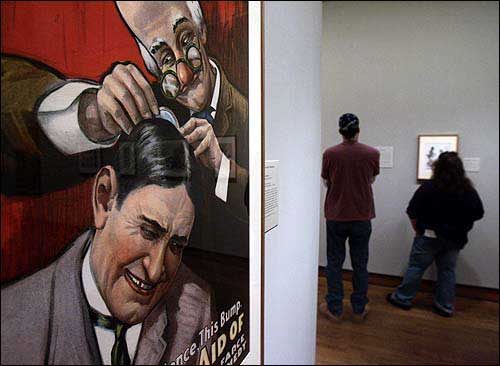
Visitors looks at prints that are part of the Quack,
The exhibit’s 75 works trace quackery from about 1600 to 1930 and include well-known artists such as Maxfield Parrish, William Hogarth and Jacques Callot.
There’s the 1885 lithograph for the “health jolting chair,” an electrified wooden seat promising women “bright sparkling eyes; a sweet, pure breath; and a vivacious manner.”
Arts and Entertainment
Events: Ballet, cinema, walking tours and lots of Easter egg hunts
Theatre Lawrence’s upcoming season to feature ‘On Golden Pond,’ ‘Pirates!’ and more

Watkins Museum to host traveling exhibition featuring photographs, narratives of the Underground Railroad
Local vendors can apply now for KU’s new monthly on-campus market, Jayhawk Fridays

UPCOMING EVENTS: Easter egg hunts, fee-waived pet adoptions and more