Checking in to ‘Hotel Rwanda’
African bishop reflects on the genocide revisited by a powerful film
The Rwandan genocide of a decade ago claimed nearly four times as many lives as this winter’s devastating Asian tsunami. But it was no natural disaster.
Between April and July of 1994, nearly 1 million Rwandans were massacred during a colonial blood feud between the Hutu and Tutsi tribes — and the world didn’t pay much attention.
The harrowing episode is the centerpiece for an acclaimed new movie, “Hotel Rwanda,” which opens today in Kansas City. The film tells the tale of Paul Rusesabagina (played by K.C. native Don Cheadle), who managed the Hotel Des Milles Collines in the capital city of Kigali. When the slaughter started, Rusesabagina used wits and diplomacy to shelter 1,268 refugees from the death squads that were hunting them.
It’s a story to which Bishop Geoffrey Rwubusisi can relate. The Anglican cleric, whose diocese includes Southern Rwanda, worked in the country in 1994 — and became a frequent guest at the hotel.
“The first time I slept in that hotel was just immediately after the war on Aug. 4, 1994,” he says. “We found the U.N. were just going and the manager was leaving that afternoon. He gave us the hotel. There was no water. There was no electricity. But he (provided) us with a young man who got us water, gave us a room, fresh bedsheets — but no blankets. I think we were the only guests. It was just the four of us.”
Rwubusisi is touring through parts of the Midwest and the East Coast discussing his experiences in Rwanda and the subsequent rebuilding of the country after the genocide. This week finds him in Kansas City, where he was able to see an advance screening of “Hotel Rwanda.”
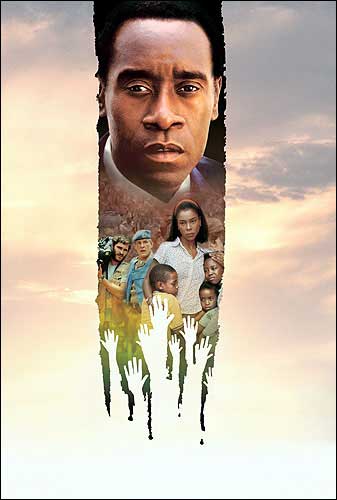
“I was really impressed by it,” Rwubusisi says. “It was as if we had been recorded and were back living in that situation again. It is a wonderful movie because it really depicts exactly what happened. Other than being a movie, you may think it was taken from somebody who was documenting the war.
“The important part of the ‘Hotel Rwanda’ film is it brings out two things which I personally have been decrying. Lives would have been saved … if there were men like Paul who stood up and defended their family, to protect their neighbors, then there would have been many souls that would have been saved. There are people who ran into churches — Catholic is the predominant church there. Thousands and thousands of people went in there, and they were not protected. The priests just left them. The bishops abandoned them. The U.N. soldiers just abandoned these people. If we would’ve had more Pauls in Rwanda, we would have saved some people.”
Darkness falls
In spring of 1994, Rwubusisi was living in Uganda, his native country, when the Rwandan atrocities began.
 Audio interview with Bishop Geoffrey Rwubusisi Audio interview with Bishop Geoffrey Rwubusisi How important is a movie like “Hotel Rwanda” in terms of getting the story of the genocide out to the rest of the world? Is it frustrating that the United States will send troops to Iraq, but wouldn’t send troops to intervene during the Rwandan genocide? Have you ever stayed at the hotel in which the movie takes place?Rwubusisi will speak about his experiences of the Rwandan genocide during the worship service of Cambridge Church.When: 10 a.m. SundayWhere: Leawood Middle School, 2410 W. 123rd St., LeawoodCost: freeMore info: (913) 685-3893 How important is a movie like “Hotel Rwanda” in terms of getting the story of the genocide out to the rest of the world? Is it frustrating that the United States will send troops to Iraq, but wouldn’t send troops to intervene during the Rwandan genocide? Have you ever stayed at the hotel in which the movie takes place?Rwubusisi will speak about his experiences of the Rwandan genocide during the worship service of Cambridge Church.When: 10 a.m. SundayWhere: Leawood Middle School, 2410 W. 123rd St., LeawoodCost: freeMore info: (913) 685-3893 |
“The bodies were floating on the River Nile, and they came in to Lake Victoria. For some time we didn’t eat fish from there,” he recalls. “It was like a darkness had overtaken that land. I lost a friend I preached with, a whole team of choir, my graduate man I teamed with.”
In August, Rwubusisi decided to head into Kigali after the rebel soldiers led by the current president of Rwanda, Paul Kagame, had established a tenuous rule of the region. He remembers driving there at night, so unsettled by the situation as to forget about some simple road rules.
“I come from East Africa, and I was driving on the left. In that country they drive on the right,” he says, laughing.
“I moved in to look at our offices, because I was working with African Enterprise and we had offices there. I tried to see if any member of our team had survived.”
Some had, and from that point the religious leader went on a mission to help rebuild the country.
In addition to his current duties with the church, the 58-year-old runs a secondary school that houses 600 girls, 400 of which are genocide survivors. He says the conflict between the Hutu and Tutsi that was so horrifically divisive a decade ago has been all but erased.
“It is quite amazing how this country has come back together,” says Rwubusisi, who speaks 10 African languages and English. “They are praying together in churches and going together in schools.”
Community blame
While some of the country’s wounds have healed, much animosity still resides. Most is aimed at the international peacekeeping community and its lack of interest during the bloodshed.
The movie does a fine job portraying how the U.N. forces were practically impotent. The blue hats were deployed in Rwanda but given orders not to shoot. (“We’re here as peacekeepers, not peacemakers” says a colonel played by Nick Nolte.)
Also culpable was the American public. Despite initial media coverage, the world seemed to lack interest. As a photojournalist portrayed by Joaquin Phoenix says in the film, “If people see this footage, they’ll go, ‘Oh my God! That’s horrible!’ then go on eating their dinner.”
Rwubusisi says, “The international community betrayed us and let us down. Rwandans are not going to forget that.”
Is it frustrating that the United States will send troops to invade Iraq, but wouldn’t send them to intervene during the Rwandan killings?
“That’s the whole story, isn’t it?” he says. “Politicians want to go where their interests are. Our country is a smaller country. We don’t have minerals. We are not accessible to a big ocean. Maybe in some people’s eyes we are not worth their offering their lives and soldiers to come and die. It’s a world of double-standards.”
That said, the bishop claims the United States is one of the few nations to help in the aftermath of the genocide.
“I think the American people are a very caring people,” he adds. “This is my second time coming here. Last year when I was speaking here at this same congregation I could see people with tears running down, and people responding and supporting our programs. Actually, America — both the government and the people of America — they’ve stood with us in Rwanda. Of all the people in the Western world, they’ve been very friendly; they’ve helped us to put the government back and to rehabilitate our infrastructure. America is giving the country such a huge support.”
Arts and Entertainment
Events: Ballet, cinema, walking tours and lots of Easter egg hunts

Theatre Lawrence’s upcoming season to feature ‘On Golden Pond,’ ‘Pirates!’ and more

Watkins Museum to host traveling exhibition featuring photographs, narratives of the Underground Railroad
Local vendors can apply now for KU’s new monthly on-campus market, Jayhawk Fridays

UPCOMING EVENTS: Easter egg hunts, fee-waived pet adoptions and more