

The power of the drink
Sports beverages gulped in record quantities
Knock back a big gulp of Gatorade. Make it two gulps. It’s refreshing and rehydrating.
Gatorade and other sports drinks are being gulped in record quantities by Olympians, weekend warriors, even devout laggards.
“Sports drinks are one of the main growth drivers of the beverage industry,” says John Sicher, editor and publisher of the trade publication Beverage Digest.
While carbonated soda was losing its fizz last year, growing by less than 1 percent, volume sales (cases sold) of sports drinks grew a healthy 18 percent, according to Sicher.
“Sports drinks are evolving from a functional hydration beverage to a product that is considered cool and hip,” he says. “You’ll see people walking down the street with a bottle of Gatorade because it’s cool, not because they’ve finished a hot, sweaty workout.”
Spurred by sales of Gatorade and Powerade, sports drinks as a group rank seventh in U.S. beverage consumption, despite being only 2 percent of the total beverages consumed. Still, sports drinks are ahead of wine, ready-to-drink tea and spirits, according to research by the Gale Group Inc. Carbonated sodas are first, followed by milk, coffee, beer, bottled water and fruit beverages.
Last year, we washed down 885 million gallons — nearly three times the sports-drink consumption of only 10 years ago. Along with the trendiness factor, Sicher cites these reasons for the increased popularity: They’re lower in calories than many beverages, they taste good, more people are exercising and the drinks perform a function.
“Absolutely, there’s a benefit from sports drinks,” says John Sweeney, a triathlete and owner of Fleet Feet on J Street athletic apparel store in Sacramento, Calif. “You can only store up to 90 minutes of blood sugar, and then you start to suffer.”
Marketing also has played a major role in the success of sports drinks. Gatorade, with its rainbow of colors and clever subspecies names such as Xtremo, X-Factor, Fierce, Frost and Ice, dominates with more than 80 percent of the market.
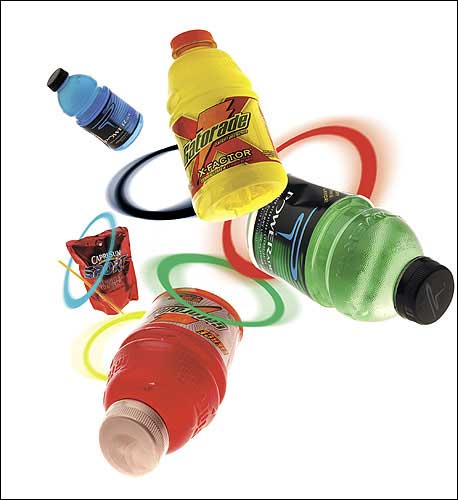
“I’ve used Gatorade often in races; it functions fine for relatively short-duration stuff – an hour or two,” Sweeney says. “When 10 hours comes into play, you’ll want something else.”
Sports drinks containing more-complex carbohydrates than drinks such as Gatorade, and thus more calories, are needed to boost energy for endurance competitions.
Andy Horrow, spokesman for Gatorade, says active 18-to 34-year-olds account for a major chunk of sales, but teens, ‘tweens and older adults also buy the product.
“Seventy percent of our consumption is in and around fitness, plus outdoor workers and factory workers,” he says. “Our core target and the folks drinking the most Gatorade are working out, cycling, running and into competitive sports.”
Powerade checks in with 17 percent of sports drinks sales, leaving a tiny share for all other competitors. CapriSun Sport was introduced last year, targeting “active kids.” ChampionLyte and Ultima Replenisher are sugar-free sports drinks, and Accelerade contains protein.
“Advertising is very powerful,” says Nancy Clark, sports nutritionist and author of the best-selling “Sports Nutrition Guidebook” (Human Kinetics, $23). “You watch baseball, basketball and all these sports, you might think sports drinks equal ‘healthy.’ It’s just sugar water for most of us.”
According to Clark, serious exercisers benefit the most from sports drinks: “They’re designed to be consumed during sports exercise — marathon runners, during long bike rides, weekend warriors who play tennis for hours and compulsive exercisers who do two hours at the gym,” she says. “Kids taking them to school is totally inappropriate. They’re just drinking sugar water. Kids need milk.”
| Beverage categories are expanding. Sports drinks have been joined by newcomers called “energy drinks” and “enhanced waters.” Here’s a rundown:Sports drinks¢ What they do: Replace electrolytes and fluids lost through perspiration during workouts and competitive sports¢ What they contain: Potassium, sugar, sodium and carbohydrates¢ How sold: Bottles, powders, pouches¢ Examples: Gatorade, Powerade, CapriSun SportEnergy Drinks¢ What they do: Quick, short-lived pick-me-up¢ What they contain: Sugar and caffeine, plus traces of amino acids, vitamins and herbs.¢ How sold: Cans¢ Examples: Red Bull, SoBe Adrenaline Rush, Monster, Rokstar, Bawls, AmpEnhanced Waters¢ What they do: Add flavor to the taste of water¢ What they contain: Nutrients, supplements and sometimes a bit of fruit juice¢ How sold: Bottles¢ Examples: Propel, Aquaveta, Aquafina Essentials, Glaceau |
Health
Missouri judge finds state laws restricting abortion violate voter-approved constitutional amendment
A Missouri judge this week struck down a series of restrictions on abortion, finding they violated a constitutional ...

ER visits for tick bites on the rise throughout the Midwest
FDA OKs first new sunscreen ingredient in over 25 years
WASHINGTON — Federal health regulators last week signed off on the first new sunscreen ingredient for the U.S. ...
OB-GYN group makes its 1st vaccine recommendations
A prominent OB-GYN group announced vaccine recommendations on Wednesday that differ from what the U.S. ...
How to talk to kids about vaping as fruity flavors make a comeback
Program that helped people with disabilities scrapped again
Margaret Tomlinson has been recovering from a traumatic brain injury for three years. Nearly a year ago, she moved ...