CRAVE: Brighten up winter cooking with citrus, from juice to zest
Citrus fruits are a staple in my house 365 days a year, but I appreciate these fruits the most during the colder months.
Other fruits are in scarcer supply in the winter, which is the peak season for citrus. Plus, when most of our cooking tends to include heavier foods with deeper flavors, that’s when I think citrus has the chance to shine best. A wonderful foil to richer ingredients.
Citrus is a genus of flowering trees and shrubs that includes lemons, limes, oranges and grapefruits. There are dozens of varieties of each type. Citrus fruits are all grown in warm climates, and the U.S. gets most of its oranges and grapefruits from Florida, lemons from California, and limes from Mexico.
Citrus fruits are often both sweet and sour because of the inherent natural combination of sugar and citric acid. They can add subtle or powerful flavor to countless savory and sweet dishes. You can include citrus in beverages, vinaigrettes, dips, marinades, meats, salads, seafood, pastas, vegetables, and desserts and baked goods of all kinds.
A little gives dishes a lift — think a sprinkle of zest over chicken marsala. A lot makes it the star of the show — hello, lemon bars!
The zest and the juice are the two main ways to incorporate citrus into your cooking. The zest is the brightly colored outer skin of the fruit. Zest adds a flavor note that can really only be described as citrusy! The zest isn’t really acidic, though it can hold a hint of pleasant bitterness.
The juice is acidic, to varying degrees. And a bit of acid is what makes most dishes sing, and taste “balanced.” Acidity makes rich foods sparkle a bit, and adds brightness in general.
A squeeze of juice over a fish fillet or grilled vegetables can make the dish.
Citrus tips
All citrus should be firm and bright in color. It is wise to always wash and dry the fruits before using to remove the waxy outer layer often sprayed on to preserve them through shipping. This is most important if using the peel in any recipes.
If you are cooking with citrus zest, leave the fruit whole and use a vegetable peeler, microplane or extra-fine grater. Just make sure to zest only the colored part of the skin as the white “pith” beneath tends to be bitter.
If the recipe calls for citrus juice, cut the fruit in half across the widest middle point. Then use a reamer, juicer or juice-extracting tool to squeeze the juice out. Don’t have one of those tools? Good old-fashioned hand squeezing works – stick a fork into the fruit and turn and squeeze to extract the most juice! Whatever way you go, make sure to strain for any pits that escape.
To get the most juice from citrus fruit, a little kitchen hack is to gently but firmly roll the fruit back and forth with the palm of your hand along its widest part. This “tenderizes” it and makes it easier for juice to be extracted.
The best way to get the longest life out of your citrus fruits is to store them in the crisper or vegetable drawer of your refrigerator. They can last approximately three weeks. Oranges and grapefruits should be stored similarly but have a shorter life, usually about two weeks in the fridge.
Here is a recipe for orange cake, which uses the fruit in two different ways.
Orange Cake
Start to finish: 45 minutes.
Yield: 8 servings
Ingredients:
1 ¼ cups all-purpose or cake flour (not self-rising), plus more for flouring the pan
½ cup (1 stick) unsalted butter, at room temperature, plus more for greasing the pan
½ teaspoon kosher salt
½ teaspoon baking powder
½ teaspoon baking soda
2/3 cup sugar
2 large eggs
1 teaspoon pure vanilla extract
1/3 cup freshly squeezed orange juice
2 teaspoons finely grated orange zest
For the Orange Syrup (Optional):
3 tablespoons fresh orange juice
¼ cup sugar
Directions:
Preheat the oven to 350°F. Butter 1 9-inch round cake pan or 1 loaf pan. Line the bottom of whichever pan you chose with parchment paper, and then butter and flour the interior, including the paper at the bottom, too.
In a medium sized bowl mix together the 1 1/4 cups flour, salt, baking powder and baking soda.
In another medium sized bowl cream together the butter and 2/3 cup sugar with an electric mixer for about 3 minutes until the mixture is smooth. Blend in the eggs one at a time, making sure each is fully incorporated. Blend in the vanilla, 1/3 cup orange juice and zest.
Blend the dry ingredients into the creamed mixture in three batches, beating on low speed just until the flour is incorporated. The batter may look a little grainy, which is ok.
Scrape the batter into the pan and smooth the top.
Bake for about 25 minutes for a 9-inch cake, and 40 to 45 minutes for a loaf cake, until a wooden skewer inserted into the middle comes out clean.
Cool in the pan on wire racks for 15 minutes then turn the cake out of the pans, peel off the paper, and turn it upright to finish cooling on the racks.
While the cake is baking, make the optional orange syrup.
In a small bowl stir together the 3 tablespoons orange juice and ¼ cup sugar. The sugar may not become fully dissolved in the syrup, which is ok.
As soon as you remove the cakes from the pan and flip them upright on the wire racks, give the orange syrup a very good stir and brush half of it over the top of the cake. Allow it to soak in for several minutes, then brush the rest of the glaze over the top and sides of the cake. Allow to cool completely. Slice and serve.
Food
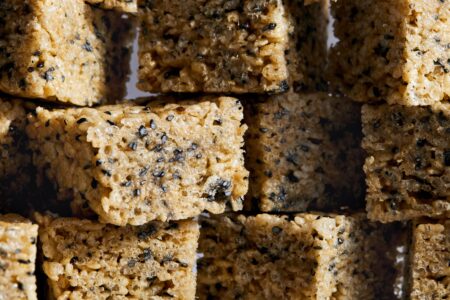
Black sesame and miso add an Asian twist to a classic treat

This smoky, fire-kissed beef tenderloin with herb butter comes from Canal House