Crave: Broaden your horizons with exotic condiments
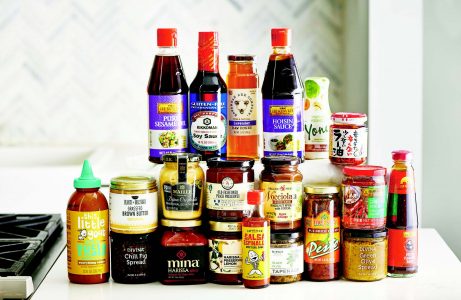
photo by: Katie Workman via AP
Sauces, dressings, salsas, mustards, honeys, international ingredients — the selection of condiments at grocery stores has expanded dramatically in recent years.
Some are hardly new, except to those unfamiliar with certain cuisines. Others are contemporary twists on classic products, or hybrids.
Here’s an assortment of condiments that have nestled themselves happily into my pantry.
Honey
Available in many varieties, usually reflecting the bees’ food source. A little honey in a glaze for fish, in a salad dressing or over a piece of cheese on a crostini is a simple way to add a bump of sweetness with a slightly earthy taste. Some brands to consider are Savannah Bee Honey, which works with beekeepers around the world and makes many flavors, and Mike’s Hot Honey, which is infused with Brazilian chiles.
Pesto
A paste often made from basil, garlic, Parmesan, pine nuts and olive oil, though there are many variations. Barilla makes a good commercial bottled pesto; Buitoni makes one that you can find in the refrigerated section at the market; and Melissa’s makes a sun-dried tomato version. For a simple dinner that will transport you to Italy, toss some pesto with hot pasta and a splash of olive oil, or make a speedy, company-worthy appetizer by spreading some pesto on baguette slices with cream cheese or another soft cheese. It’s also amazing worked into garlic bread.
Tapenades
Spreads made from olives — black, green or otherwise — tapenades can be smooth or chunky. They can be olive-centric, or feature add-ins and other flavors. Dollop them over roasted vegetables or roasted chicken thighs, or spread on sandwiches. Divina makes a line of punchy tapenades with Greek olives, and McEvoy Ranch makes a robust assortment as well, such as black olive tapenade, olive and roasted pepper tapenade, artichoke and olive tapenade, and spicy green olive tapenade.
Sweet preserves
If you’ve only thought about jams, jellies and preserves for peanut butter and jelly sandwiches or to top a slice of toast, then you’ll have fun exploring this part of the condiment world. Some preserves are just fruit-based, but others are enhanced with herbs or other seasonings. They can be used to glaze roasts, or turn a turkey, pork or grilled cheese sandwich into something amazing. Preserves are a perfect companion to cheeses and cured meats. Try Devina Sour Cherry or Kalamata Fig Spread with Almonds; Fisher & Weiser Old-Fashioned Peach preserves; or Bon Maman’s wide line of options. Check out your farmers market or neighborhood specialty store for local or artisanal options.
Dijon mustard
Among my top five condiments of all time, Dijon is widely available. It’s mustard made with white wine, in the style of Dijon, France, and adds a sophisticated sharpness to salad dressings, marinades, sauces, potato salads, etc. Maille has a load of varieties, and Grey Poupon is also easy to find.
Hazelnut spread
At its simplest, this nutty chocolate spread can turn a piece of toast into a sweet breakfast or snack. Yes, there is Nutella, but there are also artisanal versions such as Italian Nocciolata, which has a dairy-free version, and a reduced-sugar white hazelnut (bianca) variety. Try it on scones, as a filling for a layer cake, or spread on slices of apples or pears.
Brown butter
Brown butter is simply butter that has been toasted until it turns slightly brown. Use it like butter or ghee, spread on bread, to make pancakes or popcorn, to anchor a sauce, and to bake. It adds a toasty, almost caramelized flavor to whatever it touches. Black & Bolyard makes a lovely grass-fed line of these in flavors such as bay leaf and black sage honey.
Harissa
A Moroccan or North African hot chile pepper sauce made with bell peppers, garlic and vinegar. It works as a hot sauce in whatever you’re making, such as soups, stews or chilis. Blend it into sour cream for a dip, spread it on a sandwich, stir it into scrambled eggs, blend it into mashed potatoes or other vegetable purees, add it to sauces, and drizzle it over slices of meat or poultry. Shuk makes some great harissas including fiery and preserved lemon versions. Mina is another readily available brand, and has a green pepper version.
Yondu
I just discovered this all-natural condiment, which bills itself as “vegetable essence.” It is a fermented vegetarian seasoning made from soybeans, yeast and vegetable extracts, and is like a concentrated vegan bouillon that adds complexity to all sorts of dishes. Add it to soups, stews, bean and vegetable dishes, grains and pasta whenever you need a boost of savoriness. It’s meant to be used like salt or soy sauce, enhancing and building flavor.
Salsa espinaler
I came upon this hot sauce at chef Jose Andres’ Spanish food emporium, Mercado, in New York City. It can sit on the table pretty permanently, ready to dress seafood, potatoes, Spanish tortillas, chips — pretty much anything. It’s made from vinegar, red pepper and spices, and it’s addicting.
Asian condiments
A huge subject, but let’s touch on a handful to have if you like making Asian food at home. Kikkoman and Lee Kum Kee are two of the most readily available brands.
Soy sauce is probably the No. 1 ingredient needed for these dishes. It packs a rich, salty taste, and is brewed from soybeans and wheat. It can be used for dipping, marinating and cooking — especially stir fries — in all kinds of Asian cuisines. You can get gluten-free, lower-sodium and double-fermented varieties.
Sesame oil is made from toasted sesame seeds and has a nutlike, aromatic flavor. It’s often added at the end of cooking to preserve its flavor. It’s strong, so use it in small amounts.
Hoisin sauce is a sweet, thick, strongly flavored sauce made from ground soybeans and some kind of starch, seasoned with vinegar, chile and garlic. The sweetness and saltiness is excellent for marinating, stir-frying, dipping, and glazing meat, seafood, vegetables and noodles.
Oyster sauce is a staple in Chinese family-style cooking, Cantonese in particular. It’s made from oyster extracts and is used to flavor meat and vegetables, again often in stir fries, or as a topping or dipping sauce.
Gochujang is a fermented hot pepper paste used throughout Korean cuisine, with a savory umami flavor. It adds sweet and spicy notes to a variety of dishes.
Miso is a Japanese paste made from soybeans, and comes in a variety of levels of intensity, flavors and colors. There is white, yellow and red, with white being the mildest. This paste has sweet overtones with mild saltiness, and can be used in marinades, soup stocks and more.
Food
The seafood industry is betting on fish that looks more like meat
This minty pea soup with ham is a creamy, chive-packed upgrade for puréed soups

Rural winery in Leavenworth County that won $22,000 state grant for tourism hopes to grow to be bigger part of community