Town Talk
Sales tax numbers strong for holiday season
Come to find out the Grinch didn’t steal Christmas after all. At least not in Lawrence, according to early sales tax returns for the holiday season. City Hall received its January sales tax payment recently, and it was up an impressive 6.1 percent from the same period a year before. The January payment essentially accounts for sales made in Lawrence from mid-November to mid-December. The city collected $1.87 million during the time period, up from $1.76 million during the same period a year earlier. Sales tax followers would caution that one month’s worth of data isn’t overly meaningful, and they’re right. But January’s total does continue a longer-term trend. Despite all the negative news nationally about the economy, Lawrence sales tax totals now have increased eight out of the last 12 months.
Dueling piano bar slated for Downtown
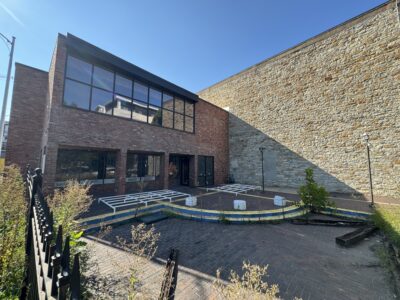
The home of a once-controversial downtown dance club soon will have a different type of sound coming out of it — piano music. A dueling piano bar — the first of its kind in the city — is slated to open next month in the New Hampshire Street building that previously housed The Last Call. The Barrel House, 729 N.H., will feature two grand pianos staffed by professional musicians who will play and sing songs for tips. The dueling piano bar concept allows other patrons to step in and preempt a song by paying a larger tip to have something else played. “It just creates a really unique, fun atmosphere,” said Alex Akers, one of the owners. “It is not your normal bar feel.”Akers said the concept has become popular with college students across the country. The dueling piano bar trend has made it to the Kansas City area, but this would be the first such bar in Lawrence, she said. She said the ownership group — which includes her sister, Emily Akers, and former bar owner Danny Williams — is interviewing musicians currently. She said the bar — which takes its name from a term used to describe saloon-style jazz and blues music — likely would have about six to eight musicians that play at different times at the bar, and also would host guest musicians. “We think it is going to go over great in Lawrence because Lawrence is known for its music,” Alex Akers said. “This is the type of thing that needs to be in Lawrence.” Akers said the group hopes to have the bar — which will serve a few snack foods but won’t include a full kitchen — open by mid-to-late March. Akers said the new club has no affiliation with the former owners of The Last Call. The Last Call vacated the building in February 2008 after three people were shot and injured outside the nightclub. That followed a 2006 incident during which seven shots were fired inside the club, although no one was injured.After the closing, the bar’s ownership group — led by Dennis Steffes — sought to keep its lease on the building. But the bar company gave up its lease as part of a court settlement in August with the owner of the building, the Park Hetzel III Trust.
Noodles & Company still eyeing downtown
As we reported back in October, it looks like Noodles & Company is going to open up a new restaurant in downtown Lawrence. But it also looks like Palace Cards & Gifts will shut down this spring to make way for the business. The national chain Noodles & Company, which serves all types of noodle dishes, is set to receive approval from city commissioners on Tuesday for a sidewalk dining area at 8 W. Eighth St., which is the site of the Palace. Palace owner Greg Guenther in October said he wasn’t sure whether he would try to reopen the store elsewhere or just retire. On Friday, he said he’s now leaning toward retirement. But that’s only if Noodles & Company follows through on its plans to open a restaurant. Guenther — who also owns the building — said Noodles & Company has until late March to decide whether to finalize the deal. If finalized, Guenther said the Palace probably would close by late April. Guenther has owned the card and gift shop since 1990, but the card store has been in business at the location since 1984. Guenther said he had mixed emotions about leaving the business. “It has definitely been a blood, sweat and tears enterprise,” he said. But Guenther also said it was becoming harder to make a living in the retail industry downtown. “In my view, downtown is more of an entertainment district than a shopping district, anymore,” Guenther said. “That has been the gradual evolution of downtown.” In other development news:• In case you hadn’t noticed, Silver Works & More, a longtime jewelry business in downtown, has left its location at 715 Mass. Cara Connelly, an owner of the business, said the building has sold. “It was just too good of an offer to walk away from,” Connelly said. She declined to release details of what may come of the building. But according to the Register of Deeds office, the building was purchased by Lawrence-based River City Holdings, LLC. Stay tuned for more details on that. Although Silver Works has moved out of the building. Cara and Jim Connelly will continue in the jewelry business. The business will sell silver jewelry at Spectator’s in downtown, and will sell gold jewelry at Mark’s Jewelers in downtown. • A rezoning request for 725 N. Second St. in North Lawrence has been filed with the city planning department. Applicant Steve Glass is seeking the industrial building to be rezoned from IG industrial zoning to IL industrial zoning. The zoning change would allow a wider range of commercial uses to be located in the building.
City in search of ‘rich uncle’
As city commissioners Tuesday considered a host of budget cuts to deal with a possible loss of $1.1 million of state funding this year, they got lots of advice. One piece was to forget this idea of adding another Sister City to its roster. In January, the city’s Sister Cities Advisory Board began exploring the possibility of adding Iniades, Greece, to the city’s Sister City Program. The idea has not yet reached the City Commission, but City Manager David Corliss said he already is unlikely to recommend moving forward on the addition. “My quick response was that we don’t need another Sister City,” Corliss said. “We need a rich uncle.” Supporters of adding the city have said it would not require any additional city funding because the program could be supported by donations. Regardless, Corliss said he likely would recommend against the idea because it sent the wrong message during tight budget times. Corliss also took time to respond to another cost savings suggestion — closing the city-operated Eagle Bend Golf Course. As the city has said previously — and as we’ve reported — the idea of closing the city course below the Clinton Lake Dam is not so simple. The reasons are two-fold: 1. The city doesn't own the land the course is on. The U.S. Army Corps of Engineers does, and there's never been any indication they're willing to let a private operator take advantage of the city's ultra low-cost lease of the ground. 2. Regardless of whether the city operates the golf course, the city is responsible for paying the debt to construct the course in the 1990s. That amounts to an annual bond payment of about $300,000 until the middle part of the next decade. "We can't walk away from that legal obligation," Corliss said.After a reorganization at Eagle Bend, the fees charged at the course have covering the costs of operation and have been covering a portion of the debt payment. If the course closed, the city at-large would have to pay the entire debt-payment."I know the community will say 'sell Eagle Bend,'" Corliss said. "But I just don't see that as being a very feasible option."
Check back after 6:35 p.m. for live blog of commission’s discussion of budget cuts
City Hall reporter Chad Lawhorn will be at tonight's City Commission meeting — where possible budget cuts will be a major topic of conversation.Post questions you have now and check back after 6:35 p.m. to see what's being discussed for possible budget elimination.Hello. This is Journal-World reporter Chad Lawhorn reporting from City Hall. The crowd is expected to be large tonight. City Hall staff members have set up chairs in the lobby outside of the commission chambers and even in the lower lobby of City Hall. Richard Heckler. Supports Prairie Park Nature Center. "It is a wealth of information." On the Arts Center. "It is another place for children and adults to go learn. You are never too old to learn something in Lawrence." On school crossing guards, he said many parents feel challenged about safe passage of their children to schools. Heckler is a Traffic Safety commissioner for the city. He said people are frequently asking for more safety efforts on the road. The meeting is expected to begin at 6:35 p.m. Commissioners have a few preliminary items to take care of before they get to the budget discussion. As a reminder, this discussion is in preparation for the loss of state funding that could impact the city if the governor's proposed budget is approved. The city would begin losing funds in July, if her budget is approved. Commissioners aren't expected to finalize any cuts tonight, but likely will wait until the legislature takes further action. Under the governor's proposal, the city is expected to lose about $1.1 million in state funding in the second half of 2009. And as always, with these live blogs, I issue an apology up front for any misspellings or grammatical mistakes. This copy does not have the benefit of being edited by our editing staff. 6:37 p.m. We're off and rolling. The budget issue is item No. 3 on the agenda. To give you some more information on the proposed budget cuts, Commissioner Rob Chestnut submitted a list of questions to staff members prior to the meeting. The questions ask for more information on several possible cuts that the staff studied but did not recommend. Among the areas he sought more information: • What would be the impact of eliminating the E-Government coordinator position?• What would be the impact of eliminating the city's Historic Resources function, and instead allowing the state to handle those duties in Lawrence?• What work would not be done if the city eliminated one or two long-range planner positions? • Would it be possible to make some positions on the city's concrete work crew seasonal? 6:56 The budget discussion is now beginning. David Corliss, city manager, makes a presentation. "We are seeking to begin the discussion about what the impact could be to the community." Does not anticipate making any final decision until state budget is approved probably in May. 6:58 Corliss explains that there are two revenue sources that could be lost under the state's budget. One is the state alcohol tax. The alcohol tax is put into three city funds: the general fund, the special alcohol fund and the special recreation fund. Corliss explains that the special alcohol fund and special recreation funds have historically been used to fund social service and youth programs. The other is a "slider" payment that is made by the state to compensate for the loss of property tax on machinery and equipment that was eliminated by the state a couple years ago. In total, $1.144,267 million will be lost to the city in the second half of 2009. Remember, the state's 2010 budget actually begins in July 2009. 7:02 Chestnut reminds everyone that the city's taxes are already set for 2009. The city does not have the legal ability to raise the city's property tax mill levy in the middle of 2009. The city next can raise the mill levy for the 2010 budget, which is set by August of 2009. 7:04 Corliss goes over cuts the city has made in past years. They include the elimination of 15 non-public safety position. The city has changed its employee compensation program. No across the board cost of living increases for city employees, except for police and fire departments. The rest of the city employees are only eligible for "merit pay increases." "We really haven't cut many services," Corliss said. "We haven't had this many citizens show up when we were eliminating positions because we figured out ways to do that without cutting services. I think we have been pretty successful in doing that." Goes over a chart showing the decline in the growth of property tax values. Notes it was very strong in the 1990s, but now has started to dip into negative terriority. "We were able to say yes to a lot of ideas in the '90s," Corliss said. 7:08 Corliss continues. "this has not been a labor of love. We don't like putting together lists of potential reductions." Corliss stresses that part of these proposed reductions is to make it clear to state leaders that these cuts would hurt local government. "I think it is critical that we communicate to our delegation the consequences of this." Says this is the first chance city commissioners have had to see these. He said he hopes the city does not have to implement any of the proposed cuts. "This is plan B," Mayor MIke Dever asks. "This is plan B,"Corliss said. "This is the retreat battle plan." Corliss begins going over potential cuts that were studied by staff. Not all are being recommended. Cross guard program. He hopes the schools can absorb that program. Eliminate the CPR training classes by fire department or begin charging a fee. Same for the the city's youth bike helmet program. On eliminating the city's Human Relations Department. "Lawrence has been a pioneer in the area of human relations law," Corliss said. "The thought is not to do away with the Human Relations ordinance." That ordinance prohibits discrimination based upon sex, religion, race and several other factors. Unlike the state's law, it also prohibits discrimination based on sexual orientation. Not recommending any changes to staff pay. Notes that city already has made changes to the system. "I think it is appropriate given the tremendous service the city employees provide and that they already are doing more with less," Corliss said. Not recommending elimination of the city's Historic Resources efforts. "This is one of those areas that I believe, makes Lawrence remarkable," Corliss said. "We've been a pioneer in this area. Also not recommending reduction of long range planners. Notes that already have made cuts to the planning department. Not recommending cuts to the city's street maintenance budget. "I have seen too many times in this room that we've balanced budgets by cutting our maintenance budget for infrastructure. I don't think that is path we want to go down again." 7:21 Corliss continues. Goes over several parks and recreation cuts. Calls them "regrettable." Knows that the community does not want to see the Prairie Park Nature Center closed, but he said he is concerned about having the revenue to keep it open. Said other options should be considered. Perhaps charging a fee to use the center is an option that needs to be considered. Also said he is disappointed that funding to plant flowers and landscaping in downtown also would be reduced. On social service cuts and outside agencies. Groups receiving money for Special Alcohol funding would be cut 50 percent in 2009. "If the state keeps all that money, we wouldn't have any money coming to us, so the question becomes what do we do after July 1." Responding to questions from public that have come in via e-mail. On selling Eagle Bend. Can't sell the land because the Corps of Engineers own the land. More imporantly, the city has a $290,000 annual debt payment. "Even if we closed the operation we would still have the debt obligation. We can't walk away from that legal obligation." Said revenues at the golf course are helping pay for some, but not all, of that debt. "I know the community will say 'sell Eagle Bend. I don't see that as a feasible option." On adding a new Sister City. Corliss said he will not recommend that. "My quick answer was that we don't need another Sister City. We need a rich uncle," Corliss said.Corliss wraps up presentation. Tells commissioeners: "I fully expect you to change this," Corliss said. "I know this is happening fast." Expresses optimism that cities can convince legislators to back off state budget cuts as proposed. 7:29 Mayor Dever asks if city has explored whether a contractor would take over operation. Corliss says no formal RFP has been done. Dever also points out that the city commission can not bind future city commissions to any action. He points out that likely the final decisions will have to be made after the April City Commission elections. Corliss said that is correct. But he said the city should talk about it now. "We're saying 'let's get ready. We may have to do this." 7:32 Commissioner Mike Amyx notes that city commission about a year ago made mid-year adjustments to social service agencies. "Who would ever have thought we were going to have to do that again," Amyx said. Amyx said the economy has changed and that means the city commission has to consider whether its priorities have changed for 2009. "We're going to have to do that," Amyx said. Amyx said he does disagree with the recommendation to close prairie park nature center. It draws applause. "I don't wan to have another vacant building. We have one with the Carnegie Library building. We have one with old Fire Station No. 4." Wants more people to volunteer. Thinks that could help with downtown beautification. "We can have contests on how pretty downtown Lawrence can be." Also brings up that city contracts with a company to clean up bus stops. Mentions whether volunteers could do that. Maybe city could pay social service agencies to do that. "There's an opportunity here for us to look at our priorities in the 2009 budget," Amyx said. "This is still our budget." He continues. "I think we have to do things different." 7:38 Amyx continues. "I learned a long time ago that there is budget and then there is money. We can put all that we want in a budget, but if we don't have the money come in, we can't do that." Then urges crowd to call legislators. 7:39 Commissioner Sue Hack. Says Corliss has done a good job. "It is important to not throw stones at our city manager for doing his job and pointing out possibilities." She continues. Says she may not agree with all recommendations. "I don't think any of us has the stomach to close Prairie Park." Thanks Corliss for bringing them forward. "This is a good alert. This is a reality. We're not playing Monopoly here. This is real money." 7:42 Amyx asks about hiring freeze except for core departments like police, fire, street maintenance and sanitation. Corliss said "We've been in a hiring chill for about two years, and that continues. We are not automatically filling positions as they become vacant." 7:43 Commissioner Rob Chestnut asks questions about what would happen if the Historic Resources efforts were discontinued. City Planning Director said it would put a strain on staff. 7:45 Dever opens up public comment. "I think you have heard that we want to keep Prairie Park Nature Center. It is clearly something the community values." Says this subject has created the most amount of e-mail he has received in his two years on the commission. 7:46 Dever continues. He said he supports keeping Prairie Park open. Said that is clearly three commissioners who support keeping the nature center open. Comm. Rob Chestnut said he agrees there is not support to close the Prairie Park Nature Center. Does want to explore changing the hours and making it "a little more fee based." He also reminds everyone that this is a very fluid situation. He said it is good that the city is talking about possible cuts "sooner rather than later." Would rather do this now than being forced to make a lot of quick decision in April. 7:50 Commissioner Boog Highberger. Said e-,mail came in faster than he could respond to them. "I like the way this is structured, Dave. You get to take all the heat for making the recommendations, and we get to be the good guys for saying we're not going to do that." Also said he wants to consider what impacts cuts would have on the local economy. He said wages should be one of the last things cut because the city wages circulate throughout the local economy. 7:52 Public comment begins. Kimball Coleman speaks first. Young adult who says he really likes the Prairie Park Nature Center. "It is a fun place to learn about animals." 7:53 Diana Fredrick, director of Douglas County CASA. Says CASA, which provides court appointed advocate services for children, already has received past cuts. "The proposed cuts would be devastating." Says CASA serves some of "our most vulnerable citizens." 7:55 Stephen Petrovits. Another young school-aged child who supports the Prairie Park Nature Center. "They put a great emphasis on science." An unidentified friend of Stephen also supports the center. "The talking crow Edgar is like a brother to me." Another young student supports it. "I learn more there in a week of summer camp than I do in a semester of school." Gwen Klingenberg, president of the Lawrence Association of Neighborhoods and a city commission candidate, said "Lawrence is at a dark crossroads." She said "I urge the city commission to put people first and find other ways to balance our budget." Said "quality of life issues are not side issues." Does not support losing the city's Human Relations program. Brandon Irvin, He urges city to look at volunteers for upkeep of downtown flower gardens and such. Also wants to find funding for Boys and Girls Club because he knows many families use this. Said he would pay higher fees to play golf at Eagle Bend. Uses several Parks and Rec programs. Said he would pay more in fees for those programs. "As a community, we can find ways to come together and do this." State Sen. Marci Francisco. Said she is here to listen and take stories back to the Statehouse about how these cuts will impact people. Said she does not think the state will get this done before April. "We like to work right up to the deadline." Highberger: Brings up to Francisco that the city does not have any revenue source that is not regressive. "The more burdens get shifted down to the local level, the more regressive our tax system becomes," Highberger said. Francisco said she will deliver that message to legislators, and also said she will stress that these cuts would hit the city in the middle of the city's budget year. David Leamon, new director of the Lawrence Arts Center. Has been told that Lawrence Arts Center is the epicenter of a very creative community. "I was also told good luck. Now, I know why." Said this is a bit of a rude awakening. Said funds that would be cut from Arts Center is used to actually maintain and clean the building. "We already have a very slim staff." Have 3,000 people visit the center each week. Traffic is getting increasingly strong as more events are held there. 71 percent of center's budget comes from fees and classes. Said revenue has started to shrink as economy has declined. Unidentifed school counselor. Said she is worried about the school crossing guard program. Thinks a volunteer program "would be too much risk to our children." Kelly Kindscher. Showed up to save the nature center. Wants the commission to involve the community. How could you have a forum that you can get some real ideas. Mentions that parks department mows too much and spends too much on herbicides at city parks and cemeteries. "Unidentified student. Wants them to save the Prairie Park Nature Center. He starts crying. His mother comes in to talk for him. Urges the commission to not close the nature center. Also supports keeping crossing guards. Unidentified student. Urges commission to not close nature center. Says it is like another home to her. "Animals are the best friends you could ever have."June Jones. Lawrence Arts Center. An essential quality of Arts Center is that it is an organization that "provides a cultural backdrop that nurishes the souls, creativity, connection that people have with things that you can not buy with money." Says several generations have used the Arts Center. "The Arts Center is not something that can easily be outsourced. If lost it can not easily be recreated." Joyce Wolf. Jayhawk Audubon Society. Supports Prairie Park Nature Center. Urges transparency in the budget. Wants more effort put into grant writing. Kristin Moreland. She's an artist who supports city funding for the arts. Her children go to Arts Center for classes. Mike West. Moved here. Could have moved anywhere. Friend told him to move to Kansas. Considered moving to Wichita, but it is a "hell hole in an unperceptable way." Said he has never been in a city like Lawrence that has so many resources of people. Said he has been amazed at the services provided by Arts Center, swimming pool. Said this is the smallest town he has ever lived in. Says this community has resources it should draw upon. "It has wealthy people, but it has other resource. It has people who give a damn." Said he is a complete outsider until moving here. "But you have an extraordinary town." Please do "whatever we have to do to keep this place extraordinary." Eva Bradley. Young student. Likes the Prairie Park Nature Center. "It is a great place to go if you need information on animals. It is a good place to go if you are not feeling happy." "I know I might be small, but this is a big, big deal to me." Young adult student. Supports Prairie Park Nature. Patrick Freeland. President of Wetland Preservation Organization. Says the group is a broad-based group "working to make environment better around us." Says Lawrence is very multi-cultural. "I ask you to have faith in your community. If you need help, feel free to ask." Supports Prairie Park Nature CenterUnidentified speaker. Concerned about swimming pools closing early. Ernesto Hodison. Nature center has made a great impact on his children's life. He has served with Boys and Girls Club as a board member and volunteer. Sees the impact it makes on children's lifes. Works with Warm Hearts. "There are a lot of people out there who need assistance and wouldn't have it if you didn't provide the funding." Also works with the Human Relations Commission. "This ordinance reflects the values of our community." "As you look at these cuts I ask that you think about the impact it will have on the quality of life of people." Daniel Poole. Member of the city's Sustainability Advisory Board. Supports keeping nature center open. Urges city to make better use of city's advisory boards. Kathy. Teacher, mother and environmentalist. Supports keeping nature center open. "It is a resource we can't afford to lose." Janet Fitzgerald. Concerned about closing the city wading pool and eliminating the City Band concerts. "It is hard to imagine what life would have been like as a parent without the experiences I have had at the city parks and the wading pool." Said wading pool is a safe environment for the really small children. "Those are the first years of their lives and it is really special to them." Also has great memories of the band concerts. Note: I missed a couple of speakers here while writing a story for the 10 p.m. broadcast of 6News. Kevin Loos. Chair of parks and recreation advisory board. "At the next advisory board we certainly talk about not closing the nature center. There would be a mutiny." Invites people to get involved with the advisory boards. Said what he heard tonight is that people are more willing to pay fees for some of these services than there was a few months ago. "There are ideas that may work now that would have gotten slaughtered not long ago," Loos said. Also said volunteer crossing guard program is a bad idea. "There would be definite incidents that would occur that none of us would want to explain after the fact." Unidentified speaker. Urges residents to take ownership and help he government make informed decisions. Rachel Vaughn. Wants more transparency. Wants a larger forum with more details. Asks people to look at domino effect of some of these cuts. Aaron Paden. Urges city and legislators to raise his taxes. "These are services that make a community worth living in," Paden said. Said he would support hiring freezes in police department. Points out that we have Douglas County Sheriff's office, and KU police department as well. Also said he could live with less street maintenance. "I wouldn't mind a pothole or two if it helped us not run over a kid," Paden said. Public comment ends at 9:20 p.m. Corliss: Reminds everybody that he intends to talk to state legislators to avoid these cuts. "That is Plan A." Also said he takes to heart the recommendation to talk more with the city's advisory boards. Dever. "This is just the first step for us. It has been overwhelming and inspirational to see how many people care about one thing or another." 9:23 Dever estimates he got about 300 e-mails in 24 hours. 9:24 Chestnut. Also stresses that this is the beginning of the process. Interested in the idea of having a forum on the subject. Said there are a couple of issues that are important to him. He is concerned about depleting reserve funds. Concerned about some past practices of spending more than the city has received in new revenue. Said many amenities are near and dear to his heart. "I grew up here and fell off the train at Watson Park, played in the wading pool, but we can't forget that fire & medical, police and sanitation are just core absolute services." On taxes he said the city doesn't have the authority to do any taxes that aren't regressive. "We're really stuck in the short-term to come up with some answers," he said, especially given that this would hit the city during the middle of a budget year. "But he have a lot of resources here, and they just aren't financial." Said he can't predict how long the financial downturn will be. Said it could be a protracted situation where revenues are flat or declining. Doesn't want to draw down reserve funds to fill the gap. Said he's not sure that is sustainable. "We can't hope that revenues will grow like they did five years ago," Chestnut said. "I don't think that would be the responsible thing to do." 9:32 Highberger. Said it is a misconception that prosperity depends on low taxes. He said prosperity depends on good education, good infrastructure and a good quality of life. But he said the city doesn't have a way to really raise taxes to address the shortfall this year. Does support the idea of a town hall meeting. Wants to see usage numbers on wading pool. Band concert cut concerns him. "$12,000 for the amount of pleasure it provides, I think is one of our most cost effective expenditures we have." Says he is not sure how to avoid cuts to social service agencies if the alcohol tax is lost. Says he really wants to do cost-benefit analysis on these programs. "It is not fun and it will continue to not be fun." 9:37 Hack. Says will have to look at more creative city fees. She's very concerned about the cuts to social service agencies. 9:39 Amyx, who is the one commissioner with an expiring term that is running for re-election. "It is time for the city to challenge its citizens," Amyx said. "We know there is going to be some reduction in funding for this community." Compile information and give residents more options to consider. He thinks more discussions about city fees are necessary. Commends the city's employees. "We have the best employees in the state of Kansas." "We're going to have to have a volunteer spirit to get a lot of this done," Amyx said. 9:42 Mayor Dever "These tough times are going to be tough on all of us." Says that more people are going to have to become involved in community service. He said residents also will have to adopt to community sacrifice. "We're going to have to make some sacrifice to save what is important to us." "Contact your legislators," Dever said. "Call, call, call." 9:45. That ends tonight's discussion on the city budget. Check out 6News and ljworld.com for complete stories.
Progress Vanguard worker tells different story
Lawrence is a long way from Wall Street, but don’t think local workers can’t fall victim to battles between two corporate titans. It is beginning to look like that is what happened to the 55 employees who lost their jobs when Lawrence’s Progress Vanguard plant closed down. “It was a corporate (expletive) match,” said Wilbur Garrison, a former employee at the plant. After the Journal-World reported Monday on the closing of the plant, Garrison called in to say that employees at the plant had a different view of why the plant shut its doors. He said it didn’t have anything to do with a supposed slowdown in rail traffic, which was one of the reasons given by Progress’ corporate headquarters. Instead, Garrison said workers believe it had everything to do with the company being bought out by the Caterpillar Corp. Here’s the deal as employees see it: The work that employees did was reconditioning a key part for locomotive engines. The locomotive engines were made by General Electric, and Progress Vanguard essentially did the equivalent of warranty work on the engines. That was a fine arrangement for a number of years, said Garrison. But when Caterpillar bought the company in 2006, the situation changed. That’s because Caterpillar and GE are battling to gain market share for the locomotive engine market, Garrison said. Garrison said workers believe GE didn’t like the idea of money going to its key competitor, so GE opened a similar maintenance facility near Kansas City International airport. That’s where the work Progress Vanguard once did is now being performed. And, of course, that is the way the business world works. But it still left Lawrence employees feeling like they got caught in the middle of something they had no control over. “It really caught us off guard,” Garrison said of the closing. “We thought with our location we were kind of a hub, and that this plant would never close.” Once it did, finding a new job at a similar salary has been difficult. Garrison said experienced technicians at the plant made about $40,000 per year. “It has been impossible,” Garrison said of finding a similar job in the Lawrence area.
Corporate retreat, mortuary among projects up for review
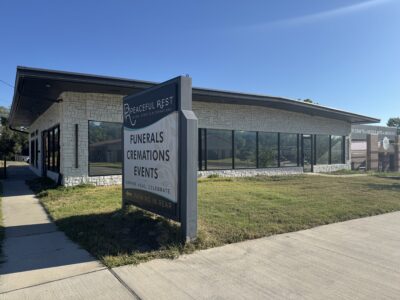
Plans for a corporate retreat between Lawrence and Lecompton have resurfaced. Lawrence-Douglas County Planning commissioners at their meeting on Wednesday will consider a request to rezone 58 acres at northeast of the intersection of North 1800 Road and East 700 Road. The rezoning would change the property from Agricultural to General Business, which would allow for a corporate retreat to be built on the property. The project is being proposed by the development group Rockwell Farms L.C. A previous proposal in 2007 has called for the corporate retreat to include a conference center with meeting rooms and a reception area, a restaurant, a bar, a swimming pool, a commercial riding stable, and hunting and shooting areas. Previous plans also called for the retreat to include cabins that would be arranged in clusters throughout the development. The county’s planning staff has found that the proposed development likely would not disrupt surrounding property owners, in part, because there is about 300 acres of woodlands adjacent to the development that would be preserved as buffer. But staff members are recommending denial of the rezoning because Horizon 2020, the long-range plan for the city and county, does not contemplate such development for that area. Previously, the developers had sought a conditional use permit for the project. But the new application requests rezoning, which unlike a conditional use permit does not have to be renewed every 10 years. Planning commissioners will consider the rezoning request at their 6:30 p.m. meeting on Wednesday at City Hall. The decision by the planning commission won’t be final. The rezoning request will be presented to county commissioners for final approval. Planning commissioners also meet at 6:30 p.m. Tuesday at City Hall. On their agenda is a proposal to rezone a church building owned by Second Christian Church of Lawrence. The rezoning would allow for the church building to be converted into a mortuary, according to documents submitted by the applicant, Peaceful Rest Corp. The rezoning would have to win approval from Lawrence city commissioners before it could become final. To see the complete agenda for the two meetings, click here.
Lawrence is hedgehog heaven
You might've thought Judson King's 15 minutes of fame were up early this month, after CNN picked up the story of his efforts to make hedgehogs a legal pet in Lawrence, and he was interviewed on Fox News Channel's Fox and Friends show.But the national attention continues. Maybe by this point, he's just famous.CBS Evening News plans to be in Lawrence this weekend to tape a segment with Judson and his hedgehog, Little Luke. It's expected to air January 30.He was first featured locally at the end of December after he single-handedly convinced city commissioners to amend the city ordinance on pets to allow hedgehogs.
Amyx may be set to enter city race
Signs are beginning to look like City Commissioner Mike Amyx will run for re-election. Amyx has scheduled an announcement for 11 a.m. Monday at City Hall. Amyx didn’t want to say what he was going to announce, but former City Commissioner Bob Moody was helping Amyx spread the word of the announcement. Moody has served as Amyx’s campaign chairman in past elections. Amyx could be the only current commissioner running for re-election. Commissioner Sue Hack has already announced she will not seek re-election. Commissioner Boog Highberger has said he’s leaning against running for re-election. The other two commissioners — Rob Chestnut and Mike Dever — are not up for re-election. They have two years left on their terms. The general election will be April 7.
Governor’s budget produces list of potential local losers
Gov. Kathleen Sebelius’ proposed state budget may end one contentious debate at Lawrence City Hall. But it is almost guaranteed to create a whole host of other ones. For the past couple of years, debate has broken out over how the city ought to be spending money in its Special Alcohol Fund. The city has broken from the recommendations of if its Special Alcohol Fund Advisory Board to fund Lawrence police officers who act as school resource officers. A whole host of social service agencies in Lawrence have objected because that money has traditionally been an exclusive funding source for non-profit agencies that help youth or people with drug and alcohol problems. The fund receives its money from a portion of the special tax that is charged on liquor sales at bars and restaurants. Believe it or not, in Lawrence that’s a pretty good industry. It is good enough that the governor is proposing that the state keep all those tax collections for itself rather than sending about 70 percent of them back to the cities and counties where they are collected. That’s one way to make the City Hall debate moot. So, what groups or agencies here in Lawrence may be staring a big loss in the face? Here’s a look at how the money is scheduled to be distributed in 2009:• $250,000 to the Lawrence Police Department to partially fund its school resource officers program
• $100,000 to the Boys & Girls Club of Lawrence
• $44,000 to the youth program Van Go Mobile Arts
• $41,000 to the drug and alcohol counseling program DCCCA
• $29,150 to DCCCA’s First Step House program
• $27,000 to the Big Brothers/Big Sisters CORE program
• $27,000 to the homeless shelter Lawrence Community Shelter;
• $22,500 to the suicide prevention program Headquarters Inc.;
• $17,000 to Women’s Transitional Care Services;
• $4,500 to the Ballard Community Center;
The liquor tax money also provides the resources for an entirely separate fund called the Special Recreation Fund. That fund provides $25,000 in scholarships for the Lawrence Arts Center, and provides $25,500 in funding to the Lawrence Arts Commission. Plus, the money is used for a variety of city projects related to the operation of the swimming pools and maintenance of parks. All these programs could be forced to make mid-year budget adjustments, if the governor’s budget is approved. Since the state’s fiscal year starts on July 1, City Manager David Corliss is estimating that the city would only receive half of the liquor tax revenues it has budgeted to receive in 2009. Then, presumably, in 2010, the city wouldn’t receive any liquor tax money. But, of course, this is only if the governor’s budget gets passed by the state. And that’s a big if. Corliss at Tuesday night’s City Commission meeting was reverting back to an old saying he surely used often in one of his previous jobs as a lobbyist for the League of Kansas Municipalities: “The governor proposes and the legislature disposes.” With the state potentially facing a $1 billion shortfall, we’ll see if that’s how it works this year.
Planning Commission to debate Menards project Monday amid signs momentum may be turning
Strap on your tool belt, it is time to talk again about Menards’ proposal to build a big box store just east of Home Depot near 31st and Iowa streets.
The Lawrence-Douglas County Planning Commission will debate the project again at its Monday evening meeting. The Planning Commission debated it last month and failed to reach consensus on whether the plan should be recommended for approval by the City Commission. I know that left some of you feeling like I feel after completing an electrical-oriented home improvement project — a bit dazed. (My wife promised me she had turned off the circuit breaker. She never said she wouldn’t turn it back on, though.)
If you remember, the Menards project hit a snag, even though there was no groundswell of opposition from neighbors in the area. Instead, it was the city’s planning staff that expressed concern about changing a portion of the city’s comprehensive plan, known as Horizon 2020, to accommodate the project.
There have been some new developments on that front. The city’s planning staff hasn’t officially changed its recommendation for denial, but it has created a new staff report that provides a clear set of reasons Planning Commissioners can use to approve the project, if they so choose.
That may prove to be important. For what it is worth, I felt like the Planning Commission last month was interested in recommending the project for approval, but was reluctant to do so because they hold the planning staff’s professional opinion in high regard.
The new memo from the planning staff, however, makes it clear that there is a reasonable argument to be made for why Horizon 2020 could be changed to accommodate the project. The main point of contention here is that Horizon 2020 calls for the proposed Menards site, the former Gaslight Mobile Home Village, to be used for apartment development in the future. A map in Horizon 2020 needs to be changed to show the property is slated for commercial development.
The memo lists the following reasons why a change could be prudent:
• It is now clear the eastern leg of the South Lawrence Trafficway will be completed, which will alleviate the need for traffic to travel through neighborhoods to reach the new commercial area.
• Public testimony from neighbors has indicated that there is a significant number of residents who may prefer retail development at the site rather than a large apartment complex.
• Even though the city has other retail zoned areas in the city, sites that can accommodate big-box development remain limited.
Planning staff members also are pointing out that it is unlikely that commercial development would extend all the way down the north side of 31st Street to Louisiana Street, if Menards is approved. Staff members confirmed the city is close to finalizing a deal to purchase the nearly six acres of property near the northwest corner of 31st and Louisiana streets. The city needs the property for a new utility pump station. City ownership means the corner wouldn’t ever develop as a retail site.
So we’ll see what planning commissioners do on Monday. That meeting is set for 6:30 p.m. at City Hall.
But remember, planning commissioners only recommend things. It will be up to the City Commission to make a final decision on the project. It still is too early to tell how city commissioners may vote on this project, but there are indications Menards has a fighting chance.
When I was speaking recently with City Commissioner Jeremy Farmer about economic matters, he brought up the need for the city to really update its comprehensive plan. He pointed to the Menards project as an example. Farmer said much of the underlying work to create the city’s comprehensive plan was done more than 20 years ago, and it probably is time to recognize that several factors in the city have changed since then.
“Menards is a great example of that,” Farmer says. “Our comprehensive plan says no, and the community seems to be saying it doesn’t want more housing there.
“I look at that and say ‘gosh, a Menards would be great in bringing some commercial taxes to a community that is going to have shrinking property tax revenues.'”
So, while Farmer stopped short of saying he would vote for the specific proposal Menards currently has brought forward, it sounds like he’ll have an open mind.
Privately, I have heard one other commissioners indicate he is going to give strong consideration to approving the project as well. It will be interesting to watch. Probably the biggest factor will be whether residents in the Indian Hills Neighborhood continue to either support the project or at least not vigorously oppose it. A large number of neighbors opposing the project could change things.
At the moment though, it is safe to assume the Menards project won’t be dead on arrival when it comes to the City Commission. Which, that reminds me: I still have to rewire the kitchen light. Oh, boy.
Wicked Broadband project seeks $500,000 city grant; downtown hotel project seeks adjustment to incentives package; historical society seeks $20k for new exhibit
Reading the agenda for Tuesday night’s Lawrence City Commission meeting is kind of like reading my household’s credit card bill: There are plenty of questions, and all the answers seem to have dollar signs.
There are three outside organizations requesting financial assistance from the city, with two of them each asking for a half-million dollars.
We’ll try to fill in more details later, but here’s a look at the basics of the requests:
• Lawrence-based Wicked Broadband announced last month that it will start a pilot project to bring super fast 1-Gigabit Internet service to a neighborhood later this year.
A kick-off event for the project spelled out a lot of details about how the company, which previously did business as Lawrence Freenet, could bring the same type of high-speed Internet service to Lawrence that Google Fiber is bringing to Kansas City. At that event, the idea of financial incentives from the city wasn’t envisioned. Well, it is now.
The company has filed an application for a $500,000 economic development grant from the city, plus is asking to receive up to a $20,000 a year rebate in franchise fees it pays to the city. It also wants to have the right to enter into $10 per year leases to use a portion of new fiber optic cables that the city plans to install throughout the community in future years.
Joshua Montgomery, co-owner of Wicked Broadband, said there are several factors that have caused him to rethink the need for city incentives for the project. But perhaps the largest is that he’s been contacted by several significant New York-based capital investment companies that are interested in investing in a locally owned, high-speed Internet service. Those investors have made it clear that the city of Lawrence needs to do something to show that it is committed to the idea of bringing a high-speed network to the city.
“If the city says that it is behind it 100 percent, that opens the door for the next $30 million in private funding that will be needed to spread this service to the rest of the community,” Montgomery said.
Montgomery said the $500,000, one-time grant would allow the service territory for the pilot project to grow to 1,000 households, up from 500. The neighborhood or neighborhoods haven’t been selected yet. Wicked is taking pre-registrations for the service on its website. The neighborhood with the highest percentage of residents pre-registered will serve as the pilot project. An announcement is expected June 15.
Montgomery said he and his business partner and wife, Lawrence school board member Kris Adair, are putting up $500,000 in private money for the pilot project.
City commissioners on Tuesday aren’t being asked to approve the request. Instead, Tuesday’s vote is just to direct city staff to begin analyzing it.
Wicked Broadband’s service will be a direct competitor to existing Internet providers, such as Knology and AT&T, which generally do not receive such city subsidies. So, it will be interesting to hear what those companies have to say as the process unfolds.
As for Montgomery, he said he’ll argue that the city won’t be making an investment in a private company as much as it will be making an investment in a new infrastructure system that will be critical to future commerce. “It is an economic enabler,” Montgomery said.
•••
The second request comes from a group led by Lawrence businessman Doug Compton, which is seeking to build a new hotel at the southeast corner of Ninth and New Hampshire.
It is a bit more complicated to understand, and I’ll try to get a better handle on the numbers before Tuesday’s meeting. But the request seeks to raise the amount of Tax Increment Finance dollars the hotel is eligible to receive to $4 million, up from $3.5 million.
Unlike the Wicked Broadband request, this doesn’t involve the city writing a $500,000 check to the development. Instead, a TIF allows the project to get a rebate on a certain percentage of the property taxes it pays. It is kind of like a tax abatement, except the money has to be used to pay for infrastructure type of expenses. In this case, that includes a private parking garage for the hotel.
What makes it a bit complicated is that the developers also have proposed a multistory apartment/office project for the northeast corner of the intersection. It also uses Tax Increment Financing. It looks like a likely option is to increase the amount of TIF money available for the southeast corner hotel project by reducing the amount of projected TIF revenues available to the northeast corner apartment project.
If that is ultimately what happens, then the overall amount of incentive basically would be a wash. We’ll have to see how those details work out.
The more interesting part is what developers have said about the hotel project. It has had its necessary building approvals for months, but hasn’t yet started construction. A letter to the city now makes it clear that there are financial questions the investors are trying to answer.
Bill Fleming, an attorney for the development group, told the city in a letter that “the hotel investors are keenly interested in the ‘cost per key,’ which is the average cost for each hotel room.”
If the additional $500,000 in TIF money is not available to the hotel project, then that will raise the average cost per room the investors must pay.
“The investors may conclude the project is not feasible at that cost per key, and the project in that case will not proceed,” Fleming wrote.
That would be a major turn of events for the project, which faced stiff opposition from the adjacent East Lawrence neighborhood, and had to fight hard to win city approval.
•••
Maybe the folks at the Douglas County Historical Society are more than just masters of history. Perhaps they also are masters of timing. After those two big-ticket items, they are asking for a mere $20,000 in city funding. The money will be used to help fund a permanent exhibit on the second floor of the Watkins Museum commemorating the 150th anniversary of Quantrill’s raid on Lawrence.
The new exhibit is set to open on Aug. 17, and will “explore Douglas County’s history, issues that shaped the development of the community, and events that made it a focus of national attention.”
Ultimately, the exhibit will be expanded to the third floor of the museum. The bulk of the nearly $257,000 in exhibit costs has come from private individuals, businesses and grants.
City staff members are recommending approval of the $20,000 in funding. The money would come from the city’s guest tax fund, which receives its revenue from the guest tax charged at hotel and motel rooms.
Commissioners meet at 6:35 p.m. Tuesday.
City recreation leaders not in favor of lighted tennis court plan near Lawrence High
All we need now is John McEnroe, or absent that, somebody in white 1980s-style tennis shorts with an excitable personality.
Yes, we’re talking about the looming tennis court debate that will be coming to Lawrence City Hall. As we reported last week, city commissioners have decided to reopen the issue of whether eight tennis courts near Lawrence High School should be lighted.
At the time, however, we didn’t have a date for when the commissioners were to have a public hearing on the issue. Well, the commission now has a tentative hearing date of June 4, at its 6:35 p.m. meeting at City Hall.
There’s been one other development in the matter: The city’s Parks and Recreation Advisory Board brought up the issue of lighted tennis courts for the site, and it is clear recreation officials aren’t on board with the idea, largely because of concerns about cost.
In case you have forgotten, members of the Lawrence Tennis Association believe lights should be added to the courts to make up for lighted courts that were lost when LHS renovated its campus. Neighbors in the area have opposed the lighting plan, expressing concern that it will be just one more example of LHS facilities creating a neighborhood conflict. They think the light will spill onto their properties.
City officials already have agreed to build eight outdoor lighted tennis courts as part of the city’s recreation center in northwest Lawrence. Several city officials thought that put an end to the issue, but members of the tennis association said they still see value in having lighted courts in the LHS area.
But at a recent meeting, the top officials at the city’s Parks and Recreation Department said they couldn’t support the idea of lighting the LHS courts and building the eight lighted courts at the recreation center. Cost was one reason they cited. They now estimate the cost of installing lights at the courts — which are on the property of the former Centennial Elementary school — at about $240,000, if done in a way to minimize light spillage. When the project was first proposed a couple of years ago, the department was planning on spending about $100,000 to light the courts.
Plus, the city would have to enter into a maintenance agreement with the school district to help make any future repairs on the courts. Parks and Recreation officials aren’t sure they want to do that, because two of the courts already are showing signs of needing significant repair. Currently, all maintenance is the responsibility of the school district. (In case you are wondering why it wouldn’t be the school district’s responsibility to add lights to courts it owns, the answer is because the district says it doesn’t really need the lights for its high school programs. The lights mainly would accommodate city residents that use the courts.)
Members of the tennis association are passionate about the issue and well-organized. They also note that the needs in the area are changing because KU will be losing most of its public courts on campus when the new School of Business building is constructed.
So, we’ll see how the debate goes. Let the volleying begin.
Knology changes its name to WOW!; lifts usage caps on Internet service
The changes keep on coming in the Lawrence Internet market.
The largest Internet service provider in Lawrence has just announced that it is removing all of its usage caps from its Internet service packages, as the company changes its name from Knology to WOW! That means customers no longer will be charged for going over their usage limits, according to a press release by the company.
Englewood, Colo.-based WOW purchased Knology back in July, but it had not converted Knology over to the WOW brand until today. Signs for the company around town are being changed today, according to WOW.
But the changes related to Internet usage caps are likely to garner more attention from hard-core Internet users. The caps had generated concern among many users because customers’ standard monthly rates could rise depending on how much Internet usage they had in a particular month.
The change in the cap policy comes at a time when both private and public officials have been talking about shaking up the city’s Internet service provider market.
A city-hired consultant recently completed a report that found that current broadband offerings in Lawrence generally are “costlier, slower and more limited than in other comparable communities.” City officials had the report commissioned because they have been interested in possibly allowing private companies to have access to a growing ring of fiber optic cable owned by the city.
On the private front, Lawrence-based Wicked Broadband — formerly known as Lawrence Freenet — has made a proposal to the city to further tap into that ring of fiber. (Ring of Fiber: Johnny Cash used to sing that song in his old age.)
At their meeting tonight, city commissioners will receive a request from Wicked for low-cost fiber leases with the city, and a one-time $500,000 grant to help the company build new broadband infrastructure in the city. The request is part of a pilot project Wicked is launching to bring to one Lawrence neighborhood the same type of superfast Internet service that Google Fiber is bringing to Kansas City. If successful, Wicked Broadband wants to extend the high-speed broadband project to all of the city.
So, we’ll see what cards the folks at WOW start playing in what appears to be an increasingly competitive game in Lawrence. Consumers, I suspect, will be keeping an eye on whether the competition starts having an impact on rates.
City estimates it may cost hundreds of thousands of dollars per year to keep concealed weapons out of city buildings
It appears the city soon will have to buy hundreds thousands of dollars worth of security measures. Either that, or the city will have to learn to live with a new state law that would allow concealed-carry permit holders to bring firearms into City Hall and other city buildings.
City commissioners at their Tuesday evening meeting will consider formally asking the Kansas Attorney General for an exemption from the new state law until Jan. 1, 2014. The state law — approved by the legislature and signed by the governor this session — essentially contains an automatic one-year exemption period for local governments. The city also may be able to get three additional one-year exemptions, although that is less certain.
The law no longer allows city or county buildings to be posted with the "no gun" signs that make it illegal for anyone, including concealed-carry permit holders, to bring a concealed weapon into the buildings. Under the new law, governments can only post those signs if the buildings have adequate security measures, such as metal detectors and security officers.
Lawrence city officials have begun calculating the cost to purchase and staff such metal detectors. A memo from City Attorney Toni Wheeler estimates it will cost about $5,000 for each metal detector, plus at least $42,000 a year for a single police officer to staff the metal detector—and the Lawrence Police Department, Wheeler wrote, believes two officers may be necessary for each detector. That would place the annual operating costs for the program at more than $84,000 for each building with a detector. And the cost may be even greater, because the personnel numbers represent starting salaries and don’t factor in benefit costs or other costs to equip a police officer.
Wheeler says at least three city buildings — City Hall, Lawrence Municipal Court and the public access area of the Police Department’s Investigations and Training Center — all warrant consideration for security systems. Beyond those three, city commissioners also would have to decide whether recreation centers and other city offices need the security measures.
New security costs for the city are expected to be addressed in the City Manager’s recommended 2014 budget, which is scheduled to be released in July. The costs could add up. If the city decided to include recreation centers in the program, there would be a total of nine buildings to equip and staff. At a minimum of $42,000 per building, that's almost $400,000 a year, plus the cost of the metal detectors. At $84,000 per building — which would be the case if two officers are required — it would be more than $750,000 a year.
But say you wanted to have security measures in place for every city-owned building that currently prohibits concealed firearms. The city currently has 47 buildings listed in its administrative policy, which means it would cost $3.9 million to provide a two-member security detail at every location. That, of course, is not going to happen. It probably would be a bit odd to have a metal detector at the city’s Landscape Shop or the Wastewater Treatment Plant, for example. Those places probably will become buildings where concealed-carry permit holders can have a weapon.
It will be interesting to see how city commissioners react to the new legislation. The previous City Commission sent a letter to the legislature objecting to the bill while it was under consideration. Whether the city’s objections rise to the level of spending more than a half-million dollars on security each year, I don’t know. The city already spends some money on security: a police officer attends each Lawrence City Commission meeting, and a bailiff is employed by the Lawrence Municipal Court.
If the city gets serious about installing metal detectors, there will be quite a few items to discuss. It probably would require the public entrances at City Hall to be changed significantly, since there are three ways for the public to enter City Hall. The city also could have a discussion about whether security officers — rather than fully sworn police officers — would be appropriate to staff the metal detectors. That may reduce the personnel cost for a security program.
And then there are city buildings such as the Lawrence Public Library and the Lawrence Arts Center that attract large crowds on a regular basis. How would they be secured and staffed?
Of course, the city always could have the discussion of whether any harm would come from allowing licensed individuals to carry a weapon in city buildings. According to the Kansas Attorney General’s office, it already is legal for concealed-carry permit holders to carry a weapon on various pieces of city property. Every city-owned park, for example, is a place where concealed-carry permit holders are entitled to have a weapon. “Parks, parking lots and other open public property" are no longer able to be restricted through signs, according to the Attorney General’s Web site. That didn’t always use to be the case, but the law was changed, I believe, during the 2010 legislative session.
City commissioners won’t be the only ones that get to have this fun. Douglas County also will have to go through the same exercise with its buildings, although it already has a metal detector for the Judicial and Law Enforcement Center. Public schools won’t have to install metal detectors under the new law. School officials can continue to post the "no gun" signs on school buildings, which will make it illegal for concealed-carry permit holders to bring a weapon into the building.
Lawrence ranked second-worst-performing small metro area, according to new national economic index
Call it a rankings rut, and this one is pretty deep for the city of Lawrence.
A new national study has ranked Lawrence as the second-worst-performing small metropolitan area in the nation, based on a variety of economic measures. The Milken Institute ranked Lawrence 178 out of 179 metro areas in its most recent Best Performing Cities index. A web site for The Atlantic this week had an article analyzing the results.
This latest report adds onto the negative news released earlier this month by the U.S. Bureau of Economic Analysis about Lawrence’s gross domestic product. It ranked 339th out of 366 metro areas, and was shrinking.
The Milken report uses some of the same types of economic numbers to create its index. But it places a particular emphasis on an area in which Lawrence is supposed to be positioned to excel: high-tech, knowledge-based jobs.
Simply put, the report found we aren’t excelling in that area. In fact, Lawrence didn’t excel in any area.
Over the course of the past year, Lawrence’s ranking in the report fell 79 spots, from No. 99 in the 2011 report to No. 178 in the most recent index. Only three other cities — Ithaca, N.Y., Great Falls, Mont., and Hot Springs, Ark. — had sharper declines than Lawrence’s.
The report takes a look at nine different categories, and Lawrence didn’t crack the top 100 in any of them. Here’s a look:
• Five-year job growth: No. 107
• One-year job growth: No. 172
• Five-year wage growth: No. 101
• One-year wage growth: No. 158
• One-year job growth percentage: No. 156
• Five-year high-tech GDP growth: No. 170
• One-year high-tech GDP growth: No. 151
• High-tech GDP as part of overall GDP: No. 164
• Concentration of high-tech companies: No. 148
I know how you all like comparisons, so I have gathered the rankings for several regional communities. I would ask for a drumroll, but the drama already has been sucked from this. Since Lawrence is second to last — last place was Carson City, Nev. — I’m guessing you’ve already deduced that every city in the region ranked ahead of us.
On a positive note, Manhattan, which has been on a roll in these type of rankings, wasn’t included in this index, likely because its population wasn’t quite large enough to qualify. But fear not, here is something for you to gnash your teeth over: Columbia, Mo., ranked No. 10 on the small cities list. Here’s a look at others:
• Iowa City, Iowa: No. 16
• St. Joseph, Mo.: No. 29
• Waco, Texas: No. 31
• Joplin, Mo.: No. 44
• Ames, Iowa: No. 61
• Topeka: No. 144
Several of the cities Lawrence often compares itself to, or at least watches, were included in the list of 200 large cities. Here’s how some of those cities fared in the rankings:
• Fort Collins, Colo.: No. 12
• Boulder, Colo.: No. 15
• Lubbock, Texas: No. 20
• Oklahoma City: No. 32
• Madison, Wis.: No. 71
• Lincoln, Neb.: No. 81
• Kansas City: No. 104
• Tulsa, Okla.: No. 118
• Springfield, Mo.: No. 144
• Wichita: No. 146
Take these rankings for whatever you think they’re worth. These indexes all have their own biases about what they think are the most important economic indicators. This one seems to be heavily focused on wages and high-tech business indicators. For what it is worth, those are two areas I hear local leaders emphasize a lot as well.
Another factor to remember is that this index — like all of them — is based on data that sometimes has some age to it. Most of the job growth numbers date back to 2011, and some of the wage numbers date back to 2010. It was no secret that Lawrence struggled during those periods. It also is worth remembering that Lawrence basically has entirely revamped its economic development team since that point.
Plus, some recent indicators have been more positive. Retail sales tax collections in 2012 had their best growth since the mid-1990s, there’s been a significant decline in Massachusetts Street vacancies, Hallmark Cards is in the process of shifting about 200 workers to its Lawrence plant, and even home sales and building permits have showed signs of a rebound.
Yes, I’m trying to put a little cheer in your Kool-Aid. But only for a moment. I’ll leave you with a finding from the report that ought to leave Lawrence leaders scratching their heads. The authors of the report noted that there were two types of communities most likely to do well in this year’s index: communities benefiting from the country’s new natural gas and oil exploration; and communities with “high concentrations of public-sector employees, especially in prominent universities.”
That second one sure sounds like us. But maybe our definition of prominent is a bit different from others. The top ranked small city, for the second year in a row, was Logan, Utah, home to Utah State University. Prominent? I don’t know. But I’m pretty sure our basketball team can beat theirs.
Another residential development files plans for area near recreation center, Rock Chalk Park
The area around the proposed Lawrence recreation center and Rock Chalk Park site continues to heat up.
Lawrence developer Tim Stultz has filed plans at City Hall for a 40-acre development of single-family homes and apartments south and east of the recreation center site.
The plan is seeking rezoning for the area at the northwest corner of Queens Road and Overland Drive. The request seeks to create 15.89 acres of RM-12 apartment zoning, 21.54 acres of traditional RS-7 single family zoning, and 3.34 acres of small-lot RS-5 single family zoning.
Based on the preliminary plans, it looks like there will be the potential for about 80 to 85 single-family homes in the area. The plans aren’t yet detailed enough to indicate how many apartments may be a part of the project. But the plans do indicate that the development really wants to integrate the single family homes with the apartment development. Specifically, the plans talk about how the apartment complex will have its own clubhouse and swimming pool, and how that facility will be available to the single-family residents on a membership basis.
That’s not an unheard-of concept, but it is a bit new for Lawrence. It will be interesting to see if that may be a model for creating a more harmonious relationship between apartments and single-family development.
What will be particularly interesting to watch, however, is how quickly the area around the recreation center and Rock Chalk Park begins to fill up with new homes and apartments.
Obviously, the recreation center has brought out a lot of emotions on both sides of the fence, but the area really does have some elements to be a dynamic residential neighborhood. Homes within this area will be within walking distance of indoor basketball courts, a fitness center, an indoor turf field, a walking/jogging track, outdoor tennis courts, and about five miles of walking trails through the Rock Chalk Park area. That’s in addition to the various stadiums at the Rock Chalk Park site, which probably won’t be open for use by the public but will attract multiple spectator events. And time will tell whether the Rock Chalk Park facilities become venues for non-KU events, such as barbecue festivals, community runs and other celebrations.
But that is just one element of the area. If you are willing to lace your walking shoes up a little tighter, you can walk to an indoor pool as well. The city’s Indoor Aquatic Center is down the hill near Wakarusa and Overland drives. (It is about a mile, so you’ll need to lace them up tight. And notice my great sales skills: I mention down the hill but don’t mention the uphill trip on the way back.)
But maybe the most unique aspect for the area will be golf. The Links development — about 630 apartments that will surround a nine-hole golf course — certainly is within walking distance. As we previously have reported, it basically will be just east of the recreation center and Rock Chalk Park site. The Arkansas-based developers say they are going to start the project this year, but they have had timetables in the past that haven’t come to fruition. So, we’ll see.
The Links' development group, though, is further along than they have been. Hugh Jarrett, a spokesman for the group, shared details with me about the company's golf plans for the community. He said the nine-hole course will be open for public play, both on a membership basis and on a daily greens fee type of basis. He didn’t release any details about how much it would cost to play a round there. People who rent apartments at the complex will be able to play unlimited golf at the course with no green fees.
Based on plans filed at City Hall, the course will be more than a standard par 3 executive course. It won’t be as expansive as the city’s Eagle Bend course, but depending on its pricing, it certainly could be a competitor.
Here’s what the plans show for the course’s layout: Hole No. 1, 333 yards; No. 2, 254 yards, plays partially over about a half-acre lake; No. 3, 100 yards; No. 4, 250 yards, plays over a portion of what looks to be an approximately 3-acre lake; No. 5, 487 yards, plays over a portion of the same lake; No. 6, 112 yards, plays through a narrow alley of trees; No. 7, 487 yards; No. 8, 123 yards; and No. 9, 333 yards.
I’m sure I’ll hit a few balls out there some day. Fair warning: If you happen to be walking to the Indoor Aquatic Center that day, you may want to wear a helmet.
Two convenience stores coming to downtown Lawrence
Here’s a tip for you: Make sure your stock portfolio includes plenty of exposure to cheap snack food and elastic waist bands. I may be providing a serious boost to both products.
There are at least two efforts underway to bring a full-fledged convenience store — minus the gasoline — to downtown Lawrence.
The largest effort comes from Scott Zaremba, an owner of the Lawrence-based Zarco convenience store chain. As we reported last week, Zaremba and his partners are opening up a Sandbar Sub shop at 745 New Hampshire, the former spot of the Mirth Cafe.
But Zaremba has confirmed to me it will be much more than a sandwich shop. Zaremba plans to use the approximately 3,500 square foot space to create what he calls a “24-hour destination for downtown.” There will be restaurant food — the sub sandwiches and the Sandbar’s hot breakfast menu will lead the way — but there also will be all the items you would expect to find at a Zarco convenience store. That means fountain drinks, basic grocery items, bottles of Advil (not that you would ever need one of those at work), and . . . well, this is going to get really long if I list everything a convenience store sells.
It won’t be the full-fledged grocery store that many downtown leaders have been clamoring for, but it seems like it will be a significant step in that direction. Zaremba said he sees a need to provide convenience items to the growing number of people who are living downtown. Plus, he said he thinks the large number of office workers in downtown will appreciate the store too.
“Really, where can you go downtown and just get a fountain drink and get in and out without standing in a large food line?” Zaremba said.
Another feature not often found in downtown: The store will be open 24 hours a day. Zaremba said he hopes to have the business up and running before Aug. 10. That’s the date of the anniversary party for The Sandbar — the downtown tavern, not the sub shop. Longtime Sandbar leader Peach Madl is a partner in the Sandbar Sub Shop chain.
Last week we also reported that Peoples Bank was going to have a presence at the location. I haven’t yet had heard back from Peoples officials, but Zaremba confirmed the bank will have a quick service banking operation inside the Sandbar business, which Zaremba said he will brand as Sandbar World Headquarters.
But I mentioned there are two efforts underway to bring convenience items to downtown. The other one is smaller but already underway. Tobacco Bazaar has moved from its location at 19th and Massachusetts to 14 E. Eighth Street in downtown. In addition to selling all sorts of cigarette, tobacco and pipe items, the store also sells an assortment of convenience items. That includes candy, sodas and energy drinks, batteries, and — wait for it — beef jerky. To top it off, the business is setting up a chip section too.
Beef jerky and Doritos in one location, and just steps away from my office: Perhaps now you understand why I’m in the market for an elastic waistband.
In case you're trying to picture where 14 E. Eighth Street is in downtown, it's basically right around the corner from the old Mirth Cafe location. So, these two businesses will be neighbors. It will be interesting to watch how that plays out.
Tobacco Bazaar currently is open from 10 a.m. to 10 p.m. on most days, except it is open to 11 p.m. on Thursdays, Fridays and Saturdays.
There is one question unanswered about the two businesses: Will either have slushies? My waistband was afraid to ask.
Contentious issue of lighted tennis courts near LHS to be discussed again by city commissioners
One after another, speakers with fingertips that lighted up stepped to the lectern at Lawrence City Hall last night. It was like a herd of E.T.’s had come to watch the City Commission meeting.
I’ve seen odder things at City Hall, but, no, there wasn’t an extraterrestrial presence at Tuesday night’s commission meeting. These lighted fingers could only mean one thing: The contentious issue of lighted tennis courts in the Centennial neighborhood is back.
More than a dozen members of the Lawrence Tennis Association showed up at the meeting to lobby commissioners to reconsider the idea of placing lights at the Lawrence Tennis Center near Lawrence High School. (The fingertip lights are a device players use to play on unlit courts.)
And simply put, the game is back on. Commissioners agreed to put the lighting issue on a future City Commission agenda for discussion.
That’s despite the fact that it appeared for the last several months that the issue was done and decided. City commissioners have agreed to spend about $640,000 to build eight, lighted, outdoor tennis courts as part of the city’s recreation center at Rock Chalk Park.
The lights have been controversial because neighbors near the site — which is basically on the grounds of the former Centennial Elementary school at 2145 Louisiana Street — have objected to the amount of light the court lights would spill onto their properties.
But members of the Lawrence Tennis Association have been equally adamant that the city needs to follow through on a promise to light the courts. Renovations at nearby Lawrence High School caused the city to lose eight lighted tennis courts several years ago. The school rebuilt the courts in a new location, but when it came time to add the lights, neighbors voiced concerns and city officials backed off.
Some city officials thought they had solved the issue with the Rock Chalk Park project. On Tuesday, members of the tennis association said they were appreciative of the future courts at Rock Chalk Park, but said they still want lighted courts in the central part of town. Plus, they said a city of Lawrence’s size could support lighted courts both at Rock Chalk Park and the Lawrence Tennis Center. That argument upset at least one commissioner.
“When we started all of this, it always has been about the need for eight illuminated courts,” City Commissioner Bob Schumm said. “Now we have the conversation up to 16, and I’m not buying that.”
But the other four commissioners said they were fine with having a formal discussion about the idea at a future meeting. Two new members have joined the commission — Jeremy Farmer and Terry Riordan — since the commission last discussed the issue. Neither Farmer nor Riordan indicated a position on the idea Tuesday.
“But I had a meeting with the neighborhood group a few weeks ago, and it seems to be pretty adamantly opposed to this,” Farmer said. “I think the tennis court lights are the straw that is breaking the camel’s back, it seems.”
A date for the commission to discuss the issue hasn’t been set. When one is, I’ll pass it along. And when it does, forget “E.T. phone home.” It will be: Chad, phone home. It will be a late night.
Day after city’s bid opening for recreation center, relief and a few questions
Sometimes you don’t understand why good things happen.
That’s the approach Lawrence city commissioners generally were taking the day after bids to build the city’s recreation center came in about $10 million below what city officials had estimated.
“My first thought was ‘this is awesome,’” City Commissioner Jeremy Farmer said of a low bid of $10.5 million by Lawrence-based Gene Fritzel Construction Co. “My second thought was ‘why did we miss it by so much?’”
City officials had received pre-bid estimates from two different architects — one for $18.4 million and another for $20.7 million. All nine bidders came in millions of dollars below those estimates.
Farmer said he asked some contractors who weren’t involved in the bid process why they thought the bids came in so much lower. Nobody had a definitive answer, but contractors said the construction market is very competitive right now because of a lack of jobs.
City Commissioner Terry Riordan thinks that had a lot to do with it.
“I think there were companies out there making a bid because they wanted to keep their crews together,” Riordan said.
I’ve talked to almost all of the commissioners now — I haven’t yet been able to catch up with Mayor Mike Dever — and happiness and relief are emotions in pretty high supply currently with the group. But several commissioners also acknowledge the process has created some questions. I suspect the issue of why the architectural estimates were off by so much will be asked quite a bit by commissioners at their Tuesday evening meeting.
Other lingering questions include:
• Given this low bid, how confident should the city be in its $8.3 million estimate for the remaining infrastructure work at the site? As we’ve written many times, the infrastructure work isn’t going through a bid process. An entity led by Lawrence businessman Thomas Fritzel will do the infrastructure work through a no-bid arrangement. (Fritzel is an executive of Gene Fritzel Construction, the company founded by his father that was the winning bidder.)
Is it possible that the city’s estimate for the infrastructure — items like parking lots, roads, sewers, and other utilities — also is substantially off? It's tough to say.
“Well, you have to wonder,” Riordan said when asked the question. “It will be very interesting to see how that comes in.”
The city will review invoices from Fritzel’s subcontractor as work is completed, and the city says it will review the prices charged compared to the prices the city is seeing at other infrastructure projects around town. There are no indications that a majority of commissioners are interested in changing the deal and requiring bid work for the infrastructure. Some infrastructure work already has started at the site.
• How much will the recreation center end up costing the city? We don’t quite have that number yet, because we don’t yet know the infrastructure cost. But proponents of the rec center plan touted the notion that the city would be getting about $32 million worth of improvements — the recreation center and the infrastructure — for only $25 million in payments. The way the agreement is structured, however, the city will pay $25 million or the actual amount of the recreation center and the infrastructure, whichever is less. Based on the bid for the 180,000-square-foot rec center building and the projected infrastructure cost, the city may pay millions less than expected.
Right now the city’s costs are at about $12.2 million. That means the infrastructure cost would have to come in near $13 million for the total to reach $25 million.
“If those costs come in at $13 million, there won’t be anybody in the city that is O.K. with that,” Farmer said. If the infrastructure comes in at the city estimate of $8.3 million, the city’s total cost would be a little over $20 million. (The city still will have some cost for equipping the facility, but that always has been the case.) If somehow the infrastructure comes in at about half the cost estimate, the city would have the project for less than $17 million.
• Is the city paying too much of a share of the infrastructure costs for the Rock Chalk Park development? That’s obviously a matter of opinion, but there aren’t any indications that a majority of commissioners want to reopen that part of the agreement.
The $8.3 million infrastructure estimate isn’t just for facilities that will be on the city’s 26-acre recreation center site. It also covers parking and other infrastructure work on the adjacent Rock Chalk Park site, which will include stadiums for Kansas University's track and field, soccer and softball teams.
How you feel about the issue may go back to how you view the Rock Chalk Park project. Is it a KU project or a private development project? There is no question KU is going to be the major user of the Rock Chalk Park facilities. But it also is not accurate to say it is a KU project, at least not in the sense most people think of the phrase. The university won’t own any of the stadiums or facilities. An entity led by Fritzel will own the facilities and lease them back to KU. That lease gives Fritzel the ability to use the facilities for private events. How much he will choose to do that will become clearer in the future.
That makes it trickier to assess the fairness of the city's pricetag for the infrastructure. When the city signed the development agreement in March, officials thought the most likely scenario was that Lawrence would pay for around half the infrastructure costs for the two projects, with the Fritzel mainly picking up the tab for the rest. Now, because of the reduced cost of the rec center building, the city may wind up paying all of the infrastructure costs—although the amount would be about the same as previously expected, or maybe even less.
Riordan and Farmer weren’t on the commission when the city approved the agreement, but neither indicated any interest on Thursday in renegotiating the infrastructure part of the deal.
“If we can get these infrastructure costs to come in at $8.3 million or less, I think the talk of the town is going to be how much less this is costing us than what was expected,” Farmer said. “I don’t think there will be many people who care that we’re paying for a larger share.”
• The final question may be: What if? The city came pretty close to allowing the entire recreation center project to be built without going through any traditional bidding process.
It wasn’t until February that public opposition grew to the point that the city was able to negotiate a deal with Fritzel and officials with KU Endowment, which controls the land, to bid the recreation building. They weren’t able to negotiate a deal for the infrastructure to be bid, although City Manager David Corliss said that would have been his preference.
“We have been consistent in saying we preferred a bid process, but in partnerships with others, we don’t always get all that we want,” Corliss said.
Looking back on the situation, City Commissioner Bob Schumm — who was mayor during the negotiations — said he’s certainly pleased the city ultimately had a bid process for the recreation center. In round numbers, the city was prepared to pay about $20 million for the recreation center and another $5 million for infrastructure.
“I’m glad we bid it,” Schumm said. “I always wanted to bid it, and there was a time that it wasn’t going down that path until we pushed for it. That was for sure the right thing to do.”
It goes to show that an outcry from the public still has some impact. No matter how you calculate the savings, it seems safe to say the opposition to the project saved the city millions.
Marketplace
Arts & Entertainment · Bars · Theatres · Restaurants · Coffeehouses · Libraries · Antiques · Services
- Opinion: Scandals undermine trust in Obama May 19, 2013 · 33 comments
- Lawhorn's Lawrence: A night of partying in Oread May 19, 2013 · 43 comments
- KU student killed in crash on U.S. Highway 59 May 17, 2013 · 41 comments
- Opinion: Benghazi triggers a major credibility crisis May 18, 2013 · 48 comments
- Opinion: Benghazi, IRS: Son of Watergate? May 15, 2013 · 113 comments
- Missouri man dies of injuries after Saturday motorcycle accident May 18, 2013 · 18 comments
- Gas prices approach record highs May 18, 2013 · 34 comments
- Senate approves bill banning use of tax dollars to advocate for gun control May 17, 2013 · 60 comments
- On the street: Would you rather have a lower income tax and higher sales tax, or lower sales tax and higher income tax? May 17, 2013 · 39 comments
- Graduation brings a boom weekend for local businesses before the quieter days of summer May 18, 2013 · 5 comments
- Sun shines on KU graduates' smiles as they celebrate commencement May 19, 2013
- Lawhorn's Lawrence: A night of partying in Oread May 19, 2013
- Kansas Court of Appeals rules Martin Miller should get new murder trial February 10, 2012
- Mother, son to graduate from KU together Sunday May 18, 2013
- Trio of Lawrence road projects to begin on Monday May 19, 2013
- Two Topeka men shot in Lawrence early Sunday morning; police seeking persons of interest May 19, 2013
- KU student killed in crash on U.S. Highway 59 May 17, 2013
- KU student sues Sigma Phi Epsilon fraternity, alleging underage drinking led to head injury March 19, 2013
- Kansas baseball’s Piché named to reliever watch list April 24, 2013
- Gas prices approach record highs May 18, 2013


and 13 others