Entries from blogs tagged with “Town Talk”
Another residential development files plans for area near recreation center, Rock Chalk Park
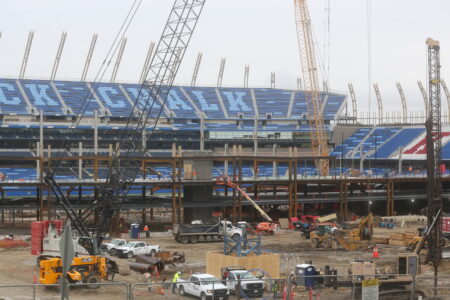
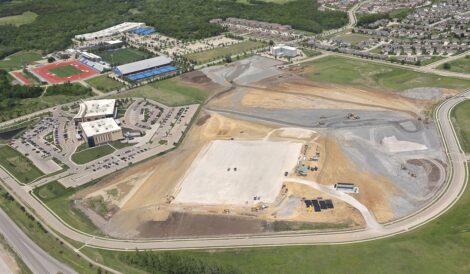
The area around the proposed Lawrence recreation center and Rock Chalk Park site continues to heat up.
Lawrence developer Tim Stultz has filed plans at City Hall for a 40-acre development of single-family homes and apartments south and east of the recreation center site.
The plan is seeking rezoning for the area at the northwest corner of Queens Road and Overland Drive. The request seeks to create 15.89 acres of RM-12 apartment zoning, 21.54 acres of traditional RS-7 single family zoning, and 3.34 acres of small-lot RS-5 single family zoning.
Based on the preliminary plans, it looks like there will be the potential for about 80 to 85 single-family homes in the area. The plans aren’t yet detailed enough to indicate how many apartments may be a part of the project. But the plans do indicate that the development really wants to integrate the single family homes with the apartment development. Specifically, the plans talk about how the apartment complex will have its own clubhouse and swimming pool, and how that facility will be available to the single-family residents on a membership basis.
That’s not an unheard-of concept, but it is a bit new for Lawrence. It will be interesting to see if that may be a model for creating a more harmonious relationship between apartments and single-family development.
What will be particularly interesting to watch, however, is how quickly the area around the recreation center and Rock Chalk Park begins to fill up with new homes and apartments.
Obviously, the recreation center has brought out a lot of emotions on both sides of the fence, but the area really does have some elements to be a dynamic residential neighborhood. Homes within this area will be within walking distance of indoor basketball courts, a fitness center, an indoor turf field, a walking/jogging track, outdoor tennis courts, and about five miles of walking trails through the Rock Chalk Park area. That’s in addition to the various stadiums at the Rock Chalk Park site, which probably won’t be open for use by the public but will attract multiple spectator events. And time will tell whether the Rock Chalk Park facilities become venues for non-KU events, such as barbecue festivals, community runs and other celebrations.
But that is just one element of the area. If you are willing to lace your walking shoes up a little tighter, you can walk to an indoor pool as well. The city’s Indoor Aquatic Center is down the hill near Wakarusa and Overland drives. (It is about a mile, so you’ll need to lace them up tight. And notice my great sales skills: I mention down the hill but don’t mention the uphill trip on the way back.)
But maybe the most unique aspect for the area will be golf. The Links development — about 630 apartments that will surround a nine-hole golf course — certainly is within walking distance. As we previously have reported, it basically will be just east of the recreation center and Rock Chalk Park site. The Arkansas-based developers say they are going to start the project this year, but they have had timetables in the past that haven’t come to fruition. So, we’ll see.
The Links' development group, though, is further along than they have been. Hugh Jarrett, a spokesman for the group, shared details with me about the company's golf plans for the community. He said the nine-hole course will be open for public play, both on a membership basis and on a daily greens fee type of basis. He didn’t release any details about how much it would cost to play a round there. People who rent apartments at the complex will be able to play unlimited golf at the course with no green fees.
Based on plans filed at City Hall, the course will be more than a standard par 3 executive course. It won’t be as expansive as the city’s Eagle Bend course, but depending on its pricing, it certainly could be a competitor.
Here’s what the plans show for the course’s layout: Hole No. 1, 333 yards; No. 2, 254 yards, plays partially over about a half-acre lake; No. 3, 100 yards; No. 4, 250 yards, plays over a portion of what looks to be an approximately 3-acre lake; No. 5, 487 yards, plays over a portion of the same lake; No. 6, 112 yards, plays through a narrow alley of trees; No. 7, 487 yards; No. 8, 123 yards; and No. 9, 333 yards.
I’m sure I’ll hit a few balls out there some day. Fair warning: If you happen to be walking to the Indoor Aquatic Center that day, you may want to wear a helmet.
Day after city’s bid opening for recreation center, relief and a few questions
Sometimes you don’t understand why good things happen.
That’s the approach Lawrence city commissioners generally were taking the day after bids to build the city’s recreation center came in about $10 million below what city officials had estimated.
“My first thought was ‘this is awesome,’” City Commissioner Jeremy Farmer said of a low bid of $10.5 million by Lawrence-based Gene Fritzel Construction Co. “My second thought was ‘why did we miss it by so much?’”
City officials had received pre-bid estimates from two different architects — one for $18.4 million and another for $20.7 million. All nine bidders came in millions of dollars below those estimates.
Farmer said he asked some contractors who weren’t involved in the bid process why they thought the bids came in so much lower. Nobody had a definitive answer, but contractors said the construction market is very competitive right now because of a lack of jobs.
City Commissioner Terry Riordan thinks that had a lot to do with it.
“I think there were companies out there making a bid because they wanted to keep their crews together,” Riordan said.
I’ve talked to almost all of the commissioners now — I haven’t yet been able to catch up with Mayor Mike Dever — and happiness and relief are emotions in pretty high supply currently with the group. But several commissioners also acknowledge the process has created some questions. I suspect the issue of why the architectural estimates were off by so much will be asked quite a bit by commissioners at their Tuesday evening meeting.
Other lingering questions include:
• Given this low bid, how confident should the city be in its $8.3 million estimate for the remaining infrastructure work at the site? As we’ve written many times, the infrastructure work isn’t going through a bid process. An entity led by Lawrence businessman Thomas Fritzel will do the infrastructure work through a no-bid arrangement. (Fritzel is an executive of Gene Fritzel Construction, the company founded by his father that was the winning bidder.)
Is it possible that the city’s estimate for the infrastructure — items like parking lots, roads, sewers, and other utilities — also is substantially off? It's tough to say.
“Well, you have to wonder,” Riordan said when asked the question. “It will be very interesting to see how that comes in.”
The city will review invoices from Fritzel’s subcontractor as work is completed, and the city says it will review the prices charged compared to the prices the city is seeing at other infrastructure projects around town. There are no indications that a majority of commissioners are interested in changing the deal and requiring bid work for the infrastructure. Some infrastructure work already has started at the site.
• How much will the recreation center end up costing the city? We don’t quite have that number yet, because we don’t yet know the infrastructure cost. But proponents of the rec center plan touted the notion that the city would be getting about $32 million worth of improvements — the recreation center and the infrastructure — for only $25 million in payments. The way the agreement is structured, however, the city will pay $25 million or the actual amount of the recreation center and the infrastructure, whichever is less. Based on the bid for the 180,000-square-foot rec center building and the projected infrastructure cost, the city may pay millions less than expected.
Right now the city’s costs are at about $12.2 million. That means the infrastructure cost would have to come in near $13 million for the total to reach $25 million.
“If those costs come in at $13 million, there won’t be anybody in the city that is O.K. with that,” Farmer said. If the infrastructure comes in at the city estimate of $8.3 million, the city’s total cost would be a little over $20 million. (The city still will have some cost for equipping the facility, but that always has been the case.) If somehow the infrastructure comes in at about half the cost estimate, the city would have the project for less than $17 million.
• Is the city paying too much of a share of the infrastructure costs for the Rock Chalk Park development? That’s obviously a matter of opinion, but there aren’t any indications that a majority of commissioners want to reopen that part of the agreement.
The $8.3 million infrastructure estimate isn’t just for facilities that will be on the city’s 26-acre recreation center site. It also covers parking and other infrastructure work on the adjacent Rock Chalk Park site, which will include stadiums for Kansas University's track and field, soccer and softball teams.
How you feel about the issue may go back to how you view the Rock Chalk Park project. Is it a KU project or a private development project? There is no question KU is going to be the major user of the Rock Chalk Park facilities. But it also is not accurate to say it is a KU project, at least not in the sense most people think of the phrase. The university won’t own any of the stadiums or facilities. An entity led by Fritzel will own the facilities and lease them back to KU. That lease gives Fritzel the ability to use the facilities for private events. How much he will choose to do that will become clearer in the future.
That makes it trickier to assess the fairness of the city's pricetag for the infrastructure. When the city signed the development agreement in March, officials thought the most likely scenario was that Lawrence would pay for around half the infrastructure costs for the two projects, with the Fritzel mainly picking up the tab for the rest. Now, because of the reduced cost of the rec center building, the city may wind up paying all of the infrastructure costs—although the amount would be about the same as previously expected, or maybe even less.
Riordan and Farmer weren’t on the commission when the city approved the agreement, but neither indicated any interest on Thursday in renegotiating the infrastructure part of the deal.
“If we can get these infrastructure costs to come in at $8.3 million or less, I think the talk of the town is going to be how much less this is costing us than what was expected,” Farmer said. “I don’t think there will be many people who care that we’re paying for a larger share.”
• The final question may be: What if? The city came pretty close to allowing the entire recreation center project to be built without going through any traditional bidding process.
It wasn’t until February that public opposition grew to the point that the city was able to negotiate a deal with Fritzel and officials with KU Endowment, which controls the land, to bid the recreation building. They weren’t able to negotiate a deal for the infrastructure to be bid, although City Manager David Corliss said that would have been his preference.
“We have been consistent in saying we preferred a bid process, but in partnerships with others, we don’t always get all that we want,” Corliss said.
Looking back on the situation, City Commissioner Bob Schumm — who was mayor during the negotiations — said he’s certainly pleased the city ultimately had a bid process for the recreation center. In round numbers, the city was prepared to pay about $20 million for the recreation center and another $5 million for infrastructure.
“I’m glad we bid it,” Schumm said. “I always wanted to bid it, and there was a time that it wasn’t going down that path until we pushed for it. That was for sure the right thing to do.”
It goes to show that an outcry from the public still has some impact. No matter how you calculate the savings, it seems safe to say the opposition to the project saved the city millions.
City recreation leaders not in favor of lighted tennis court plan near Lawrence High
All we need now is John McEnroe, or absent that, somebody in white 1980s-style tennis shorts with an excitable personality.
Yes, we’re talking about the looming tennis court debate that will be coming to Lawrence City Hall. As we reported last week, city commissioners have decided to reopen the issue of whether eight tennis courts near Lawrence High School should be lighted.
At the time, however, we didn’t have a date for when the commissioners were to have a public hearing on the issue. Well, the commission now has a tentative hearing date of June 4, at its 6:35 p.m. meeting at City Hall.
There’s been one other development in the matter: The city’s Parks and Recreation Advisory Board brought up the issue of lighted tennis courts for the site, and it is clear recreation officials aren’t on board with the idea, largely because of concerns about cost.
In case you have forgotten, members of the Lawrence Tennis Association believe lights should be added to the courts to make up for lighted courts that were lost when LHS renovated its campus. Neighbors in the area have opposed the lighting plan, expressing concern that it will be just one more example of LHS facilities creating a neighborhood conflict. They think the light will spill onto their properties.
City officials already have agreed to build eight outdoor lighted tennis courts as part of the city’s recreation center in northwest Lawrence. Several city officials thought that put an end to the issue, but members of the tennis association said they still see value in having lighted courts in the LHS area.
But at a recent meeting, the top officials at the city’s Parks and Recreation Department said they couldn’t support the idea of lighting the LHS courts and building the eight lighted courts at the recreation center. Cost was one reason they cited. They now estimate the cost of installing lights at the courts — which are on the property of the former Centennial Elementary school — at about $240,000, if done in a way to minimize light spillage. When the project was first proposed a couple of years ago, the department was planning on spending about $100,000 to light the courts.
Plus, the city would have to enter into a maintenance agreement with the school district to help make any future repairs on the courts. Parks and Recreation officials aren’t sure they want to do that, because two of the courts already are showing signs of needing significant repair. Currently, all maintenance is the responsibility of the school district. (In case you are wondering why it wouldn’t be the school district’s responsibility to add lights to courts it owns, the answer is because the district says it doesn’t really need the lights for its high school programs. The lights mainly would accommodate city residents that use the courts.)
Members of the tennis association are passionate about the issue and well-organized. They also note that the needs in the area are changing because KU will be losing most of its public courts on campus when the new School of Business building is constructed.
So, we’ll see how the debate goes. Let the volleying begin.
Planning Commission to debate Menards project Monday amid signs momentum may be turning
Strap on your tool belt, it is time to talk again about Menards’ proposal to build a big box store just east of Home Depot near 31st and Iowa streets.
The Lawrence-Douglas County Planning Commission will debate the project again at its Monday evening meeting. The Planning Commission debated it last month and failed to reach consensus on whether the plan should be recommended for approval by the City Commission. I know that left some of you feeling like I feel after completing an electrical-oriented home improvement project — a bit dazed. (My wife promised me she had turned off the circuit breaker. She never said she wouldn’t turn it back on, though.)
If you remember, the Menards project hit a snag, even though there was no groundswell of opposition from neighbors in the area. Instead, it was the city’s planning staff that expressed concern about changing a portion of the city’s comprehensive plan, known as Horizon 2020, to accommodate the project.
There have been some new developments on that front. The city’s planning staff hasn’t officially changed its recommendation for denial, but it has created a new staff report that provides a clear set of reasons Planning Commissioners can use to approve the project, if they so choose.
That may prove to be important. For what it is worth, I felt like the Planning Commission last month was interested in recommending the project for approval, but was reluctant to do so because they hold the planning staff’s professional opinion in high regard.
The new memo from the planning staff, however, makes it clear that there is a reasonable argument to be made for why Horizon 2020 could be changed to accommodate the project. The main point of contention here is that Horizon 2020 calls for the proposed Menards site, the former Gaslight Mobile Home Village, to be used for apartment development in the future. A map in Horizon 2020 needs to be changed to show the property is slated for commercial development.
The memo lists the following reasons why a change could be prudent:
• It is now clear the eastern leg of the South Lawrence Trafficway will be completed, which will alleviate the need for traffic to travel through neighborhoods to reach the new commercial area.
• Public testimony from neighbors has indicated that there is a significant number of residents who may prefer retail development at the site rather than a large apartment complex.
• Even though the city has other retail zoned areas in the city, sites that can accommodate big-box development remain limited.
Planning staff members also are pointing out that it is unlikely that commercial development would extend all the way down the north side of 31st Street to Louisiana Street, if Menards is approved. Staff members confirmed the city is close to finalizing a deal to purchase the nearly six acres of property near the northwest corner of 31st and Louisiana streets. The city needs the property for a new utility pump station. City ownership means the corner wouldn’t ever develop as a retail site.
So we’ll see what planning commissioners do on Monday. That meeting is set for 6:30 p.m. at City Hall.
But remember, planning commissioners only recommend things. It will be up to the City Commission to make a final decision on the project. It still is too early to tell how city commissioners may vote on this project, but there are indications Menards has a fighting chance.
When I was speaking recently with City Commissioner Jeremy Farmer about economic matters, he brought up the need for the city to really update its comprehensive plan. He pointed to the Menards project as an example. Farmer said much of the underlying work to create the city’s comprehensive plan was done more than 20 years ago, and it probably is time to recognize that several factors in the city have changed since then.
“Menards is a great example of that,” Farmer says. “Our comprehensive plan says no, and the community seems to be saying it doesn’t want more housing there.
“I look at that and say ‘gosh, a Menards would be great in bringing some commercial taxes to a community that is going to have shrinking property tax revenues.'”
So, while Farmer stopped short of saying he would vote for the specific proposal Menards currently has brought forward, it sounds like he’ll have an open mind.
Privately, I have heard one other commissioners indicate he is going to give strong consideration to approving the project as well. It will be interesting to watch. Probably the biggest factor will be whether residents in the Indian Hills Neighborhood continue to either support the project or at least not vigorously oppose it. A large number of neighbors opposing the project could change things.
At the moment though, it is safe to assume the Menards project won’t be dead on arrival when it comes to the City Commission. Which, that reminds me: I still have to rewire the kitchen light. Oh, boy.
Two convenience stores coming to downtown Lawrence
Here’s a tip for you: Make sure your stock portfolio includes plenty of exposure to cheap snack food and elastic waist bands. I may be providing a serious boost to both products.
There are at least two efforts underway to bring a full-fledged convenience store — minus the gasoline — to downtown Lawrence.
The largest effort comes from Scott Zaremba, an owner of the Lawrence-based Zarco convenience store chain. As we reported last week, Zaremba and his partners are opening up a Sandbar Sub shop at 745 New Hampshire, the former spot of the Mirth Cafe.
But Zaremba has confirmed to me it will be much more than a sandwich shop. Zaremba plans to use the approximately 3,500 square foot space to create what he calls a “24-hour destination for downtown.” There will be restaurant food — the sub sandwiches and the Sandbar’s hot breakfast menu will lead the way — but there also will be all the items you would expect to find at a Zarco convenience store. That means fountain drinks, basic grocery items, bottles of Advil (not that you would ever need one of those at work), and . . . well, this is going to get really long if I list everything a convenience store sells.
It won’t be the full-fledged grocery store that many downtown leaders have been clamoring for, but it seems like it will be a significant step in that direction. Zaremba said he sees a need to provide convenience items to the growing number of people who are living downtown. Plus, he said he thinks the large number of office workers in downtown will appreciate the store too.
“Really, where can you go downtown and just get a fountain drink and get in and out without standing in a large food line?” Zaremba said.
Another feature not often found in downtown: The store will be open 24 hours a day. Zaremba said he hopes to have the business up and running before Aug. 10. That’s the date of the anniversary party for The Sandbar — the downtown tavern, not the sub shop. Longtime Sandbar leader Peach Madl is a partner in the Sandbar Sub Shop chain.
Last week we also reported that Peoples Bank was going to have a presence at the location. I haven’t yet had heard back from Peoples officials, but Zaremba confirmed the bank will have a quick service banking operation inside the Sandbar business, which Zaremba said he will brand as Sandbar World Headquarters.
But I mentioned there are two efforts underway to bring convenience items to downtown. The other one is smaller but already underway. Tobacco Bazaar has moved from its location at 19th and Massachusetts to 14 E. Eighth Street in downtown. In addition to selling all sorts of cigarette, tobacco and pipe items, the store also sells an assortment of convenience items. That includes candy, sodas and energy drinks, batteries, and — wait for it — beef jerky. To top it off, the business is setting up a chip section too.
Beef jerky and Doritos in one location, and just steps away from my office: Perhaps now you understand why I’m in the market for an elastic waistband.
In case you're trying to picture where 14 E. Eighth Street is in downtown, it's basically right around the corner from the old Mirth Cafe location. So, these two businesses will be neighbors. It will be interesting to watch how that plays out.
Tobacco Bazaar currently is open from 10 a.m. to 10 p.m. on most days, except it is open to 11 p.m. on Thursdays, Fridays and Saturdays.
There is one question unanswered about the two businesses: Will either have slushies? My waistband was afraid to ask.
Lawrence retail spending off to strong start in 2013; up 3.1 percent for the year
Here I thought I was the only one who visited my banker around Valentine’s Day. I’ve found that a home equity loan is useful when you’re trying to buy a year’s worth of forgiveness.
But apparently I’m not alone because a new report from City Hall shows retail spending spiked during the mid-February through mid-March period. The city’s latest sales report shows retail spending increased by 6.3 percent during the mid-February to mid-March period, compared with the same period a year ago.
It is always risky to put too much stock into one month’s worth of numbers, but we’ll see if this is the beginning of a spring spending surge. Regardless, retail sales in Lawrence are off to a solid start in 2013. Sales tax collections through the April reporting period are up about 3.1 percent compared with the same period a year ago. (The most recent report was for the April reporting period, but because of a lag time in processing, the numbers represent sales generally made in mid-February to mid-March.)
Here’s a look at how Lawrence’s retail sales totals stack up to past years. As always, the number in parenthesis is adjusted for inflation. Take a close look at those numbers, because for the first time in awhile the adjusted numbers show that Lawrence basically has returned to the pre-recession numbers of 2008 and early 2009. In other words, perhaps we have about dug out of that hole.
2013: $456 million
2012: $442.4 million ($448.5 million)
2011: $422.3 million ($437 million)
2010: $406.2 million ($433.6 million)
2009: $421.4 million ($457.22 million)
2008: $421.1 million ($455.2 million)
As for 2013, Lawrence’s growth rate is slightly above the statewide growth rate of 2.9 percent. Here’s a look at how Lawrence’s growth rate of 3.1 percent stacked up with some of the larger communities in the state:
• Emporia: up 2.9 percent
• Hays: up 3.3 percent
• Kansas City: up 5.8 percent
• Manhattan: down 3.2 percent
• Olathe: up 3.8 percent
• Ottawa: up 5 percent
• Overland Park: up 1.5 percent
• Shawnee: up 4.5 percent
• Topeka: down 0.1 percent
That list tells me one thing: My wife has been shopping in Kansas City. Dangit. I should have kept that joke to myself. Now, I have to find my banker’s number again.
Knology changes its name to WOW!; lifts usage caps on Internet service
The changes keep on coming in the Lawrence Internet market.
The largest Internet service provider in Lawrence has just announced that it is removing all of its usage caps from its Internet service packages, as the company changes its name from Knology to WOW! That means customers no longer will be charged for going over their usage limits, according to a press release by the company.
Englewood, Colo.-based WOW purchased Knology back in July, but it had not converted Knology over to the WOW brand until today. Signs for the company around town are being changed today, according to WOW.
But the changes related to Internet usage caps are likely to garner more attention from hard-core Internet users. The caps had generated concern among many users because customers’ standard monthly rates could rise depending on how much Internet usage they had in a particular month.
The change in the cap policy comes at a time when both private and public officials have been talking about shaking up the city’s Internet service provider market.
A city-hired consultant recently completed a report that found that current broadband offerings in Lawrence generally are “costlier, slower and more limited than in other comparable communities.” City officials had the report commissioned because they have been interested in possibly allowing private companies to have access to a growing ring of fiber optic cable owned by the city.
On the private front, Lawrence-based Wicked Broadband — formerly known as Lawrence Freenet — has made a proposal to the city to further tap into that ring of fiber. (Ring of Fiber: Johnny Cash used to sing that song in his old age.)
At their meeting tonight, city commissioners will receive a request from Wicked for low-cost fiber leases with the city, and a one-time $500,000 grant to help the company build new broadband infrastructure in the city. The request is part of a pilot project Wicked is launching to bring to one Lawrence neighborhood the same type of superfast Internet service that Google Fiber is bringing to Kansas City. If successful, Wicked Broadband wants to extend the high-speed broadband project to all of the city.
So, we’ll see what cards the folks at WOW start playing in what appears to be an increasingly competitive game in Lawrence. Consumers, I suspect, will be keeping an eye on whether the competition starts having an impact on rates.
City estimates it may cost hundreds of thousands of dollars per year to keep concealed weapons out of city buildings
It appears the city soon will have to buy hundreds thousands of dollars worth of security measures. Either that, or the city will have to learn to live with a new state law that would allow concealed-carry permit holders to bring firearms into City Hall and other city buildings.
City commissioners at their Tuesday evening meeting will consider formally asking the Kansas Attorney General for an exemption from the new state law until Jan. 1, 2014. The state law — approved by the legislature and signed by the governor this session — essentially contains an automatic one-year exemption period for local governments. The city also may be able to get three additional one-year exemptions, although that is less certain.
The law no longer allows city or county buildings to be posted with the "no gun" signs that make it illegal for anyone, including concealed-carry permit holders, to bring a concealed weapon into the buildings. Under the new law, governments can only post those signs if the buildings have adequate security measures, such as metal detectors and security officers.
Lawrence city officials have begun calculating the cost to purchase and staff such metal detectors. A memo from City Attorney Toni Wheeler estimates it will cost about $5,000 for each metal detector, plus at least $42,000 a year for a single police officer to staff the metal detector—and the Lawrence Police Department, Wheeler wrote, believes two officers may be necessary for each detector. That would place the annual operating costs for the program at more than $84,000 for each building with a detector. And the cost may be even greater, because the personnel numbers represent starting salaries and don’t factor in benefit costs or other costs to equip a police officer.
Wheeler says at least three city buildings — City Hall, Lawrence Municipal Court and the public access area of the Police Department’s Investigations and Training Center — all warrant consideration for security systems. Beyond those three, city commissioners also would have to decide whether recreation centers and other city offices need the security measures.
New security costs for the city are expected to be addressed in the City Manager’s recommended 2014 budget, which is scheduled to be released in July. The costs could add up. If the city decided to include recreation centers in the program, there would be a total of nine buildings to equip and staff. At a minimum of $42,000 per building, that's almost $400,000 a year, plus the cost of the metal detectors. At $84,000 per building — which would be the case if two officers are required — it would be more than $750,000 a year.
But say you wanted to have security measures in place for every city-owned building that currently prohibits concealed firearms. The city currently has 47 buildings listed in its administrative policy, which means it would cost $3.9 million to provide a two-member security detail at every location. That, of course, is not going to happen. It probably would be a bit odd to have a metal detector at the city’s Landscape Shop or the Wastewater Treatment Plant, for example. Those places probably will become buildings where concealed-carry permit holders can have a weapon.
It will be interesting to see how city commissioners react to the new legislation. The previous City Commission sent a letter to the legislature objecting to the bill while it was under consideration. Whether the city’s objections rise to the level of spending more than a half-million dollars on security each year, I don’t know. The city already spends some money on security: a police officer attends each Lawrence City Commission meeting, and a bailiff is employed by the Lawrence Municipal Court.
If the city gets serious about installing metal detectors, there will be quite a few items to discuss. It probably would require the public entrances at City Hall to be changed significantly, since there are three ways for the public to enter City Hall. The city also could have a discussion about whether security officers — rather than fully sworn police officers — would be appropriate to staff the metal detectors. That may reduce the personnel cost for a security program.
And then there are city buildings such as the Lawrence Public Library and the Lawrence Arts Center that attract large crowds on a regular basis. How would they be secured and staffed?
Of course, the city always could have the discussion of whether any harm would come from allowing licensed individuals to carry a weapon in city buildings. According to the Kansas Attorney General’s office, it already is legal for concealed-carry permit holders to carry a weapon on various pieces of city property. Every city-owned park, for example, is a place where concealed-carry permit holders are entitled to have a weapon. “Parks, parking lots and other open public property" are no longer able to be restricted through signs, according to the Attorney General’s Web site. That didn’t always use to be the case, but the law was changed, I believe, during the 2010 legislative session.
City commissioners won’t be the only ones that get to have this fun. Douglas County also will have to go through the same exercise with its buildings, although it already has a metal detector for the Judicial and Law Enforcement Center. Public schools won’t have to install metal detectors under the new law. School officials can continue to post the "no gun" signs on school buildings, which will make it illegal for concealed-carry permit holders to bring a weapon into the building.
Wicked Broadband project seeks $500,000 city grant; downtown hotel project seeks adjustment to incentives package; historical society seeks $20k for new exhibit
Reading the agenda for Tuesday night’s Lawrence City Commission meeting is kind of like reading my household’s credit card bill: There are plenty of questions, and all the answers seem to have dollar signs.
There are three outside organizations requesting financial assistance from the city, with two of them each asking for a half-million dollars.
We’ll try to fill in more details later, but here’s a look at the basics of the requests:
• Lawrence-based Wicked Broadband announced last month that it will start a pilot project to bring super fast 1-Gigabit Internet service to a neighborhood later this year.
A kick-off event for the project spelled out a lot of details about how the company, which previously did business as Lawrence Freenet, could bring the same type of high-speed Internet service to Lawrence that Google Fiber is bringing to Kansas City. At that event, the idea of financial incentives from the city wasn’t envisioned. Well, it is now.
The company has filed an application for a $500,000 economic development grant from the city, plus is asking to receive up to a $20,000 a year rebate in franchise fees it pays to the city. It also wants to have the right to enter into $10 per year leases to use a portion of new fiber optic cables that the city plans to install throughout the community in future years.
Joshua Montgomery, co-owner of Wicked Broadband, said there are several factors that have caused him to rethink the need for city incentives for the project. But perhaps the largest is that he’s been contacted by several significant New York-based capital investment companies that are interested in investing in a locally owned, high-speed Internet service. Those investors have made it clear that the city of Lawrence needs to do something to show that it is committed to the idea of bringing a high-speed network to the city.
“If the city says that it is behind it 100 percent, that opens the door for the next $30 million in private funding that will be needed to spread this service to the rest of the community,” Montgomery said.
Montgomery said the $500,000, one-time grant would allow the service territory for the pilot project to grow to 1,000 households, up from 500. The neighborhood or neighborhoods haven’t been selected yet. Wicked is taking pre-registrations for the service on its website. The neighborhood with the highest percentage of residents pre-registered will serve as the pilot project. An announcement is expected June 15.
Montgomery said he and his business partner and wife, Lawrence school board member Kris Adair, are putting up $500,000 in private money for the pilot project.
City commissioners on Tuesday aren’t being asked to approve the request. Instead, Tuesday’s vote is just to direct city staff to begin analyzing it.
Wicked Broadband’s service will be a direct competitor to existing Internet providers, such as Knology and AT&T, which generally do not receive such city subsidies. So, it will be interesting to hear what those companies have to say as the process unfolds.
As for Montgomery, he said he’ll argue that the city won’t be making an investment in a private company as much as it will be making an investment in a new infrastructure system that will be critical to future commerce. “It is an economic enabler,” Montgomery said.
•••
The second request comes from a group led by Lawrence businessman Doug Compton, which is seeking to build a new hotel at the southeast corner of Ninth and New Hampshire.
It is a bit more complicated to understand, and I’ll try to get a better handle on the numbers before Tuesday’s meeting. But the request seeks to raise the amount of Tax Increment Finance dollars the hotel is eligible to receive to $4 million, up from $3.5 million.
Unlike the Wicked Broadband request, this doesn’t involve the city writing a $500,000 check to the development. Instead, a TIF allows the project to get a rebate on a certain percentage of the property taxes it pays. It is kind of like a tax abatement, except the money has to be used to pay for infrastructure type of expenses. In this case, that includes a private parking garage for the hotel.
What makes it a bit complicated is that the developers also have proposed a multistory apartment/office project for the northeast corner of the intersection. It also uses Tax Increment Financing. It looks like a likely option is to increase the amount of TIF money available for the southeast corner hotel project by reducing the amount of projected TIF revenues available to the northeast corner apartment project.
If that is ultimately what happens, then the overall amount of incentive basically would be a wash. We’ll have to see how those details work out.
The more interesting part is what developers have said about the hotel project. It has had its necessary building approvals for months, but hasn’t yet started construction. A letter to the city now makes it clear that there are financial questions the investors are trying to answer.
Bill Fleming, an attorney for the development group, told the city in a letter that “the hotel investors are keenly interested in the ‘cost per key,’ which is the average cost for each hotel room.”
If the additional $500,000 in TIF money is not available to the hotel project, then that will raise the average cost per room the investors must pay.
“The investors may conclude the project is not feasible at that cost per key, and the project in that case will not proceed,” Fleming wrote.
That would be a major turn of events for the project, which faced stiff opposition from the adjacent East Lawrence neighborhood, and had to fight hard to win city approval.
•••
Maybe the folks at the Douglas County Historical Society are more than just masters of history. Perhaps they also are masters of timing. After those two big-ticket items, they are asking for a mere $20,000 in city funding. The money will be used to help fund a permanent exhibit on the second floor of the Watkins Museum commemorating the 150th anniversary of Quantrill’s raid on Lawrence.
The new exhibit is set to open on Aug. 17, and will “explore Douglas County’s history, issues that shaped the development of the community, and events that made it a focus of national attention.”
Ultimately, the exhibit will be expanded to the third floor of the museum. The bulk of the nearly $257,000 in exhibit costs has come from private individuals, businesses and grants.
City staff members are recommending approval of the $20,000 in funding. The money would come from the city’s guest tax fund, which receives its revenue from the guest tax charged at hotel and motel rooms.
Commissioners meet at 6:35 p.m. Tuesday.
Douglas County oil production up 12 percent in 2012; outpaces statewide growth
Maybe I’ve been prospecting for oil wrong all these years. You remember how Jed Clampett on the Beverly Hillbillies struck it rich when he was out shooting at some food, and up from the ground came some “bubbling crude” (or “Texas tea,” that is)? I just figured that was the way to do it.
Well, others in Douglas County have been having more success with other methods, it seems. A new report from the Kansas Geological Survey at KU says oil production is up in Douglas County, just as it is statewide.
There were 51,715 barrels of oil pumped in Douglas County in 2012, up 12 percent from 2011. Douglas County’s rate of increase outpaced the state as a whole, which saw oil production increase by 5 percent in 2012.
Douglas County’s totals were the highest since 2010, when about 53,000 barrels were pumped. The numbers represent quite a turnaround from the early 2000s. From 2000 to 2007, the county didn’t pump more than 40,000 barrels in any given year.
The number of wells operating in Douglas County is also at a high. The county had 422 wells operating in 2012, which was the highest total since at least 1995.
Several of the new wells are actually old wells that had been abandoned but now have been restarted. But there also has been some new drilling in the county.
The area between Baldwin and Eudora in eastern Douglas County continues to be the prime area for oil production in the area. With oil prices remaining high, and recovery techniques improving, there have been some dramatic increases in the amount of oil that producers are able to extract from those fairly modest wells.
For example, there is a field called Eudora South in eastern Douglas County. Up until 2007, it had not had more than one well operating at a time, and the field did not produce more than 710 barrels in any given year.
Since 2007, the field has had anywhere from 19 to 22 wells operating, and it has produced a total of 21,100 barrels of oil. If extracting oil has become that much more efficient, it makes you wonder why the price of it has remained so high?
Folks may be surprised that there actually are oil wells just outside the city limits of Lawrence. There has been new activity just outside of North Lawrence behind the ICL Performance Products plant — or the former FMC plant, to you old-timers.
A new set of oil storage tanks has been built near the intersection of North 1650 Road and East 1600 Road in the past several months. There also appears to be a fairly new oil well just to the south of that location.
The idea that there is oil in the Kansas River valley is not a new one, and indeed there have long been some old wells near the North 1650 and East 1600 roads area. But Lynn Watney, geologist with the Kansas Geological Survey, said he expects drillers will start having more interest in what has been known as the “shoestring sands” that run through the valley.
Enhanced drilling techniques have made it more feasible to get through the 1,000 to 1,200 feet of sediment that covers the sand beds. But the biggest factor, Watney said, has been the sustained high price of oil over the past several years. That has been the main driver in Douglas County becoming more active in the oil business.
“There is plenty of incentive when you are talking about $80 to $100 oil,” Watney said.
Statewide, oil production rose to 43.7 million barrels last year, up 5 percent from 2011. Douglas County continues to be a minor player in the oil business, compared to counties in western and southern Kansas. Ellis County, in northwest Kansas, is the state’s top producer, with nearly 3.6 million barrels in 2012, an increase of about 5 percent over 2011. Following Ellis County were the counties of Barber, Barton, Russell, Ness, Rooks, Haskell, Finney, Graham and Stafford.
Douglas County is in the middle of the pack when it comes to oil production from area counties. Here’s a look at 2012 totals for area counties:
• Jefferson County: 20,285 barrels from 62 wells;
• Johnson County: 293,351 barrels from 779 wells;
• Leavenworth County: 64,912 barrels from 210 wells;
• Franklin County: 201,661 barrels from 1,861 wells;
• Osage County: 2,195 barrels from four wells;
• Miami County: 171,826 barrels from 2,327 wells;
• Neighboring Shawnee County has no oil wells.
The KU report also measured natural gas production. Kansas, unlike some other states, hasn’t seen an increase in natural gas production; in fact, it declined about 4 percent in 2012. Watney said that mainly was because natural gas prices have been low, which has halted new drilling in the expansive Hugoton gas fields in southwest Kansas.
Douglas County had no active gas wells in 2012, according to the KU numbers.
That’s good to know. I’ll put my natural gas hunting expeditions on hold for a while. And I need to explain to my wife why the tulips are full of buckshot.
Lawrence restaurant updates: La Parilla’s new location, plans for a Sandbar Sub shop and 60 years for Johnny’s Tavern
Downtown Lawrence’s restaurant scene is heating up. Here’s a look at a few updates:
• La Parilla has moved into its new location at 724 Massachusetts Street, which formerly was the home of Tapas.
Co-owner Subarna Bhattachan told me recently that the new space gives the Mexican/Latin American restaurant about double the space that it had in its old location at 814 Massachusetts.
But Bhattachan said lots of new space doesn’t mean lots of changes for the restaurant. He and co-owner/co-chef Alejandro Lule decided not to make any changes to the menu.
What you may notice, though, is the restaurant now has a full bar. It also has a second-story dining area, which Bhattachan said may be used for private dining and catering events.
Bhattachan said the restaurant eventually will start hosting some wine tastings featuring vintages from Spain, Chile, and Argentina. Bhattachan said he also wants to look into the idea of doing some rum and tequila tastings. That sounds very interesting, but I doubt I can afford to participate in a tequila tasting. No. Bhattachan didn’t share any prices with me, but it has been my experience that tequila tastings ought to involve bail money.
• Bhattachan confirmed to me that La Parilla — which will turn 15 this summer — wasn’t really looking to move. But the restaurant did not have its lease renewed at 814 Massachusetts.
That’s a good sign that the owner of 814 Massachusetts, veteran landlord George Paley, has another tenant lined up to take the space. Indeed he does.
Paley told me another restaurant is set to take over the space. I don’t have details yet on the name or type of restaurant slated for the location. Paley said the new tenant is someone who grew up in Kansas, but is coming back from the East Coast.
I’ll let you know when I get more details.
• Also in the category of needing more details, is a plan to redevelop the former Mirth Cafe space at 745 New Hampshire. If you remember, Mirth has moved to the old Pepperjack’s Grill location at 10th and New Hampshire streets.
A building permit has been issued to remodel 745 New Hampshire into a space to house a Sandbar Subs shop and a branch for Peoples Bank, according to the paperwork filed at City Hall.
I’ve got calls into representatives with both of those businesses, and will report back when I hear more. What I can tell you, though, is Sandbar Subs already has a presence in Lawrence. The restaurant has locations in the Zarco gas stations on W. Sixth Street and E. 23rd Street. It also has a location in the Zarco station along Interstate 35 in Ottawa.
It has sandwiches or wraps with names like Captain Hook, Pirate Steak, Sammy the Shark and Jimmy the Sailor. The restaurants play beach-lovers' music and have a very tropical theme to them. It's sort of like having Jimmy Buffett serve you a sandwich. (I don’t think the menu is salt free, so evidently he found his lost shaker of salt.)
As I said, no details yet on what the downtown location may involve, but I would be warming up your pirate voice and digging out your eye patch just in case.
I know I said this was going to be a restaurant update, and unless you do something different with your money than I do, Peoples Bank doesn’t fit that bill. But if Peoples indeed is opening another branch downtown, that would be significant. New bank locations were a hallmark of the 1990s and early 2000s when the economy was really humming. Over the past few years, however, it was more common to see a bank consolidate locations — Central National for example pulled out of downtown.
But recently there has been expansion activity. We reported on Baldwin-based MidAmerica Bank signing a deal to open a location on West Sixth Street, and Lawrence Bank will get a nice new facility in downtown as part of the multistory apartment building project slated for the northeast corner of Ninth and New Hampshire.
So, maybe the banking industry is one to keep an eye on again in Lawrence. (I may even have to take this eye patch off.)
• Several of you have been asking for an update on The Roost, which is the breakfast- and lunch-oriented restaurant slated to take over the former space of Milton’s at 920 Massachusetts Street.
Well, Manda Jolly, a partner in the project, told me the restaurant is scheduled to have a late-June to early-July opening. Renovation work is underway.
Some of you may have seen that the restaurant has started a Kickstarter campaign to try to raise $20,000 in funding. That sometimes creates questions about the viability of a project, but Jolly told me some of the building plans for the restaurant would have to be readjusted if the campaign is not successful. Either way, the group is committed to opening the restaurant.
Jolly also gave me some other details about how the menu and ownership group of the restaurant is shaping up, as well as plans to get into the venue rental business are shaping up. I’ll pass those along in a later post.
• And finally, you can’t forget Johnny’s, although there have been times the establishment has made my memory a little fuzzy.
The venerable restaurant and tavern in North Lawrence is celebrating its 60th anniversary this week. There are a handful of old bars in Lawrence, but Johnny’s uses the phrase “the longest running tap in Lawrence,” to describe itself.
The bar will have a special concert on Friday night with Billy Spears and the Beer Bellies, and then will throw an anniversary party on Saturday.
The business got started in 1953 when John Wilson turned his father’s farm implement store into a tavern. For the past 35 years, Lawrence businessman Rick Renfro has been the lead owner of the operation, and has expanded the Johnny’s brand into West Lawrence and the Kansas City metro area.
“It’s extraordinary,” Renfro said of the business’ run. “The average life span of a bar or restaurant is 15 years. I think we have beaten the odds.”
Contentious issue of lighted tennis courts near LHS to be discussed again by city commissioners
One after another, speakers with fingertips that lighted up stepped to the lectern at Lawrence City Hall last night. It was like a herd of E.T.’s had come to watch the City Commission meeting.
I’ve seen odder things at City Hall, but, no, there wasn’t an extraterrestrial presence at Tuesday night’s commission meeting. These lighted fingers could only mean one thing: The contentious issue of lighted tennis courts in the Centennial neighborhood is back.
More than a dozen members of the Lawrence Tennis Association showed up at the meeting to lobby commissioners to reconsider the idea of placing lights at the Lawrence Tennis Center near Lawrence High School. (The fingertip lights are a device players use to play on unlit courts.)
And simply put, the game is back on. Commissioners agreed to put the lighting issue on a future City Commission agenda for discussion.
That’s despite the fact that it appeared for the last several months that the issue was done and decided. City commissioners have agreed to spend about $640,000 to build eight, lighted, outdoor tennis courts as part of the city’s recreation center at Rock Chalk Park.
The lights have been controversial because neighbors near the site — which is basically on the grounds of the former Centennial Elementary school at 2145 Louisiana Street — have objected to the amount of light the court lights would spill onto their properties.
But members of the Lawrence Tennis Association have been equally adamant that the city needs to follow through on a promise to light the courts. Renovations at nearby Lawrence High School caused the city to lose eight lighted tennis courts several years ago. The school rebuilt the courts in a new location, but when it came time to add the lights, neighbors voiced concerns and city officials backed off.
Some city officials thought they had solved the issue with the Rock Chalk Park project. On Tuesday, members of the tennis association said they were appreciative of the future courts at Rock Chalk Park, but said they still want lighted courts in the central part of town. Plus, they said a city of Lawrence’s size could support lighted courts both at Rock Chalk Park and the Lawrence Tennis Center. That argument upset at least one commissioner.
“When we started all of this, it always has been about the need for eight illuminated courts,” City Commissioner Bob Schumm said. “Now we have the conversation up to 16, and I’m not buying that.”
But the other four commissioners said they were fine with having a formal discussion about the idea at a future meeting. Two new members have joined the commission — Jeremy Farmer and Terry Riordan — since the commission last discussed the issue. Neither Farmer nor Riordan indicated a position on the idea Tuesday.
“But I had a meeting with the neighborhood group a few weeks ago, and it seems to be pretty adamantly opposed to this,” Farmer said. “I think the tennis court lights are the straw that is breaking the camel’s back, it seems.”
A date for the commission to discuss the issue hasn’t been set. When one is, I’ll pass it along. And when it does, forget “E.T. phone home.” It will be: Chad, phone home. It will be a late night.
Bowersock to host ribbon cutting for $25 million hydroelectric power plant on Friday
Here’s one company that won’t be sad at all if it rains on its ribbon cutting.
The folks at the Bowersock Mills and Power Company will be celebrating the opening of its $25 million hydroelectric power plant on the north bank of the Kansas River at 4 p.m. Friday.
The public is welcome at the event, and so is rain. The company opened the plant — located near the north end of the downtown Kansas River bridges — in late November. But it wasn’t until early April that the plant started producing any meaningful amount of electricity.
“There was just no flow in the river,” said Sarah Hill-Nelson, an owner of Lawrence-based Bowersock Mills and Power Company. “We were in the middle of this epic drought, but since then, we have had good continued rains.”
Hill-Nelson even can remember the exact day the plant had enough water flowing through it to really crank up the turbines: April 10, her birthday. (Man, I need her to teach me how she blows out her candles. Thanks to my wife’s stubbornness, it appears a birthday wish is the only way I’m going to get a lifetime supply of Doritos and a new Lazy Boy recliner.)
The project, in case you have forgotten, has more than tripled the amount of electricity the Bowersock Mills and Power Company can produce on the Kansas River. The new plant can produce 4.65 megawatts of electricity, while the company’s turn-of-the century hydroelectric plant on the south bank of the Kaw produces 2.35 megawatts.
All of the power produced by the plant is sold to the Kansas City Board of Public Utilities, which uses it to power homes in the metro area and receive credit for having a green energy source as part of its portfolio. I know the fact that all of the power is shipped to Kansas City has bummed out some people. They thought it would be cool if Lawrence residents could use the green power that is produced in Lawrence. But the fact the power is shipped to Kansas City is one of the greater parts of the project, in my opinion. If Lawrence residents buy the power, we’re just trading money that already is in the community. If Kansas City residents buy the power, that is new money coming to a truly Lawrence-based company — and thus into the Lawrence community — on a daily basis. That’s economic development.
But my favorite part of the project is it gives us all a reason to root for dreary, rainy, muddy days in Manhattan on a regular basis. Bowersock officials keep a close eye on the weather in the Manhattan area because when it rains there, it will mean increased flows through the power plant in another day or so.
There is good news on that front, Hill-Nelson said. (No, Willie the Wildcat hasn't permanently gotten stuck in a mud wrestling pit, as far as I know.) She said Tuttle Creek Reservoir near Manhattan recently reached conservation pool stage, meaning the lake’s water level is basically back up to normal. As more spring rains come, Tuttle Creek will be able to release more water into the Kaw, which will benefit the power plant. But more rain would be helpful for a variety of reasons. Both Perry and Milford, two other reservoirs that help feed the Kaw, are still several feet below normal levels. (The latest readings I have show Perry down by about 2 feet, and Milford down by about 4.5 feet. Of course, I may be off. You try carrying that measuring stick around.)
As for Friday’s event, it runs from 4 p.m. to 5 p.m., and will include tours of the new plant. Kansas Department of Wildlife, Parks & Tourism Secretary Robin Jennison will make remarks about the project, and so will an official from the national hydroelectric power association. The Lawrence Chamber of Commerce is hosting the ribbon cutting, but Hill-Nelson said the event is open to both chamber and non-chamber members. She asks that members of the public who want to attend send an RSVP to RSVP@bowersockpower.com.
City to use eminent domain to take over dilapidated East Lawrence property; Just Food seeks $25,000 in CDBG funding to expand dairy, meat offerings
Well, Town Talk is playing catch-up today. As I previously reported, I was off on Friday to help park cars at the annual Lawrence Auto Swap Meet. And I was off on Monday to clean mud out of places that I didn’t know I had. So, that leaves us with several items of note on tonight’s Lawrence City Commission agenda to update you on. Here’s a look:
• The city is continuing to move down an unusual road in its efforts to see that a piece of East Lawrence property is cleaned up. The city is going through the process of using eminent domain to take over ownership of the property at 1106 Rhode Island St.
For those of you trying to picture the location, it is just east of the Judicial and Law Enforcement Center. Or perhaps some of you remember it as the property that for years had multiple old Packard automobiles stored in its overgrown backyard.
The property — owned by the Barland family, which once owned the city’s Packard dealership — has a house and a barn. The house hasn’t been lived in for years, and its condition has been deteriorating.
The city has taken code enforcement action against the Barlands, but the city finds itself in an odd situation. Usually, the big hammer in a code enforcement case of this nature is that ultimately the city can declare the property unsafe and order it to be demolished. But in this case, the property is of a historic nature. The house dates back to 1871, and was owned by one of the city’s more prominent Irish businessmen — Rhody Delahunty, who operated his successful dray wagon business from the site.
Such history makes it likely that the city’s Historic Resources Commission would balk at tearing down the structures. The city has asked the Barland family to come up with ideas to either refurbish/redevelop the property or sell it to someone who is willing to do so. The family hired an architect to come up with proposals, but it hasn’t committed to any of the ideas. It also hasn’t been willing to sell the property, although it has attracted interest from the Lawrence Preservation Alliance.
So, commissioners in February started the process to use eminent domain to acquire the property. At tonight’s meeting, commissioners are being asked to take the next step: authorizing staff members to file a petition with Douglas County District Court that would start the legal proceedings.
The way the process works is that the court will come up with a price that the city must pay for the property. The process can be stopped at any time, if the Barlands and the city come to an agreement on the future of the property.
As for what the city would do with this deteriorating piece of property, that’s not entirely clear. City officials have said their plan would be to accept proposals from parties interested in restoring the property. The most common ideas have been for the property to be restored as a residence, and the barn perhaps as an artist studio or some other type of work space.
We’ll see how the process goes. The city certainly uses eminent domain to purchase easements for roads and utility projects where it can agree on a price with a landowner. But in my 20 years of covering City Hall, this is the first time I remember eminent domain being used to purchase a rundown piece of property. It will be interesting to see if this is the beginning of a new trend because there’s certainly more than one rundown piece of property in the city.
• Here’s a case where eminent domain wasn’t needed. The city is beginning to purchase easements to run a major water line from the Kaw Water Treatment Plant, across the Kansas River and into North Lawrence.
On tonight’s agenda, the city commission is set to approve paying $80,600 for 25,530 square feet of property. The property is vacant commercial property at 1000 N. Third Street, which is just south of the I-70 Business Center. The property is owned by a trust controlled by Lawrence businessman Samih Staitieh.
The price for the property — it pencils out to $3.15 per square foot — was based on independent appraisals. More purchases for the water line project are expected. The multimillion-dollar project is designed to provide an additional main water line to North Lawrence.
• The recent election of City Commissioner Jeremy Farmer has created an extra piece of paper work for Lawrence City Hall. Commissioners tonight are being asked to approve a conflict of interest waiver that will allow Farmer’s employer to apply for Community Development Block Grant Funding.
Farmer is the CEO of Just Food, the not-for-profit food bank that serves the county. A city advisory board is recommending that Just Food be awarded $25,000 in CDBG funding to buy a refrigerated food truck. But in order for the organization to receive the funding, the city must send a form to the U.S. Department of Housing and Urban Development disclosing the conflict of interest and why the money should be awarded to the agency.
The more interesting part is what the truck will allow Just Food to do. Farmer told me the truck will be used to go to grocery stores, restaurants, convenience stores and other locations that often have to dispose of aging meat, dairy and produce.
Currently, Just Food doesn’t have a way to transport refrigerated material from the stores to its distribution center in East Lawrence. Consequently, Farmer estimates grocers and other are throwing away “thousands of dollars of food per week.” Most of the perishable items are pulled off the shelves several days before their expiration dates, which gives Just Food time to distribute it to needy families.
Farmer said the program is expected to significantly increase Just Food’s ability to provide milk, eggs, butter, meat and some produce to families.
“This is going to be a huge, huge deal for us,” Farmer said. “I haven’t seen butter and eggs down here in a long time.”
Farmer hopes to have the truck later this summer, but he said the timeline is dependent upon Washington, D.C.. Administrators with the CDBG program are watching to see if the sequestration delays or cuts the amount of funding available to the CDBG program.
City commissioners meet at 6:35 p.m. tonight at City Hall.
Lawrence homes sales up 24 percent; selling prices also on the rise
The Lawrence real estate community hit a significant milestone in March. It was the 12th straight month that the Lawrence real estate market has posted year-over-year sales gains.
According to the new report from the Lawrence Board of Realtors, there were 76 homes sales in March, up nearly 29 percent from the 59 sales made in March 2012.
Those numbers helped make for a strong first quarter. During the first three months of the year, 159 homes sales were recorded in the city, a 24 percent increase from the same time period a year ago.
It was about this time last year that the real estate market started making an upward climb, but back then the market was being fueled, in part, by sellers lowering their pricing expectations.
Now, the numbers indicate homes prices are on the rise as well. The median sale price on Lawrence homes in the first quarter was $165,000, up about 7 percent from the same period a year ago. Average sale prices should be taken with a grain of salt, because they are pretty dependent on the particular types of home being sold at the time. But still it is a number still worth watching.
Another number showing signs of a rebound is the average number of days a home sits on the market before it sells. The median days on market in March dropped to 68 days, down from 94 during March of 2012.
Several Realtors report the number is dropping because many homes have sold in just a matter of days. That must be the forces of supply and demand kicking in, because the supply of homes for sale on the Lawrence market is now at a two-year low.
The report found the number of active listings in Lawrence fell to 408, down from 578 in March 2012 and from 615 in March 2011.
All in all, local real estate agents seem to be genuinely pleased with the numbers.
“We need more new-construction homes and resale home listings to satisfy the demand,” said John Esau, president of the Lawrence Board of Realtors and an agent with Keller Williams Realty. “It has been a long time since we could say that.”
Now, we’ll wait and see how the rest of the important spring and summer buying season plays out. We'll see whether local agents can expand upon their streak of consecutive months of sales increases. But the report indicated that sales were going well in April. Real estate agents had written contracts for 123 homes sales in April, up from 98 in April 2012.
•••
Let me take care of a quick housekeeping matter here. (My wife’s ears just perked up. She would tell you my idea of housekeeping is making sure I put a chip clip on the bag of Doritos I keep next to my La-Z-Boy.) Town Talk will be off for the next couple of days. It will return on Tuesday.
Feel free to find me on Friday. I’ll be parking cars as part of a Eudora 4-H project at the Lawrence Auto Swap Meet at the Douglas County Fairgrounds. (It runs Friday through Sunday.) Then you can help me find a fender for a ‘66 T-Bird.
You can also try to find me on Monday, if you want. I would look in a dog house. That’s where I 'm usually forced to keep house in the days following the swap meet.
Duo has plan to convert Teller’s into gastropub with heavy emphasis on craft beers; Papa Murphy’s opens with special event for Boys and Girls Club today
In Lawrence, beer is art. If you don’t believe me, drive through certain neighborhoods and behold the beer-bottle pyramids erected on many a front porch.
Well, it looks like Lawrence beer lovers may soon have another way to express their love for the beverage: a gastropub.
A deal is in the works to convert the longtime, downtown, upscale restaurant Teller’s into a gastropub that focuses on Midwest food and an extensive list of libations, led by a large lineup of craft beers.
The idea for the new restaurant comes from T.K. Peterson, the former executive chef of The Oread, and Philip Wilson, the operating manager of Teller’s.
Peterson left his position at The Oread last week, and if all goes as planned, he’ll join Wilson at Teller’s next month.
“It is a concept that I’m passionate about,” Peterson told me. “We feel like Lawrence needs a new restaurant concept like this, but really why it comes down to this is the type of food I like to cook.”
What type of food will that be? I don’t know. My mind was still on the beer. (What can I say? I’m a dedicated patron of the arts.) Peterson said the plan is for the restaurant to work with the usual brewers and develop relationships with many small-batch breweries, and perhaps even have some special batch brews created just for the restaurant.
Notice that I have used the word “plan” quite a bit here. Some details are still being worked out on this deal, but Peterson and Wilson agreed to share a few details with me because the rumor mill had started to crank up about the future of Teller’s and whether it was set to close.
As it is currently envisioned, Teller’s, 746 Massachusetts St., is scheduled to close temporarily for a major renovation. Wilson said the closing likely would take place around July 1 and the business would reopen in its new form before the students arrive in late August.
As for whether the new restaurant will keep the Teller’s name, Peterson said that hadn’t been decided. “We don’t know on that yet, but it is hard to ignore the kind of name recognition Teller’s has, not only locally but really with alumni across the country.”
The project will be a bit of a homecoming for Peterson. He worked at Teller’s while attending the Culinary Institute at Johnson County. In total, Peterson has about 12 years on the Lawrence food scene, including stints at the former upscale French restaurant Bleu Jacket at The Eldridge and for the last 17 months as the executive chef at The Oread.
It sounds like this project will be one to watch in the coming months. I’ll update you as a I get more information.
•••
On another restaurant note, those of you who want some pizza and don’t want to get out of the car to get it are in luck. As we previously reported, Papa Murphy’s Take ‘N’ Bake Pizza is one of the tenants opening in the new retail building at 650 Congressional Drive, which is just west of the Famous Dave’s BBQ location at Sixth and Wakarusa.
Well, Papa Murphy’s is now open at the location. (Wireless Zone, a Verizon Wireless phone dealer, is also open at that site. Other tenants for the location will include Prime Martial Arts and Meritrust Credit Union.) But back to pizza. Papa Murphy’s is hosting a special event today, where 20 percent of all sales made at the shop will go to benefit the Boys and Girls Club of Lawrence.
As for the part about having the pizza placed right in your car, the location has a drive-through, which is a new concept for Papa Murphy’s in Lawrence. But hopefully you realize the “Take ‘N’ Bake” in Papa Murphy’s name means you have to cook the pizza yourself.
I don’t know about your vehicle, but my old F-150 doesn’t have an oven (or a working cassette player or a rear view mirror or brakes), so you may still have to get out of your vehicle to enjoy the pizza.
Or maybe not. I’ll ponder on it a bit. It is a beautiful May day. Perhaps I’ll do some pondering with a piece of pizza and a healthy dose of art, if you know what I mean.
Lawrence ranked second-worst-performing small metro area, according to new national economic index
Call it a rankings rut, and this one is pretty deep for the city of Lawrence.
A new national study has ranked Lawrence as the second-worst-performing small metropolitan area in the nation, based on a variety of economic measures. The Milken Institute ranked Lawrence 178 out of 179 metro areas in its most recent Best Performing Cities index. A web site for The Atlantic this week had an article analyzing the results.
This latest report adds onto the negative news released earlier this month by the U.S. Bureau of Economic Analysis about Lawrence’s gross domestic product. It ranked 339th out of 366 metro areas, and was shrinking.
The Milken report uses some of the same types of economic numbers to create its index. But it places a particular emphasis on an area in which Lawrence is supposed to be positioned to excel: high-tech, knowledge-based jobs.
Simply put, the report found we aren’t excelling in that area. In fact, Lawrence didn’t excel in any area.
Over the course of the past year, Lawrence’s ranking in the report fell 79 spots, from No. 99 in the 2011 report to No. 178 in the most recent index. Only three other cities — Ithaca, N.Y., Great Falls, Mont., and Hot Springs, Ark. — had sharper declines than Lawrence’s.
The report takes a look at nine different categories, and Lawrence didn’t crack the top 100 in any of them. Here’s a look:
• Five-year job growth: No. 107
• One-year job growth: No. 172
• Five-year wage growth: No. 101
• One-year wage growth: No. 158
• One-year job growth percentage: No. 156
• Five-year high-tech GDP growth: No. 170
• One-year high-tech GDP growth: No. 151
• High-tech GDP as part of overall GDP: No. 164
• Concentration of high-tech companies: No. 148
I know how you all like comparisons, so I have gathered the rankings for several regional communities. I would ask for a drumroll, but the drama already has been sucked from this. Since Lawrence is second to last — last place was Carson City, Nev. — I’m guessing you’ve already deduced that every city in the region ranked ahead of us.
On a positive note, Manhattan, which has been on a roll in these type of rankings, wasn’t included in this index, likely because its population wasn’t quite large enough to qualify. But fear not, here is something for you to gnash your teeth over: Columbia, Mo., ranked No. 10 on the small cities list. Here’s a look at others:
• Iowa City, Iowa: No. 16
• St. Joseph, Mo.: No. 29
• Waco, Texas: No. 31
• Joplin, Mo.: No. 44
• Ames, Iowa: No. 61
• Topeka: No. 144
Several of the cities Lawrence often compares itself to, or at least watches, were included in the list of 200 large cities. Here’s how some of those cities fared in the rankings:
• Fort Collins, Colo.: No. 12
• Boulder, Colo.: No. 15
• Lubbock, Texas: No. 20
• Oklahoma City: No. 32
• Madison, Wis.: No. 71
• Lincoln, Neb.: No. 81
• Kansas City: No. 104
• Tulsa, Okla.: No. 118
• Springfield, Mo.: No. 144
• Wichita: No. 146
Take these rankings for whatever you think they’re worth. These indexes all have their own biases about what they think are the most important economic indicators. This one seems to be heavily focused on wages and high-tech business indicators. For what it is worth, those are two areas I hear local leaders emphasize a lot as well.
Another factor to remember is that this index — like all of them — is based on data that sometimes has some age to it. Most of the job growth numbers date back to 2011, and some of the wage numbers date back to 2010. It was no secret that Lawrence struggled during those periods. It also is worth remembering that Lawrence basically has entirely revamped its economic development team since that point.
Plus, some recent indicators have been more positive. Retail sales tax collections in 2012 had their best growth since the mid-1990s, there’s been a significant decline in Massachusetts Street vacancies, Hallmark Cards is in the process of shifting about 200 workers to its Lawrence plant, and even home sales and building permits have showed signs of a rebound.
Yes, I’m trying to put a little cheer in your Kool-Aid. But only for a moment. I’ll leave you with a finding from the report that ought to leave Lawrence leaders scratching their heads. The authors of the report noted that there were two types of communities most likely to do well in this year’s index: communities benefiting from the country’s new natural gas and oil exploration; and communities with “high concentrations of public-sector employees, especially in prominent universities.”
That second one sure sounds like us. But maybe our definition of prominent is a bit different from others. The top ranked small city, for the second year in a row, was Logan, Utah, home to Utah State University. Prominent? I don’t know. But I’m pretty sure our basketball team can beat theirs.
New report finds city’s broadband market sub-par
Costlier, slower, more limited: It is bringing back memories of the teacher comment section on my report cards.
Well, this is a report card of sorts, and "costlier, slower, more limited" is the key phrase in a new study of the city’s Internet broadband market. A consulting team hired by Lawrence City Hall found that the current broadband offerings in Lawrence generally are “costlier, slower and more limited than in other comparable communities.”
Fixing that situation, however, won’t be easy. Every once in a while the idea of the city owning and operating its own high-speed Internet broadband network is brought up. In other words, the city would jump into the Internet service provider market, and compete with the likes of Knology, AT&T and others. But the city would do it with high-speed, fiber-optic cable that runs directly to homes and businesses, as opposed to the slower, more traditional copper telephone and cable lines that serve much of Lawrence.
The idea is a recurring dream for technology geeks. But the latest numbers indicate it may be nothing more than a dream for quite some time. The consultants, CTC Technology & Energy, estimate that it will cost upwards of $70 million to build and deploy such a system in the city. That’s not an impossible number — it's about $25 million more than what the city is spending for a library and a recreation center — but the consultants are urging caution in the matter. Their analysis indicates the city would have to capture at least 50 percent of the entire market share in Lawrence to break even. That would be a tough number to reach, the consultants predict.
But there are other ways the city can make itself a more desirable high-speed Internet city – which not surprisingly, the consultants said will be very important in the future. Here’s a look at some of the recommendations:
• The city could spend around $320,000 to $640,000 to complete a 17-mile ring of fiber-optic cable around the city. The fiber would allow city, county, school and university facilities access to higher-speed Internet connections. The consultants say that alone is worth the cost of the project. But if built in the right way, excess capacity on the fiber ring could be leased out to private companies that have an interest in competing against the two large Internet providers in the city — AT&T and Knology. The report found there are at least three companies that have expressed an interest in such an idea: Level 3, Kansas Fiber Network and Wicked Broadband, which already leases some fiber from the city.
• New development regulations could be written that would require builders to install more fiber-optic infrastructure as a part of their projects. Loma Linda, Calif., has created development regulations that require “cable pathways, fiber connections and internal fiber wiring” be installed as part of any major residential or commercial building project. Sandy, Ore., goes even further. It requires developers to install conduit all the way from the public right-of-way to the home, and then deed that conduit to the city. The idea is that when fiber-optic projects reach a neighborhood, the most expensive part of the process already will be complete, courtesy of developers. The report estimates any new regulations would be a “small burden” to developers. We would see about that, but usually new regulations for developers produce something a bit larger than a “small debate” at City Hall.
• Sucking up to Google may be a good idea. The Google Fiber project in Kansas City is all the buzz in the tech world. The consultants said the city should at least make a more serious effort to have Google consider expanding the project to Lawrence. Google recently did announce that it was expanding the service to Olathe. The consultants reached out to the community manager for the Google Fiber project, and she asked that the city send a formal letter of interest to enter into discussions with Google about an expansion.
As for what the report had to say about Lawrence’s existing broadband providers, it wasn’t much different than what many ordinary folks say. The report found AT&T’s offerings are more limited than in several other comparable communities. With Knology, the consultants found the company’s base pricing is reasonably competitive with other markets, but its use of data caps on many plans makes it less competitive. The report didn’t provide any analysis of the recently-announced pilot project by Wicked Broadband to extend fiber to at least one neighborhood in Lawrence.
The report made several other recommendations and findings, but they were of a technical nature that went beyond my “costlier, slower and more limited” mind.
City commissioners will get a chance to digest the report soon. The City Commission is expected to formally receive the report and discuss possible next steps in the next several weeks.
Lawrence home builders have best first quarter since 2010, according to new report; Hallmark undertakes another $3.3 million in construction
Shine that hammer and sharpen that saw. There are signs that the Lawrence homebuilding industry is getting busier.
According to a new report released by City Hall, builders started 23 new single-family or duplex homes in Lawrence during March. That brings the total number of single-family and duplex permits to 42, which is the highest first-quarter total since 2010.
For decades, single-family home construction has been the bread and butter of the Lawrence construction industry, and a major driver in the overall Lawrence economy. But the industry has hit hard times. In 2011, only 95 single family building permits were issued for the entire year, snapping a 55-year streak of the city issuing at least 100 new single-family building permits annually.
Since then, the industry has been creeping back. But this latest report is the best sign yet that the industry is getting a new footing. The first-quarter single-family and duplex numbers are 40 percent higher than the 2012 first-quarter numbers and are double the 2011 first-quarter totals.
The latest report also had strong numbers for several other parts of the local construction industry. Here’s a look at other figures from the March report:
• The city issued permits for $12.1 million worth of projects in March, the highest March total since 2009.
• For the year, the city has issued permits for $34.9 million worth of projects, the highest first-quarter total in the past five years.
• As we’ve previously reported, Hallmark Cards is moving all of its U.S. greeting card production to its Lawrence plant as part of a reorganization. That project is continuing to pay dividends for the local construction industry. Hallmark took out a $3.3 million building permit to make interior renovations to the plant. That’s in addition to $1.2 million worth of permits Hallmark already had received for the project earlier this year. If your abacus is a bit rusty, that means Hallmark now has undertaken $4.5 million worth of work at the plant during the first three months of the year.
• The city didn’t issue any permits for new apartment construction in March, but for the first quarter, that sector has been busy. Through the first three months of the year, the city has issued permits for 286 apartment units, the highest first-quarter total of the past five years.
Popular breakfast restaurant Milton’s returning to downtown in space currently occupied by Loopy’s
There are a few survival tips I’ve learned in nature: Never stare a feral hog in the eye; don’t get between a bear and her cub; and don’t block a Lawrence resident from his French toast.
That last one is courtesy of David Lewis, the former owner of the one-time downtown breakfast institution Milton’s. (I won’t tell you where the first one came from.)
Lewis confirmed to me that he’s bringing back Milton’s and all its old menu favorites, but it will be in Lewis’s new restaurant location in the ground floor of the 901 Building at Ninth and New Hampshire streets. That restaurant currently is called Loopy’s, but not for long. Lewis said he will rebrand the restaurant to Milton’s, as soon as he can get the details on signs and such worked out.
In November, Lewis closed Milton’s — which had operated for 15 years at 920 Massachusetts Street — and began focusing on the new Loopy’s concept.
Unlike Milton’s, Loopy's was a breakfast, lunch and dinner place that stayed open until 11 p.m. But there was a problem: Breakfast wasn’t what it used to be. It was frittatas, quiches and other similar dishes rather than hashbrowns, over-easy eggs and French toast.
“Our plan is to build on our old menu and really go with the things that have worked for us in the past,” Lewis said. “A lot of customers really missed it. We heard about it everyday since we opened.”
The new menu — which is basically the old menu — is already back in place. Lewis said the new Milton’s is serving breakfast seven days a week, and until 2 p.m. each day.
Unlike the past Milton’s, this location will stay open until 10 p.m. on Friday and Saturday nights, and Lewis said the restaurant is keeping the liquor license it received to operate Loopy’s.
One of the bigger differences with the new Milton’s will be its size. The 901 location has just 28 seats inside, but it has a large patio area than can seat another 32.
“I love the space that we have with the windows and the light,” Lewis said. “We would like to get some nice weather, though, to take advantage of the outdoor seating. I think folks are really going to like that.”
Other changes include removing the pizza oven from the restaurant in order to accommodate the kitchen equipment to cook a full breakfast. The ownership of the operation also has changed. Lawrence chef Sula Teller and her husband, Lawrence marketing executive Billy Pilgrim, are no longer involved with the restaurant.
What hasn’t changed though, is all the old Milton’s recipes. Lewis said 20 of the 22 employees at the restaurant were former Milton’s employees, so the transition to the old dishes has not been difficult.
He said crowds have picked up at the location since the menu was implemented about a week ago.
“The Loopy’s concept just didn’t seem to resonate with a lot of people,” Lewis said. “When we were closing Milton’s, I started to see the sentiment and feelings people had for it. It was really pretty emotional.”
And many people would tell you pretty addictive too. Since its closing, we've heard from many people who seem to be having breakfast food withdrawals. Lewis said that might have something to do with the little bit of brandy that is a key ingredient in the French toast.
Yes, the return of Milton’s may mean downtown Lawrence becomes even more competitive on the breakfast scene. As we previously reported, a former manager of Milton’s is set to open up a breakfast restaurant called The Roost in the former Milton’s location on Massachusetts Street. I haven’t received an update on those efforts in awhile, so I’ll check in and report back.
In the meantime, I need to get my dose of breakfast brandy. Sure, I probably could go for some French toast too.
Marketplace
Arts & Entertainment · Bars · Theatres · Restaurants · Coffeehouses · Libraries · Antiques · Services
- Gas prices approach record highs May 18, 2013 · 11 comments
- Lawhorn's Lawrence: A night of partying in Oread May 19, 2013 · 2 comments
- KU student killed in crash on U.S. Highway 59 May 17, 2013 · 29 comments
- Senate approves bill banning use of tax dollars to advocate for gun control May 17, 2013 · 46 comments
- Opinion: Benghazi, IRS: Son of Watergate? May 15, 2013 · 102 comments
- Budget provision would block state funding for Common Core standards May 16, 2013 · 74 comments
- Editorial: Gun law costly May 16, 2013 · 25 comments
- Opinion: Benghazi triggers a major credibility crisis May 18, 2013 · 16 comments
- KU student arrested after fight sends Lawrence man to trauma center May 17, 2013 · 11 comments
- Motorcycle accident briefly closes Kansas Turnpike; one person critically injured May 18, 2013 · 9 comments
- KU student killed in crash on U.S. Highway 59 May 17, 2013
- Burgers, bratwurst, gifts and good times: friends tell of homicide victims’ last days May 19, 2013
- Past and present Jayhawk athletes set to graduate Sunday May 18, 2013
- Gas prices approach record highs May 18, 2013
- KU MBA students examine no-shows at Bert Nash, other nonprofit problems April 25, 2013
- Motorcycle accident briefly closes Kansas Turnpike; one person critically injured May 18, 2013
- McLemore speaks about AAU coach, agent allegations May 17, 2013
- 25 years ago: Linwood High School celebrates final graduation May 18, 2013
- Lawrence High grad Srinivasan nears confimation to federal appeals court in D.C. May 16, 2013
- Wheel Genius: Roadwork planned for this week May 18, 2013


and 13 others