Industry groups fight to preserve sales tax exemptions
Topeka ? Kansas farmers, home-builders and a host of other industry groups are working hard at the Statehouse this year to keep in place all the various sales tax exemptions they’ve been granted over the years, but that may be difficult this year as lawmakers look for new sources of revenue to help fill the $755 million budget hole that’s projected over the next two fiscal years.
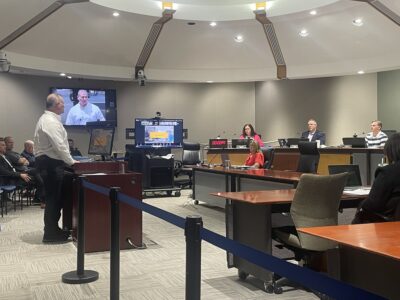
The House Taxation Committee opened what it called an “informational hearing” Monday to look at just a few of those exemptions.
That meeting came as lawmakers in both chambers are preparing to work on a “rescission bill” to plug the estimated $340 million shortfall in revenue needed to fund the last six months of this fiscal year’s budget.
Among them were exemptions on the purchase of farm machinery and equipment, labor used in residential construction and remodeling, and certain nonvoice data services provided by telecommunications companies.
John Idoux, who lobbies for CenturyLink, a telecommunications company that serves a number of small communities in Kansas, said telephone customers in Kansas are already paying sales tax, not to mention a wide range of state and federal surcharges and excise fees.
“When you add all the taxes up, telecommunications customers are taxed more for their services than cigarettes and alcohol,” he said.
Unlike other public utilities like electricity and natural gas, Kansas does charge sales tax on telephone bills. But it does not tax phone companies for 800 and 900 service, nonvoice data service, certain kinds of private communications services or carrier access service, which telecom companies buy and sell from each other.
One of the more controversial sales tax exemptions is the one for the purchase of farm machinery and equipment because for many years farmers have not had to pay either sales or personal property taxes on such items. Their real estate is also taxed at a much lower rate than residential or commercial property.
Manufacturing machinery and equipment are also exempt from sales tax, but it has only been in recent years that the state has started phasing out personal property tax on that machinery and equipment.
But farm lobby groups such as the Kansas Farm Bureau, Kansas Livestock Association, Kansas Corn Growers Association and the Kansas Pork Association all testified in favor of keeping those exemptions, arguing that the retail sales tax should only apply to retail purchases, not to purchases used in producing goods such as farm products that are later sold at retail.
Josh Roe, an assistant secretary of the Kansas Department of Agriculture, said removing that exemption would eat up about 9 percent of the average annual per-acre profit for wheat producers and 25 percent of the profit for wheat growers in the north-central region of the state.
That was based on the average per-acre return north-central Kansas farmers have seen for last 10 years, he said, which included years when farm profits were at record high levels.
“In 2015 and 2016, we were looking at near zero or negative net farm income, and 2017 is projected to be the lowest levels since the farm crisis in the 1980s,” he said.
Home-builders also defended the sales tax exemption on labor used in new construction and residential remodeling, arguing that it makes housing more affordable for home buyers, which they said helps stabilize the property tax base of the state, cities and counties.
“There is absolutely no question that these exemptions have been instrumental in making it possible for more people to become homeowners,” said Wes Galyon of the Wichita Area Builders Association. “
Galyon added that home construction in the Wichita area still has not rebounded to its pre-recession levels.
Over the next two weeks. the House and Senate hope to pass a rescission bill to balance the current fiscal year’s budget. Gov. Sam Brownback has proposed several measures that many lawmakers have said they find distasteful, but which they may have to accept, such as borrowing $317 million from state idle funds and repaying it over the next seven years.
Their next task will be to tackle budgets for each of the next two fiscal years. For that, Brownback has proposed items that many lawmakers find even more distasteful, such as sweeping hundreds of millions of dollars out of the state highway fund, freezing payments into the state pension system at 2016 levels, selling off the state’s interest in future tobacco payments and imposing big hikes in cigarette and alcohol taxes.
House Taxation Committee chairman Rep. Steve Johnson, R-Assaria, said no specific bill is being considered to repeal any of the exemptions. He said the purpose of Monday’s briefing was just to get more information about the exemptions, and that they may be considered further as the panel puts together a larger tax package later in the session.
City Government
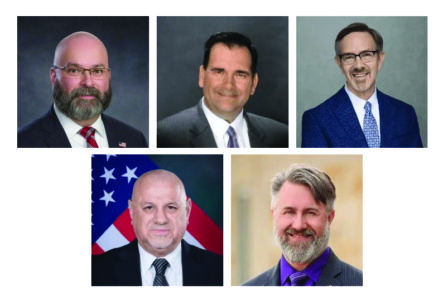
City names five finalists for city manager position; community to meet candidates Wednesday
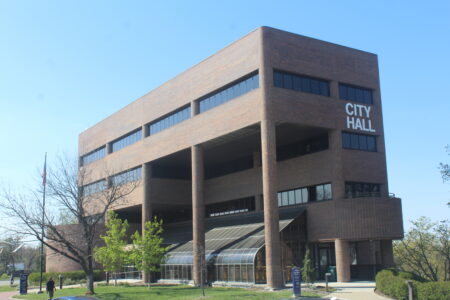
Lawrence city leaders will weigh in on 5-year infrastructure plan, whether to put 0.3% sales tax renewal on the 2027 ballot

Proposed Aldi grocery store in northwest Lawrence hits a setback in city’s planning process

In Riverfront lawsuit settlement, city commissioners see a ‘once-in-a-generation opportunity’ for downtown Lawrence
Lawrence City Commission approves earlier public comments once a month, civility resolution for commissioners