

Senate panel endorses $9.4 million swap from KU Lawrence campus to Wichita medical school
Topeka ? The full Senate Ways and Means Committee endorsed a budget plan Thursday that would shift $9.4 million over two years from Kansas University’s main campus in Lawrence to the Wichita campus of the medical school, a move KU officials say would be harmful to the university overall.
The bill also cuts funding for the Kansas Geological Survey, located on the KU campus in Lawrence, at a time when that agency is being asked to invest more resources into studying the causes of earthquakes in south-central Kansas.
And it shifts millions of dollars in student financial aid money from public universities to independent, private colleges, a move that the Kansas Board of Regents says will result in about 1,050 fewer students receiving that form of need-based financial aid.
The full committee endorsed those proposals one day after its subcommittee on education voted to recommend them.
Sen. Tom Arpke, R-Salina, who chairs the subcommittee, said the shift was intended to help the KU Medical Center fulfill its goal of expanding its full, four-year medical training program in Wichita from about 28 students a year to 65 students a year.
But Dr. Garold Minns, dean of the Wichita campus, said the funding shift between campuses was not something he requested.
“There’s no doubt that we need the funding to achieve our goals,” Minns said in a separate telephone interview Thursday. “But I don’t feel that taking from one institution and giving it to the other is a good idea. I don’t support that concept at all.”
Most of the students trained at the Wichita campus are third- and fourth-year medical students who studied their first two years at the main KUMC campus in Kansas City, Minns said. In 2011, the Wichita campus began a limited program with about 28 students who took their first and second year of classes there.
Arpke said one of his goals was to increase the number of doctors practicing in rural counties in Kansas. Many of the doctors who graduate from the Wichita campus go on to residency programs in rural counties.
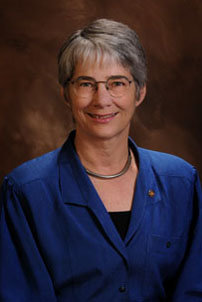
State Sen. Marci Francisco
Sen. Marci Francisco, D-Lawrence, tried unsuccessfully to have the full committee reverse the funding swap between the two KU campuses. But she did eventually get an agreement to review those changes in the final days of the session, when lawmakers will pass a final “omnibus” budget bill.
“I’m concerned that this addition for the Wichita expansion project is something that I haven’t heard any information on,” Francisco said. “Can they accommodate the expansion with the current facilities?”
Dr. Doug Girod, executive vice chancellor of the KUMC, said Wednesday that about half of all the school’s medical students come from undergraduate pre-med programs at the Lawrence campus, and he opposed shifting money from Lawrence to the Wichita school.
In addition to the funding shift between KU campuses, the budget proposal also deletes almost $236,000 over two years from the Kansas Geological Survey. Arpke said the intent was to continue the allotment cuts that Gov. Sam Brownback ordered in February.
But Sen. Dan Kerschen, R-Garden Plain, said that would jeopardize the enhanced seismic monitoring the agency is doing in Harvey and Sumner counties, which have had the largest number of earthquakes that are thought to be the result of oil and gas production in that area.
“I don’t know how we’re going to be able to maintain that if we delete another $117,700 (each year),” Kerschen said. “They were requesting about $100,000 to maintain those monitors.”
The panel also proposed adding $2 million in the next fiscal year for the Kansas Comprehensive Grant program, a form of need-based financial aid. That would bring the total amount available to about $17.7 million.
The Senate panel also added language to reserve at least 75 percent of that money, or $13.3 million, for independent, private colleges. Currently, those colleges get about 50 percent of the grant money. The result would be about $3 million less available next year for students at public institutions.
Arpke said those 18 private institutions produce about 20 percent of all the bachelors degrees in Kansas, and 24 percent of all the masters degrees.
Kansas Board of Regents Chairman Kenny Wilk issued a statement saying the change, “would be disruptive and negatively impacts the number of students who can be awarded this crucial financial support.”
“Initial estimates suggest over 1,050 fewer need-based grants will be awarded to Kansas students if this language is enacted,” Wilk said.
State Government
Property tax protest bill would let a few dozen voters block tax increases in some parts of Douglas County

Lawmakers pass bill to create sports authority to oversee new Chiefs stadium in Kansas
Kansas Legislature passes a bill that would give 10% of voters the power to stop some property tax increases
Kansas Senate, House pass budget bill that pegs raises at 1% for most state employees

U.S. Supreme Court Justice Sonia Sotomayor to visit KU next month; will speak to students, select guests
