

Many lives upended in Libyan fight
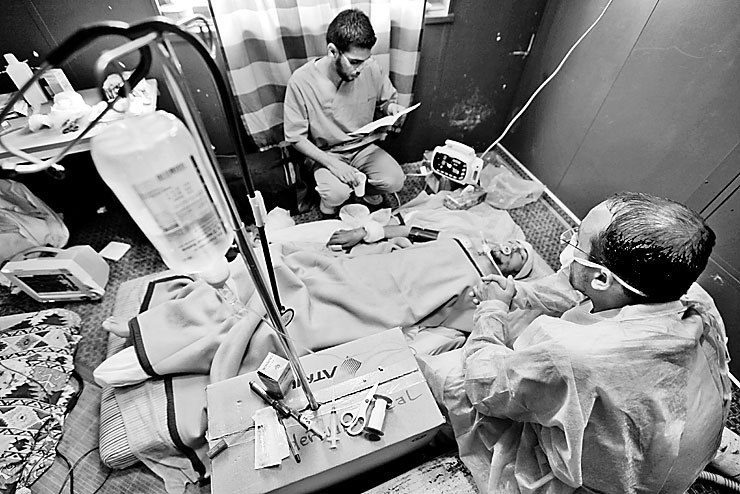
Libyan dentist Ali Salhi, 33, right, tends his critically wounded brother Khalid Salhi, 27, who was hit by a mortar blast a week ago, on Thursday at a temporary Intensive Care Unit set up on board the Ionian Spirit ferry evacuating injured residents and stranded foreign refugees from the battered city of Misrata to Benghazi, at the Mediterranean Sea, off the Libyan coast.
Aboard the Ionian Spirit ? The scene was testimony to the wrenching changes war brings. It turned Dr. Ali Salhi, a Libyan dentist, into a battlefield medic. In a ship’s corridor transformed into an intensive care unit, the patient he hovered over was his little brother, a lawyer who became a fighter to defend their home city Misrata from Moammar Gadhafi’s forces.
Near a stack of life vests, Khaled Salhi lay unconscious on a mattress, a hunk of shrapnel lodged in his brain. Ali silently watched the tubes running into his brother’s mouth and nose and listened to the beep of the heart monitor. Khaled hasn’t woken up since he was hit.
But the 33-year-old Ali doesn’t regret that his brother, six years younger than him, fought.
“If we all prevented our brothers from fighting, there would be no resistance to Gadhafi,” he said Thursday. “My brother might die and others as well, but we have to defend our city.”
On Thursday, the Ionian Spirit, a Greek passenger ferry, carried away more than 1,000 people fleeing Misrata. Also aboard the vessel, which docked in Benghazi late Thursday, were the bodies of an Oscar-nominated documentary maker from Britain and an American photographer who were killed covering clashes Wednesday.
Areas below deck were turned into impromptu clinics for the wounded. The ship’s bar-disco was settled by Libyan families. Every hallway and seat was filled by others, including African and Asian workers, sleeping, eating, taking the opportunity of their first electricity in days to charge their cell-phones.
The two-month-old anti-Gadhafi rebellion has upturned lives across Libya, but perhaps nowhere else more completely than in Misrata, Libya’s third largest city and the most significant rebel stronghold in the regime-controlled western half of the country. For nearly two months, Gadhafi forces have surrounded the city from three sides, pounding it with shelling and rocket fire, with ground troops and rebel fighters battling building by building along the main boulevard in the center of town.
Thousands have fled the city of 300,000 in ships from Misrata’s Mediterranean port, on the more than daylong journey across the Bay of Sirte to the de facto rebel capital Benghazi. The Ionian Spirit’s journey was organized by the International Organization for Migration.
The ship’s passengers include dozens of injured and shell-shocked Libyans, hundreds of migrant workers from Africa, as well as smaller groups from Pakistan, Nigeria and the Philippines.
Their presence on a tourist vessel created bizarre contrasts. Many of the Africans were impoverished laborers who sneaked across the desert and entered Libya illegally to look for work. On the ferry, they took over nearly every seat, table and much of the floor in the ship’s main cabin and outside deck.
Nearby sat 24 Filipinos, among them 16 who came to teach at the university in Misrata for salaries five times higher than what they could earn at home. The others worked as nurses or factory engineers.
Upstairs, the Panorama Bar holds more than 100 Libyans, mostly families with children, who tried to flee the city by tugboat before the ferry arrived. Now they sit and sleep at cocktail tables while their children race around and spin on the padded swivel chairs. Shutters on the bar have been tightly closed, and the conservative Muslim families have drawn the curtains across a small dance floor to provide privacy for nursing women.