

Stressful situations: With recent scare, Big 12 coaches cognizant of health concerns
Gary Pinkel likes to get away from a stressful day and sneak in a quick shopping trip with his granddaughters, even it’s just for 15 minutes.
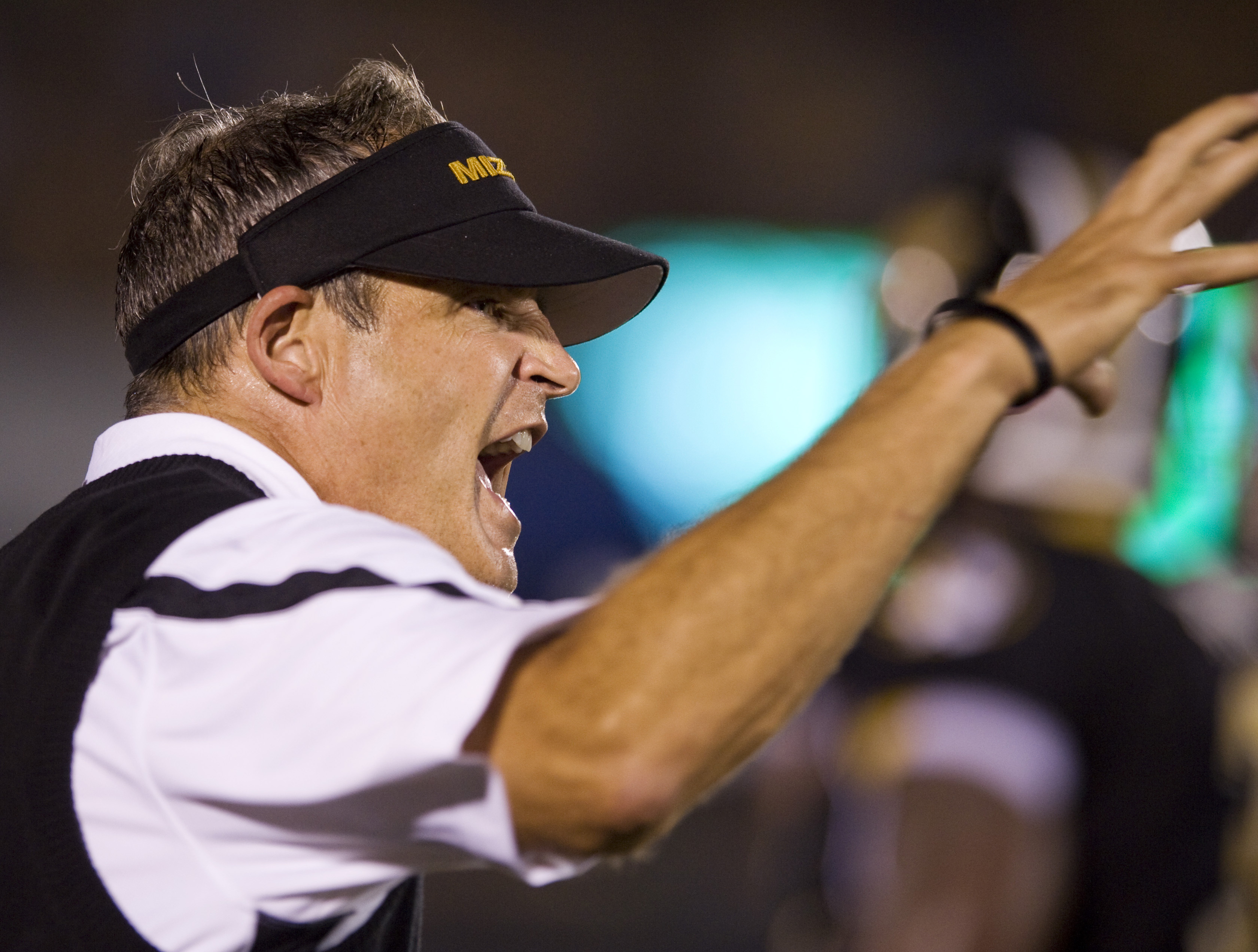
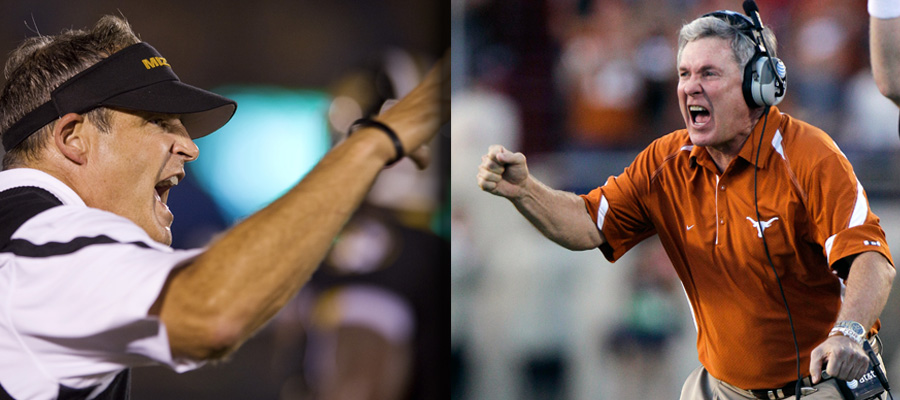
Missouri head coach Gary Pinkel argues a call in the Tigers’ game against San Diego State on Saturday in Columbia, Mo.
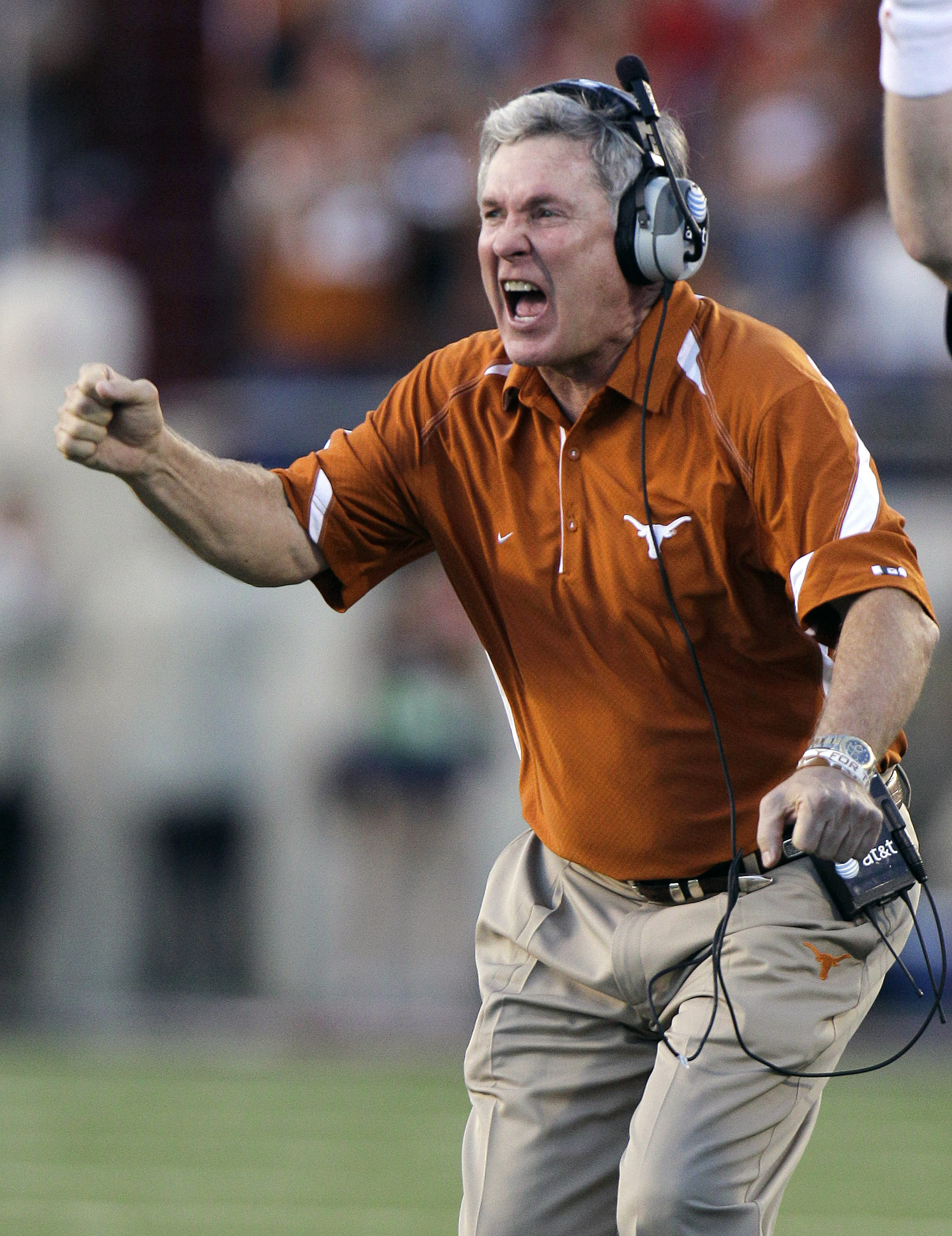
Texas coach Mack Brown yells from the sideline in the Longhorns’ game against Texas Tech on Saturday in Lubbock, Texas.
He’ll push them around in a shopping cart for a while, get them all wired, then drop them back off with his daughter and return his focus to coaching Missouri football.
Even such a brief break is soothing for the 58-year-old Pinkel.
“This job is pressure-packed,” Pinkel said Monday on the Big 12 coaches’ conference call. “I think it’s more pressure-packed than it ever has been because of ESPN, because of the national sports scene, because of the Internet, because of all the instant communication out there, and there’s so many media avenues now that exist, the amount of money coaches make.
“To me, it’s going to get worse, the pressure. It’s not going to go the other way.”
Michigan State coach Mark Dantonio suffered a mild heart attack Sunday morning not long after an overtime victory against Notre Dame, highlighting the health hazards of coaching that were a hot topic after Urban Meyer briefly resigned from Florida following last season.
The health of top college coaches was a hot topic this week. Some admit that taking care of themselves can become an afterthought if they don’t carefully plot out time to exercise and eat right.
“I need to do a better job taking care of myself,” Texas coach Mack Brown said. “I do in the offseason, and I feel great. But there’s no doubt that you just wear yourself thin trying to win every game in the fall, and there’s a lot on your plate.”
Leading a football team takes far more than just calling plays for a few hours on Saturdays. Brown rattled off an expansive list of people he has to answer to: high school coaches, lettermen, fans, alumni, regents, administrators, faculty, media and 130 players — each with parents who’d like to see their kids get to play.
“I think it’s a concern. The intensity level and stress is beyond, I think, what anybody could ever imagine on a head coach,” Pinkel said. “I’ve been a head coach 20 years. You kind of learn to deal with it, but if you’re a competitor, that’s just the way you are. And you thrive on it, too, a little bit.”
Pinkel said he works out three times a week: early on Monday, Wednesday and Friday mornings. He and his assistants also schedule in time for dinner with their families, although doing that requires coming in early.
Kansas State’s Bill Snyder multitasks by watching game film while he runs on a treadmill after practice. Colorado’s Dan Hawkins tries to set aside time for himself and his staff to hit the weight room and sleep.
“Certainly it’s a 24/7 operation, not just here but anywhere,” Snyder said. “It’s easy to overlook a lot of things that are significant in life, not just your health. But you have to carve out and create ways.”
At Oklahoma State, Mike Gundy has allowed new offensive coordinator Dana Holgorsen more control over the game planning. That means at least two less meetings per week for Gundy, but he also thinks it will add years to his life.
“I don’t think there’s any question that my health is not good during the season,” Gundy said. “I exercise, I try to eat right, but there’s just a lot involved in being a coach. It’s not necessarily football. It’s the responsibility of the 125 players on your team and their families and their parents and their well-being.”
With all that’s going on, Pinkel suggested coaches should be proactive about their health and visit a doctor more frequently than others might. Better to go there for a checkup than be taken there in bad shape.
“I know that it’s a concern for all of us,” Gundy said. “You’re seeing more of it in the last few years than you ever have before.”
Pinkel said every coach has to find his own system that works, and that process becomes easier over time.
“When I was a first-year head coach, Wednesday night I was ready to play the game — emotionally, physically, everything. I was wired,” he said. “I think through the years I’ve learned to try to delay that. I still wake up every Saturday morning like it’s the national championship game for me. I guess when I quit feeling that way, then I’ll go do something else.”