

Rebuilding slow to address Afghanistan’s power problem
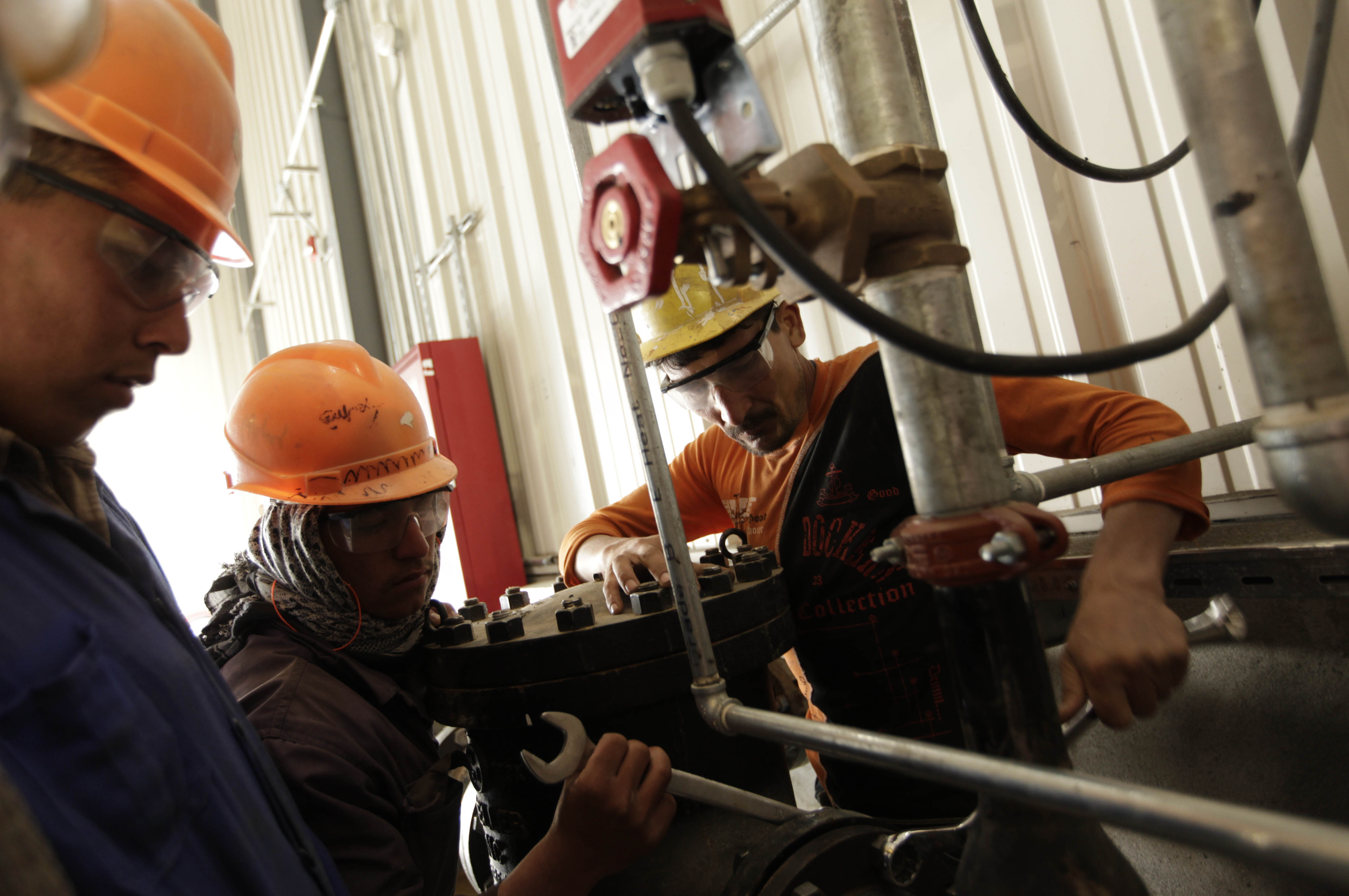
Workers perform maintenance work inside the Tarakhil power plant in the outskirts of Kabul, Afghanistan, in this May 14 photo. The 05 million diesel power plant represents the biggest single investment the U.S. has made thus far to light up the country. It has been dubbed the most expensive plant of its type in the world, sitting in one of the world’s poorest countries.
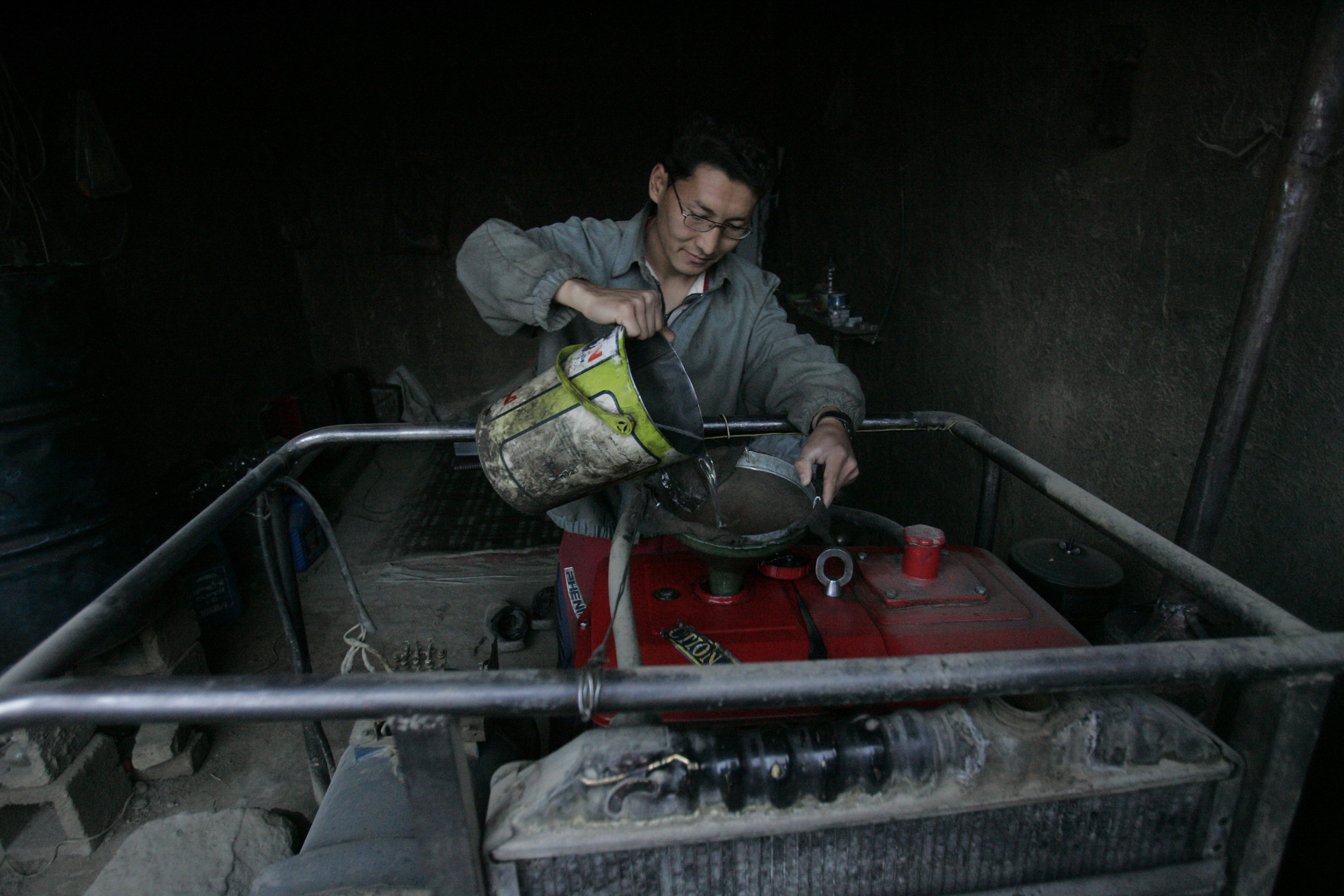
A man operates a diesel power generator April 14 in Kabul, Afghanistan. Afghanistan consumes less energy per person than any other country in the world, even after years of reconstruction efforts, according to data compiled by the U.S. government.
Kabul, Afghanistan ? The goal is to transform Afghanistan into a modern nation, fueled by a U.S.-led effort pouring $60 billion into bringing electricity, clean water, jobs, roads and education to this crippled country. But the results — or lack of them — threaten to do more harm than good.
Reconstruction efforts have stumbled since the U.S. military arrived in 2001, undermining President Barack Obama’s vow to deliver a safer, stable Afghanistan capable of stamping out the insurgency and keeping al-Qaida from re-establishing its bases here.
Poppy fields thrive, each harvest fattening bankrolls of terrorists and drug barons. Passable roads are scarce and unprotected, isolating millions of Afghans cut off from jobs and education. Electricity flows to a fraction of the country’s 29 million people.
Power plant failures
Case in point: a $100 million diesel-fueled power plant that was supposed to be built swiftly to deliver electricity to more than 500,000 residents of Kabul, the country’s largest city. The plant’s costs tripled to $305 million as construction lagged a year behind schedule, and it often sits idle as the Afghans import cheaper power from a neighboring country.
The failures of the power plant project are, in many ways, the failures of often ill-conceived efforts to modernize Afghanistan:
The Afghans fell into bad habits that favored short-term, political decisions over wiser, long-term solutions.
The U.S. wasted money by deferring to the looming deadline of Afghan President Hamid Karzai’s 2009 re-election efforts.
And a U.S. contractor benefited from a development program that essentially gives vendors a blank check, letting them reap millions of dollars in additional profits with no consequences for mistakes.
Rebuilding Afghanistan is an international effort, but the U.S. has committed $51 billion to it since 2001, and plans to raise that to $71 billion over the next year — more than it has spent on reconstruction in Iraq since 2003.
Roughly half the money is to bolster the Afghan army and police, with the rest for shoring up the country’s crumbling infrastructure and inadequate social services.
There have been reconstruction successes, such as rebuilding a national highway loop, constructing or improving thousands of schools, and creating a network of health clinics.
But the number of Afghans with access to electricity has inched up from 6 percent in 2001 to an estimated 10 percent, well short of the development goal to provide power to 65 percent of urban and 25 percent of rural households by the end of this year.
Too many projects are not delivering what was promised, and dumping billions of dollars into the country is making matters worse, not better, Afghan Finance Minister Omar Zakhilwal said.
All of that has ramped up corruption, undermined efforts to build a viable Afghan government, stripped communities of self-reliance, and delivered projects like the diesel plant that the country can’t afford, he said.
Continuing complaints
Afghanistan consumes less energy per person than any other country in the world, even after years of reconstruction efforts, according to data compiled by the U.S. government.
The diesel power plant, dubbed the most expensive plant of its type in the world, represents the biggest single investment the U.S. has made to light up the country.
The U.S. and other international donors had spent years helping Afghanistan develop an energy strategy, one focused on reducing the country’s rel
iance on diesel as a primary power source. The goal was to buy cheaper electricity from neighboring countries and develop Afghanistan’s own natural resources, such as water, natural gas and coal.
All of that was abandoned with the decision by U.S. and Afghan officials to build the diesel plant on the outskirts of Kabul.
Never mind that the plant would make the country more, not less, reliant on its fickle neighbors for power.
“The Kabul diesel project was sinful,” said Mary Louise Vitelli, a U.S. energy consultant who focused on power development in Afghanistan for six years, working with the U.S., the World Bank and as a special adviser to Karzai’s government.
James Bever, the U.S. Agency for International Development’s director of the Afghanistan-Pakistan task force, said it’s unfair to label the project a failure.
“You can have it fast, you can have it high quality, and you can have it low cost. But you cannot have all three at the same time,” Bever said.