

Hungry otters straying into fishermen’s territory
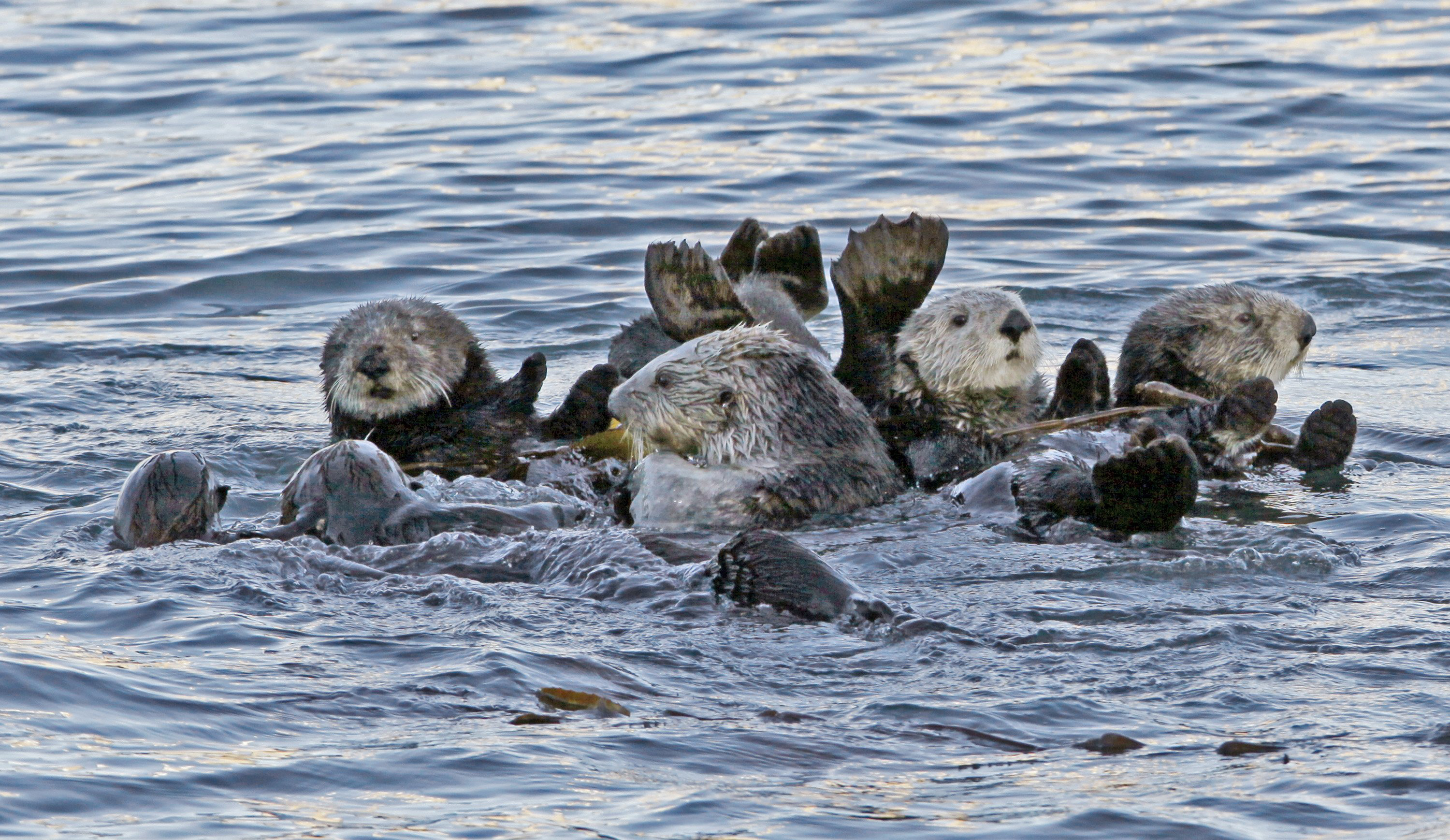
A group of sea otters gather Jan. 15 in Morro Bay, Calif.
Los Angeles ? The first hint of trouble in trying to save endangered sea otters and protect fishermen competing for the shellfish the creatures eat was when bureaucrats drew a line in the ocean separating the two.
That was followed by an unsuccessful attempt to create a colony for the creatures on a distant island and a more disastrous venture to relocate strays who wandered into what was dubbed the “no-otter zone.”
The otters didn’t cooperate and their subsequent rebound in Southern California created a classic man vs. nature conflict that could alter a two-decade recovery program and raises the question of what species is more endangered: animals or urchin divers.
At the heart of the matter is a well-intentioned attempt to control nature for commerce that backfired.
“It’s a view of the world as if animals are your chess pieces,” said Lilian Carswell, who oversees otter recovery at U.S. Fish and Wildlife.
The agency long ago abandoned the costly and ineffective transfer policy, but environmentalists who claim the otters are being targeted filed a lawsuit in federal court last year to extend protections for otters that migrate outside the artificial boundaries.
“They’re moving into a hostile environment,” said Allison Ford with The Otter Project, which sued the Department of Interior and Fish and Wildlife. “We’ve heard anecdotal evidence of otters being shot, harassed and run over by boats.”
Shellfish divers liken the voracious mammals to locusts of the sea and fear that giving the critters free rein will jeopardize their industry.