

American troops more than welcome in country — for now
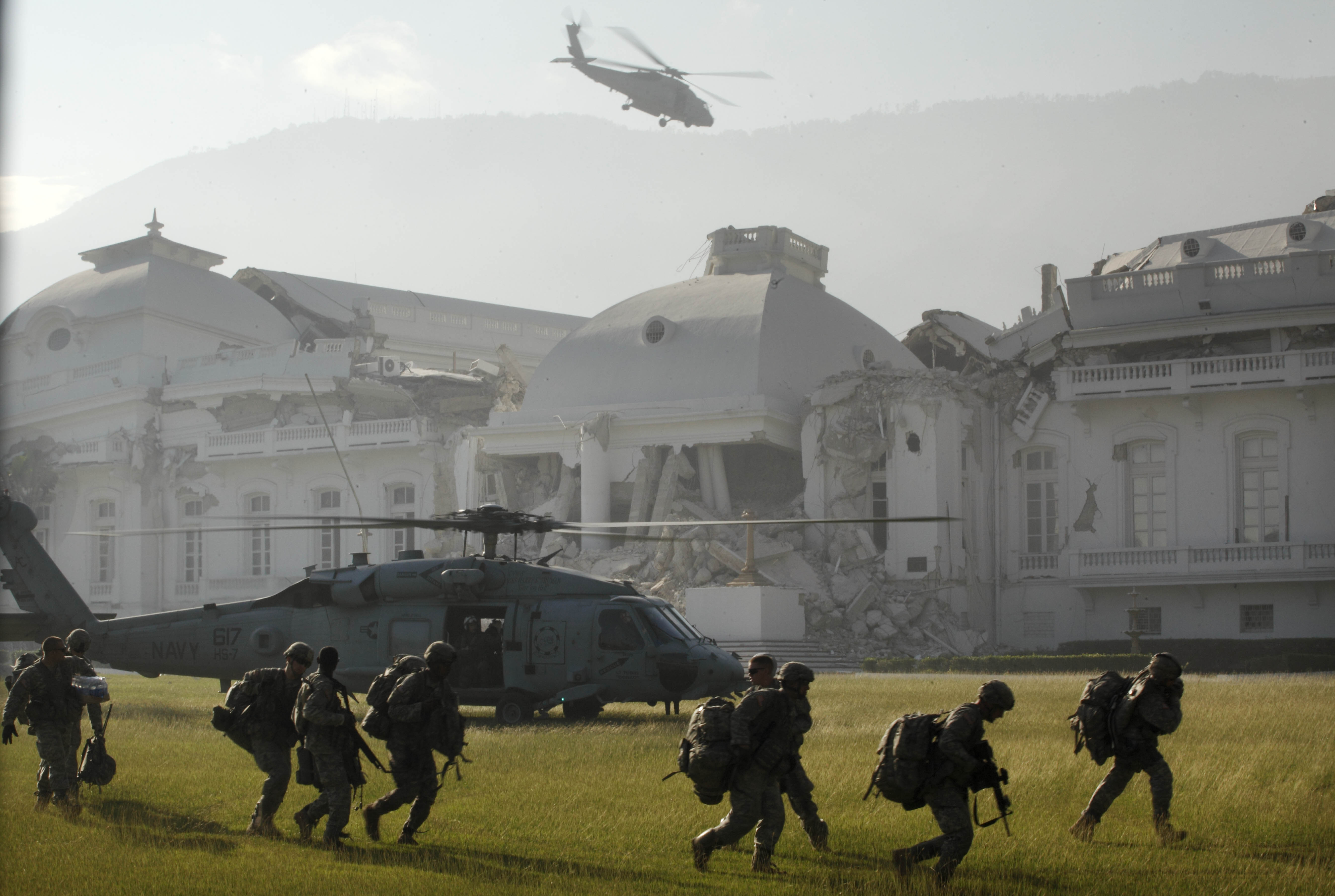
A U.S. Navy helicopter takes off in front of the National Palace after members of the U.S. Army 82nd Airborne, front, landed Jan. 19 in Port-au-Prince, Haiti. U.S. troops are bandaging the wounded, clearing debris, handing out food and even directing traffic, generating goodwill among Haitian citizens, who, at least for now, are welcoming a foreign military that historically supported despotic rulers and for decades occupied the country in the early 20th century.
Port-au-Prince, Haiti ? Young men gripping a steel fence along Port-au-Prince’s waterfront call out “Hi, Sir!” to two U.S. Army soldiers, pleading for jobs as translators, drivers, laborers.
None are getting any jobs today. But that doesn’t dampen their enthusiasm for the U.S. military, despite a checkered history in Haiti for the forces that are now providing a huge humanitarian mission after the Jan. 12 earthquake killed at least 150,000 people.
“The Americans are our friends,” said Jean Rony Doudou, a 28-year-old jobseeker. “They are here to help us.”
Many Haitians — at least for now — share that sentiment as they see U.S. troops bandaging the wounded, clearing debris, handing out food and water and even directing traffic. The soldiers are generating goodwill and are given a large degree of credit for keeping Haiti relatively peaceful during these worst of circumstances.
And for the soldiers, Haiti is a welcome respite from dodging suicide bombers, snipers and roadside explosives in Iraq and Afghanistan.
“Here you don’t go in there with your war face,” said Sgt. Warren Bell from Hampton, Va., a paratrooper who did three tours in Iraq before handing out meals in Haiti. “You go in there with your peace face. You try and treat people like you would in the United States.”
American troops, part of a 20,000-strong U.S. military humanitarian mission in Haiti, are not supposed to be arresting looters.
“They are not there to participate in any police operations,” said Jose Ruiz, a spokesman for the U.S. Southern Command.
But as Haitian police and private security guards struggle to maintain control, the U.S. soldiers will have to decide how and whether to get involved.
A dozen Army soldiers decided to take action Friday when they came upon a violent confrontation after a private security guard shot and killed a man who was among a group of organized looters inside an appliance store. The U.S. Army 82nd Airborne platoon, which happened to be on patrol nearby, rushed up and quickly dominated the scene, shouting “Stop it!” and pulling guards off the captives.
The crowd outside cheered the Americans.
“I hope the Americans stay forever so things can get better,” said 38-year-old Lenau Deschamps, an ice vendor who has camped out on a wooden pallet near the ruined National Palace since his house was destroyed. “We should keep the Americans and get rid of the Haitian government because it’s worthless.”
But many know the good feelings could come to an end.
For two decades in the early 20th century, the U.S. occupied the country — sometimes in brutal fashion. Later, it supported despotic rulers, including the notorious Duvalier dynasty. U.S. troops also helped return Bertrand Aristide, the fiery priest and president beloved by the poor who was ousted in a coup.
American troops more than welcome in country — for now
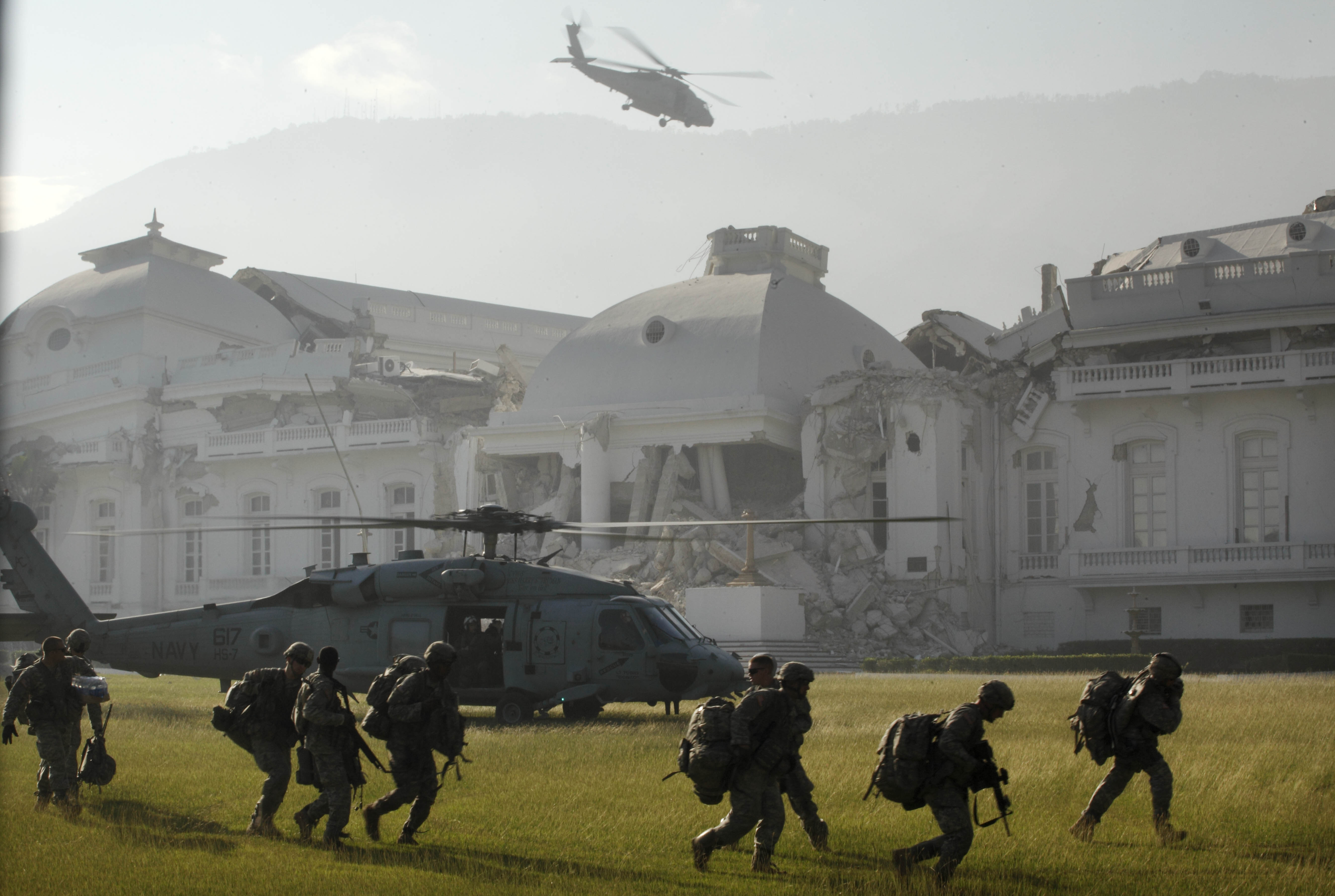
A U.S. Navy helicopter takes off in front of the National Palace after members of the U.S. Army 82nd Airborne, front, landed Jan. 19 in Port-au-Prince, Haiti. U.S. troops are bandaging the wounded, clearing debris, handing out food and even directing traffic, generating goodwill among Haitian citizens, who, at least for now, are welcoming a foreign military that historically supported despotic rulers and for decades occupied the country in the early 20th century.
Port-au-Prince, Haiti ? Young men gripping a steel fence along Port-au-Prince’s waterfront call out “Hi, Sir!” to two U.S. Army soldiers, pleading for jobs as translators, drivers, laborers.
None are getting any jobs today. But that doesn’t dampen their enthusiasm for the U.S. military, despite a checkered history in Haiti for the forces that are now providing a huge humanitarian mission after the Jan. 12 earthquake killed at least 150,000 people.
“The Americans are our friends,” said Jean Rony Doudou, a 28-year-old jobseeker. “They are here to help us.”
Many Haitians — at least for now — share that sentiment as they see U.S. troops bandaging the wounded, clearing debris, handing out food and water and even directing traffic. The soldiers are generating goodwill and are given a large degree of credit for keeping Haiti relatively peaceful during these worst of circumstances.
And for the soldiers, Haiti is a welcome respite from dodging suicide bombers, snipers and roadside explosives in Iraq and Afghanistan.
“Here you don’t go in there with your war face,” said Sgt. Warren Bell from Hampton, Va., a paratrooper who did three tours in Iraq before handing out meals in Haiti. “You go in there with your peace face. You try and treat people like you would in the United States.”
American troops, part of a 20,000-strong U.S. military humanitarian mission in Haiti, are not supposed to be arresting looters.
“They are not there to participate in any police operations,” said Jose Ruiz, a spokesman for the U.S. Southern Command.
But as Haitian police and private security guards struggle to maintain control, the U.S. soldiers will have to decide how and whether to get involved.
A dozen Army soldiers decided to take action Friday when they came upon a violent confrontation after a private security guard shot and killed a man who was among a group of organized looters inside an appliance store. The U.S. Army 82nd Airborne platoon, which happened to be on patrol nearby, rushed up and quickly dominated the scene, shouting “Stop it!” and pulling guards off the captives.
The crowd outside cheered the Americans.
“I hope the Americans stay forever so things can get better,” said 38-year-old Lenau Deschamps, an ice vendor who has camped out on a wooden pallet near the ruined National Palace since his house was destroyed. “We should keep the Americans and get rid of the Haitian government because it’s worthless.”
But many know the good feelings could come to an end.
For two decades in the early 20th century, the U.S. occupied the country — sometimes in brutal fashion. Later, it supported despotic rulers, including the notorious Duvalier dynasty. U.S. troops also helped return Bertrand Aristide, the fiery priest and president beloved by the poor who was ousted in a coup.