Teaching Americans to be better financial planners has to happen early and often, a panel of bankers, regulators and educators told two members of Congress on Tuesday.
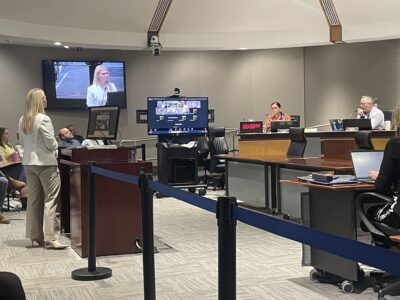
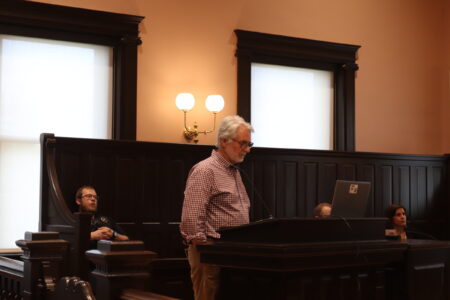
U.S. Rep. Dennis Moore, D-Kan., and Rep. Lynn Jenkins, R-Kan., were at KU’s Dole Institute of Politics to listen as regional experts on financial literacy talked about the need to beef up financial education in schools and find ways to reach the adults who need it the most but are reluctant to seek help.
The testimony was part of a field hearing for the House Financial Services Subcommittee on Oversight and Investigations, which Moore chairs.
Tuesday’s hearing was the third in a series that focused on how Americans’ personal finances played into the economic collapse.
“We are constantly bombarded with the message that we deserve — no, we are entitled — to have a new car, new house, new clothing, newest electronic gadget. What we don’t hear is that those things have to be paid for from what we earn,” said Shawn Mitchell, president and CEO of the Community Bankers Association of Kansas.
“We see too many examples of good people who have made themselves victims of poor financial management simply because they did not understand what they could truly afford,” he said.
Providing financial education early in schools is important, even if it means reaching out to grade school students. But in a world where curriculum is geared toward standardized testing, teachers don’t often have the time to incorporate financial education into the classroom, panelists said.
Financial literacy is just as important for adults and those on the brink of adulthood, especially as financial products become more complicated.
Kansas Deputy Bank Commissioner Kevin Glendening said reaching adults remains a challenge.
“Many of the problems and behaviors that can contribute to an individual’s financial distress are the same issues that can make delivering financial literacy information to adults difficult,” Glendening said.
As for what the representatives will do with Tuesday’s comments, Moore said he is working on a house bill sponsored by Rep. Emanuel Cleaver, D-Mo., that would expand educational opportunities for adults.
“I think we need to start very early and bring it up for adults because there is a huge lack of understanding by the adult population in this country about fiscal matters, financial matters and credit cards,” Moore said.
Jenkins said she too heard that education needed to be provided from “cradle to grave,” but thought the matter was best left to the states.
“We asked in many different ways, how could the federal government help in coordinating and what could we do from the federal level,” Jenkins said. “And my sense was to keep our hands off and let the state government and our officials and regulators and commissioners here in the state address the issue.”


Comments
LJWorld.com doesn’t necessarily condone the comments here, nor does it review every post. Read our full policy. Also, read about banned accounts and harassing comments.
Fairness930 (anonymous) says…
On this same subject, Leticia Gradington has been named program director of Student Money Management Services at the University of Kansas. She began work Aug. 16. Gradington has a master’s of business administration from Baker University and a bachelor’s from KU. The new office is located in the Kansas Union and its website is money.ku.edu.
avoice (anonymous) says…
It's going to be an uphill battle to try to get messages of frugality and common-sense financial practices across while people are still being bombarded relentlessly with advertisements enticing them to spend-spend-spend. The only way to curb the spending frenzy is to curb the messages that compel people to do so. Until that is in check, no amount of financial education is going to override the subliminal, brainwashing effects of ubiquitous advertising.
CreatureComforts (anonymous) replies…
It really depends on the person. I know plenty of people, including college kids (including me, back then) who had no problem spending within their means. Much of that self control came from money management classes I took in high school, which went miles to make me a practical, conscious spender.
Some people will never learn...but some will with a little education. So, it really depends on the person.
whynaut (anonymous) replies…
A step in the right direction?
http://www.bankrate.com/finance/credi...
said_zeppelin (anonymous) replies…
Although I don't disagree with you completely, it is sad to think that some people consider themselves powerless against the advertising. When people can't figure out that the $19.95 "but wait, there's more" deals where you end up paying another $19.95 in shipping and processing for the "free one" isn't a good deal, they need to wake up. Have we really turned into consumer cattle to be herded by the advertisers?
Advertising is only the start of the problem when there is an environment and reward system set up in the financial markets that rewards employees for signing new business even though anyone with common sense should know that a person who makes $30,000 a year can't afford a $300,000 house in the long run.
lawrenceguy40 (anonymous) says…
It's going to be an uphill battle to try to get messages of frugality and common-sense financial practices across while we have people like dennis moore on a Committee advising folks. Get a panel of fiscally responsible people. If dennis moore, or his bum chum barry o, lectured me on personal financial responsibility, I couldn't shout hypocrisy fast enough.
78
grammaddy (anonymous) replies…
Why is that? Just another slam on Obama?
lawrenceguy40 (anonymous) replies…
I know it is hard for you to admit the anointed messiah is not all the liberal press make him out to be, but here are some numbers to answer your specific question.
President Bush's deficit 2008 = $400 billion
barry o's deficit 2009 = $1850 billion
2008 was the highest deficit of President Bush's term in office.
Do you understand the concept of fiscal responsibility? As a liberal, I expect surviving by spending my money, you probably do not. Here it is in a special explanation for you. If you earn (are given) $100 per week and you spend $90, you are able to save $10. If you are given $100 social security and spend $100, you save nothing, but you do not owe anybody money. If the hard working taxpayer gives you $100 and you spend $110, then you have to borrow $10. The lender, probably the good grandchild who escaped the family whining and got a job, might charge you interest of a dollar, so you end up owing $11. Now when the next $100 SS check arrives, it is only worth $89, because you have to pay your grandson back $11. Of course, you could take the liberal mooching path and suggest he extend the loan for another week. Eventually you will end up owing far more than you can ever hope of paying back, and one day your grandson's new wife will call around and empty your apartment of all its contents and you will be left with nothing and will be wondering why you listened to your wild granddaughter when she said you can live in luxury and just keep borrowing from your grandson.
Change a few names and you have the scenario now in our political system. China will be the new granddaughter-in-law, and she won't just want enough cash to buy a new washer and dryer.
78
MyName (anonymous) replies…
I think the point is that many normal people don't connect every ill, real or imagined, with our current President. The way you manage to link a story about educating the American consumer seems like something you'd get from a really dumb and pointless party game, not actual intelligent political discourse.
staff04 (anonymous) replies…
"President Bush's deficit 2008 = $400 billion
barry o's deficit 2009 = $1850 billion"
President Bush's war spending that was considered "off budget" and therefore not accounted for in his deficit figures = all of it.
Barry O's off budget war spending = none of it.
Now, this doesn't weaken the importance of your elementary lesson on fiscal responsibility--you would be well served to consider that the debt incurred by taking out that $10 loan doesn't just disappear "because you say so," like it apparently did under the previous administration.
I'm not for one second forgiving Obama's incurring of debt and deficit spending, but let's at least be intellectually honest about the history of administrative spending.
grammaddy (anonymous) replies…
I have NEVER considered Obama to be an annointed Messiah. That term was started by the fear right wingnuts and now you are all upset that he's not living up to it. I'm also not going to blame him for the financial mess this country was in when he took office. I will, however, applaud him for his effort to turn the economy around. As I understand it, it's working although maybe not as quickly as the entitled right wingers would like it to.
whynaut (anonymous) replies…
But a little more emphasis on economic education at an earlier level is a good thing, right?
Jimo (anonymous) replies…
Keep on topic. Leave the spin behind.
weeslicket (anonymous) replies…
i dunno about that.
you seemed to shout hypocrisy rather fastly enough.
KU_cynic (anonymous) says…
A little financial literacy among the Kansas legislature would help, too. They need to understand, for example, the extent to which they are lying to tax payers and state employees about the financial health of the KPERS system, and then do something about it.
IndusRiver (anonymous) says…
Since it's the banks, credit card companies, and government agencies that commit fraud and theft, why do I need classes? I don't. Lawrence, KS. needs to flush the toilet and get rid of Dennis Moore.
MyName (anonymous) replies…
Umm... you do realize he's not seeking reelection this year? And that half of his district, at least, is populated by the residents of Johnson Co. And also that all of Lawrence west of Iowa Street is actually in a different Congressional district?
Maybe you need more than just financial education mate.
nobody1793 (anonymous) says…
If only I could find some information about sales and coupons for local stores...
Jimo (anonymous) says…
Basic knowledge about economic matters has long been a gapping hole in secondary education. I suppose this is a result of thinking of these students as children who don't need any understanding of financial matters.
I would go so far as to suggest a standard year long curricula with one semester devoted to principles of economics and the other to practical financial issues.
The economics portion could teach basic concepts such as supply and demand, the role money, finance and banking in the economy, how businesses deal with costs, efficiencies of production, markets, regulation, etc. This is an important focus as these are future voters who will be asked to make decisions about these issues but often are armed with little more than vague impressions and slogans. This could be tied in well with Civics.
The practical portion could explain how to apply for a car loan, how to open a bank account, how credit cards and other types of consumer credit work, how income taxes operate, sales taxes, property taxes, student loans, etc. Few high school students do these things but within a few years many students will do all of these things but have no means of learning about them other than self-education.
Made_in_China (Paul R. Getto) says…
My father figured this out a long time ago: Buy everything with cash except a house. Pay off the house as quickly as possible and stay in it. Otherwise, if you don't have the money in your pocket to buy something, you can live without it. Not the "American Way," I realize, but still good advice.
grammaddy (anonymous) replies…
Exactly!Best advice I ever got from either parent.I still live like that. If I don't have the cash for a purchase, I just do without until I can come up with the cash for it.Too many new students are bombarded with credit card offers as soon as they get here. They don't think about the long-term consequences, just shopping til they drop and hoping Mom and Dad will bail them out if they get in over their heads.
toe (anonymous) says…
It is too late. The debt must be repaid, and the taxes to repay it will depress our economy for half a century. Politicians discovered they could buy votes with debt after the first world war. It has not stopped since. But, the good news is that we are all in the same boat. Even the politicians.
CountyResident (anonymous) says…
Lynn Jenkins says for the federal government "to keep their hands off". This seems to be her answer to everyhing. Why does she even bother to go to work. It seems to me that as a CPA she would be willing to help educate the public to help them with their financial affairs.
Maybe we should vote her out of office allow her to come back and work for the state again.
Jimo (anonymous) replies…
Just how many disasters have to pile up because government 'kept it hands off' before Jenkins rethinks her dedicated to a failed, false premise? The world is not self-correcting.
weeslicket (anonymous) says…
nod to many previous posters.
the irony, dare i say hypocrisy, of bankers and legislators lecturing on the need to "beef up" financial literacy for "schools and adults".
stunning.
finanicalists, heal thine own selves.