

Easy to grow: Plant garlic now for best results
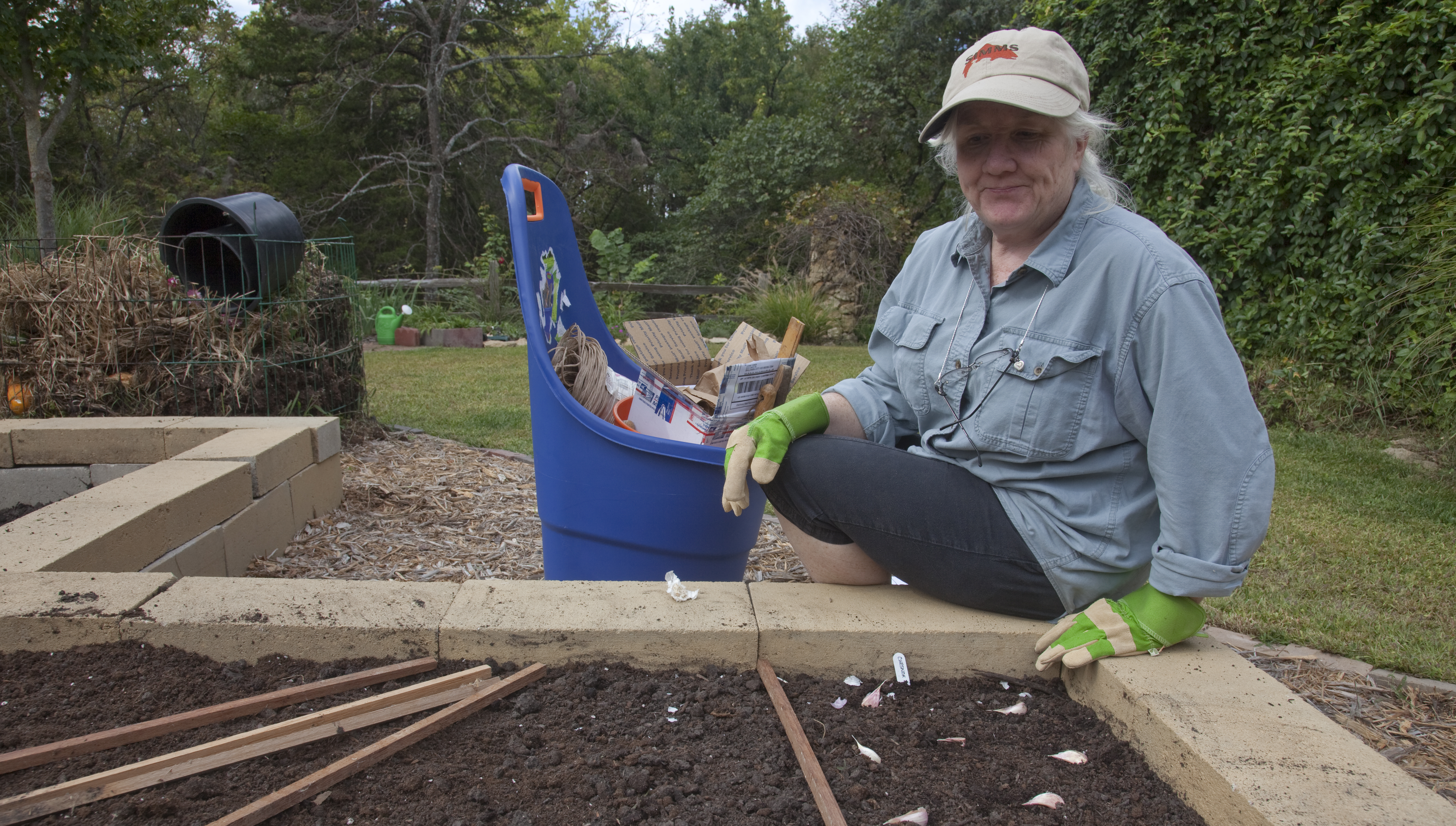
Connie Turner is ready for her third year of planting garlic in her rural home’s backyard garden. The raised beds drain well and are easy for Turner to manage.
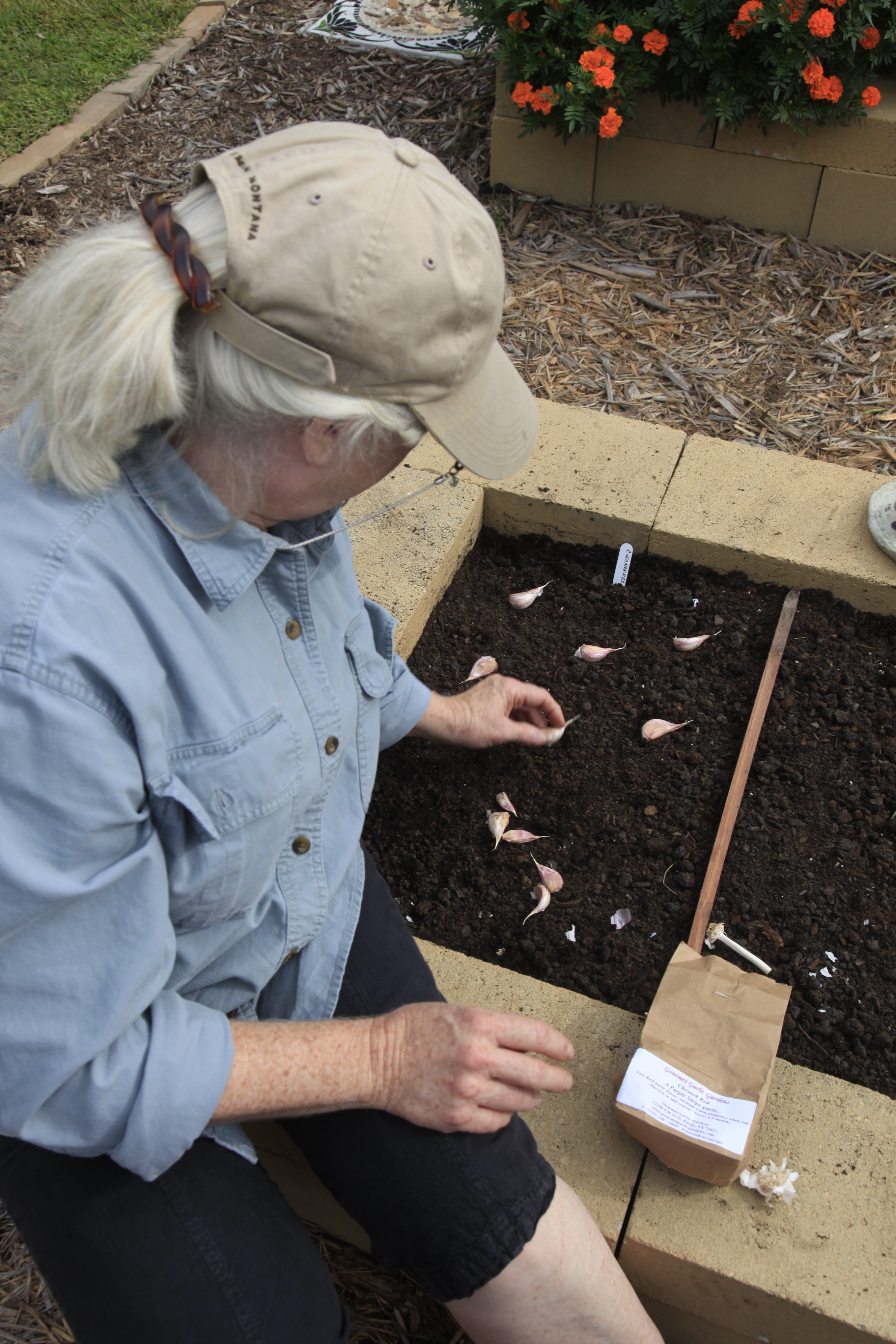
Turner warns against eating the garlic right away, as the bulbs need to cure.
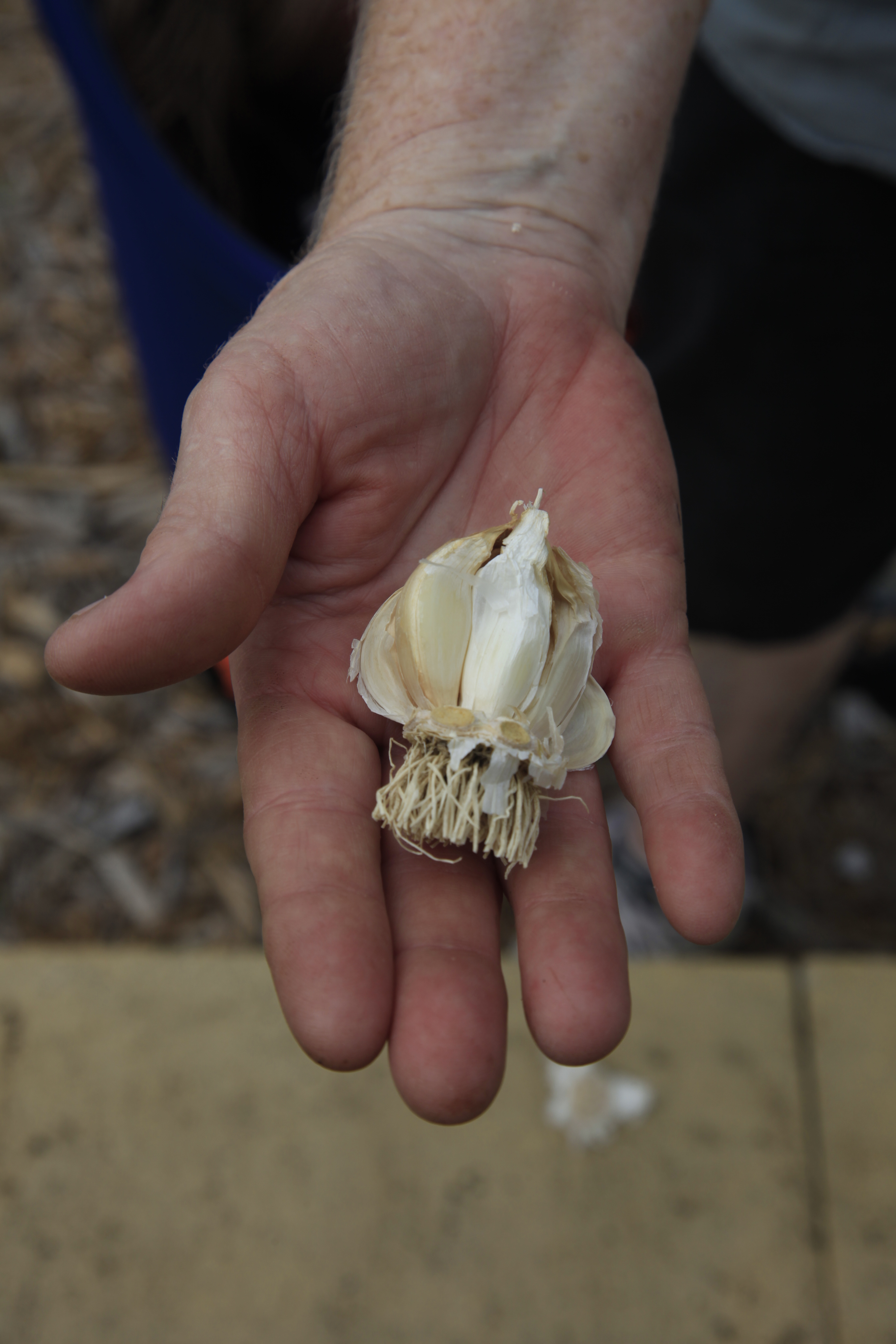
Turner displays one of several heads of garlic she grew last year.
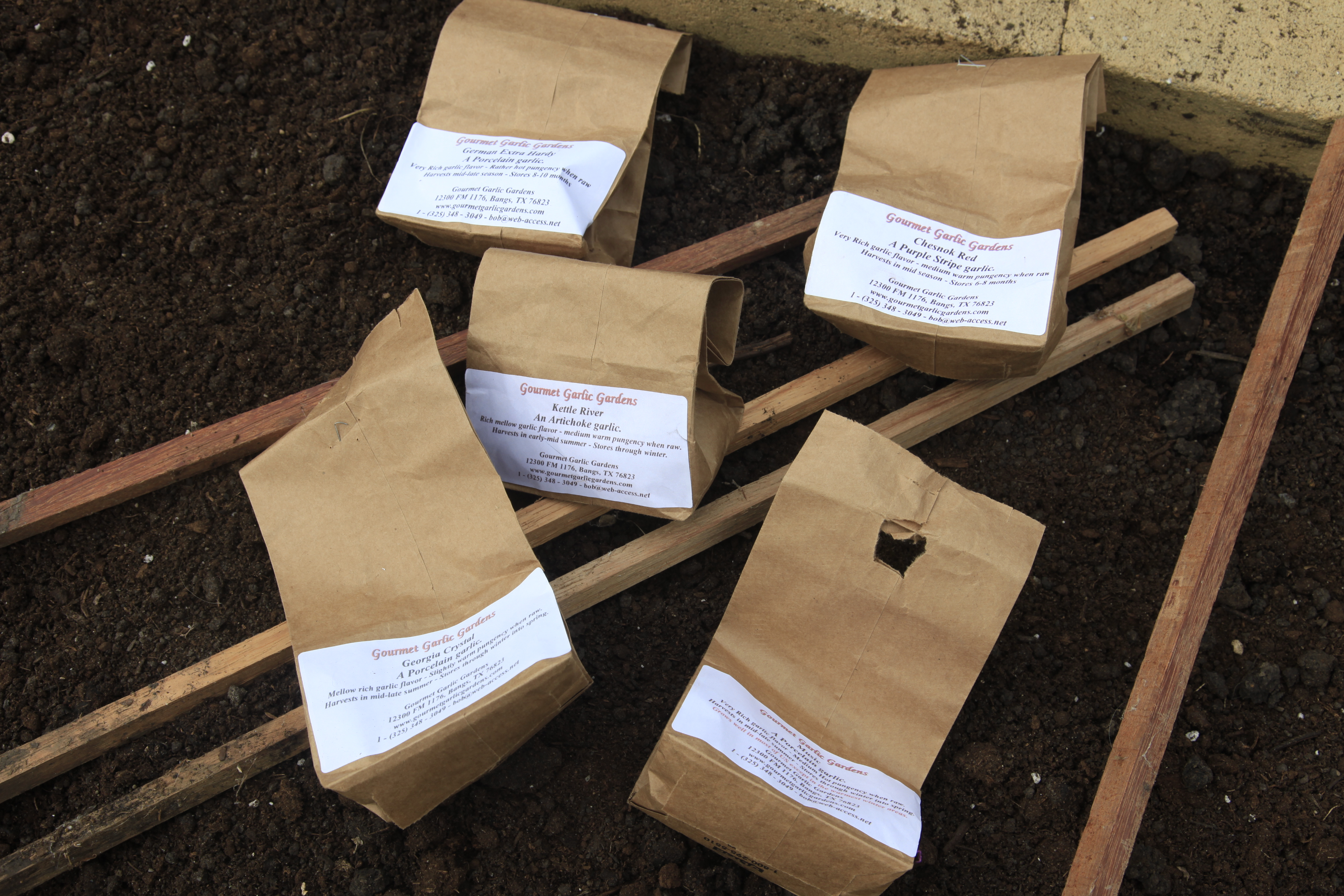
Connie Turner is planting five types of garlic plants: Chesnok red, Kettle River, German extra hardy, Georgia crystal and music.
Growing your own garlic is something new and old gardeners alike can sink their teeth into. Garlic plants require little space and care, and the rewards are a culinary delight.
Longtime gardener Connie Turner planted garlic for the first time last year at her rural Douglas County home, and now she is hooked.
“It was really rewarding,” Turner says. “It was easy to do, everything I planted came up, and it tasted good.”
Turner kept it simple to start by planting just a few cloves of one variety. This year, she purchased 12 bulbs. If you are not familiar with garlic, a bulb is composed of several small bulbs called cloves, each covered with a thin white skin. One bulb typically consists of a dozen or more cloves, and each clove can be planted to produce a new bulb.
Turner is planting more garlic this year because she has already used the garlic she grew last year. Since garlic has a long shelf life when stored in cool, dry places, she is hoping to produce more to use in her cooking next year.
Purchase garlic that is sold specifically for planting at a garden center, or check with national garlic seed producers. Grocery store garlic is often better suited for milder climates and in some instances may be treated to prevent sprouting.
Turner’s garlic came with instructions that specify how to plant, harvest and store the harvest. The producer suggests soaking the bulbs overnight before planting and dipping in rubbing alcohol to lessen the chance of disease.
“I didn’t do that last year, and my bulbs were fine,” Turner confides. “But I am going to try it this year since that’s what they recommend.”
Plant individual cloves 1 to 2 inches deep and about 3 inches apart, with the pointed end up. Garlic prefers full sun and well-drained soil like most vegetables and herbs. You may also want to mix a small amount of fertilizer into the soil before planting, but having your soil tested for nutrient content through the Douglas County Extension Office is the best way to determine the need for fertilizer.
Water the cloves after planting and mulch with straw, shredded leaves or other organic mulch. The cloves may sprout this fall, but wait until late spring or summer to harvest. Turner’s cloves sent up green shoots last year in December that later died back, but she didn’t worry about the growth. Every clove Turner planted last fall turned into a nice-sized bulb that she harvested this summer.
Waiting to harvest and eat the garlic may be the hardest part of growing the plant. Dig the bulbs when the lower leaves turn brown or when the whole plant begins to turn yellow.
Turner warns against eating the garlic right away, though. The bulbs need to cure.
“I was anxious to see what it was like. The cloves still had a garlic flavor, but it wasn’t like what you buy at the store.”
After allowing the bulbs (with foliage still attached) to cure in a warm, dry, airy place for three to four weeks, Turner’s garlic had a better and more familiar taste.
This year she is growing a purple-striped garlic (similar to the type typically available in the grocery store) called Chesnok Red, an artichoke or softneck garlic called Kettle River, and three types of porcelain garlic: German extra hardy, Georgia crystal and Music.
Elephant garlic, which is actually closer to a leek than to true garlic, should also be planted now.
— Jennifer Smith is the Douglas County Extension Agent-Horticulture for K-State Research and Extension and can be reached at 843-7058.