

Field school lets you dig into Kansas history
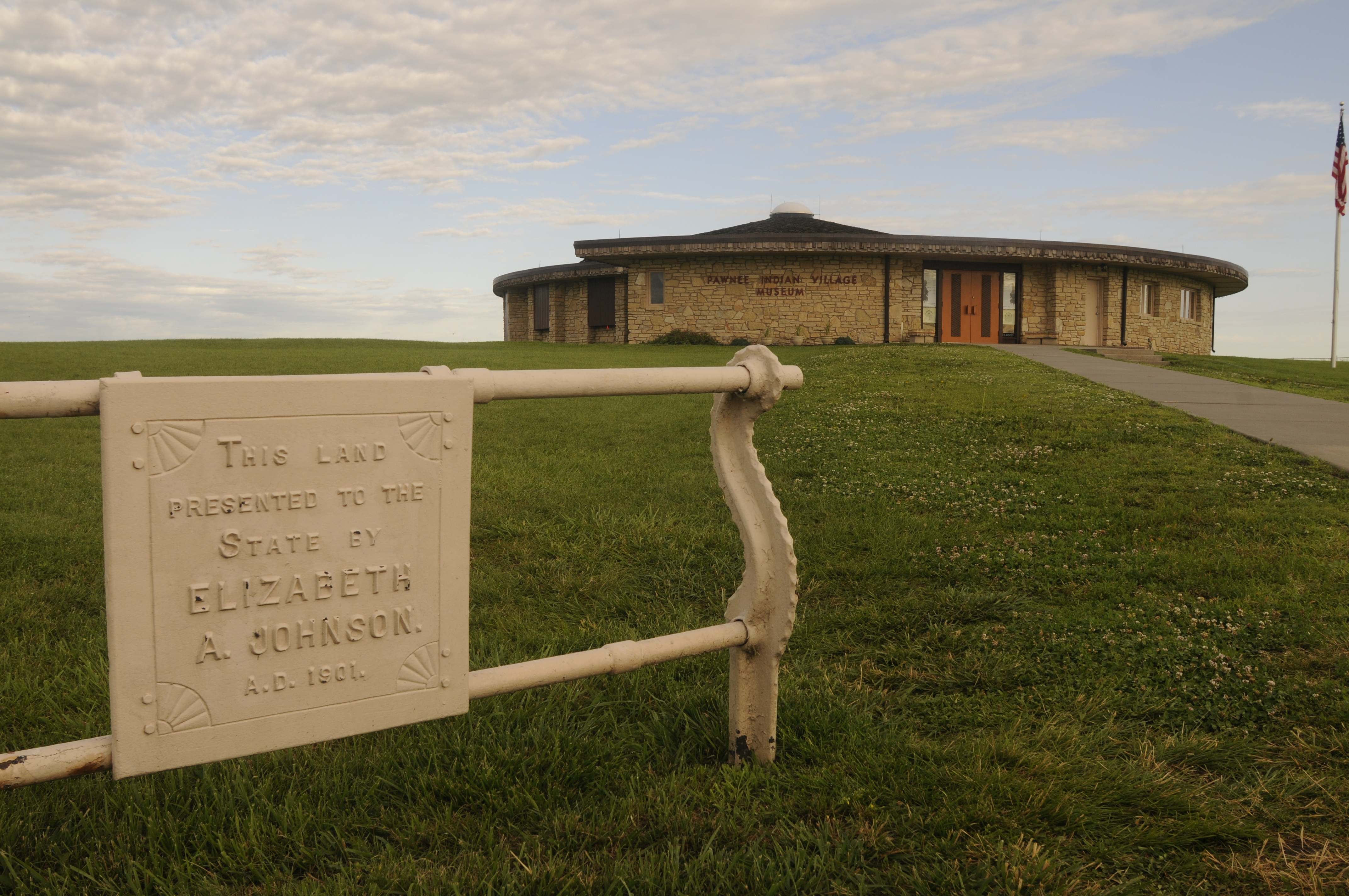
Pawnee Indian Museum State Historic Site is in Republic County. It has an excavated Pawnee earthlodge and a walking trail dotted with the remains of the native village.
The joke goes if you find any gold and silver, you can keep it. Everything else must be turned in and handled properly.
But, of course, no one on the Kansas Archeology Training Program Field School ever finds any gold or silver, according to longtime participant and Lawrence resident Mike Wildgen.
That doesn’t mean they don’t get anything out of the experience.
Virginia Wulfkuhle, public archeologist for the Kansas State Historical Society, said the school, held annually in June, represents the best opportunity for those looking to volunteer at a real archeological site.
For a nominal fee — $20 to $30 for members of the historical society or the Kansas Anthropological Association or $80 for nonmembers — participants can work in the field and in the artifact lab. And classes are offered, Wulfkuhle said.
Anyone interested in signing up for the field school may visit the school’s Web site at http://www.kshs.org/resource/katpcurrent.htm. Information is also available by phone at the Kansas Historical Society at 785-272-8681.
She said the volunteers play an important role for the historical society and for the projects they assist. The program would be years behind without the valuable labor they provide, she said.
Several sites are well-funded through the Department of Transportation when valuable archeological sites are found in the way of new roads.
“On sites that have a lot of research potential, but no development attached, there would be no funding associated with that,” Wulfkuhle said.
And without volunteers, opportunities would be lost, including opportunities to find and place artifacts in context, and to pull together heretofore unknown information about previous cultures, Wulfkuhle said.
Archeology can help explain more about the life of people who came before us, including how the population was distributed, how trade occurred and what kinds of houses and foods people used to survive, she said.
This year, the field school is traveling to Scott County to Scott State Park, where the program began back in 1975. It travels to different parts of the state each year.
It’s a part of the program that is attractive to participants like Wildgen, a former Lawrence city manager.
“I like seeing different parts of Kansas and the great folks out there,” he said.
While some other areas may lay claim to somewhat more famous archeological sites, like the Pueblo ruins in the Southwest, Kansas has nothing to apologize for when it comes to its own archeological treasures, said Lauren Ritterbush, associate professor of anthropology at Kansas State University.
Several Native American tribes have left behind a trove of information, including the Wichita and Pawnee tribes.
“It’s pretty exciting, and every year we find out a little bit more,” Wulfkuhle said.
Usually, more than 150 people attend the annual field school — though at its all-time high more than 300 people enrolled back in 1992. A few people have participated every year since the field school’s inception.
The program usually attracts people who are “real believers in historic preservation,” Wulfkuhle said.
“It’s really something that has extended the state budget,” she said. “It’s almost incalculable.”