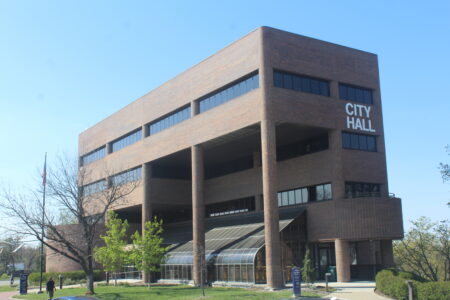
City reviews progress on 2007 goals
It’s not exactly the equivalent of resolving to shed a few pounds or to become more organized or whatever else people decide to commit themselves to on a late Dec. 31 night.
But Lawrence city commissioners do have goals, too — eight of them, actually, which are written down and included as part of the city’s budget.
Like the weight loss efforts or the organization project, results are mixed.
“I’ve been frustrated by it,” City Commissioner Boog Highberger said of progress the city has made on the goals.
In particular, Highberger said he doesn’t think the commission has paid enough attention to the goals. Traditionally, the City Commission formally sets goals once every two years — immediately following the April City Commission elections.
The current commission did that in 2007, but it did not take any time in 2008 to formally go over and revise the goals, which also had been customary with past commissions. Highberger said that was disappointing.
“I think that is absolutely critical for the City Commission,” Highberger said of formally setting and monitoring goals. “There’s a tendency to get bogged down in the day-to-day details. What the commission should be doing is providing the long-term, big-picture vision.”
City Commissioner Sue Hack, though, said she thought the city had done a good job of keeping up on its list.
“It does get frustrating when the day-to-day stuff takes longer than you think it should,” Hack said. “But if you look at our list, we’ve made progress on each one of those issues, and those are some pretty big issues.
Goals and comments
Here’s a look at the commission’s formal goals, and a few comments from city leaders.
• Economic development: “Promote the economic development of Lawrence to provide varied work and business opportunities.” The “key objectives” listed with this goal include identifying more industrial sites for the future, working toward making the area south and east of 23rd Street and O’Connell Drive into a new employment zone, and moving toward acquisition of the former Farmland Industries fertilizer plant.
Commissioners did identify at least one new industrial site. In one of the more controversial issues of the year, commissioners approved rezoning 155 acres near the Lecompton interchange on the Kansas Turnpike to be used for industrial purposes.
“I would like to be doing better on economic development, but I think we’re making some progress,” said City Commissioner Rob Chestnut.
Chestnut said approval of development plans for The Oread, a new hotel project near Kansas University, was a unique economic development project that will help the city capitalize on the tourism industry.
Commissioners also are in the process of submitting a new bid to the federal bankruptcy court for the Farmland property, which the city hopes to convert into a business park.
But work on converting the area southeast of 23rd and O’Connell into a new employment center has been slow.
• Planned growth: “Encouraging growth that protects our environment, neighborhoods and cultural features while benefiting all of our citizens.”
City leaders point to their work with Douglas County to approve new rural development standards. The new standards have led to the city recently loosening the restrictions on the number of water meters rural water district can add each year.
The city also is in the final stages of approving a new development code called the Smart Code. It will give developers the option of building denser, mixed-use developments.
But Highberger said he’s been disappointed that the commission has not had a serious discussion about impact fees, which would charge new development one-time fees to help cover infrastructure costs related to growth. Highberger said the city also didn’t hold true to the spirit of this goal when it approved the new 155-acre industrial site. Commissioners approved that rezoning before there was an area plan in place guiding how the area should develop.
• Community building: “Creating social capital and celebrating our heritage.” This goal included two key objectives — returning the former Carnegie Library building, at Ninth and Vermont streets, to public use, and improving the viability of the Lawrence Farmers Market.
The commission earlier this year decided to postpone reopening the Carnegie Building because the approximately $1 million renovation costs were going to be too much to spend during a down economy.
The Farmers Market was allowed to move its Saturday morning operations to a larger, more visible spot in downtown, in the 800 block of New Hampshire Street. The Tuesday and Thursday afternoon markets remain in a smaller lot in the 1000 block of Vermont Street.
• Environmental issues: “Integrating the environment into our decisions as we work towards a sustainable city.” Commissioners in 2007 listed moving toward a watershed stormwater policy as a key objective. Work on that policy hasn’t yet reached the City Commission level.
But commissioners did establish two new task forces related to the environment. The Mayor’s Task Force on Sustainability is meeting regularly to come up with ways to make the city more environmentally friendly. Commissioners also formed the Peak Oil Task Force after some residents expressed concern about the city’s lack of planning for higher fuel prices and possible oil shortages in the future.
Neighborhoods and beyond
• Neighborhood quality: Improve the livability of all Lawrence neighborhoods. Key objectives included developing affordable housing through the Lawrence Community Housing Trust, and to institutionalize area planning.
The city continues to provide funding for the housing trust project. Planners also have been doing more work on area and sector plans, which provide details on how areas will develop in the future.
City Manager David Corliss said a major part of neighborhood quality issues is finding ways to balance new development with existing neighborhoods.
“That will be a constant challenge in this community,” Corliss said. “But I feel we’re doing it in a professional way.”
• Transportation: “Build community consensus for a regional transportation plan that includes resolution of the South Lawrence Trafficway, U.S. Highway 59 and the eastern bypass.”
Commissioners did approve a new Transportation 2030 plan, which was required by federal regulators if the city wanted to qualify for future federal transportation funding.
Commissioners also began preliminary design work with the county on extending 31st Street from Haskell Avenue to County Road 1057 east of Lawrence.
But the big transportation issue, commissioners said, was voter approval of two new sales taxes to keep the city’s public transit system running.
“That support has made the system viable,” Chestnut said. “I’m not sure it was a viable system before.”
• Downtown Development: “Protecting the integrity of downtown while maintaining it as a unique community resource.” Key objectives included ensuring that the downtown is clean and inviting, redeveloping the library as an anchor for additional downtown redevelopment, and studying the topic of alcohol issues related to sidewalk dining.
Cost concerns ultimately stopped commissioners from moving forward on a major downtown library project, and commissioners have struggled with how to deal with panhandling concerns that have been raised by downtown merchants. But commissioners did approve new regulations that loosen sidewalk dining restrictions for places that sell alcohol.
• Service delivery: “Provide excellent city services consistent with resources available.” Key objectives included streamlining the development process, adopting a performance management system for city staff and implementing new building codes.
The city’s planning department and neighborhood resources department did merge in an effort to streamline the development process. New building codes and a performance management system also have been adopted.
Corliss said he expects commissioners to discuss crafting a new set of goals following the upcoming April City Commission elections.
City Government
Lawrence City Commission to weigh whether Costco should be included in STAR bond district
As they approve bikes plan, Lawrence city leaders ask about data collection, Kentucky and Tennessee streets
Lawrence city leaders want to toughen tobacco licensing rules ‘sooner than later’
Algerian government invites Mayor Brad Finkeldei, Lawrence delegation for a visit
Construction on Wakarusa Drive to resume; city manager says KDOT’s secretary has apologized for delay