

Signs of life: Indoor plants brighten home in winter
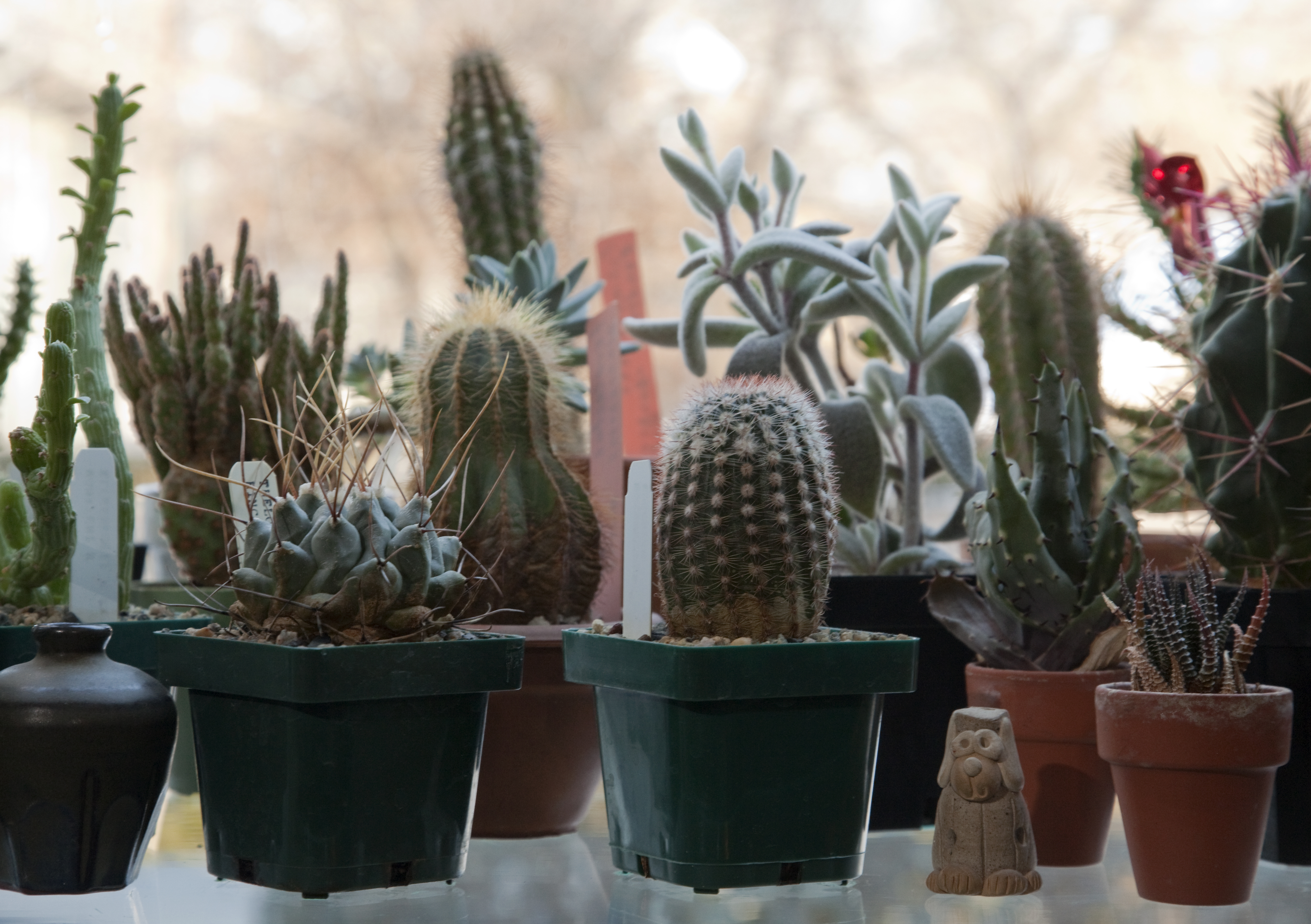
Small cactus plants sit in a recess window in Judy Northway’s kitchen.
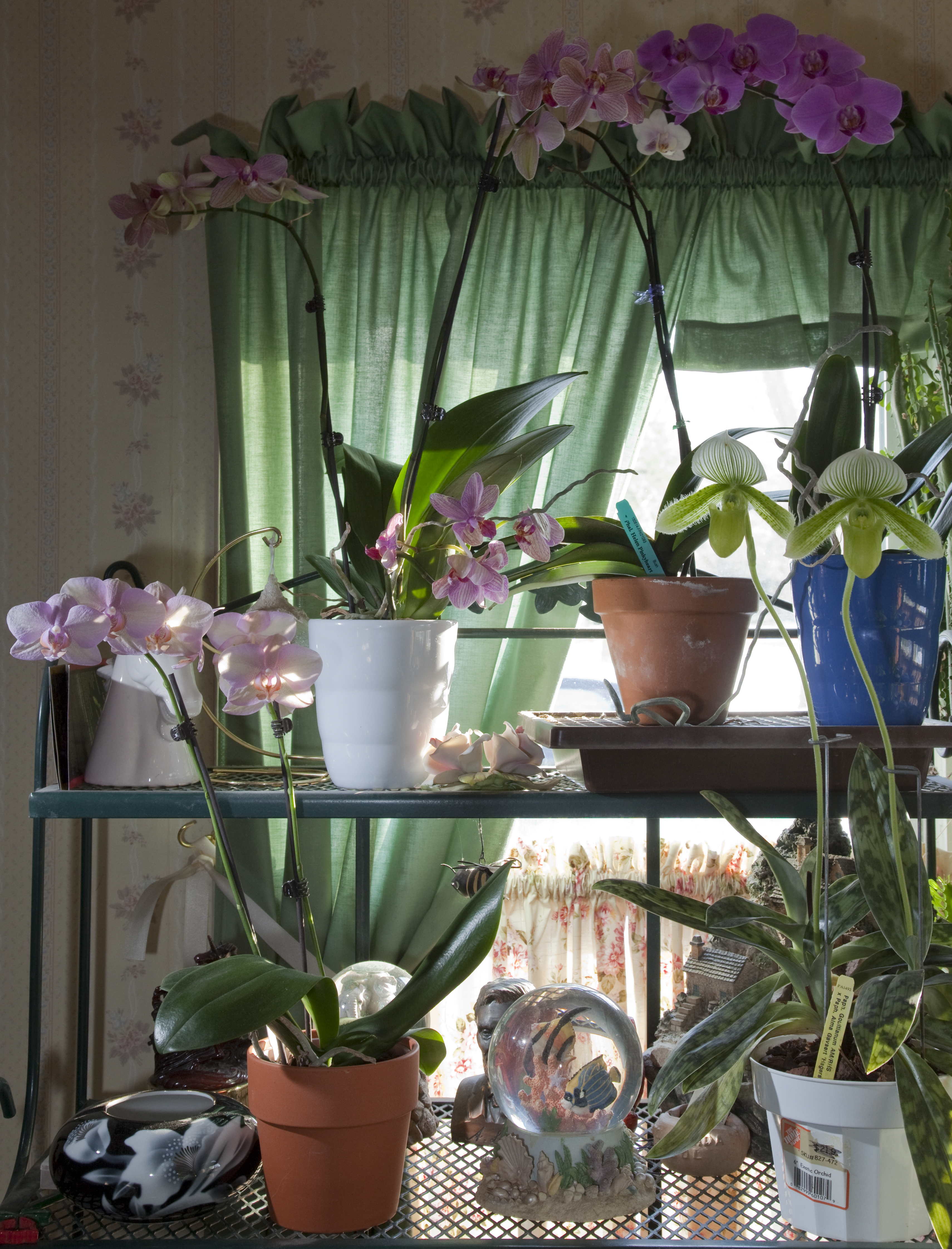
Judy Northway now has more than 70 orchids in her collection. Her tips for beginning orchid growers include finding out what kind of potting mix is best for the orchid variety you are trying to grow and determining how much light it needs.
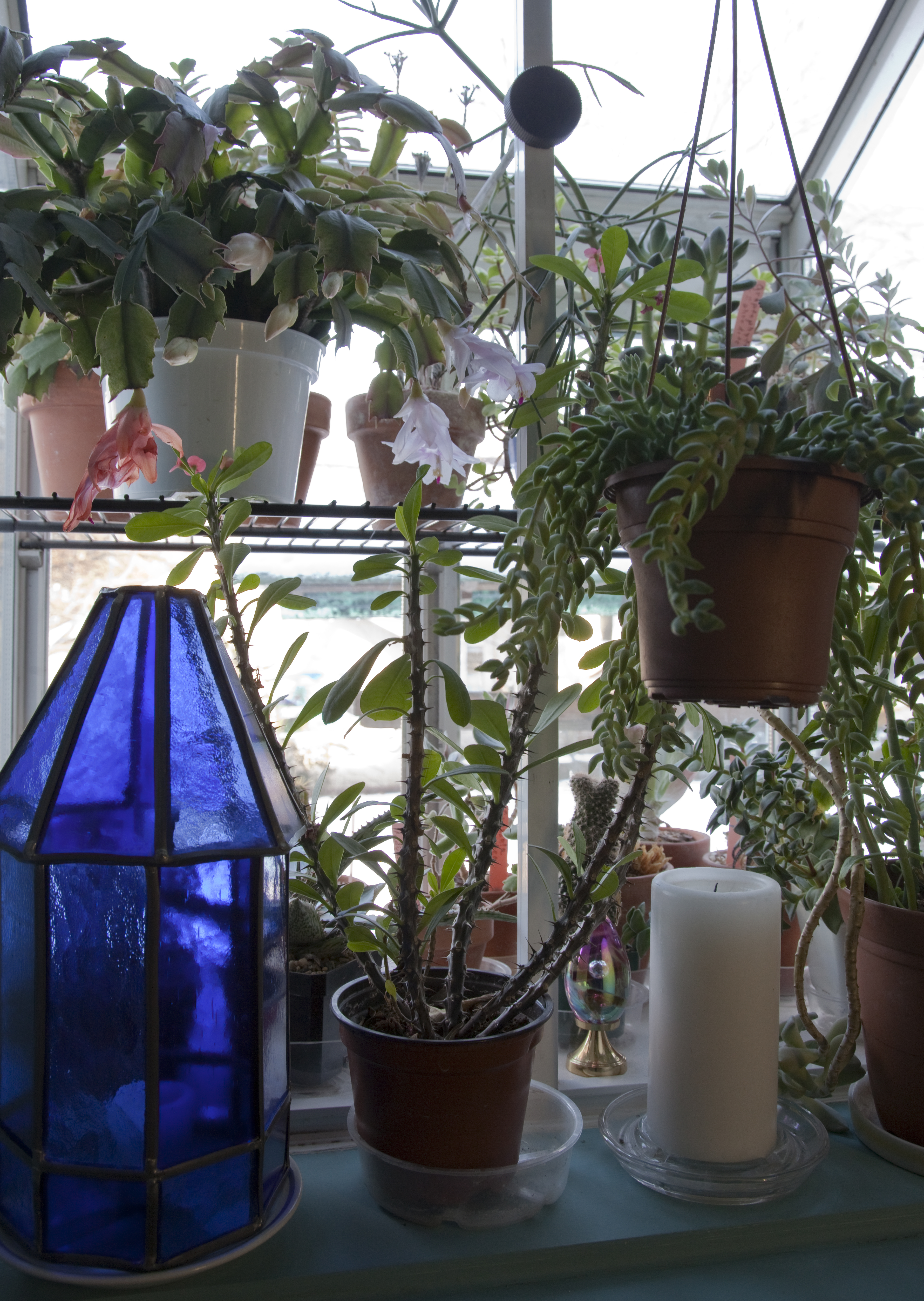
Plants and cobalt glass reside in a recess window in the bathroom of Judy Northway’s home.
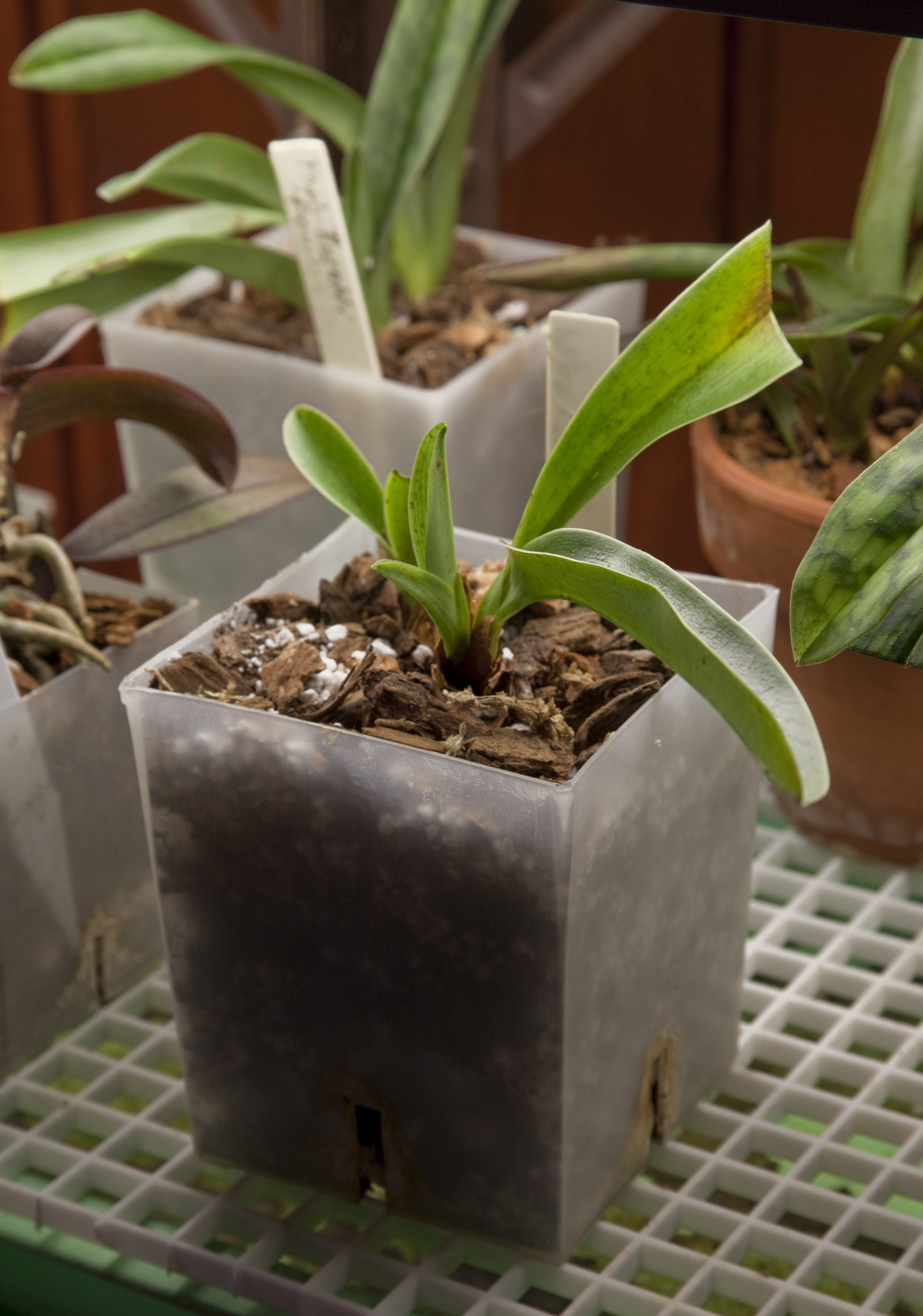
Orchid seedlings are some of the houseplant collection Judy Northway has in her Lawrence home.
Mid-winter is about the time my gardening hands start getting antsy, and I always end up picking up a few new houseplants to satisfy that gardening itch.
Indoor gardener Judy Northway says her houseplants help her make it through the winter, too.
“When I get the grumps or the weather is nasty, I just come down here and putter, and it makes me feel better,” she says.
Besides improving our moods, research proves that many common houseplants filter pollutants from the air (emitted by carpet, paint and furniture fabric) in addition to converting carbon dioxide into oxygen.
Northway grows orchids, African violets, cacti and succulents, and a variety of other tropical plants in her home. Her plants range from easy-to-grow varieties including Sansevieria (also known as snake plant or mother-in-law’s tongue), to more unusual types like a Madagascar palm with an umbrella of leaves over its 4-foot tall spiny trunk.
Even though Northway’s home has several windows, large trees shade the house and block much of the natural light. To compensate, she chooses plants carefully — using species that are tolerant of low-light conditions in much of her home. To grow the orchids and African violets that are her favorites, she uses supplemental lighting.
“The orchids are the most frustrating,” Northway shares, but I gather that it is a love/hate relationship. Northway’s first orchids were gifts from an enthusiast about 15 years ago, and she is proud that a few of those originals are still alive. She now has more than 70 orchids in her collection.
Northway’s tips for beginning orchid growers include finding out what kind of potting mix is best for the orchid variety you are trying to grow and determining how much light it needs. “Know what you are buying,” she says. “Ask questions!”
Both the orchids and the African violets receive 12 to 14 hours of light per day. Northway uses regular fluorescent bulbs in a twin tube shop light fixture. Fluorescent bulbs are less expensive than the incandescent bulbs sometimes recommended for plants, and researchers cannot agree about which is best. The real key to success is probably the location of the bulb in proximity to the plant — Northway has her orchids and violets on stands with light fixtures suspended directly above the plants.
Northway also has a wide variety of African violets, including one called King’s Ransom with ruffled pale purple blossoms. A few varieties are ancestors of plants grown by her grandmother that were shared by a cousin once Northway developed her own passion for houseplants.
Sticky yellow cards (available at garden centers) hang from the shelves to capture insects and alert Northway to infestations. Aphids, whiteflies and other insect pests occasionally find their way in, usually hitchhiking on new plants. Northway recommends examining new plants very carefully. She also recommends against taking plants outside for the summer, since it provides an easy avenue for insects to enter the home.
Finally, a collection of cacti and succulents brightens the east-facing kitchen window. My favorite is the Old Man Cactus that looks as if it is covered in gray hair.
Northway offers one last piece of advice: Never give up. Like most gardeners, she has lost a few plants over the years and knows that success can come from trying again.