May 12, 2008
Advertisement
Public transit comparison
Here's a statistical look at three different types of public transit services in the area.
Lawrence
Population: 88,605
System: The T bus system open to public
2007 ridership: 445,822
Rider fare: $1
Local tax support per ride: $2.92
Olathe
Population: 114,662
System: Taxi voucher program for elderly and disabled
2007 ridership: 45,488
Rider fare: $2.50
Local tax support per ride: $6.51
Riley County
Population: 69,083
System: Taxi voucher program for low-income seniors and disabled; ATA bus system open to public
2007 ridership: About 31,600
Rider fare: $2 to $4
Local tax support per ride: About $5.25
Note: The Riley County numbers are a combination of city- and county-run transportation programs.
It is classic Lawrence water cooler talk, frequent fodder for morning coffee clubs or big fish in the sea of anonymity known as message boards.
Surely you've heard it: "I bet you could run taxi cabs cheaper than what it costs the city to run the T."
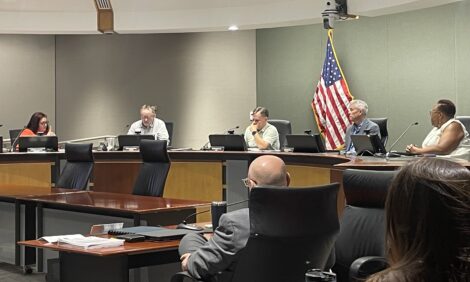
"I know that has been suggested in the community a number of times," said City Commissioner Rob Chestnut. "I can tell you I've gotten a number of e-mails about that one."
City leaders - struggling with how to deal with an estimated $1 million increase in public transit operating costs - may soon set out to determine whether that notion is myth or marvelous.
Chestnut has asked staff members to begin looking at alternatives that could take the place of the city's public transit system if commissioners don't figure out a way to come up with the necessary funding.
Voucher program
A system called a taxi cab voucher program certainly will get a look. City leaders in both Olathe and Manhattan have been teaming up with private taxi companies for years to provide transportation to seniors, the disabled and low-income residents.
Chestnut said the city may have to undergo a philosophical shift when it comes to public transit.
"It may be that we have to go away from the idea of getting huge ridership," Chestnut said.
Instead, the city may want to look at a system that is designed to primarily meet the needs of the truly transient dependent.
But T supporters say now is the wrong time to make such an ideological detour.
"It seems counterintuitive that at the same time energy costs and fuel costs are going through the roof that we're limiting the alternatives available to people," said David Dunfield, a member of the city's public transit advisory board and a former city commissioner who fought hard to establish the T in 2000.
'Extremely successful'
City leaders in Olathe, though, praise their 31-year-old taxi program. It has been expanded twice and has won national and state awards as an innovative, small-scale public transit system.
And most importantly to budget makers, Olathe spends only $296,000 in local tax dollars to provide the service. Lawrence will spend about $1.3 million in local property tax dollars this year and would need to spend about $2.3 million in local dollars in 2009 to keep the system running at its same level.
"We feel like it has been a program that has been extremely successful over the years," said Kathy Rankin, neighborhood and human services manager for Olathe. "It is providing transportation to people who without this option very possibly would be homebound."
But there is a major difference between the Lawrence and Olathe programs. The Olathe program is not open to everybody. Riders have to qualify to use the service.
Here's how it works: The city has two programs geared toward senior citizens and the disabled. People age 60 or older or those who have a disability can purchase taxi vouchers for the city's general ride program. The vouchers cost $2.50 and can be redeemed at one of two private taxi companies for a one-way ride anywhere in the city. The city limits people to purchasing 20 vouchers per month. Seniors and the disabled also can buy an unlimited number of medical vouchers that allow people to take a taxi cab to a doctor's office or for other medical-related trips.
For low-income residents - defined as people at 80 percent or below the median income as set by Housing and Urban Development - the city offers a job ride program. Low-income residents can purchase an unlimited number of the $2.50 vouchers to use to get to and from work.
Typically, the program provides about 45,000 one-way trips in a year. It is the primary public transit system in Olathe, according to Rankin, who said the Johnson County transit system only has one route in Olathe and it only operates three days per week. The Olathe program receives about $240,000 per year in federal grants.
Manhattan system
In Manhattan, the system is similar but smaller. The city spends about $15,000 per year to provide taxi cab vouchers to low-income senior citizens and the disabled, said Bernie Hayen, finance director for Manhattan. The program provides about 10,000 rides per year.
But city residents also rely on a small public transit bus system called the ATA bus. The bus system is open to anyone in Riley County, but people must call 24 hours in advance to schedule a ride. Fares, scheduled to go up in June, will be $2 per one-way trips within Manhattan and $4 for trips outside the city limits.
The service costs Manhattan and Riley County taxpayers about $150,000 per year and receives about $160,000 in federal and state funding. The system provided about 22,000 rides in 2007.
Top ads RSS
Marketplace
Arts & Entertainment · Bars · Theatres · Restaurants · Coffeehouses · Libraries · Antiques · Services
- School district needs to cut $500K more July 3, 2009 · 30 comments
- Blog: Sarah Palin: With Interest July 4, 2009 · 113 comments
- Palin to resign as Alaska governor July 3, 2009 · 128 comments
- Increased government control poses threat to America July 4, 2009 · 49 comments
- New law: Left lane only for passing July 2, 2009 · 194 comments
- Police respond to shots fired south of Eudora July 4, 2009 · 1 comment
- Franken attorneys sway election July 3, 2009 · 69 comments
- Facts about the Fourth July 4, 2009 · 8 comments
- Poll: Do you consider yourself to be patriotic? July 4, 2009 · 27 comments
- Blog: Your Favorite Patriotic Song - Songs That Make You Salute! July 2, 2009 · 112 comments
- Facts about the Fourth July 4, 2009
- Increased government control poses threat to America July 4, 2009
- Coalition to gather input on aging issues July 4, 2009
- Kansas football rookies adjusting July 4, 2009
- School district needs to cut $500K more July 3, 2009
- 6News video: SLT opponents gather for forum June 15, 2008
- Housewares with presidential images put historical spin on collecting November 5, 2006
- Sunflowers blooming in local fields August 25, 2008
- Sunflower farm shows off state icon August 18, 2007
- New law: Left lane only for passing July 2, 2009


12 May 2008
at 6:48 a.m.
Suggest removal
Permalink
just_another_bozo_on_this_bus (Anonymous) says…
“What is the downside of taxi vouchers?”It can never serve the number of people that will need it, especially with gas about to exceed $5 a gallon, and likely close to $10 a gallon by the next presidential election.
12 May 2008
at 6:51 a.m.
Suggest removal
Permalink
just_another_bozo_on_this_bus (Anonymous) says…
And I bet within the next couple of years, the taxi system in Olathe will be considered inadequate and too expensive, and the bus system will be expanded to replace it.
12 May 2008
at 7:40 a.m.
Suggest removal
Permalink
Godot (Anonymous) says…
“But T supporters say now is the wrong time to make such an ideological detour.”If being smart is an ideology, then, so be it.
12 May 2008
at 7:52 a.m.
Suggest removal
Permalink
deec (Anonymous) says…
Another downside is that in my experience drivers hate the subsidized customers. Cabbies make a percentage with no base wage, so a $2.50 run across town means you are not picking up full-fair passengers where you make more money. Also, subsidized customers rarely, if ever, tip, so the driver's income is further impaired.
12 May 2008
at 7:59 a.m.
Suggest removal
Permalink
gccs14r (Anonymous) says…
This is yet *another* way to be just like Olathe. If I wanted to live in Olathe, I'd move there. Quit bringing their McLifestyle here!
12 May 2008
at 8:07 a.m.
Suggest removal
Permalink
mothernature (Anonymous) says…
Will there be a voucher for mothers that need to get groceries? People with out cars need to do more than go to work, and more than just the elderly need to see the doctor. If you haven't noticed there are more and more people who can't afford cars these days. The Lawrence demographic is different than Olathe. On the up side, this might be a good opportunity for the city to look at the increasing city bike traffic. Getting big buses off of small streets is a start.
12 May 2008
at 8:19 a.m.
Suggest removal
Permalink
nekansan (Anonymous) says…
Just do the math……From 2007 Annual Report446,000 rides/$3.3 Million = $7.39/tripFrom other reports in LJW….170,000 gallons/446,000 rides = .38 Gallons/RidePlease don't tell me you can drive a taxi across town on the average trip a T user makes on 1/3 of a gallon of gas. I'd also like to see what constitutes a “ride” If a person transfers between buses is that counted as 2 “rides” when in reality is really a single journey? Dropping the T makes sense on both environmental and economic grounds.
12 May 2008
at 8:21 a.m.
Suggest removal
Permalink
dano (Anonymous) says…
To get even more people involved in the taxi idea, I would suggest we look at hybrid taxis even for a somewhat higher initial cost. I'd rather subsidize a hybrid purchase over a dirty, nearly empty bus any day.
12 May 2008
at 8:24 a.m.
Suggest removal
Permalink
WilburM (Anonymous) says…
As we head toward 4-5 bucks a gallon for gas, slashing public transportation makes no sense. Still, why is a city of 90K supporting TWO bus companies? Isn't there anyone smart enough to find a way to integrate the KU service (with its large number of riders for most of the year) with the T.I know there are supposed to be great difficulties, but even if it requires federal help, then Reps. Moore and Boyda should become part of the solution, along with our GOP senators.In short, where is the clear, comprehensive transportation policy that will serve Lawrence in the new age of high-cost fuel?
12 May 2008
at 8:31 a.m.
Suggest removal
Permalink
nugget (Anonymous) says…
The idea of a car rounding the corner near my house with a single passenger, instead of a 30 foot lumbering, wheezing, screaming empty diesel sounds like a better alternative. Actually, anything is a better alternative than the current “solution”.
12 May 2008
at 8:31 a.m.
Suggest removal
Permalink
gr (Anonymous) says…
“If you haven't noticed there are more and more people who can't afford cars these days.”You may want to try looking here:http://www2.ljworld.com/classifieds/transportation/cars-domestic/There are several for sale for just a few thousand.
12 May 2008
at 8:35 a.m.
Suggest removal
Permalink
moderationman (Anonymous) says…
Integration with KU has become more cumbersome as students, faculty and staff will ride free starting in the fall of 2008. Most of the increased cost of the “T” deals with rising fuel costs. I guess taxis won't have the same issue. Some apartment complexes now have their own bus system running to KU (Legends). The KU system duplicates some city routes. Maybe the city ought to pay KU to run the entire system?
12 May 2008
at 8:53 a.m.
Suggest removal
Permalink
Tanetti (Anonymous) says…
The downside to on-demand transit? It's rarely truly on-demand. Have you called a taxi? Did it show up immediately? I grew up in this town without a car, and I vividly remember waiting up to 90 minutes for a taxi, even if it was a time call, where we specified what time we needed picked up at, say, the grocery store. Meanwhile, our frozen foods would melt, wasting even more of our money. I'm sure someone will respond, “Well, then call ahead of time,” but how can you do that when you have absolutely no idea how long it will take the taxi to respond? The dispatcher can give an estimate but in my experience that estimate is worthless; could be less time, but most likely could be more. My parents now live in Des Moines and the situation is the same there; they've had to cancel taxi calls because the taxi still hasn't arrived and it's too late to make it to whatever they were planning to attend.Second, not everyone can afford “just a few thousand” for a car. That's still a LOT of money to a lot of people, and the purchase price is but one portion of the costs of ownership: annual registration/property tax, gasoline, maintenance, insurance. I would hazard a guess that most of the people who oppose the T haven't needed to use public transit regularly. It's easy to armchair-quarterback this issue, but try asking any of the people waiting at the bus stops in eastern Lawrence (and there are plenty, if you live in the neighborhood near the fairgrounds), and you'll likely get a very different response. They're the people who need it most, and as someone who can (barely) afford a car of my own, I'm more than happy to help these people get to work, shop or otherwise move around town. I would hope someone would feel the same if the roles were reversed.And FWIW, Olathe has a plenty-big low-income population. All you need to do is look west of I-35 for proof of that. If anything, Lawrence's population is probably better off than Olathe's in general. I lived there long enough to know that.
12 May 2008
at 8:54 a.m.
Suggest removal
Permalink
Logan72 (Alia Ahmed) says…
Here's a story in the KC Star about a bus system that works. I took this one day. It was great.http://www.kansascity.com/105/story/615730.html
12 May 2008
at 8:58 a.m.
Suggest removal
Permalink
WilburM (Anonymous) says…
Gee, KU has the foresight to combine fees and subsidies to address the real issue of moving people to and from the campus, with less reliance on autos. Again, despite bureaucratic rules, the continued existence of two separate systems represents a failure of imagination — especially as KU students' apartments get farther and farther from the campus.
12 May 2008
at 9:22 a.m.
Suggest removal
Permalink
Marion (Marion Lynn) says…
WilburM (Anonymous) says: As we head toward 4-5 bucks a gallon for gas, slashing public transportation makes no sense. Still, why is a city of 90K supporting TWO bus companies? Isn't there anyone smart enough to find a way to integrate the KU service (with its large number of riders for most of the year) with the T.”Marion writes:Lawrence once had a very effective and efficient bus service but it was privately owned.The Psuedo-liberal/Neosocialist/Progressives just *KNEW* that government could do it better so The T was introduced and it ran the privately owned bus company out of business and at taxpayer expence, at that!And what is the “hidden” reason that the Lawrence Bus Company was put out of business?Land.The very valuable land on which the old bus company sits.You wanted Lawrence to be a “Smart Growth” city, well; you got it.Live with it.
12 May 2008
at 9:23 a.m.
Suggest removal
Permalink
salad (Anonymous) says…
“This is yet *another* way to be just like Olathe. If I wanted to live in Olathe, I'd move there. Quit bringing their McLifestyle here!”Sorry to inform you, but that ship has sailed long, long ago. You need look no further than all of west Lawrence for proof. As far as I can tell, there's really no difference between Lawrence and Johnson county, other than Lawrence has a cooler downtown, and Johnson county has actual jobs.
12 May 2008
at 9:28 a.m.
Suggest removal
Permalink
SettingTheRecordStraight (Anonymous) says…
The T is a shameful waste. Scrap it now.
12 May 2008
at 9:33 a.m.
Suggest removal
Permalink
just_another_bozo_on_this_bus (Anonymous) says…
Touching little story, Marion, but completely devoid of reality. The “private” bus company had one reason for existence— to fulfill its contract with KU in providing a bus service for KU. They stayed in business until KU cancelled their contract— the city wasn't involved at all.
12 May 2008
at 9:40 a.m.
Suggest removal
Permalink
Newell_Post (Anonymous) says…
Marion is right. The T is a typical failure of a centrally-planned communist system. There is no need to eliminate it. Just eliminate the economic subsidies. Let a private company run the routes where sufficient demand exists and charge rates sufficient to cover their expenses and provide a return to the investors. The system will then find a sustainable equilibrium.
12 May 2008
at 9:41 a.m.
Suggest removal
Permalink
KsTwister (Anonymous) says…
One more time: A small fleet of mini-vans would make more logic but then again this is Lawrence, Kansas.
12 May 2008
at 9:43 a.m.
Suggest removal
Permalink
EmJones (Anonymous) says…
This is so short-sighted. Fuel will cost $5 a gallon soon. We should be looking at ways to make the bus better and more usable, not destroying it. Taxicabs are no better than individual cars, for the environment. I am extremely disappointed in this commission. It seems like none of the decisions and projects are for the good of the community as a whole.
12 May 2008
at 9:45 a.m.
Suggest removal
Permalink
EmJones (Anonymous) says…
Marion said “The Psuedo-liberal/Neosocialist/Progressives just *KNEW* that government could do it better…”Someone - a reliable source - told me it was Doug Compton who pushed the bus in the first place - so that people could get around from his vast array of rental properties. It was a good thing, but let's get straight who supported it in the beginning.
12 May 2008
at 9:47 a.m.
Suggest removal
Permalink
BalkansHawk (Anonymous) says…
I'll take T for Taxi over T for Taxes anytime. At least I don't have to pay for the Taxi if I am not using it.
12 May 2008
at 10 a.m.
Suggest removal
Permalink
blue73harley (Anonymous) says…
KsTwister - I agree completely with the mini-van idea. I suggested previously that many lesser used routes could be serviced easily with a small van.
12 May 2008
at 10:35 a.m.
Suggest removal
Permalink
angermeier (Anonymous) says…
Just a point of question. How many of you actually ride the T? How many of you don't have cars, have low-paying jobs and depend on the T as your ONLY mean of transportation to get to work? I'm one, and most who actually ride the T are dependents as well. I just love how most Lawrence residents who drive around in their “gas saving” Priouses, have such huge opinions about why we should all get rid of the T, but have never even ridden it. Bouigous hippies!
12 May 2008
at 11:07 a.m.
Suggest removal
Permalink
OnlyTheOne (Anonymous) says…
Typical Lawrence “leadership.”Full blown, wasteful with low ridership or nothing.Never searching for a reasonable in between.
12 May 2008
at 11:28 a.m.
Suggest removal
Permalink
JOEHAWK (Anonymous) says…
This is yet *another* way to be just like Olathe. If I wanted to live in Olathe, I'd move there. Quit bringing their McLifestyle here!It's just about any OTHER city in the country. Get out and see the world and quit trying to make us the most backward place to live.
12 May 2008
at 11:44 a.m.
Suggest removal
Permalink
HootyWho (Anonymous) says…
We need the bus, sometimes you can come up with 50 cents or a dollar a lot easier than 2.50, been there, they just need to redo the routes and maybe get some of the larger businesses in town to partner with them, offer incentives to workers who use the T, ect. my son rode the bus for over a year when he worked at Hastings, saved him a lot of money.
12 May 2008
at 11:59 a.m.
Suggest removal
Permalink
jonas (Anonymous) says…
Gr: “There are several for sale for just a few thousand.”That's a lot of money. And then there's insurance, gas prices, etc. I think you're looking at this from an extremely centric perspective.
12 May 2008
at 12:12 p.m.
Suggest removal
Permalink
KsTwister (Anonymous) says…
I never see any of the large buses with 20 people on them at a time unless the city has given free service to an event. Therefore, if you want large buses you are paying more when you cannot fill or partially fill those seats. Keep a couple of large buses if necessary and they can prove their necessity, otherwise a few small vans (electric if cost effective) to supplement transportation needs. But for this to be all or nothing at all for taxpayers to sink good money after bad is pretty stupid.
12 May 2008
at 12:44 p.m.
Suggest removal
Permalink
none2 (Anonymous) says…
angermeier (Anonymous) says:”Just a point of question. How many of you actually ride the T? How many of you don't have cars, have low-paying jobs and depend on the T as your ONLY mean of transportation to get to work? I'm one, and most who actually ride the T are dependents as well.I just love how most Lawrence residents who drive around in their “gas saving” Priouses, have such huge opinions about why we should all get rid of the T, but have never even ridden it. Bouigous hippies!”=====================================What did you do before 16-Dec-2000 when the T was started? Do you have an aversion to walking or riding a bike? I have ridden from North Lawrence to Home Depot before. You have absolutely no co-workers or friends to car pool with?
12 May 2008
at 12:51 p.m.
Suggest removal
Permalink
OldEnuf2BYurDad (Anonymous) says…
“It can never serve the number of people that will need it”But then again, how many “need” it? If SOOOO many need it, why is the T dying? If the demand increases, cab companies will fill demand.”Have you called a taxi? Did it show up immediately? I grew up in this town without a car, and I vividly remember waiting up to 90 minutes for a taxi”Ask people who use public transport in this town, and they'll tell you that 90 minutes is what it takes to get across town on the T.This $1,000,000 needed for the T… does it even calculate the price of fuel in 2009? If we cannot afford the T now, we won't be able to afford it in 2009. a $1,000,000 increase is more than $1,000 for every person in Lawrence. What will we be asked to spend in 2009 to keep it going? All the while, empty buses are spewing diesel fumes all over town… not very “green”, is it?
12 May 2008
at 2:38 p.m.
Suggest removal
Permalink
ralphralph (Anonymous) says…
There is no free lunch, and no free ride.Next year KU students will not begin to ride free, they will begin to pay in advance whether they ride or not. The subsidy is imposed within their smaller community, and student fees are the taxes each student must pay. So, all those folks who live next to campus, or who like to bike, walk, skate, or whatever, to class, will need to make sure and wave at the bus when it goes by … after all, they are paying the fare … in advance … like it or not …. kind of like non-revenue sports (which, btw, methinks the KU Athletic Dept could probably fund for a year or two, given their garantuan capital improvement budget).Free ride? nope.
12 May 2008
at 2:49 p.m.
Suggest removal
Permalink
supercowbellninja (Anonymous) says…
I think the vouchers are a great idea - I don't think there is a need for a full blown bus system in a town this small - I'll be interested to see the results of any studies done on this in the coming month
12 May 2008
at 3:20 p.m.
Suggest removal
Permalink
BigPrune (Anonymous) says…
Where are the people who protested the coal power plants in western Kansas? Oh, they WANT the T bus and all the pollution that goes with them. I try and try but I still don't get those people. Where is their logic?
12 May 2008
at 3:20 p.m.
Suggest removal
Permalink
kappyblu (Anonymous) says…
This is crazy. It doesn't say anything about helping low-income people get to the grocery store let alone other errands. I know of a woman who uses the bus to get to work and pick up her kids from daycare, go to the store, doctor's apppointments, etc. Some people take it because they have to, some people because they want to. Public transportation is necessary for a town this size, but the taxi voucher system is just not a good idea.
12 May 2008
at 4:01 p.m.
Suggest removal
Permalink
misplacedcheesehead (Anonymous) says…
D@*!, this makes me ANGRY!The persons who recommend doing away with the T are those who can afford to own and “feed” automobiles. IF a taxi voucher system were approved to take the place of the “T”, many persons would still be left without transportation.Even if such a system gave vouchers to disabled persons, and gave low-income riders vouchers ONLY to get to and from work, what are we supposed to do the rest of the time? Well?Does this mean that if a poor person needs to go to the grocery store, or any other appt. that is not their job or medical related, no service is provided?In a city the size of Lawrence, all the places a person could possibly need to get to are rather spread out. What about parents of disabled children who don't have a car, but still need to get around? If our other child(ren) are not disabled, and we need to take them with us, what the “H” do we do then?As usual, it is the persons who don't have to worry about how to afford getting to where they need to who think it is the solution to do away with the buses. IDIOTS!!!
12 May 2008
at 4:22 p.m.
Suggest removal
Permalink
Bossa_Nova (Anonymous) says…
screw it man! i'm buying a horse! i motion to have the city put water traughs throughout the city and wooden posts to tie my horse to for when i go galloping thru town to do my shopping. man, i will be the envy of all my green buddies! and to add to it, we can take the horsy poo and turn it into ethanol!
12 May 2008
at 4:35 p.m.
Suggest removal
Permalink
WHY (Anonymous) says…
The k10 connector is a great bus, and it only costs 1.50 each way. Once there is a demand for a bus system in lawrence there will be a bus system.
12 May 2008
at 4:41 p.m.
Suggest removal
Permalink
jaycee (Anonymous) says…
With gas prices out of site, I can see a lot more people riding the bus. I believe the transit system needs to stay, for students, elderly, and residents that don't own autos.
12 May 2008
at 4:42 p.m.
Suggest removal
Permalink
bevy (Anonymous) says…
Oh please, dialupandy, SRS is already cash-strapped and having to cut back on programs.I know the T is a great help to many but it does seem crazy to have mostly empty buses running all over town. In a city that is supposedly so smart (college town!) why can't we come up with a solution? Maybe they should get the environmental/engineering students on the Hill working on it? Too bad no one in gov't will actually take their suggestions (See Oread hotel above)I commute from Lecompton to Topeka every day, and I would love to see commuter rail service reestablished for me, and for all those Topekans who work in Lawrence and vice versa. The train stations have been restored in both towns.
12 May 2008
at 5:40 p.m.
Suggest removal
Permalink
Sigmund (Anonymous) says…
logicsound04 (Anonymous) says: “Just because our public transit system isn't utilized on the same level as a city like New York or Chicago, doesn't mean it is a failure. It just means we have to be a bit more creative about making it work for us. I refuse to believe that our Business Wizard city commission can't figure out a way to make a valuable service like the T work for the citizens of Lawrence. Public transit rarely operates in the black-after all, it is a service, not a business.”Chicago and New York are densly populated cities unlike little ole Larryville, sure subways are nice but we don't have the money to pay for a service that benefits so few people. Bussiness Wizards or not if there isn't the demand no one can make it work, then add the fact that because of the corporate welfare MV Transportation recieves they have no incentive to make it work, they get paid and make a profit even if nobody uses it.Unlike fire and police which are public safety and benefits everyone (if my neighbors house is on fire the FD keeps it from spreading), the bus system does not benefit everyone, not by a long shot.You want public transportation in the form of buses to work? It is easy, run it like a business. Charge the riders what it costs and the customers, or lack thereof, will quickly tell you where the demand is on what routes and at what times. I wouldn't have a problem with the taxpayers subsidizing 50% of the cost of a ride. The city will kick in $4.00 if the riders kick in $4.00. If the riders don't think it is worth that price then it needs to be scrapped.
12 May 2008
at 5:40 p.m.
Suggest removal
Permalink
frwent (Anonymous) says…
The T, if managed properly, can provide benefits to all residents. Either it will result in fewer cars on the road (resulting in less pollution, less road wear & tear) or it will allow the car-less to participate as active members of the community.YES!! How true!! But how do you get anything managed properly with a city commission who is strapped to a “city staff”. This was a disaster before it even hit the road, an off-the-shelf bill of goods from an out of town company in Iowa. No doubt, recommended by the city manager and his “staff” City comissioners have no expertise, no knowledge, no desire, no motivation to do anything that they are not directed to by the city manager and his “staff”. That is the huge flaw in this form of government as it exists in Lawrence, Kansas. I have never seen such a dysfunctional and disabled city government style anywhere, and I have lived all over the country (military) in my 64 years. And it will not change until we change the very fabric of this forlorn and useless form of government where un-elected “staff” wag the dog and dictate to the clueless and gutless commissioners who are held captive to the city manager and his cronies.
12 May 2008
at 5:53 p.m.
Suggest removal
Permalink
JHawker (Anonymous) says…
Watch the news - gas prices are going up, and public transportation usage is also going up. Why on earth would we consider getting rid of buses, which can carry a significant amount of people and replacing them with taxis! this is ridiculous… America in general needs to simply improve public transportation.. if only we had a train system like most of Europe does…
12 May 2008
at 5:58 p.m.
Suggest removal
Permalink
none2 (Anonymous) says…
logicsound04 (Anonymous) says:”Let's look at both sides of the issue here:.”=======================================The corrected version:The anti-Em-T side: It's a waste of tax payers money to spend so much money on so many empty large buses that benefit so few people.The pro-Em-T side: Where's my personal wet nurse? I'm entitled to have one! Where's my personal wet nurse? I'm entitled to have one! Where's my personal wet nurse? I'm entitled to have one! Where's my personal wet nurse? I'm entitled to have one! Not only should the elderly and disabled have access to in-expensive public transportation, but every single person — no matter what the cost is to our local, state, federal government, no matter how little it is used, no matter how large the buses are. It is more important than Fire & Police protection (which just about every incorporated town, village, surburb, & city have). It is more important than maintaining roads that bring fire protection, ambulance, food, trash, school kids, and all other sorts of items around town and in and out of town year round at all hours of the day. We cannot expect anybody non-elderly or non-disabled to ever to walk, run, skate, bike, car pool, use a motor bike, use a scooter, or even take private transportation as that is inconvenient, undignified and furthermore cruel and unusual punishment. (It' is either written so in the Constitution, the Declaration of Independence, or maybe it is in the Bible, or at least in The World According to Lawrence.)
12 May 2008
at 6:50 p.m.
Suggest removal
Permalink
del888 (Anonymous) says…
I agree with KsTwister - use mini vans. The real problem here is that we have a 50 passenger bus hauling 2 people around town.It is obvious that if enough people are in the bus, it is cheaper than having everyone riding in seperate cars - but the usually there are not enough in the bus. Solution: use smaller busses (or mini vans). Taxis will not work - they cannot support everyone who rides the T.
12 May 2008
at 7:19 p.m.
Suggest removal
Permalink
KSA_21_3503 (Anonymous) says…
I think there is a middle ground that can be had on this issue. It seems that the T got too big too fast and has become a drain on the city. It also seems that there is a legitimate need for the service.Thus, a solution lies somewhere between abandoning the project and maintaining its current operation. To discover exactly how we can solve this problem, we need to identify the interests.To me, the underlying interests of all sides seem to be:1. provide transportation for disabled, poor, or elderly2. reduce pollution3. reduce traffic congestion4. save money..a. For city (taxpayers)..b. For ridersThe T, in its current form, provides transportation for disabled, poor, and elderly. However, it is not reducing pollution, not reducing traffic congestion, and not saving money in the aggregate. When few people ride the bus, it is often driving around empty, creating pollution and traffic congestion for no benefit. It does save money for the riders, but for the city as a whole, it costs more than it is saving.Scrapping the T, for the foreseeable future, would save money for the city, reduce pollution, and reduce traffic congestion. However, this would also eliminate the transportation option for the poor, disabled, and elderly and probably cost the riders more money.So, the desire is to find a solution that addresses as many of the interests as possible. Smaller vehicles would create less pollution and less traffic congestion while still providing a transportation option for the poor, disabled, and elderly. Smaller vehicles would be cheaper to procure, and possibly cheaper to maintain. Smaller vehicles would likely get much better gas mileage. Lower costs for the city would be had from this option as well as maintaining the low cost for riders.To me, it seems like a pretty simple issue of supply and demand. We have way too much supply and not enough demand. Thus, if we reduce the supply, we can better approach an equilibrium. There is nothing that we can do to change the demand. The demand is based on what people want to do, and for the foreseeable future, most people do not want to ride the bus.I'll just list some other compromise options here that I have heard:1. raise the price for a ride2. shorten the hours of operation3. shorten the routes4. reduce the size of the fleetI think, with smaller vehicles, the price per ride could remain relatively the same, the hours of operation could actually be increased as well as the size of the routes. Thus, I would propose a change to something like a minibus:http://en.wikipedia.org/wiki/MinibusThis would seem to address most of the interests.
12 May 2008
at 7:59 p.m.
Suggest removal
Permalink
gccs14r (Anonymous) says…
Our busses are already small. KU on Wheels uses full-size busses. Our system is too small. It covers a too-small area too infrequently, and stops running way too early. These design decisions were intentional, to make the system fail.
12 May 2008
at 8:02 p.m.
Suggest removal
Permalink
pace (Anonymous) says…
If they raised the cheap parking meter cost and raised the parking ticket to $5 bucks, the money could go to the t. Meters should be active until 9 pm. At $2, people don't bother to move, maybe some of the downtown parking would open up if it meant $5.If they keep the t, they will harness it to a increase in sales tax who's real purpose is slush fund for corporate development welfare. Hack should resign.
12 May 2008
at 8:10 p.m.
Suggest removal
Permalink
KsTwister (Anonymous) says…
Last time I checked on old laws : Every downtown business will have hitching posts available for customer use.
12 May 2008
at 8:12 p.m.
Suggest removal
Permalink
KSA_21_3503 (Anonymous) says…
“Our busses are already small. KU on Wheels uses full-size busses.”Again, supply and demand.There is a demand from students for buses. Not so with the rest of Lawrence. “Our system is too small. It covers a too-small area too infrequently, and stops running way too early.”This does not logically follow at all. The system is not being used as it is. If your statement were true, the demand would be greater than the supply and the buses would be spilling over with extra riders. The exact opposite is true. There is already way too much supply. Increasing supply more will not magically increase demand.
12 May 2008
at 8:56 p.m.
Suggest removal
Permalink
bearded_gnome (Anonymous) says…
Our system is too small. It covers a too-small area too infrequently, and stops running way too early. These design decisions were intentional, to makethe system fail.agree, in a way with GCCS…I am a rider of both the t-lift para and the fixed-route T. rode the fixed route this afternoon, I was the third passenger on the bus. we clearly *didn't need* the full sized bus! one problem hampering growth in ridership of the fixed route: routes times/frequencies. my route this afternoon runs *every 40-minutes. that means when i am downtown and I want to catch it to go home, I have to check the times for departure from downtown. instead, reroute system so every our, twice an hour, same time, the bus is predictable for departure from downtown and anywhere on the route! this small change makes a huge difference. other locations where I have lived did this, the ku bus did this. makes the system more accessible (by that I don't mean like wheelchair accessible but mentally accessible). indeed extend the times later at night. could use a bus to go to the city commish meeting, but would have to pay a taxi to return home. and, finally, actually don't raise the prices. the goal is to increase ridership. government has proven if you want to reduce an activity, raise the price/tax it. go back to 50-cents a ride. agree with comments above partner with employers. ***bossa-nova…I assume you'd hire the homeless to do the turdy-shoveling? should clarify, I was the third rider…there were three of us on the bus. big fish in fishbow of anonymity…indeed.
12 May 2008
at 9:05 p.m.
Suggest removal
Permalink
jennatto (Anonymous) says…
2 summers ago, my 3 yr old and I rode the T all summer. I lived in a part of town that the KU bus didn't serve, so I took the T every day to campus, dropped the kid off at Hilltop and walked to class. It was great. He thought it was a great adventure. The only downfall was it took about 45 minutes each way, as we had a stopover downtown. I just used the time to play I spy w/ my son.It seemed to me, that in the mornings, the bus was pretty full, but maybe that was the time of day. On the way home, sometimes we were the only ones, but not always. On some days, the T drove a smaller vehicle and that seemed to work, too.I was just looking the other day at the routes and I think we could take it from my apt to his elem. school and then I could walk to work on nice days. Was looking forward to that. oh well, never mind.
12 May 2008
at 9:09 p.m.
Suggest removal
Permalink
just_another_bozo_on_this_bus (Anonymous) says…
“This does not logically follow at all.”Well, yes it does. For all but the furthest destinations, it's actually just as fast or faster to walk than to take the bus, and not because the distances are short— it's because the frequency of buses is very low. And if you have to transfer to another bus, the waits are just compounded. Since the bus doesn't run after 8, no one ever takes the bus to go anywhere in the evening, because they'll likely have to walk home. The net effect is that anyone who doesn't absolutely have to take the bus almost always finds another way. The simple fact is that the vast majority of the half million rides given every year are to people who have absolutely no other choice. If ridership is to increase, there needs to be at least a minimal level of convenience and comprehensive coverage of the town. If we want to have more than a hardcore 1000 or so residents use the T on a regular basis, it needs to be a viable transportation option, and that'll probably cost about 20 cents a day per resident, which is a small fraction of what we all pay for cars, trucks and the road system, regardless of whether you own a car and/or a driver's license.
12 May 2008
at 9:18 p.m.
Suggest removal
Permalink
KSA_21_3503 (Anonymous) says…
“Since the bus doesn't run after 8, no one ever takes the bus to go anywhere in the evening, because they'll likely have to walk home.”I bet we could stretch the hours of operation if we used smaller vehicles. Thus, we would have less pollution, less congestion, more efficiency, and greater service area (geographic and temporal). Assuming smaller vehicles cost less, it would follow that these changes could be made. On top of that, smaller vehicles would not be limited to only major thoroughfares like larger buses, thus the convenience factor could be increased as smaller van-type vehicles could serve more residential areas.I think the full-size bus option for public transportation is inappropriate for a town like Lawrence. Too big, too soon.
12 May 2008
at 9:20 p.m.
Suggest removal
Permalink
KSA_21_3503 (Anonymous) says…
“Since the bus doesn't run after 8, no one ever takes the bus to go anywhere in the evening, because they'll likely have to walk home.”Another question: where would anybody want to go after 8 anyway? Nothing is open in this town after 6. All the more reason to scale back the bus system.
12 May 2008
at 9:49 p.m.
Suggest removal
Permalink
gccs14r (Anonymous) says…
“Another question: where would anybody want to go after 8 anyway? Nothing is open in this town after 6.”You've never heard of the Lied Center, Murphy Hall, downtown restaurants, the library, Borders, or Big Boxville down south? Lots and lots of places are open after 8, including the employers in East Hills and on N Iowa. What should replace the bus system is an electric trolley system.
12 May 2008
at 10:07 p.m.
Suggest removal
Permalink
OldEnuf2BYurDad (Anonymous) says…
I don't understand all this arguing. The idea of a voucher system is that the SAME people who need the T the MOST would STILL be provided with tranportation… just in another way. This isn't “screw the poor”, this is simply an exploration of a cheaper way to provide the same services - but cheaper.
12 May 2008
at 10:13 p.m.
Suggest removal
Permalink
vega (Anonymous) says…
Sure, scale back the T (for losers), scale back the sirens (for sissies), scale back the public library (for eggheads), scale back going out (unless shopping). Nice! Just don't scale back on the gasoline pleeeeease!
12 May 2008
at 10:33 p.m.
Suggest removal
Permalink
bearded_gnome (Anonymous) says…
The simple fact is that the vast majority of the half million rides given every year are to people who have absolutely no other choice. If ridership isto increase, there needs to be at least a minimal level of convenience and comprehensive coverage of the town.If we want to have more than a hardcore 1000 or so residents use the T on a regular basis, it needs to be a viable transportation option, and that'll probablycost about 20 cents a day per resident, which is a small fraction of what we all pay for cars, trucks and the road system, regardless of whether you owna car and/or a driver's license.—bozoI cannot believe I am actually agreeing with bozo for once. bozo, you must be on some new meds. ***many things to do after 8pm. many employers have 4-midnight shifts, for example. as I mentioned above, the city commission meeting, among *many other meetings* takes place then. if the T is to survive in fixed-route form, obviously it needs more riders. you won't get more riders by 'scaling back.'scaling back by itself is a sort of wimpy surrender. ***and oh yes, I agree with the above, no more free bus passes to the occupants of the drunken/druggy shelter. if such need to be given, then pass them out to the people staying at the Salvation army, who have demonstrated some responsibility and are taking steps to change their lifestyle.
12 May 2008
at 11:08 p.m.
Suggest removal
Permalink
vega (Anonymous) says…
“The idea of a voucher system is that the SAME people who need the T the MOST would STILL be provided with tranportation:”.No they would not - especially those who work and study would not. How many cabs would be needed in the morning and evening rush hours? Fifty, one hundred, provided that 4 people get in one? Somebody here already noted that it is not easy to get a cab at certain times of the day (and evening - try to get one), it's an hour or more waiting if you are lucky. GTI fleet is already too small - but they have got limos too so more people can get into one of these. Imagine Lawrence mass transportation in limos during the rush hour - subsidized! What a sight.But let's get rid off the T and see what happens. The anti-public-anything supporters will not come back here to comment on their relief since the T is so difficult on their eyes. Somebody else said above that there was no T before 2000 and so what. It wasn't here before 1900 either (but there was a horse-power PUBLIC transporation - very commie the old Lawrence was). So we lived somehow before cars and as it seems, had a decent public transportation (horses included) most of the time.
12 May 2008
at 11:10 p.m.
Suggest removal
Permalink
KSA_21_3503 (Anonymous) says…
“if the T is to survive in fixed-route form, obviously it needs more riders. you won't get more riders by 'scaling back.'”No, if the T is to survive in its current form, it needs to stop losing so much money. Scaling back alleviates the financial burden. Digging a deeper hole will not lead to long-term stability. Adding more buses, more routes, longer hours, etc. will increase the cost. It is foolhardy to expect a dramatic increase in ridership because of this greater supply. You cannot change the demand, you can change the supply. The demand is low, the supply is way too high. This will not lead to long-term stability.
13 May 2008
at 1:59 a.m.
Suggest removal
Permalink
Meatwad (Anonymous) says…
How about a scooter/moped voucher program? That would use less fuel than a bunch of polluting, gas-guzzling taxis everywhere. Also, gccs14r (Anonymous) says: “This is yet *another* way to be just like Olathe. If I wanted to live in Olathe, I'd move there. Quit bringing their McLifestyle here!”Right on gccs14r!
13 May 2008
at 2:09 a.m.
Suggest removal
Permalink
vega (Anonymous) says…
no fuel at all:http://www.sz-wholesale.com/uploadFiles/pogo%20stick_979.jpg
13 May 2008
at 8:13 a.m.
Suggest removal
Permalink
none2 (Anonymous) says…
vega (Anonymous) says:”…Somebody else said above that there was no T before 2000 and so what. It wasn't here before 1900 either (but there was a horse-power PUBLIC transporation - very commie the old Lawrence was). So we lived somehow before cars and as it seems, had a decent public transportation (horses included) most of the time.”================Sorry to inform you but there was no T specifically before Dec 16th, 2000. So in essence one could say 2001. Of course you think 2001 is ancient history and thus want to compare it to 1900. You need a reality check & a math lesson. 1900 is over 100 years ago where as 2001 is not that long ago.Transportation hasn't changed that much in the last 8 years. Likewise, the biggest boon in Lawrence growth was through the 1980's and 1990's. So it is a very valid point to ask WHY the T is needed now when we didn't have it less than 8 years ago, and WHAT transpired during those pre-T years since everybody is making it sound like civilization like we know it is unbearable without the T. Unless your head has been buried in the sand for the last 8 years, Most of the growth in the last few years has been residential — in west Lawrence. So all these poor, under employed or unemployed people live in west Lawrence? Perhaps they could car pool with their neighbors to better paying jobs in Topeka or the KC metro area.
13 May 2008
at 9:14 a.m.
Suggest removal
Permalink
gr (Anonymous) says…
Jonas: “That's a lot of money. And then there's insurance, gas prices, etc. I think you're looking at this from an extremely centric perspective. “How so. Yes, “maybe” for some people, but not for most. Do a breakdown for us to prove it's a lot of money. Give a breakdown of total income, housing expense, food expense, and vehicle expense for those who you think it is a lot of money. Wouldn't that be reasonable information before stating it is “a lot of money”?There are lots of people driving in cars for 10 times that amount and more that are making it just fine.
13 May 2008
at 9:17 a.m.
Suggest removal
Permalink
just_another_bozo_on_this_bus (Anonymous) says…
“Wouldn't that be reasonable information before stating it is “a lot of money”?”And yet you'll complain about the expense of the T, which could be funded at a greatly expanded level for 20 cents per day per resident. Is that going to bankrupt you, gr?
13 May 2008
at 12:38 p.m.
Suggest removal
Permalink
paavopetie (Anonymous) says…
I don't have time to read all of the comments, but the T may want to piggy-back on The JO's success with the K-10 connector. I propose The T start a bus route between downtown Mass St. and Oak Park Mall on Saturdays. And on game days, the KU buses could make a few runs from Oak Park Mall to Allen Fieldhouse or Memorial Stadium. And heck, even one from Lawrence to Arrowhead for the KU/MU game.As far as local buses are concerned, I have never seen a T bus filled to capacity. Minivans or taxis seems like a better alternative then wasting so much diesel for only one or two riders.
13 May 2008
at 1:11 p.m.
Suggest removal
Permalink
kmat (Anonymous) says…
I was recently in Seattle and that city has the best public transportation I have ever seen. Buses (some all electric, some hybrid) running 24/7 on fixed schedules. All bus rides in the downtown area during regular business hours are free. They charge outrageous amounts for parking to discourage people from driving downtown to work. The best thing Seattle did was to try to keep sprawl down. Everything is compacted into neighborhoods and you don't have to go drive 5+ miles round trip to get to the store or do basic errands. Most people can do all of their shopping in their neighborhood and can take cheap, clean buses if the walk is to much. I also noticed that there weren't as many fat people there, I'm sure in large part because people there walk a lot since they don't have all the sprawl.We in the midwest need to learn to live with less, in more compacted areas and stop the darned suburban sprawl.
13 May 2008
at 2:04 p.m.
Suggest removal
Permalink
OldEnuf2BYurDad (Anonymous) says…
What works in Seattle may not apply to a city the size of Lawrence.
13 May 2008
at 3:10 p.m.
Suggest removal
Permalink
none2 (Anonymous) says…
kmat (Anonymous) says:”… I also noticed that there weren't as many fat people there, I'm sure in large part because people there walk a lot since they don't have all the sprawl.We in the midwest need to learn to live with less, in more compacted areas and stop the darned suburban sprawl.”========================= Seattle: Been there, done that; I wasn't impressed. There are too many people zonked out on coffee. Plus lots of fishy smells. It is also dreary and depressing as they have many overcast dreary days. No wonder suicide is the leading cause of injury death in King county (where Seattle is located). I seriously doubt if they have a lower obeasity level — especially if you mean that they don't have as far to travel to get somewhere as we do. The further you walk, the healthier it is.Finally, suburban sprawl is not a mid-west phenomenon. Surburbs simple exist when it is possible because most people don't want to live in a densely populated area.
13 May 2008
at 6:09 p.m.
Suggest removal
Permalink
just_another_bozo_on_this_bus (Anonymous) says…
“Surburbs simple exist when it is possible because most people don't want to live in a densely populated area.”And suburbs are only possible with cheap energy. Cheap energy is becoming a thing of the past, as will the establishment of new suburbs. Even some established ones may see a population drop as people move closer to their jobs. Lawrence may be one of them.
13 May 2008
at 6:30 p.m.
Suggest removal
Permalink
none2 (Anonymous) says…
just_another_bozo_on_this_bus (Anonymous) says:” “Surburbs simple exist when it is possible because most people don't want to live in a densely populated area.”And suburbs are only possible with cheap energy. Cheap energy is becoming a thing of the past, as will the establishment of new suburbs. Even some established ones may see a population drop as people move closer to their jobs. Lawrence may be one of them.”“===================================Lets go forward with your pessimistic view…As energy prices continue to climb, the price of food will continue to climb due to the cost of energy and petro-chemicals used for our global industrialized agri-business. With the decrease of affordable fuel and petro products, more and more labor is required in the process of growing food.As a result, more and more people will require land in order to grow some if not all of their food. As a result, they move out of densely populated urban cores into the urban edges where they can have enough land. Dense urban cores were only possible with cheap energy that allowed for the extreme mechanism of modern day agriculture. As energy prices rise, people will need to get back to the land.
13 May 2008
at 11:31 p.m.
Suggest removal
Permalink
Multidisciplinary (Anonymous) says…
“Seattle: Been there, done that; I wasn't impressed. There are too many people zonked out on coffee. Plus lots of fishy smells. It is also dreary and depressing as they have many overcast dreary days. No wonder suicide is the leading cause of injury death in King county (where Seattle is located).”–––––Thanks for the info. I may be moving there.I keep the weather on my yahoo mess, and check it a few times a day. Since I've done that, they've had pretty good weather. Fewer changes than we have, although I like our 65 degree days, when they may only have 54.I sure like their 47 degree nights, when we dip to 34!Oh, hey, I wonder if the suicide rate has to do with the very high number of Japanese up there. In Japan, suicide is not a sin, and people join together in groups to do it, very common.This “not a sin” influence may pass to non Japanese too.It may have something to do with the bridges too. Cities with high bridges appear to have more suicides.I've read S.F. 1900 diaries that mention how nice it is to have a week with no suicides on the bridge.
14 May 2008
at 12:17 a.m.
Suggest removal
Permalink
none2 (Anonymous) says…
Multidisciplinary (Anonymous) says:”Thanks for the info. I may be moving there.” ========================If you really want to move out that way (northwest) and want to be near a big city, but you don't particularly have to go specifically to Seattle (for job, family, etc.), then I might suggest you check out the Portland, OR area. It has a lot more sun, and the Columbia River is spectacular. Note that a lot of people conscious about expenses tend to shop in Oregon because the sales tax is lower, but they live across the river in Washington where the property tax is lower. If I was a young person and had no ties to Kansas, I might have seriously considered moving there.
14 May 2008
at 12:59 a.m.
Suggest removal
Permalink
just_another_bozo_on_this_bus (Anonymous) says…
“Lets go forward with your pessimistic view:”It was intended to be more realistic than pessimistic, but your post proposes an optimistic alternative to the direction the current status quo has us headed.
14 May 2008
at 1:14 a.m.
Suggest removal
Permalink
Multidisciplinary (Anonymous) says…
Thanks none2, glad to learn more.
14 May 2008
at 7:17 a.m.
Suggest removal
Permalink
gr (Anonymous) says…
Well done, none2!
14 May 2008
at 7:45 a.m.
Suggest removal
Permalink
merrill (Anonymous) says…
One person per car = one empT car = one expensive tax supported carAccording to a vocal minority definition of “empty” there must be thousands of tax dollar supported empT cars on the streets 16 hours a day. And way more streets are required to meet the demands of empT cars than is required to meet the demand of bus routes.There are over $200 Million tax dollar road projects on the table as we speak in Lawrence,Kansas for cars primarily.There is a vocal minority who did not want that tax dollar bus system no matter what. They don't like libraries either. But they like tax supported housing projects even though residential homes do not generate enough revenue to cover the cost to the city they generate. Or they like this rush to build warehouse projects for no tenants and will cost enough for new infrastructure to support the bus for 20 years.So if a bus is empty when not completely full then how can we afford the thousands of empty cars that drive around 16 hours a day and do nothing but tear up roads which require resurfacing over and over and over. In some parts of town that is ,whereas others are still rotting awayNot only that these tax dollar supported cars require police time for accidents,speeding and running red lights which means this empty car business is really getting expensive . Then comes snow removal = the tab keeps going up. Then comes traffic lights,stop signs and stop signs:and those traffic lights are very expensive. Why does this city replace working traffic lights? Empty cars are way too expensive no matter who is driving them.Yep thousands of empty cars daily are putting taxpayers in the hole big time. Once again it is not the buses creating traffic congestion:.. it is the thousands of empty cars. Buses are part of the solution to traffic congestion. And less wear and tear on our roadways.If city officials need cars they should be driving 45 mpg hybrids…if the cost of gasoline is a concern? Plus this would be a show of support for the local clean air initiative.
14 May 2008
at 8:29 a.m.
Suggest removal
Permalink
merrill (Anonymous) says…
Taxis are old worn out gas hogs.
15 May 2008
at 12:16 a.m.
Suggest removal
Permalink
merrill (Anonymous) says…
Why not hand out vouchers for the T?