

China says it will bar live TV shots from square
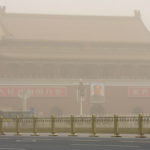
A paramilitary officer stands on duty Tuesday near the Tiananmen Gate in Beijing. China might bar live television broadcasts from Tiananmen Square during the Beijing Olympics.
Beijing ? Don’t expect to turn on your TV during the Beijing Olympics and see live shots of Tiananmen Square, where Chinese troops crushed pro-democracy protests nearly two decades ago.
Apparently unnerved by recent unrest among Tibetans and fearful of protests in the heart of the capital, China has told broadcast officials it will bar live television shots from the vast square during the games.
A ban on live broadcasts would disrupt the plans of NBC and other major international networks, who have paid hundreds of millions of dollars to broadcast the Aug. 8-24 games and are counting on eye-pleasing live shots from the iconic square.
The rethinking of Beijing’s earlier promise to broadcasters comes as the government has poured troops into Tibetan areas wracked by anti-government protests this month and stepped up security in cities, airports and entertainment venues far from the unrest.
In another sign of the government’s unease, 400 American Boy Scouts who had been promised they could go onto the field following a March 15 exhibition game between the Los Angeles Dodgers and San Diego Padres were prevented from doing so by police.
“It was never specifically mentioned to me it was because of Tibet that there were extra controls, but there were all these changes at the last minute,” said a person involved in the Major League Baseball event who asked for anonymity because he was not authorized to speak to the media.
The communist government’s resorting to heavy-handed measures runs the risk of undermining Beijing’s pledge to the International Olympic Committee that the games would promote greater openness in what a generation ago was still an isolated China. If still in place by the games, they could alienate the half-million foreigners expected at the games.
Like the Olympics, live broadcasts from Tiananmen Square were meant to showcase a friendly, confident China – one that had put behind it the deadly 1989 military assault on democracy demonstrators in Tiananmen Square that remains a defining image for many foreigners.
“Tiananmen is the face of China, the face of Beijing, so many broadcasters would like to do live or recorded coverage of the square,” said Yosuke Fujiwara, the head of broadcast relations for the Beijing Olympic Broadcasting Co., a joint-venture between Beijing Olympic organizers and an IOC subsidiary.