Archive for Monday, June 30, 2008
Moving beyond oil
Local committee urges city to take action
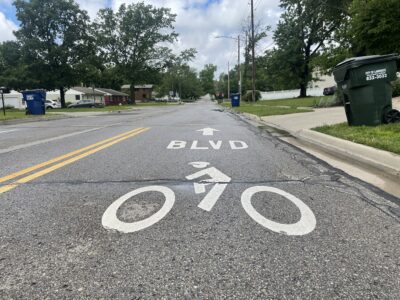
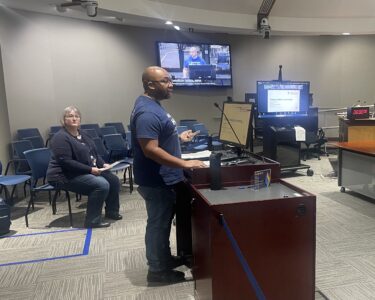
Tim Hjersted, of Lawrence, formed a local group, the Lawrence Peak Oil Action Committee, to urge the city to take action to stem the potential economic effects as the demand for oil outpaces its supply, a concept known as Peak Oil. As a result, he's enthusiastic about neighborhood markets, like the Eastside People's Market, 409 E. 12th St. He also encourages people to ride bikes as much as possible.
June 30, 2008
Advertisement
On the street
Do you think a peak in oil production will lead to a global energy crisis?
I’m one of those positive thinkers who would like to think that when it does happen, we will have wised up enough to be prepared for it.
Imagine the day when your vehicle's odometer becomes a tax meter - the more you drive, the more you pay in taxes.
When you do drive, you'll be greeted by more toll stations. And when you stop, you'll be greeted by more parking meters. Along the way you'll notice roofs with solar panels, yards with vegetable gardens, construction crews building bike paths instead of roads, and perhaps even large warehouses stuffed with massive amounts of food to deal with an energy emergency that hovers on the horizon.
Farfetched, you say.
Well, evidently you aren't in Portland, Ore., nor have you bought into the concept of Peak Oil - a supposed economic disaster-in-waiting that will make $4 a gallon gasoline look like the deal of the century.
"I think gasoline probably will hit $5 a gallon over the next year, and I've heard credible reports that it will hit $10 a gallon over the next four years," said Tim Hjersted, a Lawrence resident who has formed a local group urging city leaders to begin preparing for the day that petroleum becomes a scarce resource.
Some cities already are preparing for the day. All the above examples - taxes on individuals driving, more road tolls, additional parking meters and emergency food warehouses - are included in an approved plan by the Portland City Council to deal with what it believes is an inevitable shortage of oil.
In its simplest form, that's the easiest way to think of Peak Oil. It is a significant, worldwide shortage of oil. For the more precise types, it is the day when world oil producers aren't able to produce as much as they did the day before. In other words, it is when world oil production begins its descent.
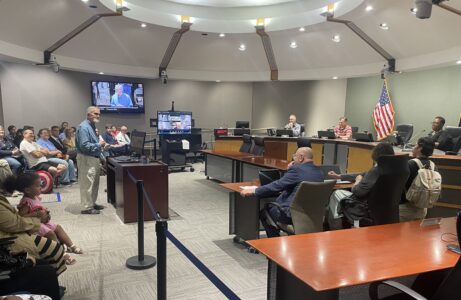
Hjersted's group - the Lawrence Peak Oil Action Committee - wants Lawrence leaders to adopt their own Peak Oil response plan. City commissioners tentatively have agreed to receive a presentation from the group later this summer. Hjersted says if Lawrence does nothing - the preferred response of most communities - it is setting itself up for a colossal economic meltdown that could occur in as few as two to three years.
"This is really important for Lawrence to do because Lawrence is definitely a commuter-heavy city," said Hjersted, a local activist who operates an independent film Web site.
Another Y2K?
There's not much debating that $10-a-gallon gasoline will put a dent in the American way of life. Heck, $4 a gallon gasoline is denting it - $10 a gallon may turn it into a relic akin to record players and SUVs.
But there is a lot of debate about whether Peak Oil is for real or whether it is like other scares that didn't materialize. Anyone remember when computers were going to freeze up and cause widespread infrastructure failures as the calendar turned to the year 2000?
In other words, is that really Peak Oil that is knocking on the door, or is it Peak Hysteria?
Energy leaders with the U.S. government are taking a position somewhere in between. Economists with the EIA - the branch in the Department of Energy that monitors energy statistics - generally say that Peak Oil is a real phenomenon. But, they contend it is decades away, not years.
In some scenarios, the day of Peak Oil could arrive near the year 2050. In some cases it could be later than that if governments around the world decide to get more aggressive in pumping oil.
"There's still a lot of oil out there," said John Staub, an economist specializing in world oil markets for the EIA.
He said many people who believe Peak Oil has arrived or is just around the corner often are working with flawed numbers. He said a past U.S. Geological Survey report estimated there were only 2 trillion barrels of recoverable oil in the world.
That sounds like a lot, but oil experts agree it is not. With a world where China and India are now developing American-like appetites for oil, 2 trillion barrels won't last long. But Staub said the 2 trillion barrel estimate was a simplistic analysis. EIA believes there are 14 trillion to 24 trillion barrels of recoverable oil worldwide.
Those numbers don't fly with many who are concerned about Peak Oil. They're concerned those are pie-in-the-sky numbers from an administration that they believe hasn't taken the issue seriously.
"The EIA is overly optimistic," Hjersted said.
Real world sacrifices
Perceived inaction on the federal level is one reason groups like Hjersted's are urging action on the local level. And in some cases - such as in Portland - they are urging not just action but dramatic lifestyle changes.
The cornerstone of Portland's response plan is a goal for every current resident to cut his or her gasoline and natural gas usage by nearly 70 percent in the next 25 years.
Some ways Portland is proposing to do so already are being discussed in Lawrence. Shifting future neighborhood design to a more pedestrian-friendly scheme is a large part of the effort. In Lawrence, city commissioners already have been making changes to city regulations that give developers the option of building neighborhoods with small corner stores and offices that allow people to stay in their neighborhoods for services.
If Portland's plan is any indication, a Peak Oil world also would add fuel to several other frequent arguments in Lawrence. Portland's plan discourages expansion of the city's growth area because sprawl will become even more costly. That means developments on the edge of town likely would face even more opposition.
The same would hold true for development on agricultural ground. Portland's plan says protecting farmland is critical because in a Peak Oil world it will be less feasible to ship in food from thousands of miles away.
And then there are the battles over roads. For those who think completing the South Lawrence Trafficway is difficult now, it may become doubly so if the city adopts a Peak Oil mentality. In the Portland plan, it recommends any road expansion should receive extra scrutiny because of higher fuel prices.
Some Lawrence residents already are advocating for that type of thinking. Michael Almon, a Brook Creek neighborhood advocate who frequently urges the city to adopt more progressive policies, recently used the threat of Peak Oil to lobby for major changes to the city's long-range transportation plan, which is called Transportation 2030.
"It is imperative to plan for transportation options that will minimize our use of oil, and even minimize our reliance on transportation itself," Almon wrote in a letter to the Lawrence-Douglas County Planning Commission. "A better title for this plan would be Transportation Contraction 2030."
To wait or to act
So, that's where Lawrence finds itself these days.
At the EIA, Staub has some optimism that technology will end up blunting the horns of this dilemma. He said advances in technology may make pumping "unconventional" oil more feasible in the near term. That would mean billions or trillions of barrels of heavy crude in Canada, Venezuela, Nigeria and other parts of the world would become viable to pump. Plus, he said advances in alternative fuels and auto technology to improve gasoline mileage could render all of today's projections obsolete.
But betting on technology is still a bet, says Don Green. He should know. As a professor of chemical and petroleum engineering at Kansas University, he's in the business of improving oil technology.
"I think we should have some expectations for new technology," Green said. "But if we just sit back and think new technology is going to take care of us, that could be a fatal mistake."
Green said he thought the safe thing to do was plan for a comprehensive energy strategy that looked beyond oil. When it comes to Peak Oil, he's like many others. He's not sure it will happen anytime soon, but he's also not sure it won't.
"Frankly, nobody really knows whether it is going to happen or not, but there are certainly a number of serious folks who believe we're pretty close to that point," Green said.


30 June 2008
at 6:40 a.m.
Suggest removal
Permalink
Solomon (Anonymous) says…
The sky is falling, the sky is falling.
Much of our current oil “crisis” is self-inflicted because we are not allowed to recover oil that we can recover. Loosen drilling restrictions and we fix much of the current problem while alternative fuels are refined.
30 June 2008
at 7:07 a.m.
Suggest removal
Permalink
powershopper (Anonymous) says…
The peak oil theory is a load of hoopla devised for doom-sayers and prius drivers.
To ad to solomon's statement, the main problem is unregulated speculation and market manipulation. Regulate the energy traders and prices will start going down. Don't know if that bill is going to pass the house until '09 though.
30 June 2008
at 7:08 a.m.
Suggest removal
Permalink
SFBayhawk (Anonymous) says…
They don't need to save oil. They need to save MONEY!!!
OHHH! That would be favoring a free market, something progressives abhor. I forgot these people are abandoning their evil ways for good intentions.
30 June 2008
at 7:09 a.m.
Suggest removal
Permalink
davidnta (Anonymous) says…
We won't even see an effect for at least 5 years if we loosen drilling restrictions. Even then how long will it take before we have another oil crisis?
30 June 2008
at 7:22 a.m.
Suggest removal
Permalink
CatFan (Anonymous) says…
Davidnta's comment is typical of those opposed to increased off-shore and domestic oil production. Yes, it's true that it would take years to see the effect, but the same is true of increased efficiency efforts. In either case it will take a long time for incremental changes to overcome marketplace momentum. Both efficiency and increased production are needed in a balanced energy portfolio, and the argument about delayed effects should be laid to rest. It cuts both ways.
30 June 2008
at 7:28 a.m.
Suggest removal
Permalink
Rickyonealku (Anonymous) says…
Devon Energy has one Big BIG discovery off the Gulf of Mexico outside USA waters, but a pipeline will take some 5 years to complete and on to market. Any other off shore drilling within the USA will take maybe one year for pipeline to market.
So will the next president elect pass or try to pass a bill in 2009???
Ride your bike people or walk.
30 June 2008
at 7:29 a.m.
Suggest removal
Permalink
Mr_Nancy_Boy_To_You (Tom Shewmon) says…
Sounds like a punishment of the masses that Leon Trotsky himself would be envious of. Does Lawrence need to give out-of-towners *MORE* reasons to not come to their fair Little Blue Island?
30 June 2008
at 7:31 a.m.
Suggest removal
Permalink
nobody1793 (Anonymous) says…
Peak oil, overconsumption, speculation…there is some truth to these things.
But the answer to the global energy crunch is more parking meters?
30 June 2008
at 7:39 a.m.
Suggest removal
Permalink
just_another_bozo_on_this_bus (Anonymous) says…
The comparison with Y2K is not that far off base. The potential problems were taken seriously, and $million, perhaps $billions, were spent to fix it, and there was no disaster. And yes, there would have been very serious consequences if we had just closed our eyes and pretended it didn't exist.
Pretending that peak oil and fossil-fuel-induced climate change aren't real, despite very good evidence to the contrary, could be very disastrous.
So you can choose— continue fervently defending your fairly-tale ideologies, or address the very real economic and ecological risks we face.
30 June 2008
at 7:47 a.m.
Suggest removal
Permalink
BABBOY (Anonymous) says…
I am pretty open minded on stuff like this.
But, this story is so stupid it has no place in a credible newspaper. But, sometimes, when comes to stirring up crap, the LJ crosses that line.
This is the kind of stuff that causes the rest of the real world to make fun of Lawerence. What is that other stupid paper, The Pitch – it belongs there and is not serious information for a real newspaper ….
30 June 2008
at 7:51 a.m.
Suggest removal
Permalink
Mr_Nancy_Boy_To_You (Tom Shewmon) says…
I prefer the “ride the pony 'til she dies” approach much better. It beats all of, as bozo puts it “fairly-tale ideologies” that the extreme left keeps piling on nowadays.
Who thinks this world is gonna put with is ridiculous humans much longer anyway?
I'd rather be dead than filing down a metered, tolled, policed footpath on Mass St. looking like a scene from “Dawn of the Dead”. No thanks.
30 June 2008
at 8 a.m.
Suggest removal
Permalink
gr (Anonymous) says…
Cute. Bozo is one of the ones who STILL believes in Y2K.
Let's cause an economic disaster now rather than it maybe happening at some unknown time in the future.
At least one point made in the article is the SLT is now an energy issue. It needs to be made the shortest route to reduce fuel usage; it needs to be completed now before the costs go up; and it needs to be completed now to reduce fuel usage for the vehicles traveling the current streets. Any other route is economically irresponsible.
Additionally, let's see if Lawrence is really serious about reducing fuel usage or just seeking a further way of padding their wallets. Most traffic signals need to be synchronized. Constant stopping and starting wastes fuel.
30 June 2008
at 8:04 a.m.
Suggest removal
Permalink
Boston_Corbett (Anonymous) says…
This article does not contain news but is self-indulgent navel contemplation. It is crap, Chad.
Not that the issues are not terribly significant….but there is just no news here. A young man on a bike being “enthusiastic” about a “building/neighborhood market” is pretty laughable and indeed is nothing but a cheap cliche for Lawrence.
30 June 2008
at 8:06 a.m.
Suggest removal
Permalink
craigers (Anonymous) says…
I would think Lawrence, being a commuter community, would try and support either drilling or other ideas to support those commuting. If Lawrence doesn't do this, most of the commuters will be forced to leave and then Lawrence will have not only a lower population, but the housing market would stink since nobody would be able to buy.
30 June 2008
at 8:11 a.m.
Suggest removal
Permalink
Sigmund (Anonymous) says…
Just another excuse to raise taxes and another nail in the Lawrence economy. Force the commuters out of Lawrence and half the local businesses will fail taking the majority of jobs with them.
Good luck with that though, Chad.
30 June 2008
at 8:13 a.m.
Suggest removal
Permalink
Bowhunter99 (Anonymous) says…
so this guy Tim on the picture is the one that formed the group that got this article on the paper? wow… I think I'll form my own group from now on every time I am bored out of my skull….
Ahh… to be young and be living off mommy and daddy's income… I bet he's enjoying the summer off while his parents commute to work in order to pay for him laying around coming up with 'ways to change the world'…
30 June 2008
at 8:14 a.m.
Suggest removal
Permalink
none2 (Anonymous) says…
Lawrence better not do anything to discourage transportation. I don't think people such as Hjersted understand that Lawrence imports in a lot more than we export out. Lawrence isn't a hub of agriculture nor of industry. It is simply a town sandwiched between the KC Metro & Topeka. It relies on the government to pump in money for KU. It relies on commuters to bring home the bacon for all its expensive ideas some locals have to make this some kind of big city player. It relies on students from around the country and the world to come to KU to spend money on their education. It relies on parents and alumni and people passing through to come to town and also spend money…
Just try making it difficult for any of these groups to come to Lawrence and get around, then you'll see Lawrence decline and eventually become another Tombstone, AZ.
30 June 2008
at 8:17 a.m.
Suggest removal
Permalink
Sigmund (Anonymous) says…
“Imagine the day when your vehicle's odometer becomes a tax meter - the more you drive, the more you pay in taxes.”
That day is today. The more gallons you use the more you pay in gasoline taxes. It will make me laugh to see Prius owners and Hummer owners be taxed by the mile and thus pay the same amount of tax.
30 June 2008
at 8:18 a.m.
Suggest removal
Permalink
missprissy0129 (Anonymous) says…
Where is this kids bike helmet??
Is Chief Bradford not doing his job or what?
30 June 2008
at 8:24 a.m.
Suggest removal
Permalink
trvlronda (Anonymous) says…
It's does not matter rather peak oil it real or not….the moral of the story is, we, as a country, need to become energy independent. e v e r y o n e needs to do their part. Sacrifices need to be made, better now than later. Ride your bike, work 4 days instead of 5, carpool, shop locally, drive a car instead of a tank, etc. It all adds up. Nothing impacts every single american like high fuel prices. If you buy it, a truck brought it—and have you seen the prices for diesel?
30 June 2008
at 8:25 a.m.
Suggest removal
Permalink
Marion (Marion Lynn) says…
I'm not going to do your homework for you but Google Portland + Smart Growth and learn just what a disaster that city has become!
30 June 2008
at 8:27 a.m.
Suggest removal
Permalink
dano (Anonymous) says…
Let's see….
1. Glowing tone toward Portland, OR
2. No expansion.
3. Conformity with local foods fad (to replace organic fad)
4. No trafficway.
5. Input only from “activist” who urges the city to “adopt more progressive policies.”
Well done. You've made your party leaders proud. Now go write someplace where objectivity isn't needed.
30 June 2008
at 8:35 a.m.
Suggest removal
Permalink
KS (Anonymous) says…
The blue libs are getting what they asked for. Unfortunately, the rest of us are paying too. It is going to get worse before it gets better. Vote red!
30 June 2008
at 8:43 a.m.
Suggest removal
Permalink
Mr_Nancy_Boy_To_You (Tom Shewmon) says…
Folks, this is more Al-Gore-esque-sells-you-a-bill-of-goods, self-serving and extremist ideology that will fatten not only Al Gore's wallet *big-time* but more than ever, the US Gov't.
Wake up and smell the coffee–take heed, and excuse me while I engage in some shameless self-promotion of the real deal, because Al Gore and the Church of Global Warming zealots are coming after your bank accounts.
http://www2.ljworld.com/search/?q=Tom…
Figures Lawrence would be a city to idolize Portland models and take the global warming ball and run wild with it. Have fun.
30 June 2008
at 8:54 a.m.
Suggest removal
Permalink
gr (Anonymous) says…
Raise the fuel prices.
Control access.
Say it's “good for the planet” - or “security”.
Soon we will have a way to spy on everyone at any time.
They'll tell you where you can drive.
Tell you what to think. Tell you what to buy.
Tell you when and where to think and buy it.
Anyone who thinks differently,
will be made to recant - or “else”.
Tell you what to eat.
When to sleep, when to wake.
Tell you when you can come and when you can go.
They'll control your electricity.
They'll control your mind.
You can slow it down.
You can speed it up.
But it's coming.
Get ready for it.
30 June 2008
at 8:56 a.m.
Suggest removal
Permalink
nobody1793 (Anonymous) says…
I'd like to announce that I'm officially starting my own political action committee: The Lawrence Apathetic Anarchists League.
While there is no charter, per se, here are some tidbits to help Chad with the article in Tuesday's paper about me:
1) I'd name myself leader of LAAL, except that I'd have to assasinate myself
2) There are no meetings or newsletters, because that smacks of organized rule-following
3) There will be no additional members, because to join a group like this would violate the principles upon which it was founded
4) I will sell carbon credits by collaborating with the mob to have people bumped off, thereby puting thier carbon footprints into cement shoes. As a non-profit, income from these carbon credits will be tax free.
Man, I should have thought of this years ago.
30 June 2008
at 8:57 a.m.
Suggest removal
Permalink
jafs (Anonymous) says…
I am always amazed at how many people are completely resistant to changing their habits.
Simple changes in lifestyle can reduce one's consumption of resources and contribution to pollution levels.
That would be a good thing.
30 June 2008
at 9:07 a.m.
Suggest removal
Permalink
andrew55 (Anonymous) says…
How proud humans have become to even think we can impact the earth environmentally. Yes, we should be good stewards…but riding a bicycle…walking to work will result in using more of our “precious” resources to remove the perspiration cause by exertion and if you are not accustomed to exercise perhaps a medical emergency…I am going to keep on living, working and dealing with life as it comes. That and the grace of God is what made this country great.
30 June 2008
at 9:07 a.m.
Suggest removal
Permalink
dandelion (Anonymous) says…
In the printed part of the paper in the opinion section is a chart called “How your U.S. lawmakers voted”. There is a bill HR6251 called Use it or Lose it. It mandates for oil companies to either drill on federal land they have leased or give up the right to do so. The bill was directed at dormant leases on 68 million acres in the West and Alaska.
So why are these oil companies wanting to open more federal lands for drilling if they aren't drilling on the land they have leased so far? Is it just a way to grab for more federal land for little or nothing (these leases are jokingly cheap). Fortunately it passed 223-195 with Boyda and Moore voting in favor of forcing the oil companies to use it or lose it. Moran and Tiahrt voted against it. It would be interesting to see the campaign contributions made to these lawmakers. I'll bet the oil companies have been very generous to Moran and Tiahrt.
30 June 2008
at 9:07 a.m.
Suggest removal
Permalink
Pdub (Anonymous) says…
Has anyone priced what it cost to go solar? It's stupid sic expensive. I got a electric bill and thought okay that's enough and started researching. Bad ROI. We got to make it cheaper.
30 June 2008
at 9:08 a.m.
Suggest removal
Permalink
nobody1793 (Anonymous) says…
“That would be a good thing.”
And $4 gas prices ARE changing habits, so therefore high gas prices are a good thing.
30 June 2008
at 9:09 a.m.
Suggest removal
Permalink
RonBurgandy (Anonymous) says…
The doomsdayness of Peak Oil is a little over the top for me, but I think the theory does have some merit.
Oil will run out eventually.
Offshore drilling isn't going to help anyone. Focus resources on renewable energy and public transportation. Make the city more bike friendly. Those will.
30 June 2008
at 9:16 a.m.
Suggest removal
Permalink
jafs (Anonymous) says…
Solar does require a large initial investment, but should pay for itself over time.
There are also a number of state and federal grants or tax rebates for installing solar power.
Yes, if higher gas prices encourage people to be more mindful, they are good. Of course, I'd like to see people care about the environment all of the time, not just when it costs them a lot of money not to do so.
And, high gas prices seem to be affecting habits less than I thought they would.
30 June 2008
at 9:16 a.m.
Suggest removal
Permalink
XD40 (Anonymous) says…
Drill here. Drill now. Whew! What a load of hooey! If, five years ago we had been drilling in ANWR or offshore, we wouldn't have a “crisis” now. The willful ignorance and stupidity of the “environmentalists” is breathtaking. We have the resources and the technology is available to extract them safely — let's do it! Let's also build coal and nuclear power plants. Wind and solar are not economically viable without massive government subsidies. More research should be done, granted, but we need to go with what we have.
30 June 2008
at 9:18 a.m.
Suggest removal
Permalink
dandelion (Anonymous) says…
Where are all the oil company apologists? Why aren't they drilling on the land they already have leased? Why do they want more? It's not the government keeping them from drilling, if the government is forcing them to drill or lose their lease. Why wouldn't they want to increase the oil output? Maybe because it would eat into their profits?
30 June 2008
at 9:22 a.m.
Suggest removal
Permalink
just_another_bozo_on_this_bus (Anonymous) says…
“If, five years ago we had been drilling in ANWR or offshore, we wouldn't have a “crisis” now.”
No, nearly all of that oil would merely be shipping to Japan and China, and gas would be 5 cents a gallon cheaper.
30 June 2008
at 9:23 a.m.
Suggest removal
Permalink
Informed (Anonymous) says…
Tim Hjersted doesn't look old enough to drive a car. And I agree with a previous poster… Where is his bike helmet???
30 June 2008
at 9:24 a.m.
Suggest removal
Permalink
helwen (Anonymous) says…
1) Y2K was a genuine concern. The reason nothing “major” happened was because managers, programmers, engineers and others took the time to review how things worked, re-write programs, wrote new programs, and tested everything. There were in fact some glitches, and I know of at least one that could have become a concern had a problem with the changeover not been caught — if there was one, I'm sure there were others.
Apparently no one remembers the newspaper articles about some of the tests that initially failed, like the manufacturing plant where they ran a fire drill and all the gates locked in the closed position and wouldn't let anyone out of the building. Imagine if the plant managers had decided to take their chances that the programming updates were fine, hadn't tested anything, and a real fire had broken out.
Appropriate planning and forethought is why Y2K wasn't a big deal in the end. Something that seems to be lacking currently…
2) Even if we drilled and dug for every bit of oil and gas we can find, it will eventually run out. They are fossil fuels, so by definition they will eventually run out. Part of the stress right now is not that we're in imminent danger of fuels being gone, but that the demand for them has gone up, with the continuing increase in industry and population, and the increase in demand for more lavish ways of living.
What then? What happens when we eventually run out of fossil fuels? Planning and learning to be more more moderate in our use of fossil fuels means it will last longer, giving us cleaner air and water, and more time to do research on alternative fuels.
3) The oil companies aren't very good at taking care of what they've already brought up out of the ground. If they were more careful, we'd have had more fuel to use.
I'm sure some folks here are tired of hearing about the Exxon Valdez and other spills both in the U.S. and other countries, but the folks whose livelihoods have been destroyed know up-close and personal what a _wonderful_ job has been done of cleaning up the oil. Oil which, in addition to killing off plants & animals and ruining an ecosystem, is lost to be used for power.
30 June 2008
at 9:24 a.m.
Suggest removal
Permalink
gr (Anonymous) says…
No gas would change habits too. Would banning gas today be a good thing?
30 June 2008
at 9:38 a.m.
Suggest removal
Permalink
supertrampofkansas (Anonymous) says…
Whew boy those dang liberal environmentalists sure have a lot of power and money don't they. Got to have your scapegoats so you can have someone to blame for all of these “crises”. You do have to wonder though with as much money as the oil industry has, why they haven't pushed to get more drilling here in the US. I mean you would think these oil companies would want to help the average American save money and not try to fatten their own bank accounts.
30 June 2008
at 9:53 a.m.
Suggest removal
Permalink
Confrontation (Anonymous) says…
Stan: Kyle, what's going on?
Kyle Broflovski: My dad says he can't live here anymore.
Stan: Mr. Broflovski, please! Kyle's my best friend!
Gerald Broflovski: I'm sorry, Stan, but unfortunately you live in a small-minded town filled with ignorant boobs.
30 June 2008
at 9:57 a.m.
Suggest removal
Permalink
any (Anonymous) says…
JAFS - Want to go solar on your house? Net metering isn't allowed in Kansas as far as I know….means you'd have to store it all in batteries. I'd imagine that isn't easy to get to any ol' outlet in the house, and this is probably one of the biggest obstacles facing solar usage in Kansas right now. Also, I am not aware of any state tax credits or grants for solar panels on a house. I'd say the state isn't doing anything at this point to encourage private individuals to use alternative sources of energy for homes.
I know there are some fed credits for home solar panels, but again, you have to pay the money up front…plus, last time I read the credit, there was a cap on the amount you could get. Up to $2000 for solar is better than nothing, but not a whole lot when considering overall cost. What are the links for the grants? Information is always a great way to help people find and use alternatives. I know I'd be interested in hearing about grant money.
30 June 2008
at 9:57 a.m.
Suggest removal
Permalink
dandelion (Anonymous) says…
“You do have to wonder though with as much money as the oil industry has, why they haven't pushed to get more drilling here in the US. I mean you would think these oil companies would want to help the average American save money and not try to fatten their own bank accounts.”
They already lease 68 million acres of federal land for drilling purposes. Why aren't they drilling? Why is Congress having to pass a use it or lose it bill on these leases? They obviously have permission. What's stopping them? They are already fattening their own back accounts, and if they invest the money in drilling it cuts into their profits. Also they could care less if the average American saves money. The bottom line in the here and now is all that's important to them. They can afford 4.00/gallon gas. They could care less if their hired help have to bicycle to work.
30 June 2008
at 10 a.m.
Suggest removal
Permalink
cjwirth (Anonymous) says…
Peak Oil is a catastrophe that begins soon, as explained in this free 45 page report that is downloadable and can be distributed/ emailed: http://www.peakoilassociates.com/POAn…
30 June 2008
at 10:06 a.m.
Suggest removal
Permalink
notajayhawk (Anonymous) says…
jafs (Anonymous) says:
“I am always amazed at how many people are completely resistant to changing their habits.”
I am always amazed at how many people think we have to.
Is the oil going to run out? Maybe not as soon as the doomsayers predict, but of course it will eventually. But why should we have to change our lifestyle because of that?
Electric and other alternatively-powered passenger vehicles are a reality, and with the price of gas rising, they are becoming more and more cost effective. As they catch on, economies of scale will make them more affordable and practical. What we need to do is start building nuclear plants - and lots of them - and building them *now*, to power those vehicles.
If we're planning changes for the future, why shouldn't that future be something that preserves our way of life, not something that makes us change it? Why shouldn't it be something that expands the possibilities, instead of limiting them? Why can't the solution to the oil problem be cheap nuclear power feeding electric cars, along with hydrogen-powered scramjets that can take us anywhere in the world in a couple of hours, instead of saying we all have to ride the bus and pedal our bikes?
I agree that we have to find a solution, eventually - I just think that solution should be something that moves us into the future, not the past, and if you expect people to get onboard, it had better be a solution that preserves their chosen way of life, something that preserves and even expands their freedoms, not something that tells everyone what they have to give up.
30 June 2008
at 10:17 a.m.
Suggest removal
Permalink
Marcus (Anonymous) says…
I want my solar panels feeding electricity into the grid during the day and using it from the grid at night when I am charging my plug-in hybrid. No gas used and no electric bill. Seems like a positive outcome for $20,000 investment.
30 June 2008
at 10:17 a.m.
Suggest removal
Permalink
just_another_bozo_on_this_bus (Anonymous) says…
“if you expect people to get onboard, it had better be a solution that preserves their chosen way of life, something that preserves and even expands their freedoms, not something that tells everyone what they have to give up.”
When people are living beyond their means, they generally have to give some things up, nota. Even you.
30 June 2008
at 10:18 a.m.
Suggest removal
Permalink
just_another_bozo_on_this_bus (Anonymous) says…
“I want my solar panels feeding electricity into the grid during the day and using it from the grid at night when I am charging my plug-in hybrid.”
Not all that charging has to happen at night. When your car is parked at work, it can be charging there, as well.
30 June 2008
at 10:22 a.m.
Suggest removal
Permalink
DougCounty (Anonymous) says…
OK, folks, I hate to present the naysayers with some facts, but check these things out and see if you still believe that the Peak Oil is a sham:
Check out the KS geological survey website for the Oil and Gas Production forcasts for 2002 and you will find the following projections from the Energy Information Agency/DOE:
Year Projected price of a barrel of oil
2002 25.83
2003 23.27
2005 23.27
2020 25.50
2025 26.50
Clearly, the wildest forcasts of the EIA didn't have an inkling of what laid ahead, and the article even mentions the Hubbert Curve of Peak oil and poo-poos the very idea.
Fast forward to today, and check out the current EIA website and you'll find an interesting slide show that documents the reality of Peak Oil:
http://www.eia.doe.gov/conf_pdfs/Mond…
In it, you will find out the following facts:
-peak oil demand projections indicated that it was supposed to top out at around 68 million barrels per day (MMBD) somewhere between 1988 and 1994. Instead, by 2008, the oil demand had skyrocketed to 88 MMBD, which has had the effect of using up 99% of the spare oil production capacity.
-Peak oil production took place in May 2005.
-With the increasing oil demand, even new oil fields put into production won't prevent the new phase we have entered: liquidation of the reserves.
-To ignore this reality would be a colossal mistake.
Quite a change of tune, and this from the Bush Administration-led DOE. You may think that the guy on the bike is silly, but at least he's looking more clearly at the reality of the situation than the deniers.
30 June 2008
at 10:27 a.m.
Suggest removal
Permalink
Satirical (Anonymous) says…
People of Lawrence are in dire straits financially because of high gas prices, so what is the solution Lawrence comes up with….make them pay even more for using their cars. Brilliant!!! This isn't paranoia in the least bit.
Now I just need a bicycle that can fit me, my wife and my 3 kids, plus extra room for all the groceries we will need for the week. And since I live just outside Lawrence we will need bike paths parallel to the highway (since it is illegal to ride a bike on the highway). Boy am I grateful I live in such a forward thinking community!
30 June 2008
at 10:36 a.m.
Suggest removal
Permalink
Mr_Nancy_Boy_To_You (Tom Shewmon) says…
The level-headed conservatives here today are doing a really good job of exposing the extremist left for only having an agenda of 'leveling' the playing field, via, taxes/regulation/policy/policing. It is a broad, but very true and real agenda.
The extremist left couldn't care less about saving lives or the environment—only eliminating classed society and being able to thereby eliminate the gargantuan chip they've been carrying around on their shoulders.
30 June 2008
at 11:02 a.m.
Suggest removal
Permalink
dandelion (Anonymous) says…
Tommy Boy
Why aren't the oil companies drilling on the land that they already lease from the government? Why are all of you whining that they aren't allowed to drill, when the government has to pass a bill (HR6251) to force them to drill or lose the lease? Has Rush and AnneC not given you a canned answer for this yet? Obviously a good conservative business person would look at this leased land and the oil beneath it and start digging. Or is it better to let oil climb higher and make a killing? If you have to invest money into hiring people and buying equipment, your profits won't look as good. Tommy boy, those oil companies could care less about you.
How many of their lavish parties have you ever attended? Been invited to any of their yachts? What class do you think your are in? Those rich oil guys don't have time to post on forums, they are too busy spending their money and wining and dining politicians, and trying to convince you that those crazy environmentalist aren't letting them drill. Talk about scapegoats.
30 June 2008
at 11:03 a.m.
Suggest removal
Permalink
just_another_bozo_on_this_bus (Anonymous) says…
“Boy am I grateful I live in such a forward thinking community!”
No amount of “forward thinking” can completely compensate for nearly all of us having collectively and individually made unsustainable lifestyle choices. But desperately clinging to those poor choices won't make the inevitable adjustments any easier.
30 June 2008
at 11:04 a.m.
Suggest removal
Permalink
notajayhawk (Anonymous) says…
just_another_bozo_on_this_bus (Anonymous) says:
“When people are living beyond their means, they generally have to give some things up, nota. Even you.”
Why, thank you, boohoozo, for that timely and perfect illustration of my point: That the kool-aid crowd sees no possible solution except giving up.
The little flaw with your supposition, boohoozo, is that I'm not even close to living beyond my means. First of all, gas hasn't even approached the cost I had budgeted when I first took my current job, and when it hits $7/gal I'll still be comfortably within my means. And I'm already working on alternatives, boohoozo, but those alternatives do not include giving up my commute or using public transportation.
Only the kool-aid drinkers like yourself think that there's no other possible solution to the eventual end of oil that's within our means. But then, surrender is such an integral part of boohoozo's ideology, I'm beginning to think he must be French.
30 June 2008
at 11:12 a.m.
Suggest removal
Permalink
just_another_bozo_on_this_bus (Anonymous) says…
” and when it hits $7/gal I'll still be comfortably within my means.”
In light of your other comments on this board, I'd say you're either extremely overcompensated, your socio-pathology makes it preferable to you to flush your money down a hole, or both.
30 June 2008
at 11:16 a.m.
Suggest removal
Permalink
JackRipper (Anonymous) says…
“I am always amazed at how many people are completely resistant to changing their habits.”
I am always amazed at how many people think we have to.
Interesting since people are already having to make those changes. Moving from SUV's to fuel efficient cars is making a change. Moving closer to work is making a change. I'm afraid the endless nuclear plants might not be the answer since we haven't found a solution for the waste from the current ones.
Mr_Nancy_Boy_To_You (Tom Shewmon) says:
The level-headed conservatives here today are doing a really good job of exposing the extremist left for only having an agenda of 'leveling' the playing field, via, taxes/regulation/policy/policing. It is a broad, but very true and real agenda.
Yes, an other example of how the “conservatives” have changed the definition, sort of like how republicans have refined what a republican is. I remember being conservative meant not squandering, taking care of things like the infrastructure before mindlessly building more. I guess we can keep our current lifestyle if that is what you all think you are doing. We can overlook that two major countries with a total population of 2 billion people also want our lifestyle. How do you suppose that will all work out?
Peak oil is as much about the demand far out pacing the potential supply from any source we reasonably can produce. We have changed and will continue to and part of the change might mean living with less. Living within our means as the old term of conservative use to mean. Our current financial “crises” might be the tip of the iceberg and when you consider that our infrastructure is seriously in need of repair and soon the medicare and social security issues will be hitting and plus the aging population and additional health care expenses and never mind that the country is in debt out the wazzoo as well as many in the personal lives. The point is we currently as a country are not actually paying for all the things we enjoy today, what about the future when promises we made are owed? I'm just wondering, how are we going to maintain status quo?
30 June 2008
at 11:19 a.m.
Suggest removal
Permalink
ronwell_dobbs (Anonymous) says…
Fuel prices still aren't changing the simple habits, so they must not yet be truly hurting. I was at the Sonic drive-in the other day and I'll be darned if almost every SUV was idling its engine while waiting for the food to arrive. In most cases, at least the driver, if not some of the passengers, had their windows rolled down. It wasn't a scorcher out, by any means. If you can afford to idle your engine and still go to Sonic for your meals then you ain't hurting.
Sorry to have to show my colors, but I think paying these prices for fuel will only help to bring the new technologies to market that would otherwise languish. Likely it will bring new oil fields and possibly even some refineries online as well. Prices will probably rise over the next five years and then potentially fall back to a level close to what we are seeing now (if I conglomerate what a whole bunch of wildly different voices are saying)
Extended high prices will reshape our economy in ways that we probably can't even begin to fathom. One thing we're seeing already is reverse globalization because it now costs too much to ship the raw materials to Bangalore, have peasants create finished products, and ship them back to the States for sale. When ice cream purchased from the gas-powered ice cream truck costs $5.00 for a bomb pop, there won't be demand at that price and that whole industry will go away. Likely will the demand for exotic produce or year-round availability of fruits.
We will adapt. I would wager that the population of the U.S. will begin to decrease as couples reconsider how many children they can afford to support or should subject to future hardships. We'll probably learn to walk when we can, and drive only when we must. I really don't believe we'll need higher taxes or more parking meters to discourage us.
30 June 2008
at 11:33 a.m.
Suggest removal
Permalink
Satirical (Anonymous) says…
Bozo…
“But desperately clinging to those poor choices won't make the inevitable adjustments any easier.”
Are you suggesting that purchasing a 4 cylinder, 5 seating car for a family of 5 was a poor choice when the car was purchased at a time when gas was $1.50 a gallon? And when having non-gasoline powered car wasn't a viable alternative? The choice to own an gas powered car is perfectly sustainable given the fact that we have enough oil to last 200 years, and there are methods such as coal to oil that could supplement this.
Of course oil is a non-renewable resource, but that doesn't mean we should never use non-renewable resources. Even if the changes are inevitable, it doesn't mean we should further punish those who drive cars when it is not practical or necessary to do so. Applying that logic to a computer; you could buy a new computer every day, since buying a new computer is inevitable in the long-run. Even though buying a new computer every day isn't practical.
There may come a day when driving gasoline powered automobiles is not possible, but that is not today or the near future, and people (including those with low incomes, that cannot afford a new hybrid car, and need transportation for more than themselves) shouldn't be further punished for using cars.
30 June 2008
at 11:39 a.m.
Suggest removal
Permalink
notajayhawk (Anonymous) says…
just_another_bozo_on_this_bus (Anonymous) says:
“In light of your other comments on this board, I'd say you're either extremely overcompensated, your socio-pathology makes it preferable to you to flush your money down a hole, or both.”
What comments would those be, boohoozo? Or is this yet another example of you pulling information from your hind-quarters?
I drive a compact car that I bought used for the sole purpose of commuting. It averages 34 mpg on the 55-mile one-way commute. My total annual gas expenditures when gas gets to $7/gal will be $5,661.74, which is not even close to the difference between what I can earn where I work compared to the local dismal job market. But I forgot - your pathology makes it preferable to work in fast food and live in poverty to conserve resources. Although I'm sure that in *your* case, commuting wouldn't be worth that expense - no matter where you go in the country, there's not going to be that much of a difference in salary for saying “Hi, welcome to Wal-mart.”
**************************
JackRipper (Anonymous) says:
“Interesting since people are already having to make those changes. Moving from SUV's to fuel efficient cars is making a change. Moving closer to work is making a change.”
Right, Jackie-boy, 'cause switching from one kind of car to another kind of car is a lifestyle change very similar to switching from a car to riding a bicycle or a bus. And who said anything about moving closer to work? When we moved here, it was a change from being 7 miles from work to being over 50, and while I toyed with working locally for a short time, it was just a short time ago that I switched from a job that was less than 15 miles away to one that's 55.
“I'm afraid the endless nuclear plants might not be the answer since we haven't found a solution for the waste from the current ones.”
Another manufactured 'problem.” That having a big effect on you, is it, Jackie? Lots of nuclear waste piling up in your backyard? The 'problem,' Jackie, isn't disposing of nuclear waste, it's the nutjobs - like you - who think no matter what they do with it it's a 'problem.'
But it's good to see you return to form and throw in the national debt and social security. Perhaps you think spending billions on a new train infrastructure (and paying half the operating costs) will solve the country's financial problems??
30 June 2008
at 11:48 a.m.
Suggest removal
Permalink
JackRipper (Anonymous) says…
Yeah, actually I think it would make more sense to rebuild the infrastructure we currently have before we spend an other dollar adding to it. As far as the backyard scenario, I was going to suggest that about your call for more nuclear, a bold call but amazing how many people say not in my back yard. And so far the solution where to store it hasn't been made because of people don't want it in their backyard so we should add more? Not only storing it but how we get it to the storage is worth considering, again I suppose you can overlook it when it isn't in your backyard. But again it comes down to we are overspent as a nation, squandering the resources and infrastructure we currently have while the potential of adding billions of more people wanting our kind of lifestyle, the the kind of lifestyle we can't even afford as the debt shows, move ahead economically.
30 June 2008
at 11:50 a.m.
Suggest removal
Permalink
dandelion (Anonymous) says…
Still waiting for an answer. Why aren't the oil companies drilling on the Alaska property they already lease from the government? Why are they being forced to drill or lose the lease? Why are they whining that they can't drill? Where's the answer to this strange turn of events? What's the deal?
30 June 2008
at 11:58 a.m.
Suggest removal
Permalink
JackRipper (Anonymous) says…
“Right, Jackie-boy, 'cause switching from one kind of car to another kind of car is a lifestyle change very similar to switching from a car to riding a bicycle or a bus. ”
A change is a change. The righteousness of those who drove the SUVs was right up there with God and country but many are having to change to something that gets good gas mileage and of course it is a change since we were told how rational it was for them in the first place, you know the space and safety and all. None of that changed so for those people it is obviously a real change.
“And who said anything about moving closer to work? When we moved here, it was a change from being 7 miles from work to being over 50, and while I toyed with working locally for a short time, it was just a short time ago that I switched from a job that was less than 15 miles away to one that's 55.”
That is great about your life but think the discussion is a little broader then being about you. I know it tends to be about you and there are many places we can all go look at the amazing life you have but I'm afraid it isn't really that interesting to me. I could call you names and insult you but I don't have the inferiority complex you seem to have. Life is good for me thank you.
30 June 2008
at 12:12 p.m.
Suggest removal
Permalink
Satirical (Anonymous) says…
People will make changes when it is economically feasible to do so. People weren't buying hybrids 5 years ago because the difference in price of a hybrid (about $3000 more) was less than the savings in gas at that time.
The real question is why is it necessary to force change on people when the current market doesn't require it for everyone? Are we really so naive to think that 1 town not consuming gasoline will have an effect on the price? Will the environment suddenly crumble if we don't make these changes immediately? The answer is that liberals want to force everyone into their own view of a utopia, rather than letting people choose; so they use the government to reach their objectives.
30 June 2008
at 12:21 p.m.
Suggest removal
Permalink
notajayhawk (Anonymous) says…
JackRipper (Anonymous)&