

More visibility sought for disabled
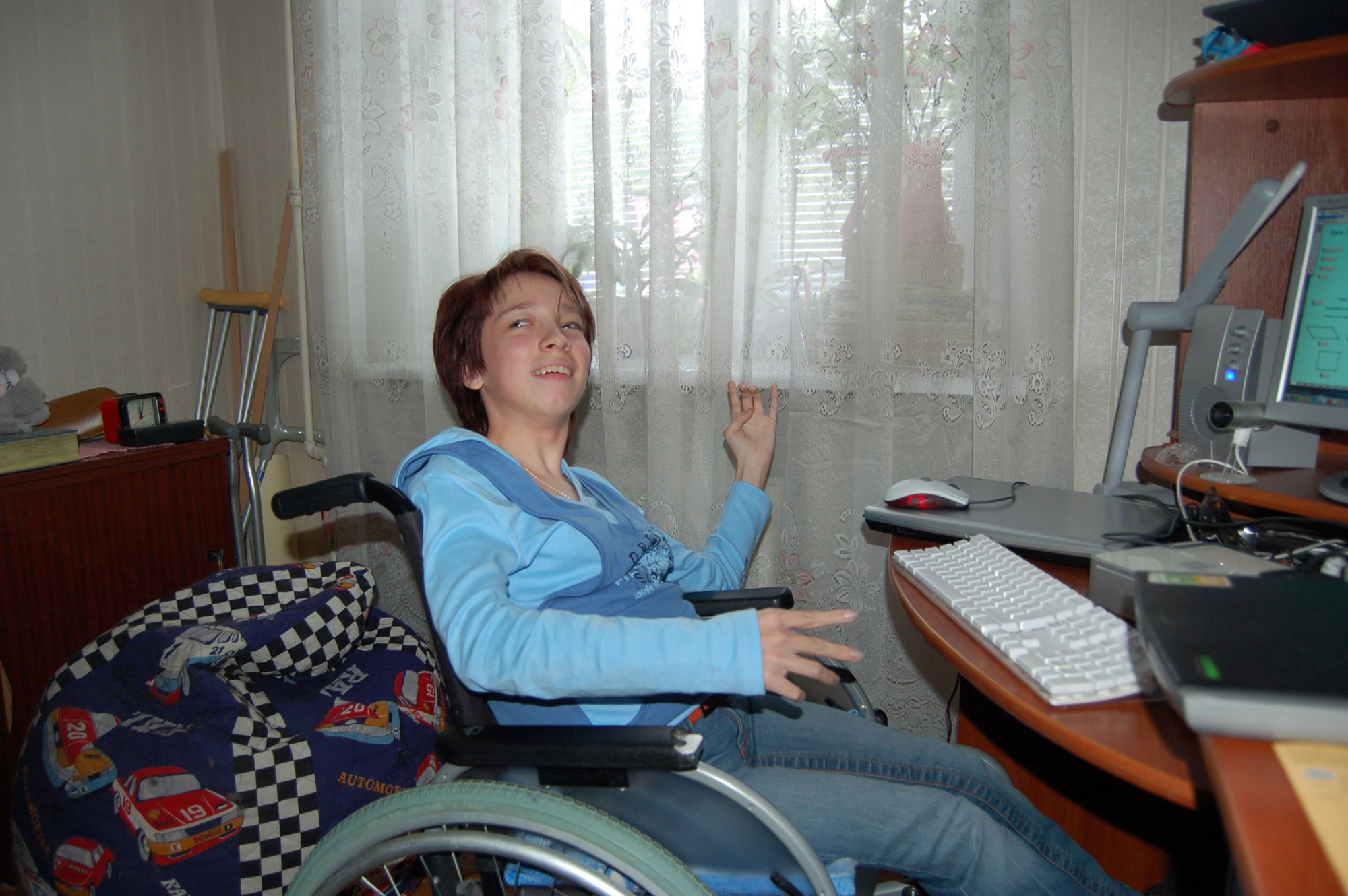
Vera Samykina, an outstanding student who has cerebral palsy, just completed ninth grade. People with disabilities in Russia are almost invisible. They are isolated in homes, special schools and sheltered workshops.
Moscow ? Vera Samykina is an A student in all subjects who just completed ninth grade, a significant marker in Russian education when some students bow out to pursue a trade or a technical education. But Samykina, 17, is determined to finish high school in two years and then pursue a university degree in English.
She has never been inside a regular classroom, however. Most of her education occurs in her cramped Moscow apartment. Samykina has cerebral palsy, and until she was 15, tutors came to her house three times a week for a couple of hours to instruct her in her various subjects. For the past two years, she has been taught over the Internet by specialists in each subject.
“There is no other way,” Samykina said. “I would like to get out more often, but it’s very difficult.”
People with disabilities are literally almost invisible in Russia, isolated in homes, special schools and sheltered workshops. It is a rare event to see a person in a wheelchair or a blind person or someone with an intellectual disability such as Down syndrome out and about on the streets of a Russian city.
Halfhearted attempts to encourage the employment of the disabled by setting quotas for businesses have faltered. Most employers preferred to pay the low fines for failing to meet quotas rather than actually hire disabled people, according to advocates for people with disabilities.
Long after Western countries began concerted efforts to mainstream the disabled in both education and employment, Russia is only beginning to seriously explore the task.
“This is an issue we did not talk about at all for a long time,” President Dmitry Medvedev said last month at a meeting with government ministers and advocates for the disabled. “We have the … task of providing disabled people with comfortable living conditions and creating a developed rehabilitation system so that they can take a full part in life.”
But to date, even getting a ramp built can often prove impossible.
Samykina, for instance, lives in a first-floor apartment up three short flights of stairs. All her mother’s attempts to get the local authorities to build a ramp have failed. “They said they don’t have the technical expertise,” said Tatyana Samykina, who drags her daughter’s wheelchair up and down the stone steps when they go out.
According to government officials and advocacy groups, about 50,000 disabled children study at home and an additional 70,000 are in special day and boarding schools. But according to Oleg Smolin, a member of parliament on the Committee for Science and Education, 200,000 disabled children in Russia receive no education at all.
Health
Program that helped people with disabilities scrapped again
Margaret Tomlinson has been recovering from a traumatic brain injury for three years. Nearly a year ago, she moved ...
Excitement builds as LMH Health draws closer to completing Therapy Services renovations
More children’s hospitals turn to furry caregivers to help kids heal
Sometimes ‘baby blues’ is actually something darker
Moments after Jenna Carberg gave birth to her daughter, doctors put the baby on her chest. “I felt a disconnect ...
Moving to music offers all kinds of benefits as you age
Conflicting mamogram advice leads to confusion
WASHINGTON — Deciding when to get routine mammograms is confusing. Some health groups recommend women begin at ...