

Mexican migrants struggle to send money home
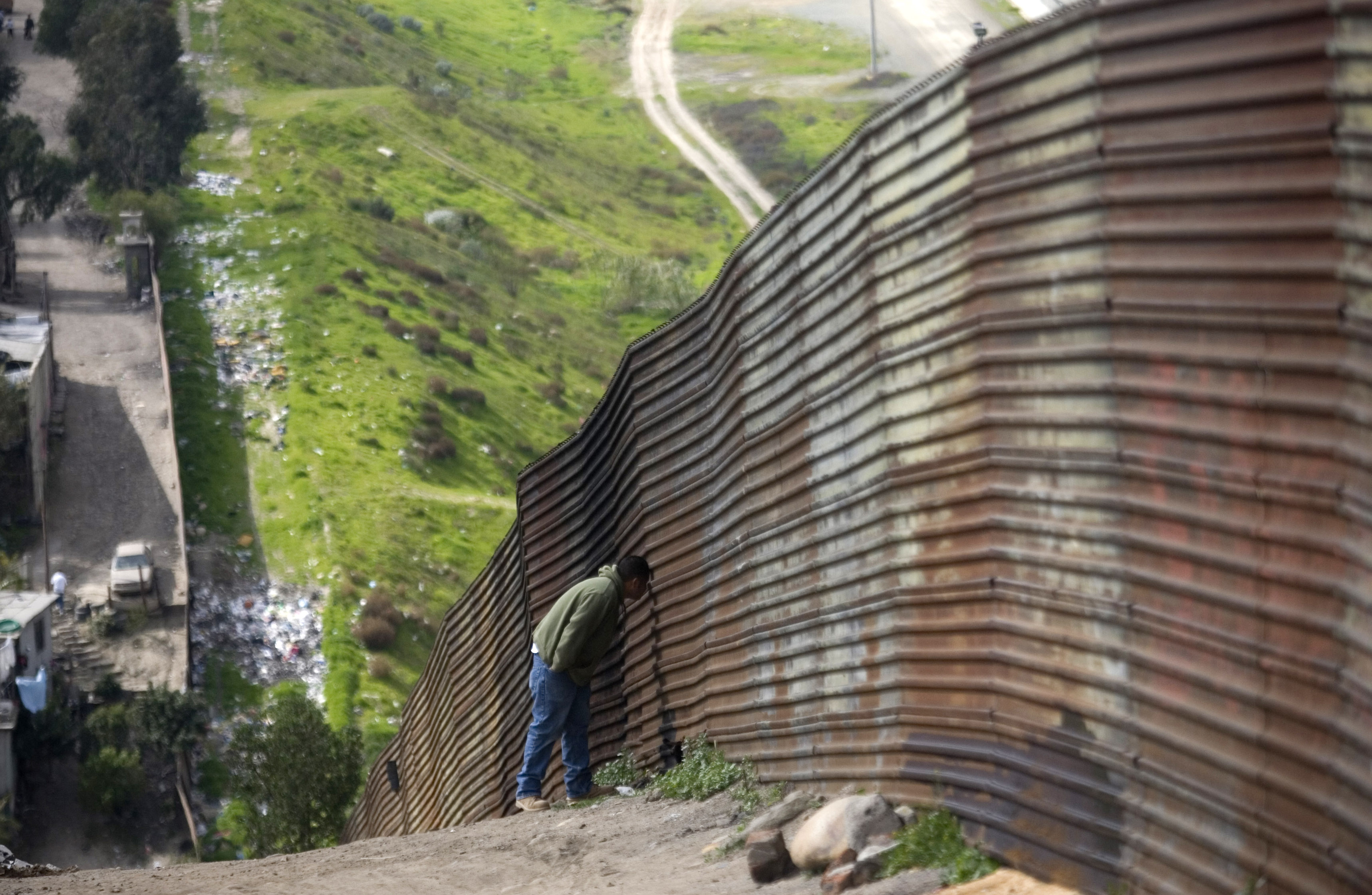
A man peeks through the border fence to the U.S. from Tijuana, Mexico, in this February 2008 file photo. Remittances sent home by Mexicans working abroad have fallen for six straight months, threatening local businesses and choking off what used to be a strong cash flow for many Mexican families.
Atotonilco, Mexico ? Mexicans working in other countries are sending less money home, threatening businesses, stalling construction and choking cash flow to hamlets where as much as half the population works in the United States.
Analysts said stepped-up immigration raids and the slowdown in the U.S. economy accounted for the drop in the payments, which many migrants use to sustain families back home.
The payments, or remittances, have fallen about 2 percent this year to $11.6 billion, the first such drop in more than a decade since reliable records have been kept, Mexico’s Central Bank said Wednesday.
And the buying power of this money has been battered by the weakening U.S. dollar, which has lost about 8 percent of its value against the Mexican peso so far this year.
‘No money anymore’
In Mexico, businesses that once thrived selling everything from beds to bricks to the families of migrants have laid off workers. In this town of verdant fields beneath the snow-clad slopes of the Iztaccihuatl volcano, there’s little left to rely on but small farms.
“There’s no money anymore,” Carlos Escalona said of his family’s business, which sells concrete blocks and bricks to help people build houses with the money migrants send home. Sales have fallen by a third, forcing the business to lay off 70 percent of the staff.
Of migrant workers in the U.S., Escalona said, “They lose their jobs, and then they’re afraid to leave the house. It’s like they’re trapped.”
Bank of Mexico President Guillermo Ortiz said about 22 percent of Mexican workers in the U.S. have jobs in construction, an industry that has slowed sharply.
About 152,000 Mexican immigrant workers lost U.S. construction jobs in 2007, while overall unemployment for Mexican immigrants in the U.S. rose from 5.5 percent to 8.4 percent over the year, according to a June report by the Pew Research Center.
More migrants rounded up by U.S. immigration officials are being sent home penniless.
Others have decided to return for good, bringing as many household items as they can along with them and eliminating the need to buy much locally.
Small-town trouble
In Atotonilco, migrant families once had enough money for %50 chests of drawers or $100 beds at Yesica Ordonez’s furniture store, Muebleria El Rosal.
Now the few customers who do appear spend remittances on necessities, she said. “It’s been about two years since things were good.”
Ortiz said remittances will probably drop 2 percent to 3 percent for the full year, the first sustained drop since 1995, when the bank began keeping a tally. In small towns, about one in eight families gets money from workers in other countries, the government estimates.
The payments have become a key source of foreign currency for the bank, representing Mexico’s second-largest source of outside income, after oil exports. It represents less than 3 percent of Mexico’s gross domestic product.
In the first part of the decade, the recorded payments grew rapidly – from $9 billion in 2001 to almost $24 billion in 2007 – because of swelling immigration and better reporting methods.
The number of Mexicans crossing the border rose to an average of 400,000 a year between 2000 and 2004, more than 10 times the migrant flow of a generation ago. About three-quarters were undocumented, according to Mexico’s Population Council.