

Stranded Chinese travelers fight for seats on any vehicle moving
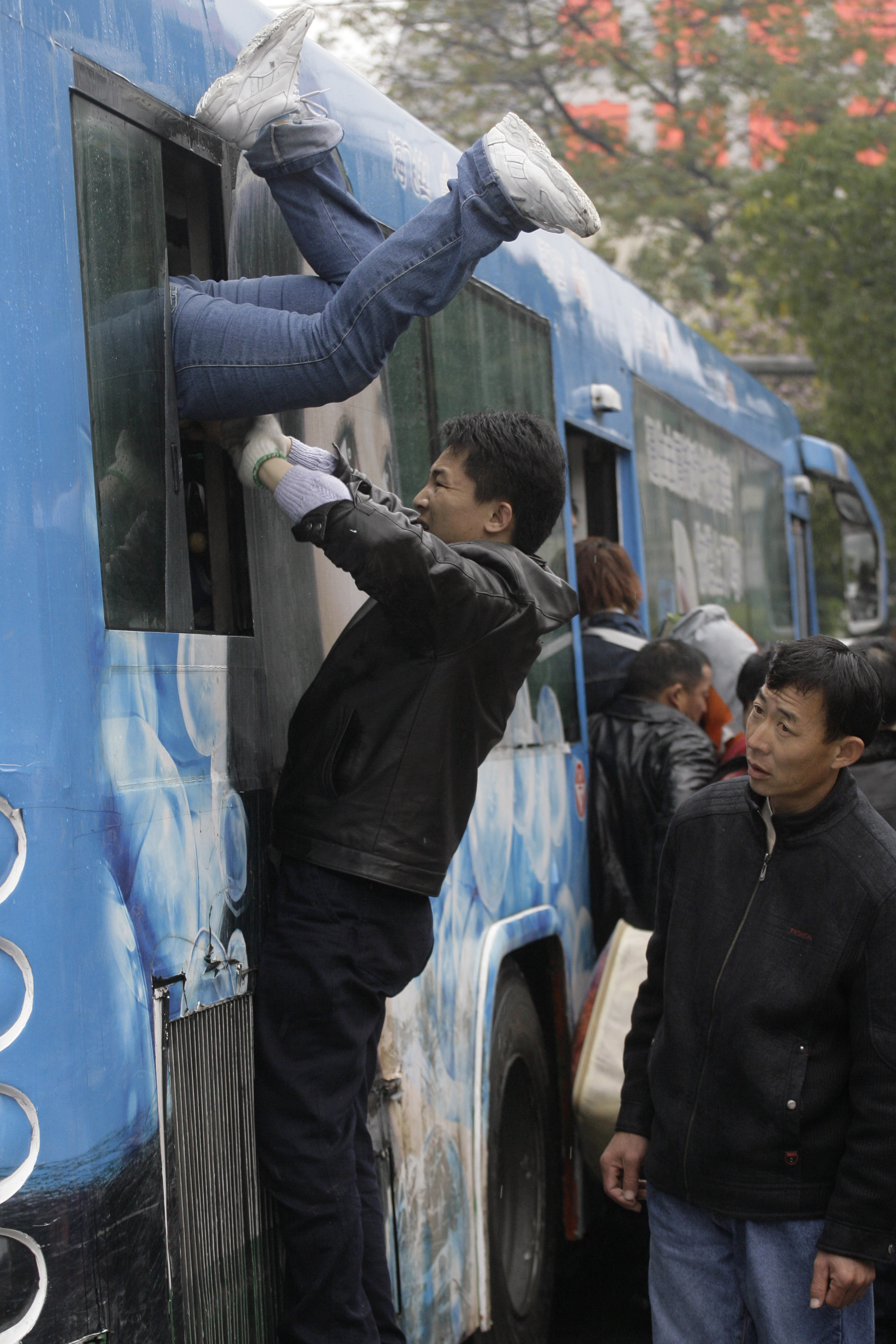
A man pushes a woman into a bus going to the Guangzhou Railway Station in southern China. Thousands of passengers have been stranded in Guangzhou after heavy snow in provinces to the north created havoc for transportation networks. Most of the stranded travelers are desperate to get back to their home cities for the Lunar New Year next week.
Guangzhou, China ? Crowds of frantic Chinese fought for seats Wednesday on the few trains leaving southern China, where the worst winter storms in half a century have crippled the nation’s transport system during its busiest travel season.
One desperate mob stormed a city bus in the main southern city of Guangzhou, mistakenly thinking it was taking passengers to the day’s last departing trains. They pried open doors and elbowed their way inside as helpless police yelled, “It’s not going to the station!”
Hundreds of thousands of stranded Chinese want to get home for next week’s Lunar New Year – a holiday that is as important in China as Christmas is in the West. For millions of migrant workers, the festival that begins Feb. 7 is their only vacation from dreary jobs in factories that feed the world’s ravenous appetite for DVD players, laptops, shoes and other goods.
Many travelers were becoming more willing to criticize the government’s response to the blizzards that have paralyzed the country’s transport network in southern, central and eastern China just before one of the world’s biggest annual mass movements of humanity. Before the storms, railway officials estimated a record 178.6 million people would travel by train for the holiday
“If this happened in America, it would have been cleared up much faster,” said factory worker He Mingtong, 48. “America has the equipment, the trucks, to clear away the snow. But we haven’t had snowfall like this for 30 years or more, so we were unprepared.”
The situation might get worse as forecasters warned that more snow might fall in the next three days in parts of eastern and southern China.
China’s leaders have deployed more than 450,000 army troops and extra units of police to clear roads and help provide emergency supplies to the millions of stranded travelers, state-run media reported, saying authorities had declared an “all-out war” on the crisis.
The storms have caused dozens of deaths and airport closures. China’s antiquated power grid, powered largely by coal, ground to a near halt, plunging many cities into darkness. The storms have caused economic losses of $3 billion since they began Jan. 10, the Civil Affairs Ministry said Tuesday.
Jing Ulrich, chairwoman for China equities for JPMorgan Securities, said the snowstorm came at the worst time. “In the first quarter, we’re going to see pretty high inflation because of what is going on right now,” she said.
Meanwhile, workers kept streaming into Guangzhou, looking like refugees.
Police said 7,000 were camping outside the railway station, while 200,000 sought temporary shelter in a massive exhibition center blocks away.
City officials said only 40 trains – half the normal number – were leaving the station each day with a total 80,000 passengers. The lucky ones riding the trains were those who could find a seat on the 10 city buses shuttling passengers to the station from the mad crush of the emergency shelters.
“I’m really nervous and scared,” said He Jingsha, 23, a petite office worker. “These people, they’ll push and shove you, treat you like you’re not a human being.”
But she added with a smile, “But I understand why they do it. It’s Chinese New Year!”