

Bird land
Avian diversity high, but room for improvement still remains
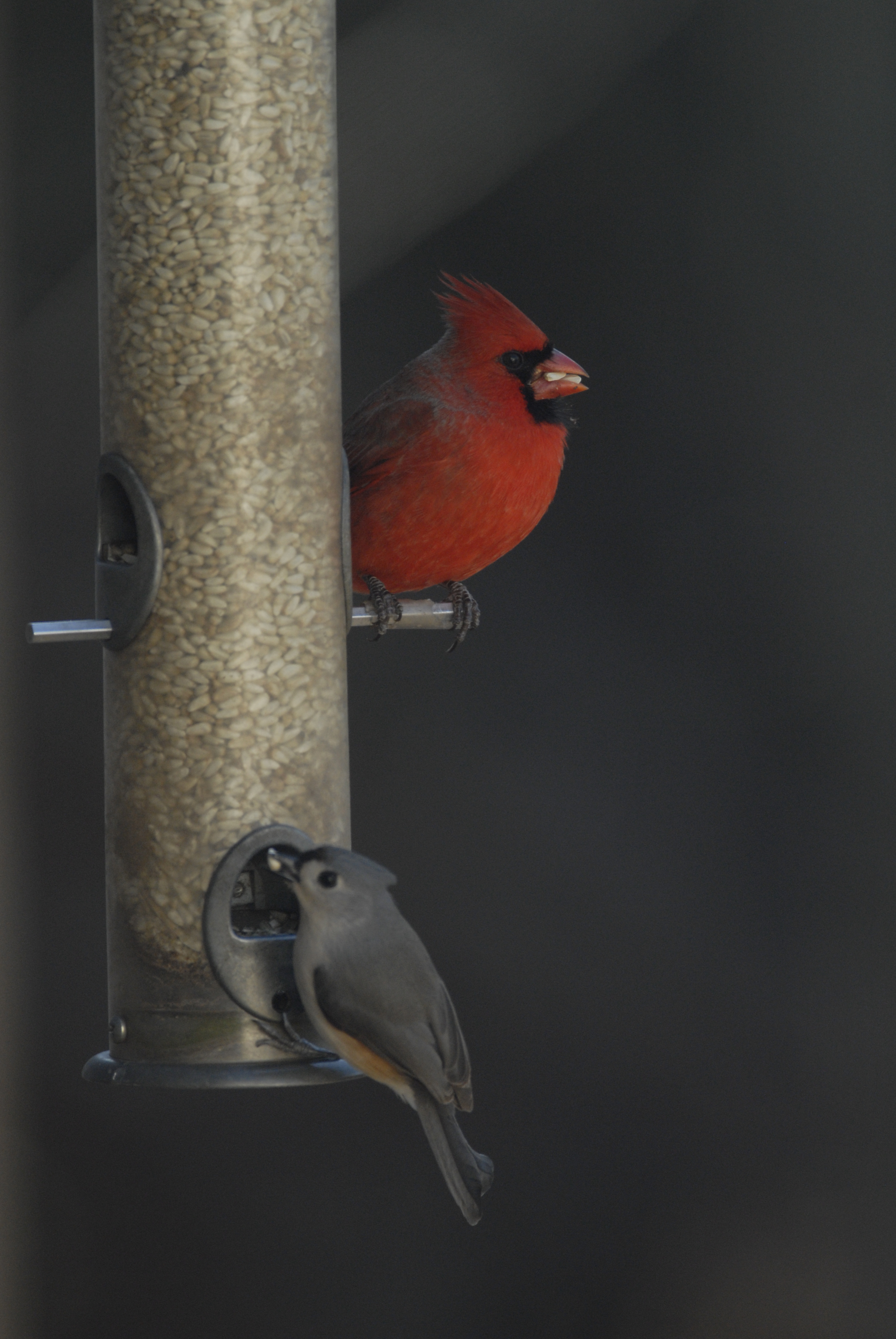
A Northern cardinal, top, and a tufted titmouse, fill their beaks with seeds from a bird feeder outside the Prairie Park Nature Center, 2730 Harper St.
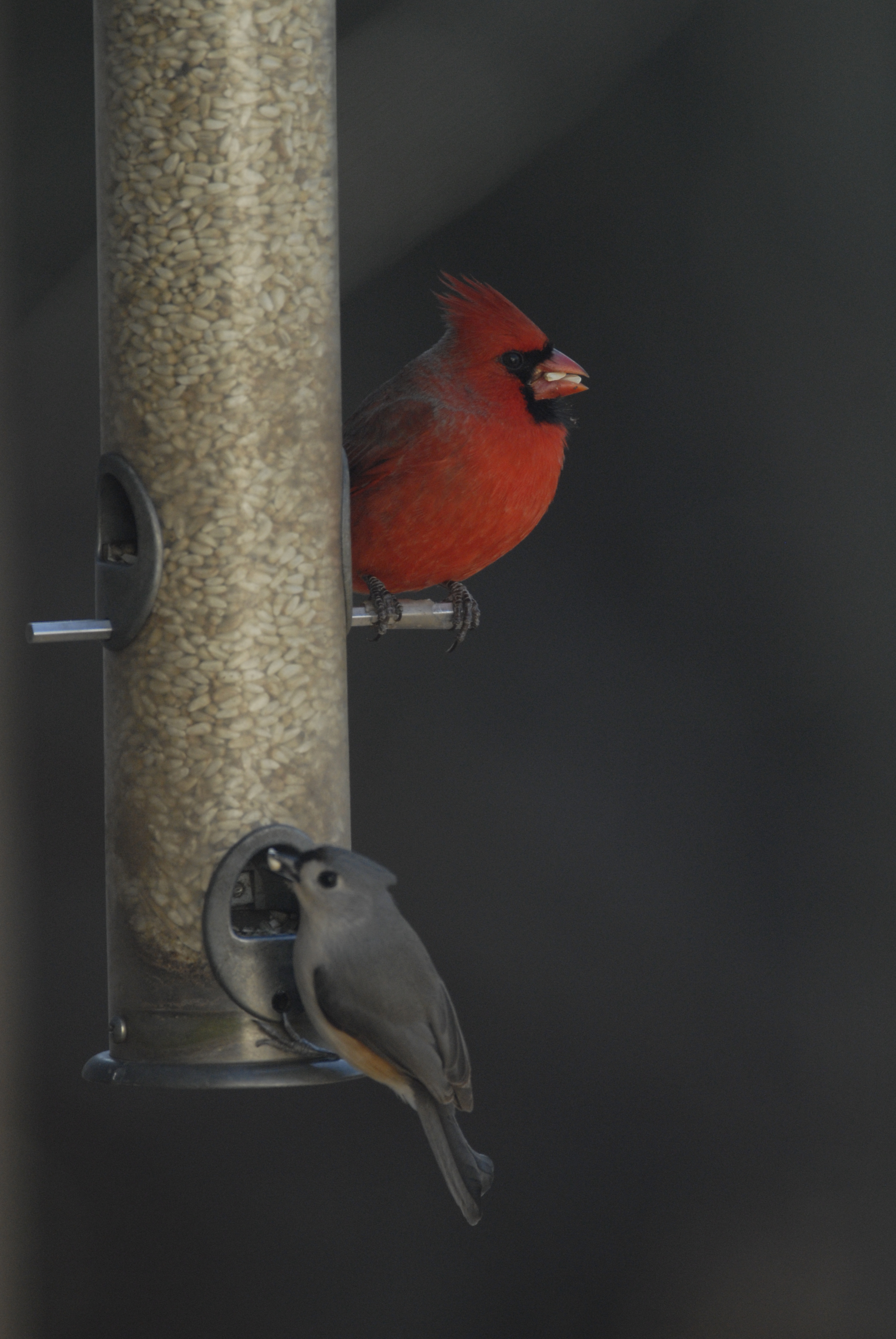
A Northern cardinal, top, and a tufted titmouse, fill their beaks with seeds from a bird feeder outside the Prairie Park Nature Center, 2730 Harper St.
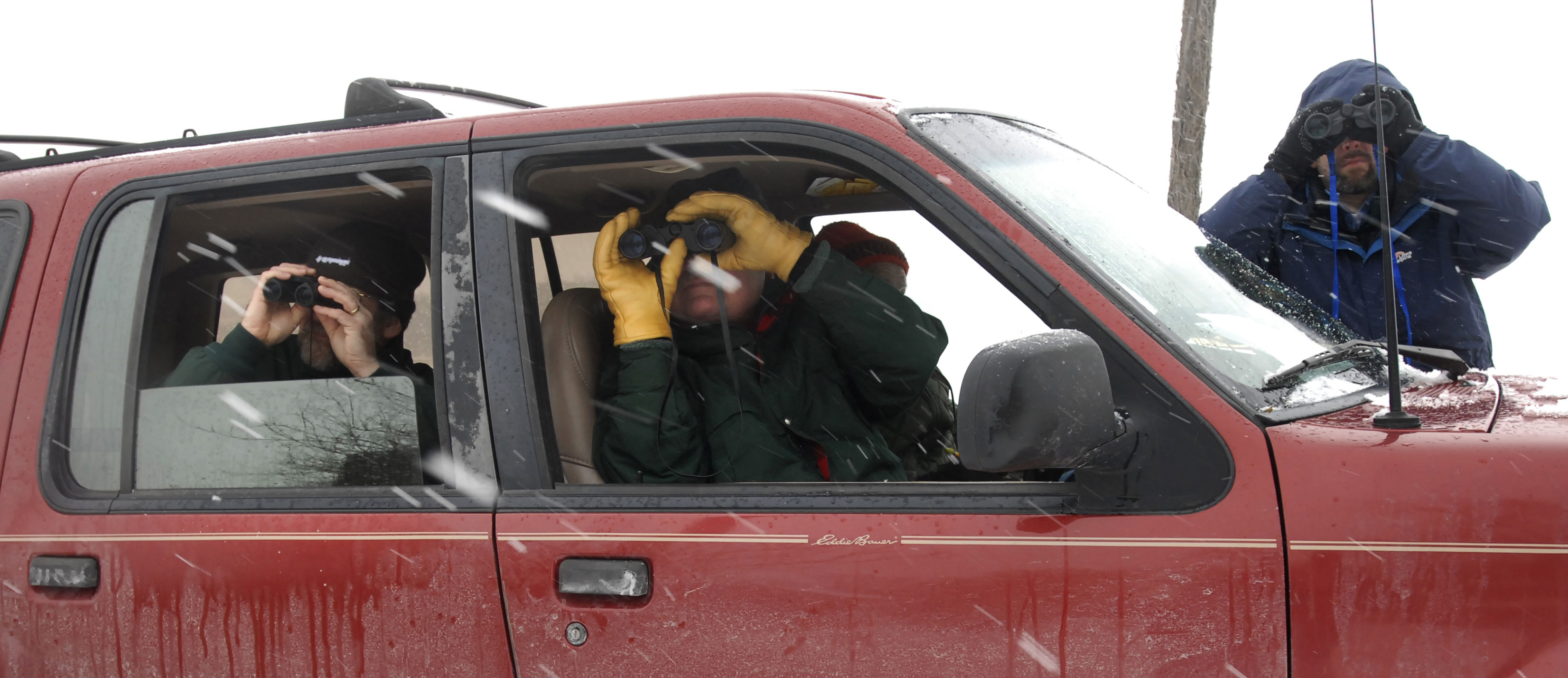
Bob Hagen, left, Jeff Witters and Jon Witters watch for birds last month during the Lawrence Winter Bird Survey north of Lawrence on North 2050 Road. Their group was one of about 45 surveying groups watching for birds over a three-week period in December.
Kansas ranks third in the nation for avian species diversity, according to the Audubon Society.
Kansas ornithologists have counted at least 225 different bird species in the Sunflower State. But it is not all wine and roses. While some birds, such as the robin and crow, are thriving in more urban settings, others require substantial territories of natural habitats to survive.
In essence, the canaries are deserting the coal mine, which is the message from the National Audubon Society. Every year since 1900, Audubon has compiled a nationwide bird census where thousands of volunteers participate in the Christmas Bird Count. Since 1966, this tally has been matched by another volunteer count, the North American Breeding Bird Survey, conducted by the U.S. Geological Survey and the Canadian Wildlife Service. Birds that rely on wetlands, grasslands and woodlands are finding life quite a bit more stressful than in the past.
According to those surveys, the population of the northern bobwhite, a grassland bird, is down 82 percent over the last 40 years. Other grassland birds are also down, such as the eastern meadowlark, down 72 percent; loggerhead shrike, 71 percent; grasshopper sparrow, 65 percent; lark sparrow, 63 percent; and horned lark, 56 percent.
“Most birds require natural environments,” says Bill Busby, associate scientist at the Kansas Biological Survey. “As natural environments are lost to human altered ones (i.e. development), places for birds decrease and bird populations decline. In the Great Plains, one of the biggest issues is declines of grassland birds, whose rates of decline exceed that of most other groups of birds. The key is maintaining habitat.”
Susan Iversen, a member of the Jayhawk Audubon Society, cites examples of dwindling habitats that have affected birds.
“If the type of tree or bush that a bird uses to nest has been eliminated then they cannot mate,” she says, “the ivory-billed woodpecker is of course the classic example, needing a type of southern pine forest that was virtually destroyed by logging in the first half of the 20th century.”
Development is converting grasslands into lawns, which are essentially a no man’s land for birds providing zero protection and the introduction of pesticides. Traffic noise also disturbs the mating calls and reproduction of songbirds.
But Iversen shares some ideas to increase the chances for grassland birds’ survival.
“Plant shrub and evergreen shelter belts to give birds more protection from weather and predators,” she says. “Plant trees and shrubs that have berries such as crabapples, service berries, sumac, Virginia creeper, elderberry, viburnum and mulberry. Try planting flowers that have bird attracting seeds and leave the seed heads standing in the winter.”
The Audubon Society Guide to Attracting Birds offers these suggestions:
¢ Plant native species.
¢ Provide water, which is best when protected by shrubs. A bird bath should only be a few inches deep. A dripping water effect will lure more birds, and mount your bird bath on a pedestal if you have cats.
¢ Create a songbird border along your property edge. Plant several species adjacent to each other; include one species of thorny tree like a hawthorn or raspberry for nesting. And include evergreens, such as holly or juniper for cover.
¢ Create a brush pile, which songbirds will use as a shelter. When limbs break, throw them into the heap.
¢ Reduce your lawn by at least 25 percent to favor meadow plants and taller grasses. Tall grasses provide seeds and nesting places for birds.
¢ Avoid lawn pesticides.
¢ Clean tube feeders with a brush and 10 percent solution of non-chlorine bleach; allow the feeder to dry completely before refilling.
¢ Remove soggy seeds that could carry lethal molds.
¢ Move feeders about 3 feet from windows so birds don’t strike the glass.
¢ Keep your cats indoors for the safety of both cats and birds. Cats kill hundreds of millions of birds each year, especially in the spring when young birds are fledging.
Overall, the unabashed interest in birds is a wonderful thing. But keep in mind that while the feathered friends in our gardens are whistling a happy tune as they become accustomed to humanized environments, the grassland, wetland and woodland birds’ songs are quickly getting muffled.
Maybe the most progressive thing we can do is to lend a voice to those songbirds before they are a distant memory.