

Mars project faces technical hurdles
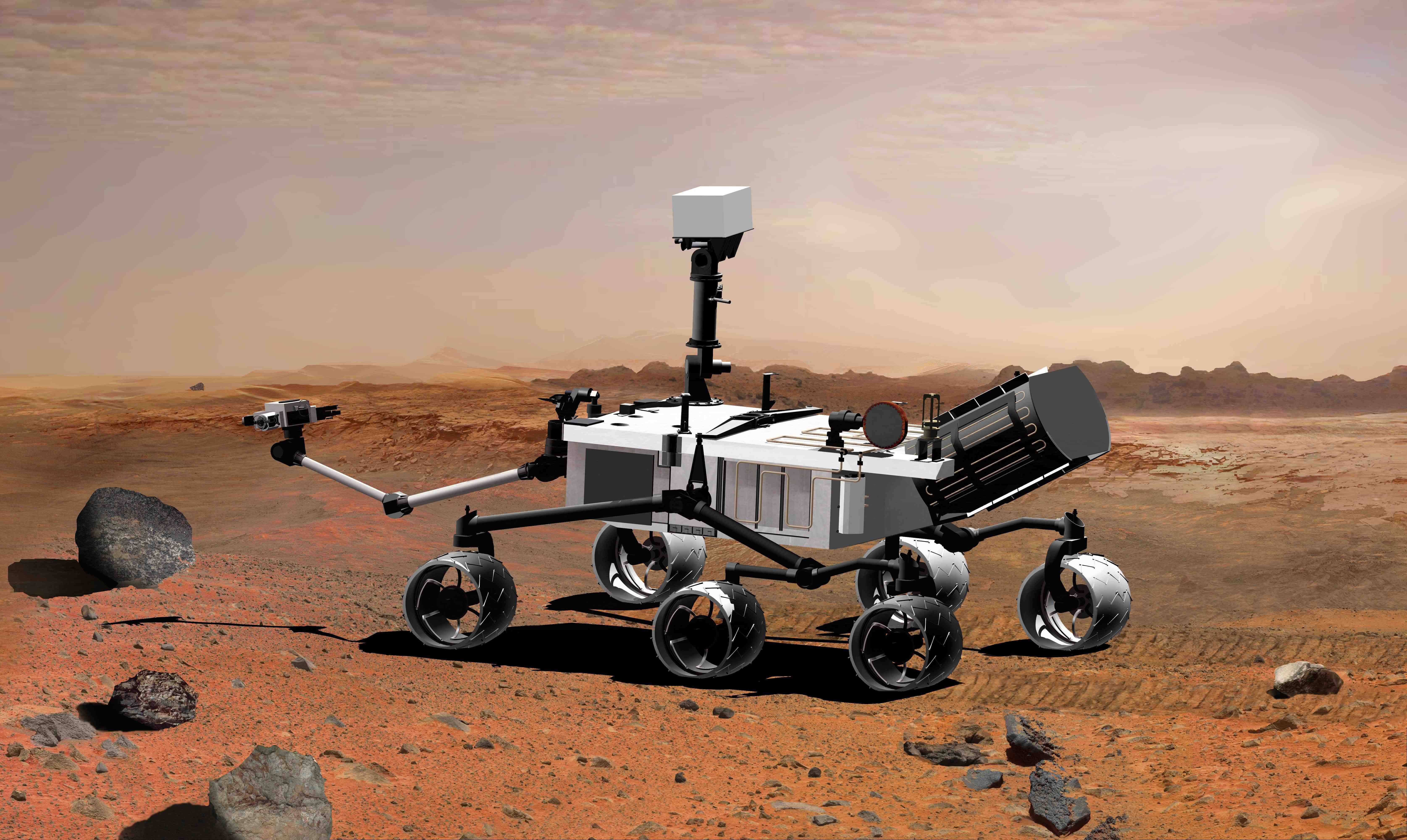
This artist's rendering released by NASA shows the Mars Science Laboratory, a mobile robot for investigating Mars' past or present ability to sustain microbial life.
Los Angeles ? NASA’s flagship mission to land a nuclear-powered, next-generation rover on Mars is facing development problems and ballooning costs that could threaten its scheduled launch next year.
NASA Administrator Michael Griffin told a congressional hearing this month that engineers had to redesign the heat shield on the Mars Science Laboratory after tests showed the protective layer would not survive entry through the Martian atmosphere.
The extra work is expected to add $20 million to $30 million to the $1.8 billion price tag, already $165 million over budget.
NASA is still aiming for a 2009 launch, but the space agency is also mulling alternative voyages in 2010 and 2011, Griffin told the House Science and Technology Committee on Feb. 13.
“Things have gone along more slowly than we would like,” Griffin said.
Any delay of the Mars Science Lab would deal a major setback to NASA, which already had to push back a mission to send an atmospheric probe to the Red Planet because of an undisclosed conflict of interest in the purchasing process.
The Mars Science Lab will be the most advanced and expensive unmanned probe ever sent to the Martian surface. The 9-foot-long mobile robot is larger and can travel farther than the twin rovers Spirit and Opportunity, which are still alive four years after parachuting to opposite ends of Mars.
Both rovers have uncovered geologic evidence of ancient water on the planet.