

France seeking greener image
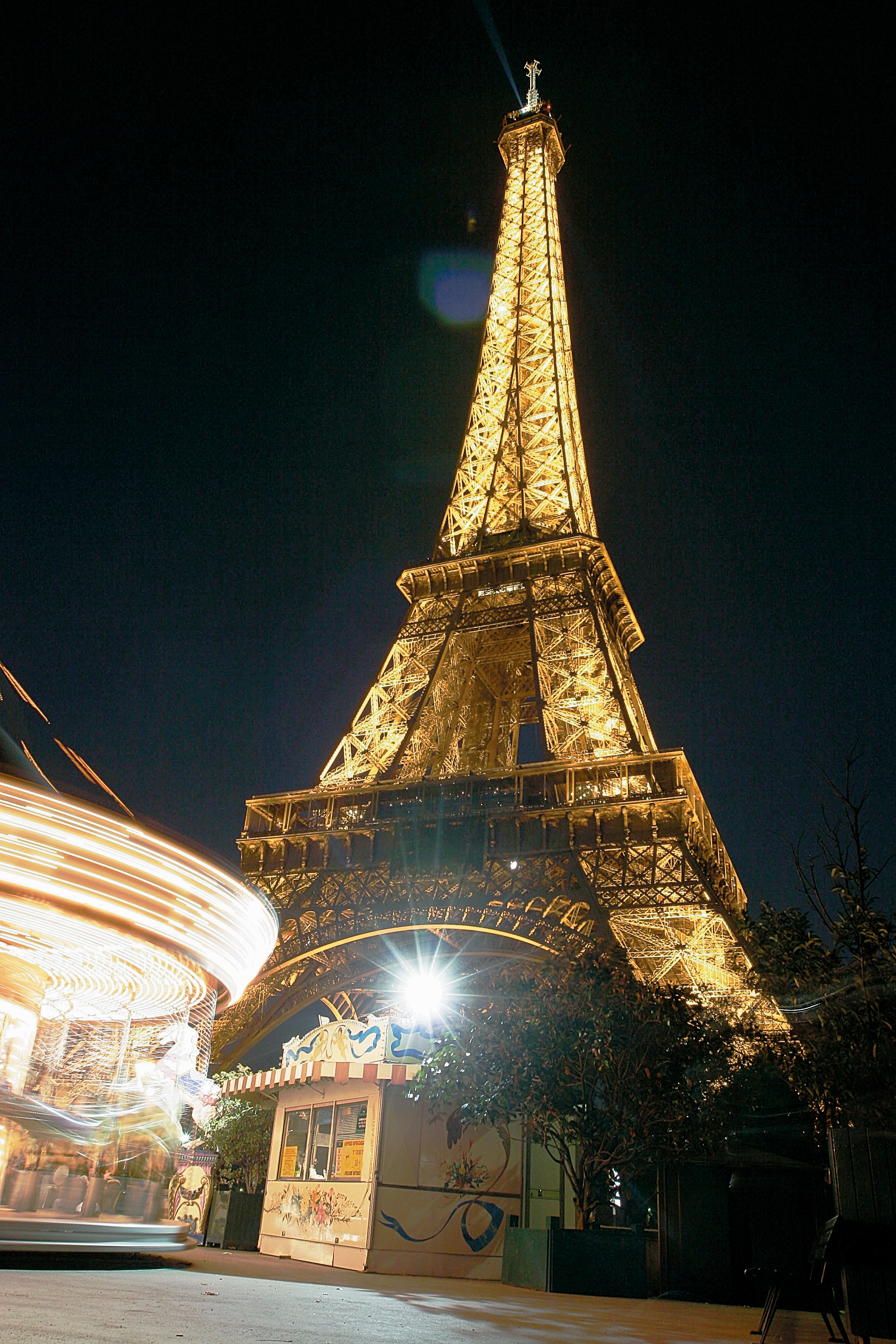
The Eiffel Tower is shown just before the 20,000 bulbs illuminating it went out Tuesday for five minutes. The City of Lights went dim when thousands of Parisians joined a lights-out campaign aimed at showing concern for climate change.
Paris ? Stamping camembert with a “carbon footprint” rating. Charging Parisians for the empty Bordeaux bottles they discard. Banning high speeds through the pasture-lined highways of the Loire Valley.
France is trying to clean up its act, readying measures this week aimed at reversing its image as environmental laggard and making it a pioneer in the fight against global warming and other threats to the Earth’s well-being.
Yet environmental groups fear the measures, to be finalized at a conference Wednesday and Thursday, will be too watered down to make a difference in France’s carbon emissions and have little impact on worldwide efforts to reduce the pollution that is warming the planet.
President Nicolas Sarkozy isn’t letting those fears slow his push to raise France’s eco-profile.
He put global warming high on his agenda after his election in May, creating Europe’s most powerful environment ministry and berating the United States for its resistance to emissions cuts. At the United Nations, Sarkozy urged developed countries and major polluters to commit to a 50 percent reduction in greenhouse gases by 2050.
Sarkozy’s friendly relations with President Bush have had no apparent effect on U.S. climate policy, but the French president is reaching out to other Americans, too: Al Gore, who won this year’s Nobel Peace Prize for his work against global warming, will be at Sarkozy’s side at this week’s conference in Paris, Sarkozy’s office said.
At twilight Tuesday, the Eiffel Tower’s twinkling lights went out for five minutes – along with lights at the Elysee presidential palace, the prime minister’s office and other sites – to call attention to energy consumption and its consequences.
Households were asked to join in and many apparently did. The company that manages the flow of electricity, RTE, said it measured a 0.9 percent drop in consumption – equivalent to use of 10 million 60-watt light bulbs.
The measures to be announced Thursday came out of three months of talks among activists, farmers, businesses and government officials that have been fraught with friction.
They made no progress on nuclear energy – which Sarkozy champions and environmental groups reject – or on biofuels, the junior minister for ecology, Nathalie Kosciusko-Morizet said in an interview.