

The rewards of collecting
Pure fun can enhance financial performance of collectibles
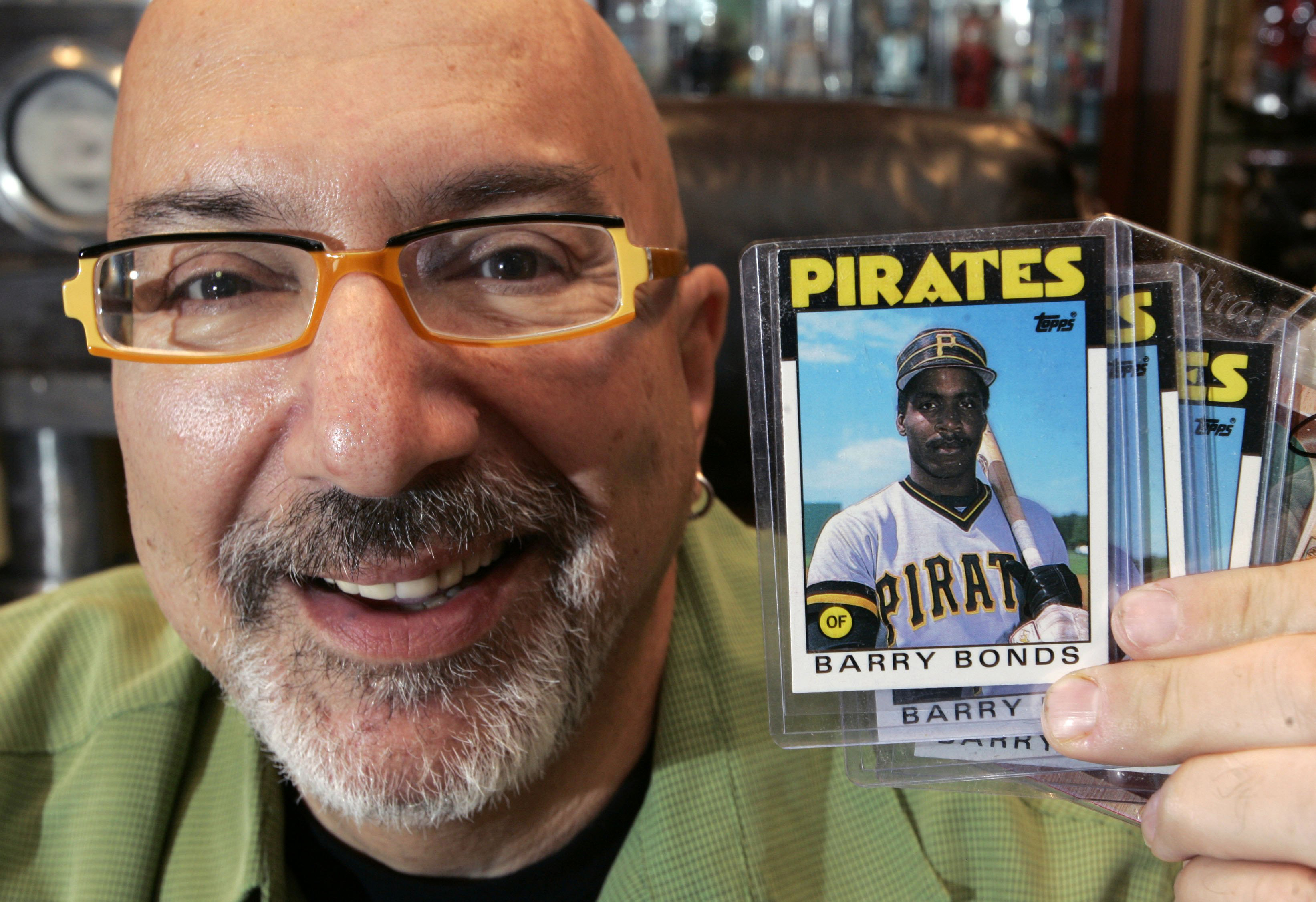
Alan Rosen makes his living by selling an average of million worth of baseball cards a year, making about 21 percent profit before expenses. Among Rosen's holdings at his home office: early versions of cards featuring Barry Bonds.
For 31 years Alan Rosen has built a successful career as a professional baseball card dealer, but his personal pride is an army of robots.
Rosen has amassed a robot collection now 609 large, worth a total of $1.2 million. He keeps every single one in individual shrink-wrapped plastic cases displayed in cabinets in his home office in Montvale, N.J., and his Japanese-made tin robots include robots named Jupiter, worth $35,000, and Television, worth $25,000.
Owning 609 of anything demonstrates real dedication, the kind that has built countless collections of Beanie Babies, stamps and state quarters. And in the current stock market turmoil, the possibility of making money from collectibles may appeal to those looking for a different place to invest.
Ellen Dorle, a certified financial planner, sees the value in collecting as depending largely on the items. A passionate collector may spot value that others miss, she said.
“If something is old and it has some scarcity to it, it may eventually be worth something to somebody,” Dorle said. “The question is who is that person and how do you find them.”
Still, collectors indulging their passions run certain risks, said Carl von dem Bussche, also a financial planner: The biggest downsides to collecting are liquidity, retaining value and a 28 percent capital gains tax to be paid at the time of sale when collectibles have been owned for more than a year.
‘Mr. Mint’ makes moolah
Rosen, who is known in the collectors circuit as Mr. Mint, sells an average of $4 million worth of baseball cards per year and makes roughly 21 percent profit before expenses. He finds the cards at conventions or through collectors who see his ads in trade magazines.
In most cases, though, collectors view making money as incidental.
While Rosen is passionate about both baseball cards and robots, he makes a distinction: Cards are his business, and robots are his fun. He started his robot collection in 1954, when he was eight years old and his parents bought him his first one.
“A collector usually collects what they had as a child,” said Rosen, 61. “Collecting is sort of buying back a piece of your youth.”
There are enthusiasts for almost any collectible, judging by the clubs listed on the Collectors.org Web site, the umbrella for the Association of Collecting Clubs and the National Association of Collectors. The list of 3,566 clubs turns up Beyond the Pond for collectors of frog figurines, Kollectors of Nasty Old Ties (KNOT), Hammered Aluminum Collectors Association and the Lighter-than-Air Society for blimp enthusiasts.
Vintage collections
Wine is a gaining popularity as a collectible among amateurs and professionals alike, thanks to growing demand leading to sharp price hikes. That has drawn interest from investors who have created funds to treat wine much like stocks; the Fine Wine Fund and Wine Investment Fund, both based in the U.K., buy wines making bets on how different vintages will sell later.
Former investment banker Steve Bachmann founded Vinfolio – a San Francisco company that sells wine through its Web site, stores bottles for clients and helps them catalog their cellars – to follow a passion for wine that already had led him to create a personal 7,000-bottle cellar. Bachmann’s clients sometimes end up as accidental investors.
When Bachmann’s clients are buying wine for personal consumption, they sometimes add a few cases to their order, with plans to sell them for a profit later.
Bachmann generally doesn’t encourage wine collecting as an investment strategy, but he concedes that in recent years at least, wine has proven to be a good investment. For example, he bought six bottles of a 2003 Petrus for $670 a piece in July 2004 that have nearly tripled in value, with an average auction price of $1,879 today.
“I don’t in general advocate people treating wine as an asset class, like securities, partly because that’s not what it’s intended for,” Bachmann said. “It’s intended to be consumed.”
But the collecting bug certainly seems to afflict at least some of Bachmann’s buyers. He reports a near-fanatical loyalty by some Chinese customers for certain vintages from the Bordeaux region of France, popular partly because of the area’s long track record for producing quality wines.
Rising demand, particularly from China, has affected world markets, he said. “There seems to be almost like a fixation on particular labels people want and pay prices that almost don’t make any sense.”
Irrationality seems to creep into most collecting markets.
Rosen said this year there is a set of baseball cards featuring the greatest players of all time. The set of 17,300 cards come in different styles and colors and with different pictures.
“Now, that is really for a sickness,” Rosen said. “Try to collect 17,300 of something just because it has a little different picture or little different word – that’s where I have to draw the line.”