Study: Anti-smoking shot helps some smokers quit
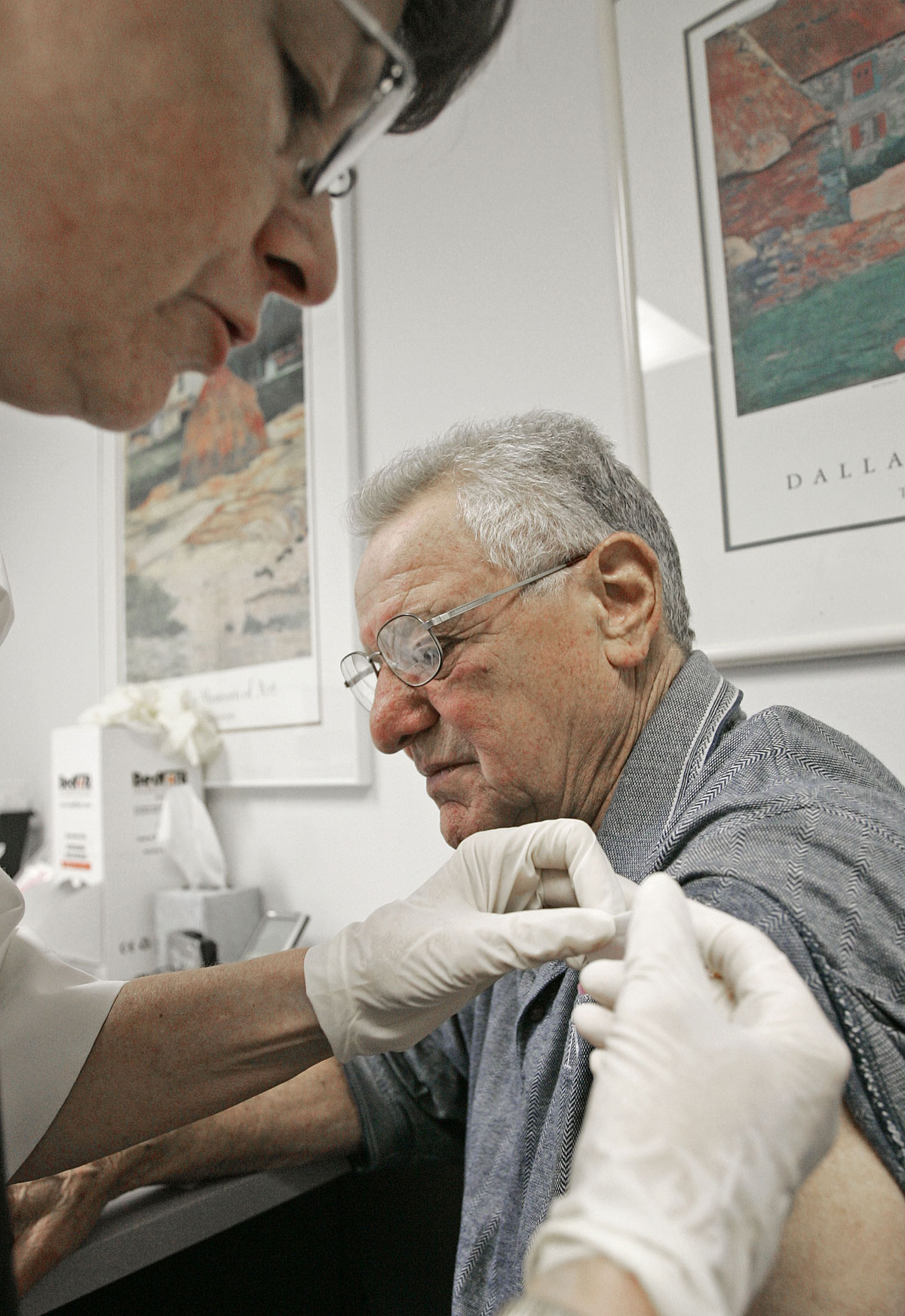
Mario Musachia, 75, a participant in a University of Wisconsin Center for Tobacco Research and Intervention study, gets an injection from Donna Muehlenbruch in Madison, Wis. Doctors were testing a radical new way to help smokers quit: a shot that immunizes them against the nicotine buzz.
Orlando, Fla. ? A shot that robs smokers of the nicotine buzz from cigarettes showed promise in midstage testing and may someday offer a radically new way to kick a dangerous habit.
In a study, more than twice as many people given five of the shots stopped smoking than those given fewer or phony shots – about 15 percent versus 6 percent after one year.
That is comparable to some other smoking cessation aids currently sold and could be an important new tool for people who have failed to quit using other methods, doctors said.
The results, presented Wednesday at an American Heart Association conference, do not prove the new approach works but encouraged some experts.
“It clearly shows promise” and merits a definitive study, said Dr. Frank Vocci, director of medications development at the National Institute on Drug Abuse, which has given $8 million for the research so far.
The study tested NicVAX, a vaccine designed to “immunize” smokers against the rush fueling their addiction. It’s made by Nabi Biopharmaceuticals of Boca Raton, Fla.
The treatment keeps nicotine from reaching the brain, taking the fun out of smoking and hopefully making it easier to give up. Some nicotine still gets in, possibly easing withdrawal, the main reason quitters relapse.
This approach – attacking dependency in the brain – is different than just replacing nicotine, as the gum, lozenges, patches and nasal sprays now sold do.
“These are impressive preliminary data,” said Dr. Sidney C. Smith Jr., a cardiologist at the University of North Carolina at Chapel Hill and past heart association president.
Getting people to quit smoking “may well be at the top of the list” for improving public health, Smith said. Worldwide, an estimated 1.3 billion people smoke, according to the heart association, and it’s a leading cause of cancer and heart disease.
The Food and Drug Administration has granted the vaccine fast-track status, meaning it will get prompt review.
Two similar vaccines are in midstage testing: TA-Nic, by Bermuda-based Celtic Pharmaceuticals, and NicQb, a product whose marketing rights Cytos Biotechnology AG recently sold to Switzerzland-based Novartis AG.
A similar “brain approach” to smoking cessation is taken by Pfizer Inc.’s Chantix, a drug that went on sale in August 2006. In a study of it, researchers reported one-year smoking abstinence rates of 22 percent versus 16 percent of those given the smoking cessation drug Zyban.
With the vaccine, people who have not quit may require periodic boosters to keep trying, Vocci said.
Of the roughly 46 million smokers in the United States, 40 percent each year make a serious attempt to quit, but fewer than 5 percent succeed long-term.
Health
ER visits for tick bites on the rise throughout the Midwest
FDA OKs first new sunscreen ingredient in over 25 years
WASHINGTON — Federal health regulators last week signed off on the first new sunscreen ingredient for the U.S. ...
OB-GYN group makes its 1st vaccine recommendations
A prominent OB-GYN group announced vaccine recommendations on Wednesday that differ from what the U.S. ...
How to talk to kids about vaping as fruity flavors make a comeback
Program that helped people with disabilities scrapped again
Margaret Tomlinson has been recovering from a traumatic brain injury for three years. Nearly a year ago, she moved ...