

Explosion in Lebanon kills 6 U.N. peacekeepers
Beirut, Lebanon ? A car bomb killed six U.N. peacekeepers on patrol in southern Lebanon Sunday in the first attack on the international force since it was expanded after last summer’s war between Israel and Hezbollah guerrillas.
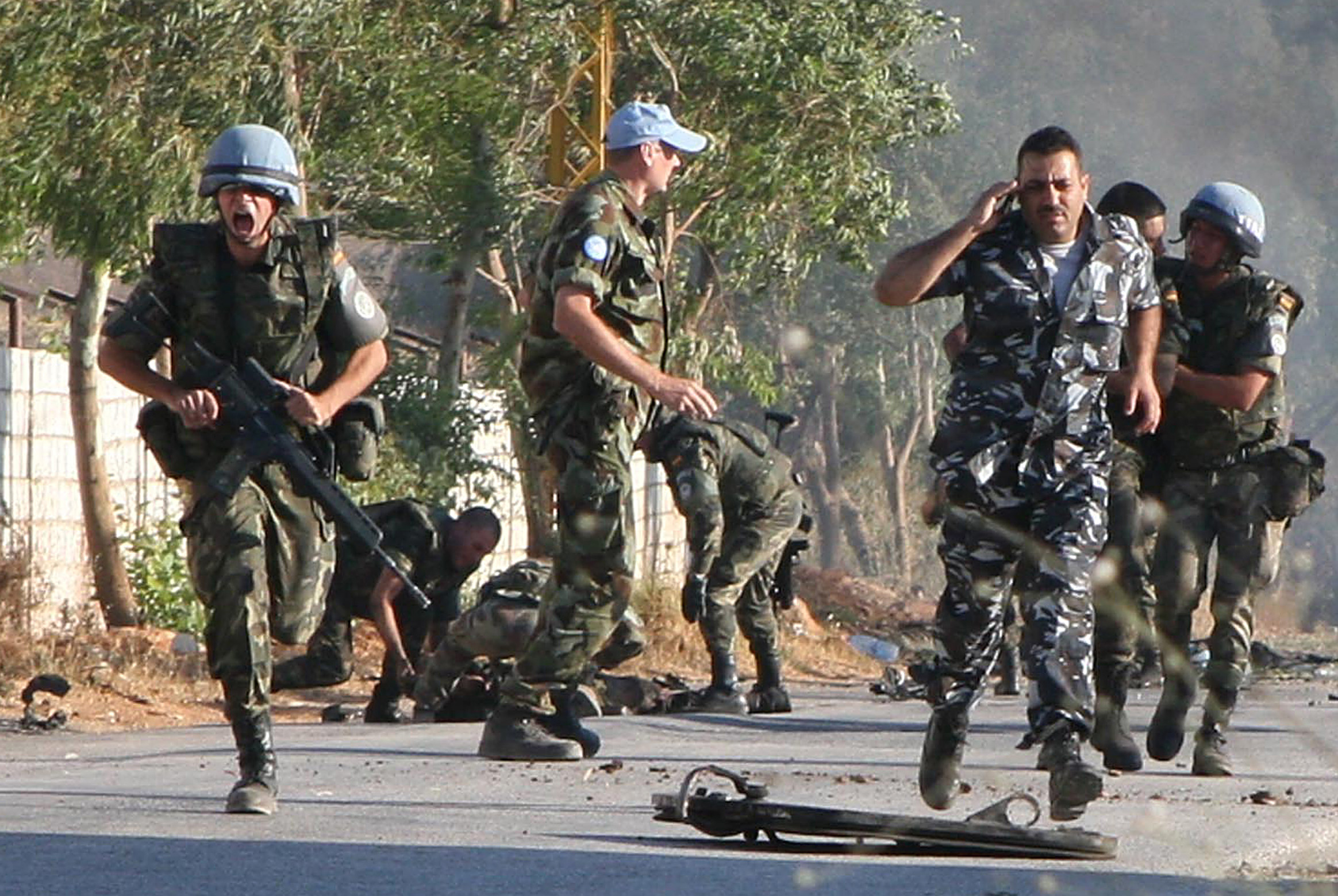
A Spanish U.N peacekeeper, left, screams as other Spanish soldiers assist colleagues wounded in an explosion targeting U.N. troops near the southern Lebanese village of Marjayoun. Six U.N. peacekeepers were killed by the blast Sunday.
Among those condemning the attack on the peacekeepers was the Shiite Hezbollah, which called it a “suspicious act that harms the people of the south and of Lebanon.” The militant group has had good relations with the U.N. Interim Force in Lebanon , known as UNIFIL, since the troops were first deployed in 1978.
The U.N. has since become increasingly involved in highly divisive issues in Lebanon, including its tense relations with neighboring Syria.
UNIFIL said in a statement that the six peacekeepers were killed and two others seriously wounded in an “apparent car bomb attack” while they were on patrol.
In Madrid, Spanish Defense Minister Jose Antonio Alonso said three Colombian and two Spanish peacekeepers were among the slain. He called it a “premeditated attack” and said the “most likely cause” was a car bomb or device activated by remote control.
Lebanese officials said no body parts were found in the car, meaning the bomb was detonated from a distance and did not involve a suicide attacker.
The blast threw the troops’ armored personnel carrier to the side of a main road between the towns of Marjayoun and Khiam, a few miles north of the Israeli town of Metulla. Investigators worked under floodlights late Sunday at the scene to determine what happened.
Spain has 1,100 peacekeepers in Lebanon, part of the 13,000-member U.N. force from 30 countries. UNIFIL, along with 15,000 Lebanese troops, patrols a zone along the Lebanese-Israeli border.
UNIFIL’s presence puts teeth in the U.N. cease-fire resolution that halted last summer’s 34-day war. Southern Lebanon has been largely quiet after the summer war killed more than 1,200 people, most of them in Lebanon.
Western-backed Lebanese Prime Minister Fuad Saniora denounced the attack, as did Israeli, U.S. and French officials.
Syria also condemned the attack, the country’s official news agency reported. Foreign Minister Walid al-Moallem told his Spanish counterpart in a telephone call that the attack was “a criminal act that aims at shaking security and stability in southern Lebanon.”
Last month, the U.N. Security Council imposed an international tribunal to try suspects in the 2005 assassination of former Lebanese Premier Rafik Hariri despite rejection from the country’s Hezbollah-led opposition, which supports Damascus’ involvement in Lebanon.
Complicating the picture, media reports earlier this month said interrogations by Lebanese authorities with captured al-Qaida-inspired militants revealed plots to attack the U.N. force.
The warnings became more serious after the al-Qaida-inspired Sunni Islamic group Fatah Islam began fighting Lebanese troops at Nahr el-Bared, a northern Lebanon Palestinian refugee camp, five weeks ago. The militants have threatened to expand their battle to other parts of Lebanon.
Ten people died Sunday in the latest battle between Lebanese troops and the militants.
In addition, al-Qaida’s No. 2, Ayman al-Zawahri, in videos broadcast in September, has denounced the reinforced UNIFIL.