Kansas Legislature
House committee considers tax incentives for hybrid cars
A $2,500 credit would be available for new purchases
February 6, 2007
Advertisement
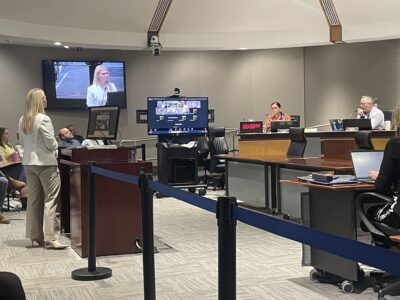
Topeka With six children and a job in construction, state Rep. Anthony Brown, R-Eudora, said Tuesday that he hasn't found a hybrid vehicle to fit his lifestyle.
But that doesn't mean he won't some day.
Brown and state Rep. Tom Hawk, D-Manhattan, are pushing legislation that would give Kansans a $2,500 refundable state income tax credit if they purchase a hybrid vehicle.
The two legislators told the House Energy and Utilities Committee that the tax refund would prompt car manufacturers to increase production of fuel-efficient hybrid vehicles, such as cars that use gas and electricity, and help clean the environment.
"This also would be a good way to curb our use of foreign oil," Brown said.
Dr. Peter Bock, a family physician from Eudora, who has a 3,000-watt wind generator in his yard, testified in support of the bill, saying it would promote alternative fuel technology.
"This technology currently exists. It's just a mater of economics, imagination and government incentives to keep the ball rolling," Bock said.
Ford and General Motors, which are producing hybrid cars in the area, the Sierra Club and the Kansas Automobile Dealers Assn. also supported the bill.
A state tax incentive, along with a current federal tax break would close the gap between the cost of hybrid vehicles and regular ones, auto industry officials said.
But the Kansas Department of Revenue said the proposed state bill was expensive and could produce some disgruntled taxpayers.
Under House Bill 2222, the tax credit would be capped at $2.5 million, which means 1,000 people would be eligible. There were approximately 1,500 hybrid vehicles sold in Kansas in 2005, the agency said.
Potentially hundreds of car buyers would not be able to get the tax credit, which would be handed out on a first-come, first-serve basis.
In addition, the agency would have to spend more than $200,000 to program the tax credit, which under the bill would last only two years.
"Are there more efficient uses of $2.5 million in state funding?," Revenue spokesman Richard Cram asked.
Brown said he didn't think it would be a big hassle to establish the hybrid tax credit. The state already provides a $750 tax credit for alternative fuels vehicles, but few people know about it, Brown said. He said only 20 people last year applied for the credit.
The committee took no action on the bill, but several committee members were intrigued with the legislation and thought maybe it should be narrowed.
For instance, state Rep. Tom Sloan, R-Lawrence, said it may be better to restrict the tax credit for vehicles assembled in the United States. And state Rep. Forrest Knox, R-Altoona, questioned providing a tax credit for hybrid pickup trucks and SUVs since their fuel efficiency wasn't that much greater than standard pickup trucks and SUVs.
More like this
- Hybrid vehicles may fuel tax credit 1 comment / February 7, 2007
- Tax incentives cut costs of green living 2 comments / June 10, 2009
- Cash-for-clunkers could drive up sales, but has critics March 22, 2009
- House GOP pushes energy tax breaks July 19, 2001
- Some states consider taxing mileage instead of gasoline January 3, 2009
Top ads RSS
Marketplace
Arts & Entertainment · Bars · Theatres · Restaurants · Coffeehouses · Libraries · Antiques · Services
- Blog: Being A Stripper: 10 Things I'Ve Learned So Far November 10, 2009 · 95 comments
- Mormons throw support behind gay-rights cause November 12, 2009 · 63 comments
- KU fraternity members to collect food, money this weekend at Clinton Parkway Hy-Vee November 10, 2009 · 2 comments
- Q&A with Kansas health officer about H1N1 November 12, 2009 · 16 comments
- Muslims troops deserve support November 12, 2009 · 76 comments
- Little to red-shirt this season, Self says November 12, 2009 · 3 comments
- Attorneys of man who says he killed George Tiller ask for change of venue November 12, 2009 · 22 comments
- Blog: We're Up And Running... If Only We Could Come Up With A Good Name November 12, 2009 · 16 comments
- A month later, Aberdeen residents still waiting to enter their burned apartments November 11, 2009 · 18 comments
- Legislators believe pressure is building to consider furloughs of state employees November 12, 2009 · 4 comments
- Fair Trade Holiday Market opens Nov. 27 in Lawrence November 12, 2009
- Q&A with Kansas health officer about H1N1 November 12, 2009
- KU receives $6 million contract for vaccine research November 12, 2009
- Kansas conservation activist Jan Garton dies at 59 November 11, 2009
- Report looks at county’s learning programs November 12, 2009
- Douglas County ceremony honors America's veterans November 11, 2009
- Topeka area woman dies from swine flu; death toll from virus at 18 in Kansas November 12, 2009
- Lawrence's Woodlawn School earns three Challenge Awards November 12, 2009
- Kansas women sign four November 12, 2009
- Report: Nearly 6 million children die from hunger November 23, 2005


6 February 2007
at 4:08 p.m.
Suggest removal
Permalink
grubesteak (Anonymous) says…
Interesting. A step in the right direction.
I watched “Who Killed The Electric Car?” last weekend and thought, if only Kansas would pass a zero-emissions mandate … how sweet it would be.
Then again, a zero-emissions mandate would put quite a crimp on KUs nasty buses.
6 February 2007
at 4:30 p.m.
Suggest removal
Permalink
JackRipper (Anonymous) says…
Interesting, but if you can get 50mpg from a diesel or even some gas powered cars how is getting the same gas mileage and adding all the batteries that hybrids need to the environment a good idea? When it comes time to pony up $3000-5000 for new batteries will people do it or will the car be destined to the landfill sooner? Where will all those batteries go?
Zero emissions is a good idea but don't forget that the power coming out of your wall socket isn't coming from a zero emission sources. It's sort of a shell game.
6 February 2007
at 5:53 p.m.
Suggest removal
Permalink
davisnin (Anonymous) says…
JackRipper you're right. A Toyota yaris is a much better environmental choice than a prius, especially for the commuters of Lawrence. In fact the best thing to do is keep your current vehicle running as long as possible regardless of the miles per. A 15mpg truck going for 20 years has less of an environmental impact than building a new car. If the main concern is foreign oil, though, Yaris is the better choice.
6 February 2007
at 8:08 p.m.
Suggest removal
Permalink
Mkh (Anonymous) says…
I for one really hope this goes through, mainly because I bought a hybrid; but I also think we need to make these automobiles more affordable to more people.
Of course hybrids are not the end all be all answer, but there are much better than convential automobiles.
In terms of 50mpg from a diesel, I believe you are referring to bio-diesel automobiles. While it is relatively cheap and easy to convert your diesel to bio-diesel. There are not enough bio-diesel fueling stations yet to make this a realistic option (unless you live in California). The same thing goes for ethanol. Those are even better environmental options, but unfortunately we are not ready to have them available to the masses.
–––––––––
“In fact the best thing to do is keep your current vehicle running as long as possible regardless of the miles per”
––––––—
I'm not sure if I buy this or not…considering that cars' engines that are five years or older do not burn nearly as clean emissions as newer cars.
6 February 2007
at 9:30 p.m.
Suggest removal
Permalink
JackRipper (Anonymous) says…
I'm not sure how hybrids are better than conventional autos. 50mpg is 50mpg whether it is a hybrid or a traditional diesel or gas engine. The hybrid adds one more problem to the mix with the batteries which aren't particularly friendly items for the environment.
Standard diesel engines in cars are getting 50mpg, this is regular diesel not biodiesel. Look at Volkswagens which have been selling diesels for years and they keep improving the technology since it is popular in Europe.
It would seem keeping a vehicle running and maintained for as long as possible and maximizing its useful life makes more sense than adding it to the pile of waste. Manufacturing new vehicles probably has more of an impact on the environment than a 20 year old car that is properly tuned.
Why isn't the tax break for any vehicle that can get over 50mpg? Is it a good idea when politicians try to decide what technology should be developed instead of just setting a goal to shoot for and let the markets work.
6 February 2007
at 9:49 p.m.
Suggest removal
Permalink
JackRipper (Anonymous) says…
Oh yeah, standard ethanol doesn't sound to be that great of an idea. We couldn't raise enough for our demand and corn isn't a particularly friendly crop on the land. Lots of fertilizer and water and don't forget all the fuel tractors and combines use. Then think about how much more fertilizer run off there will be, less wetlands to control run off because we will have to put every available acre into production if we really want to use standard ethanol. The experimental ethanol that converts wood chips and straw into ethanol is interesting but is down the road they say.
6 February 2007
at 9:58 p.m.
Suggest removal
Permalink
Mkh (Anonymous) says…
Well I think the short answer to your questions Jack is it depends really on your environmental viewpoint.
Do you think the landfill problem is the biggest threat to the Earth, or the Global Warming/Clean Air problems?
Meaning hybrids vehicles are better than conventional automobiles in terms of they have Zero emmissions. Which most environmental experts say is one main cause of Global Warming.
I hear what your saying about adding cars/batteries, etc. to the landfills. But I beleive there are alternatives such as recycling various parts of automobiles.
I do know about one Volkswagen model diesel (the Jetta) that gets tremendous gas milage. But I believe that they are able to achieve that only due to specific size and type of the Jetta. But I agree those cars are great and people should buy them.
I also very strongly agree that we should also have tax breaks for anyone that buys a fuel effeciant vehicle. I also think there needs to be standard regulations on the car manufactors to keep gas guzzlers off the market.
6 February 2007
at 10:02 p.m.
Suggest removal
Permalink
Mkh (Anonymous) says…
On Ethanol, again it's not the stand alone answer to our Energy Crisis. But we need to incorporate more of it into our fuels. I don't think we'll ever get to the point of Brazil and be able to be totally gassed up with ethanol. But that is just due to our massive demand.
6 February 2007
at 10:42 p.m.
Suggest removal
Permalink
Mkh (Anonymous) says…
I'm not saying that keeping cars out of landfills is a bad idea. But the question is which threatens the Earth faster. Gas burning emissions, or issues with landfills?
Hybrids are officially classified something like “nearly-zero” emissions. They emit a very minimial amount of emissions, to date they have the lowest emissions of any cars on the market.
Now let's talk about the practical aspects of everyone keeping the same car for 20 years. Would that not completely shut down the vast automotive industry and cause massive amounts of job lay-offs? What about ever evolving safety measures and standards that are working to save the lives of motorists? Do you really not want your love ones to have airbags and other vital safety measures?
6 February 2007
at 11:27 p.m.
Suggest removal
Permalink
JackRipper (Anonymous) says…
The hybrids discussed are not zero emission. They have gasoline engines and they get supposedly 50mpg but that has been a topic for discussion also.
The landfill problem is an issue for air pollution and possibly global warming when you consider what did it take to mine the iron, process it into steel, transport it, turn it into a car, and then ship it. That is just one component of a car and if you add up all the other components and stages of production, oh yes, the power plants that produce the power for the manufacturing plants, fuel burned transporting all this you'll see a whole lot of energy being used to produce a car, even if it is a hybrid. Keeping the old car out of the landfill longer and not creating the demand for new vehicles seems like a way to cut the effects you mentioned.