

Pastor’s suicide increases religious tension
Erfurt, Germany ? We know this much: The 73-year-old pastor’s last sermon focused on his fear that Christian Europe would be overwhelmed by Islam.
A few weeks later, at one of the most important Lutheran landmarks, the Rev. Roland Weisselberg soaked himself in gasoline and set himself ablaze.
He left no suicide note, and the meaning of his final words is still the subject of conjecture.
But in a time when Christians and Muslims in Europe lurch from one crisis to the next, the poetry-quoting, retired Lutheran minister is being proclaimed a self-martyr – the latest victim in a growing conflict between the cross and the crescent.
“What’s sad is that many people are so quick to believe that he killed himself to protest Islam. They want to believe it,” said Bishop Christoph Kaehler, who leads the German Protestant Church in the eastern Thuringia state, which includes historic Erfurt, where the 16th-century Reformation trailblazer Martin Luther took his first religious vows.
“Weisselberg has become a magnet for fears and suspicions about Muslims,” Kaehler said. “It’s an unfortunate lesson in how tense things have become.”
Germany has felt that uneasiness in many ways recently.
Last month, a Turkish-born lawmaker sought protection from death threats after calling Islamic head scarves a symbol of oppression of women.
In Berlin, an opera company has become Europe’s latest freedom of expression flash point. A planned production of Mozart’s “Idomeneo” outraged Muslims with a scene depicting the severed heads of the Prophet Muhammad along with other religious figures including Jesus and Buddha.
Pope Benedict XVI used a speech at a German university in September to decry violent trends in Islam, setting off a maelstrom of protests around the world. The German pontiff is scheduled to begin a visit to Turkey on Nov. 28 in his first papal trip to a mostly Muslim nation.
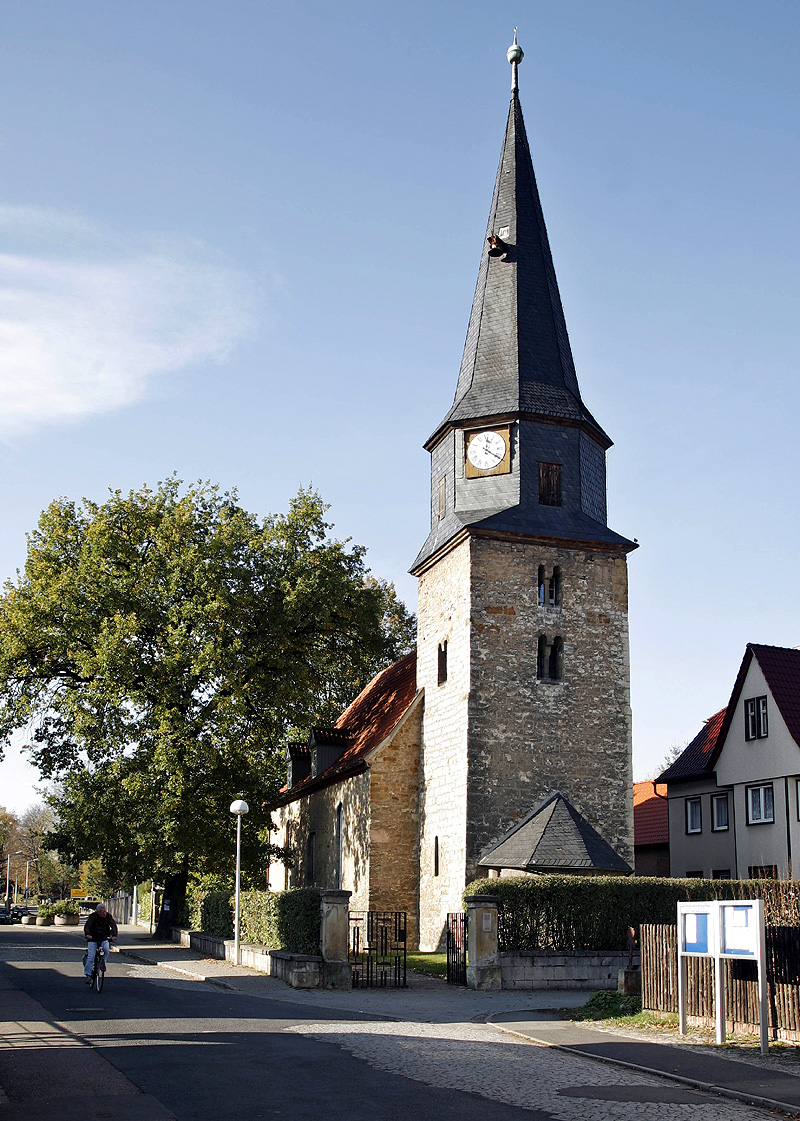
This church near Erfurt, Germany, is where the Rev. Roland Weisselberg, 73, poured a can of gasoline over his head and set himself alight last month in protest at the spread of Islam. He died the next day, Nov. 1. The Augustinian monastery is where Martin Luther spent six years as a monk at the beginning of the 16th century.
Meekness scorned
Weisselberg was not a silent bystander.
He wrote letters to newspapers, venting on a range of topics. Most were packaged around his belief that European Christians had become too meek and separated from the faith’s bold history – such as Luther’s famous call for spiritual renewal, which helped stir the Protestant Reformation.
In his last sermon in late September – called from retirement to fill in for an absent minister – Weisselberg said Christians in Europe must unite or risk being overrun by Islam in generations to come.
Then, on Oct. 31, he walked through the stone arches of the St. Augustine Monastery, a place where from 1505 to 1511 Luther lived, studied and took monastic vows. A morning service was under way for Reformation Day, the anniversary of Luther’s famous 95 Theses, which helped inspire the Protestant break from Rome.
Weisselberg pulled out a canister of gasoline hidden under his coat. An instant later, he was ablaze.
Weisselberg died the following day. No formal suicide note was found. But his widow – who has refused to speak publicly – told a church official that her husband left behind a letter describing his angst over Islam’s rising power in Europe.
Anti-Muslim groups across Europe have exalted his name. Christian Web sites have given him top billing – in a repeat of the global cyber-eulogies for an Italian missionary, Sister Leonella Sgorbati, who was gunned down in Somalia in September in possible retaliation to the pope’s comments on Islam.
Unknown motivation
In the monastery’s main church, tributes to Weisselberg have been left on a small wooden table near towering stained glass windows. Amid the wilting flowers and votive candles is a wreath with a message on a yellow ribbon: “We hope this act bears fruit.”
“He had planned the time, the place and even planned his own funeral,” said the Rev. Uwe Edom, who succeeded Weisselberg at a suburban parish outside Erfurt following his retirement in 1989. “Why on earth did he not tell us precisely why he would take his own life? It now leaves it open for any interpretation and abuse. Weisselberg’s legacy is now one of a cry against Islam, even if he wanted that or not.”
Ironically, Weisselberg’s death occurred in a place where Islam is still barely noticeable.
Unlike Berlin and other major urban centers in western Germany, the former East Germany has only recently become host to significant numbers of Muslim immigrants. The West opened its doors to a huge flow of so-called “guest workers,” mostly from Turkey, during the postwar reconstruction while Erfurt and other cities moved into the Soviet orbit behind the Berlin Wall. On Friday, the pope urged Catholics in Germany to seek “spiritual dialogue” with the nation’s more than 3 million Muslims.
Only an estimated 1,000 Muslims are among the 200,000 people in Erfurt.