Rival science standards emerge in evolution debate
Topeka ? School districts looking for science standards now have a choice.
They can turn to State Board of Education standards that criticize evolution, or the product of a science standards committee that adheres to mainstream science.
“I want people to have the ability to look at the two documents and see the difference and cut through the hyperbole,” said Steve Case, a Kansas University assistant research professor.
Case is chairman of a committee of scientists and teachers that put together science standards that were rejected by a 6-4 majority on the State Board of Education.
The 6-4 majority instead opted for science standards pushed by proponents of intelligent design. Controversy over the standards has roiled Kansas politics over the past year.
Now there are two versions that districts can compare and contrast.
Despite being rejected by the board, Case said the standards writing committee continued its work for two reasons.
The first was to make changes to the recommendations that were suggested by an outside consultant. Aside from evolution, Case said, there were other areas of the standards that needed repair.
Compare the two versions of science standards:
And the second reason was in case there is a change in the makeup of the board during this year’s elections.
“Should there be an electoral change we wanted to make sure there is a coherent document to turn to,” he said.
Four of the six members who voted for the intelligent design-backed standards are up for election this year. One of those, Iris Van Meter, R-Thayer, has announced she will not seek re-election.
The science standards are used as guides by the school districts, and as the basis for statewide testing.
Education Board Chairman Steve Abrams, R-Arkansas City, who voted for the standards that criticize evolution, said he didn’t know whether the board would take a new look at the standards in light of the final recommendations from Case.
Asked whether school districts should choose between the two standards, he said, “School districts can basically do anything they want to do. We don’t have centralized development of curriculum in the state of Kansas, and consequently they can develop their own curriculum as they see fit.”
City Government
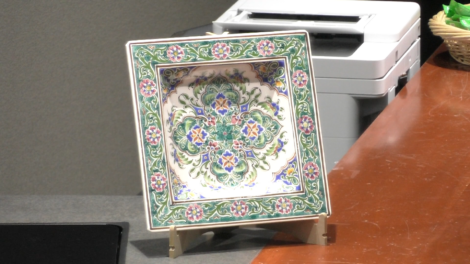
Algerian ambassador gives Lawrence a gift for supporting national team – a piece of art

Lawrence City Commission approves incentives for Alarm.com’s office project in downtown building

Lawrence City Commission interested in a moratorium on data center development

Lawrence city leaders defer decision on selling downtown parking lot for senior housing project
Majed Al-Ghafry selected as Lawrence’s new city manager; he says he plans to ‘hit the ground running’