

Happy trails
Traveling with children can be a joy - with proper planning
Dan and Nicole Sabatini’s vacations aren’t what they used to be.
No three-hour dinners with time to sip an entire bottle of wine. No rigorous hikes through the Colorado wilderness. No marathon visits to museums.
Now they have two young children in tow.
But that hasn’t stopped them from seeing the world.
“We think it’s really important for them to have these experiences and be used to it, because we’re not going to stop traveling,” says Nicole Sabatini, mother of 3-year-old Maya and 9-month-old Elijah. “The earlier they get used to going places and being away from their routine, the easier it’s going to be from now on.”
No doubt traveling with little ones can be a challenge. But each year, families stock diaper bags, pack stuffed animals and handheld games, and haul strollers and car seats to kid-friendly destinations here and abroad.
It just takes more planning, parents say – and more stuff.
We consulted a Lawrence travel agent and a couple of parents with plenty of miles under their belts for tips on how to take the growing pains out of family travel. Here are some of their best:
Choose an age-appropriate destination
Consider a child’s age and attention span and the types of activities available at the vacation spot.
“You wouldn’t want to take a 2-year-old and a 3-year-old for a five-day trip to Washington, D.C., and spend seven hours a day in a museum,” says John Novotny, vice president of operations at Travellers Inc.
He recommends cruises and major resort chains for their children’s programming, which gives parents and kids occasional breaks from one another. Cities known for their child-friendliness include San Antonio, San Diego, Las Vegas, Chicago and Orlando, Fla.
The Windy City is 3-year-old Maya Sabatini’s favorite getaway, her mom says. During a brief recent trip, the Sabatinis visited the Shedd Aquarium, the Sears Tower and the Museum of Contemporary Art, which is a more manageable size than other Chicago museums.
“There’s always something to do there,” Nicole Sabatini says. “The hardest part is realizing you can’t do everything that you might want to do.”
Bring the necessary gear
Susie Wilson’s survival kit for road trips with her three children includes a bag filled with games, toys and other activities to keep the youngsters occupied. She and her husband, Steve, take along their young trio – Ben, 7; Alec, 3; and now Lia, 4 weeks – on their annual 10-hour trek to Susie’s family’s lake cabin in Minnesota.
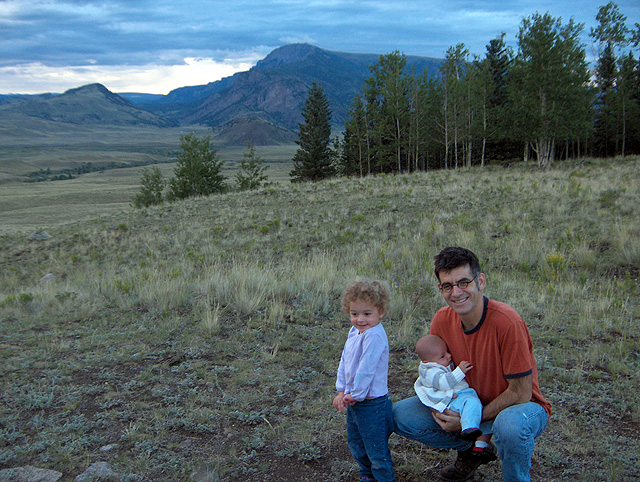
The Sabatini family, of Lawrence, soaks up the mountain scenery during a vacation last August in Colorado. Pictured, from left, are Maya, now 3, Elijah, now 9 months, and their father, Dan. Mother Nicole Sabatini took the photo.
Their new minivan is equipped with a DVD player, and last year the couple brought portable CD players and headphones for Ben and Alec, who also got to select their favorite music for the journey.
Susie recommends packing a cooler with drinks and snacks to minimize pit stops to bathroom breaks and quick lunches, when taking a moment to let the kids run around and burn some energy is a good idea.
“If you don’t let them out for pit stops then they’ll have to go to the bathroom at the worst time: when you’re driving and there’s nowhere else to stop,” she says.
Trading the family car for plane tickets requires even more attentive packing. Infants still need diapers, bottles, a change of clothes, strollers and car seats, but there aren’t any convenience stores at 30,000 feet, so be sure to err toward bringing more than you think you might need.
A space-saving tip for long journeys: Pack only enough diapers and food for the trip and then stock up when you arrive, recommends Nicole Sabatini.
Don’t skimp on accommodations
It’s a fact: You’ll spend more time in your hotel room on a family vacation. Even at Disney World, your children will need naps and cranky breaks.
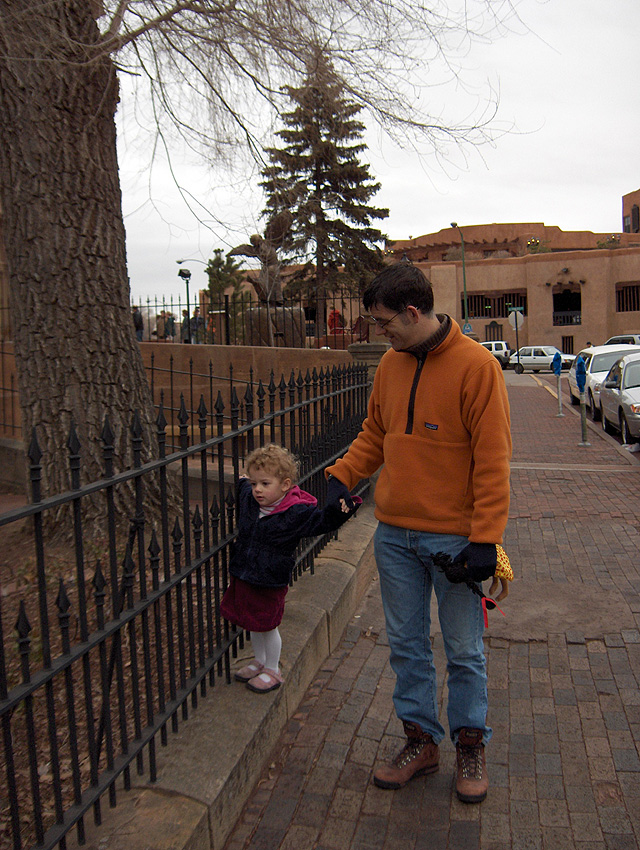
Maya and Dan Sabatini visit downtown Santa Fe, N.M., in December 2004. Maya, 3, also enjoys trips to Chicago.
In that case, travel agent Novotny says, it might be wise to spend a little extra money for a hotel that’s linked to the amusement park’s transportation system. Then if you have to leave the park mid-afternoon, you’re not fighting traffic in an unfamiliar city with a wailing child in the back seat.
If you’re planning an extended stay, Nicole Sabatini says renting a suite – or sometimes even an apartment – can be cheaper than getting adjoining rooms at hotels. And, if budget allows, you’ll want to have a separate room for the kids so you can stay up after they’ve gone to sleep.
When making reservations, be sure to ask whether the hotel has cribs, bed rails, childproofing kits and highchairs. If not, consider bringing a Pack ‘N Play and a booster seat.
Flying high
Planning air travel? Heed this advice:
¢ Most airlines allow children under 2 to fly without a ticket – but then they have to sit on your lap the entire flight. If that’s not appealing, it’s often possible to buy a reduced-price seat for children.
¢ Although it’s not required, Novotny recommends getting a photo ID for children in case you get separated from them at the airport.
¢ Don’t check your stroller with the rest of your luggage. Airports are always bigger than you think, so save your back and check it at the gate.
¢ Fly nonstop whenever possible.
¢ Ask for bulkhead seating because that area tends to be roomier.
¢ During takeoff, give your baby something to suck on to normalize the pressure in her ears.
Kid-friendly voyage tips
AAA offers the following tips to help time pass quickly and safely when traveling with children:
¢ Involve children in as much of the planning of the trip as possible, from choosing the destination to selecting the restaurants along the way.
¢ Purchase a few inexpensive items – small toys, books or snacks – that can be given out as treats along the way.
¢ Pack special snacks and favorite toys appropriate for auto or air travel. Pack a damp cloth and paper towel for spills.
¢ Outfit the children in comfortable clothes. Airplane cabins and air-conditioned cars tend to be cool. Carry a sweater or jacket for kids.
¢ For auto travelers, stop every two hours for a 10-minute break. Before hitting the road again, make sure everyone has buckled up and youngsters 12 and under are properly belted and seated in the back.
¢ During those much-needed breaks, accompany your children
to the restroom or snack area.