

Concrete craze: Versatility, affordability earn material a stamp of approval
I love my garden, but I must admit I’m engaged in a never-ending battle with my patio.
It’s made of old, large and not-so-flat stones, making it a trying surface for anyone to tread, much less my 17-month-old son. He tumbles and recovers, but one day I’m just sure he’ll lose some permanent teeth in his quest to catch the dog’s tail.
The outdoor furniture doesn’t sit quite right. Every time you change positions, the entire chair moves with you. And then there’s my No. 1 nemesis: weeds. I pick and spray and pick and spray, and the weeds and grass just keep peeking up through the massive gaps between the bumpy rocks.
But alas, there is hope for removing this thorn in my side; and if you, too, are struggling with a patio of wavy proportions, I may just have the cure for you as well.
Concrete! No longer is this material residing in the Stone Age. It’s making life smooth sailing for homeowners across the globe. Far beyond the old, pedestrian, gray matter that makes up sidewalks and giant parking lots, the kaleidoscope of concrete’s possibilities is only as small as your imagination these days.
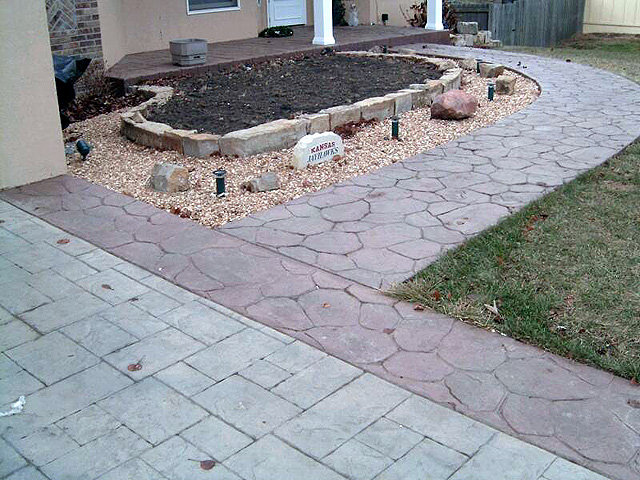
More people are turning to concrete as its decorative possibilities expand. There
“We can make concrete look like tile, brick, big pieces of slate – it really surprises a lot of people,” says Brett Smith, a Lawrence concrete finisher.
Stamping, coloring and drawing on concrete originated in California and the desert Southwest, but today those techniques are sweeping the nation. In fact, Stan Tiemeyer, president for 38 years of Jayhawk Concrete Finishing in Lawrence, says that 90 percent of concrete requests today are for the decorative new looks the material has to offer.
“There are unlimited shades and colors to choose from. Even existing concrete can be chemically stained, and designs can be cut or engraved to produce practically any effect you envision,” he says. “It can look like brick, stone, slate or tile, or we can create a stamp that looks like your company logo or a pet, whatever.”
People aren’t just using concrete outdoors anymore, either. They’re incorporating the incredibly durable substance into the interior decor of their homes.
“Indoor floor coverings are expensive, have to be replaced and can harbor dirt, allergens and unwanted bacteria,” Tiemeyer says. “A concrete floor is easy to clean and lasts the lifetime of the home.”
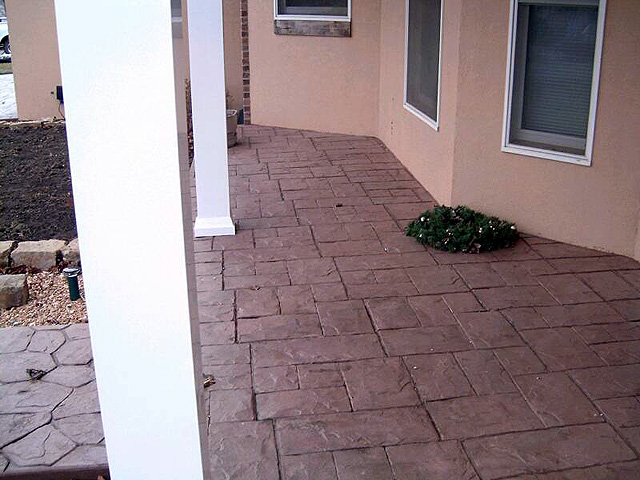
Concrete's possibilities include a stamped tile finish like the one shown above.
Lawrence residents Gene and Nancy Dorsey became interested in concrete by happenstance.
“One of my friends who lives near Moab, Utah, has the entire floor of his house done in concrete with radiant heating,” Gene says. “Nancy wanted our interior floors to be wood, but we have a beautiful, stamped concrete patio.
“I looked at other materials but decided on the stamped and stained concrete because it was lower in cost and lower in maintenance,” he continues. “We have the stamp that looks like flagstone at a fraction of the cost of flagstone.”
When you have a patio, you want to enjoy it rather than constantly fret over it. Concrete provides outdoor-lovers with a maintenance-free patio, and it leaves them with a little extra cash to purchase a plant or two.
“Stone and brick are more expensive than concrete, take longer to lay and usually are more undulated, making it harder to walk on or set furniture on,” Tiemeyer says. “Finding craftsmen who lay stone is becoming increasingly difficult. Plus, maintaining mortar joints and keeping out grass or weeds are time-consuming efforts and can be costly.”
Boy, can I relate. I’m ready to sit back on a sunny day with a refreshing drink and laugh at the antics of my son rather than wondering whether this will be the day we head to the emergency room.