

P.M. tries to diffuse anger, rules out talks with Syria
Jerusalem ? Prime Minister Ehud Olmert tried to defuse growing public anger Monday over his handling of the war against Hezbollah, promising to rebuild rocket-scarred border areas but rejecting peace talks with Syria, a key supporter of the Lebanese guerrillas.
With efforts to recruit troops for an international peacekeeping force facing resistance from Europe, the week-old truce appeared increasingly fragile. The Israeli army, which is waiting for the U.N. force to arrive before fully withdrawing from southern Lebanon, said its soldiers shot two Hezbollah guerrillas who approached in a “threatening manner” late Monday. A Hezbollah official called the report “untrue and entirely baseless.”
Italy has indicated it would be prepared to send 3,000 soldiers and offered Monday to command the enhanced international force. France, which currently leads the force, has pledged only 400. If Rome follows through, other European countries might be more willing to commit troops.
But Europe has been hesitant to get involved because of questions about whether the force will be called on to disarm Hezbollah fighters, who have largely melted back into the civilian population. Indonesia, Malaysia and Bangladesh have offered front-line troops but Israel does not want them because those Muslim nations have not recognized the Jewish state.
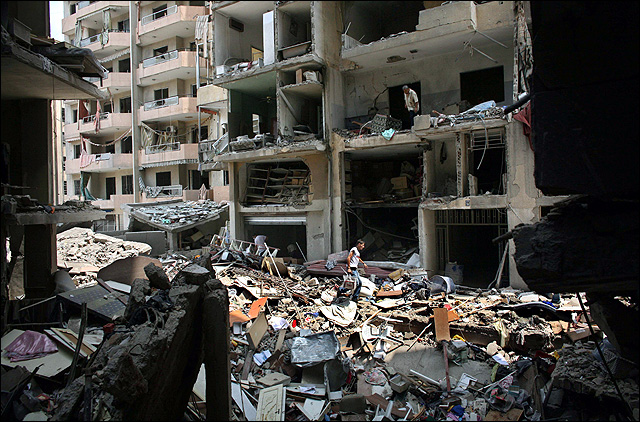
People salvage goods and check damage to apartments amid rubble and debris Monday in a residential area hit during the Israeli bombardment in the Hezbollah stronghold in the southern suburbs of Beirut.
Since the U.N.-brokered cease-fire took effect, ending 34 days of war, the Israeli public’s frustration with the performance of the government and the military has grown steadily. On Monday, hundreds of reservists signed a petition calling for an official inquiry, some marching outside Olmert’s office to demand his resignation.
Olmert’s government, a coalition led by his centrist Kadima party and the moderate Labor party, is in no immediate danger of collapse. It could be brought down only by parliament, which is in recess until October, and it is not clear whether the public storm will last until then.
The war, launched in response to a Hezbollah raid in which two soldiers were captured and three killed, initially enjoyed broad public support that withered as the fighting dragged on and the Israeli death toll grew. Critics said Israel’s political and military leaders were indecisive, set unrealistic goals and settled for an insufficient truce.