

Flower therapy
Garden's beauty, tranquility can offer peace of mind
Human beings have an innate, primal attraction to nature.
Oftentimes nature can proportionally bring into scale the width and breadth of our own problems by merely absorbing the scene at the apex of a mountaintop or while sitting next to a raging river.
It is impossible to separate from the natural world, even if you don’t consider yourself an “outdoorsy” type, because nature has a firm grip on many of the ways in which we conduct our existence. For instance, society works on a solar clock. Our moods and hormones shift with the angle of light from the sun’s rays; many people experience the “winter doldrums” because of the lack of sunshine.
This applies to the world of flora as well. A garden can be very calming because it is a nonjudgmental environment. In nature, the playing field is leveled, and we all shine.
Candice Davis has a lovely, tranquil garden courtyard. The courtyard is an introduction for her clients to the world of therapy. In order to reach Davis’ office of Cottage Hill Counseling, 947 La., you must first walk through the cheerful setting.
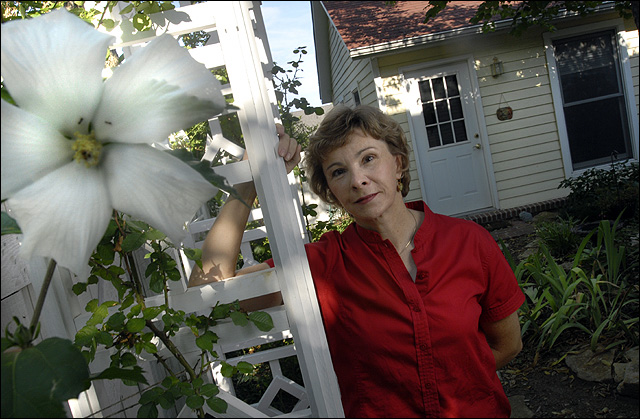
Candice Davis, a Lawrence therapist, is pictured in her garden courtyard, a client entryway to her practice at 947 La. Many studies suggest that flowers and gardens can have a calming effect similar to the results of meditation.
Davis has a master’s degree in social work and is a licensed specialist clinical social worker. Her days are spent listening, and her goal is to redirect her clients onto a path of how they want their life to be. Davis’ aim is to pinpoint harmful patterns and work to find useful guides for her clients.
“The garden I like to think of as a place that is uplifting, safe and peaceful,” Davis explains. “It immediately sets a mood of ease, versus walking through a parking lot or office space. This garden implies a sense of hopefulness.”
Her clients enter through the side walkway and stroll under a Terry Miller-crafted arbor that is crawling with Fourth of July roses. They tread on the random stone path with irises, peonies, lirope, ferns and a smattering of impatiens. It is not uncommon for clients to wait in the garden under a redbud tree for their session while Davis is finishing another therapy sitting.
“People are very vulnerable, especially the first time you experience a session,” Davis says. “It takes a lot of courage to come and discuss issues. People don’t want to be judged, and this garden seems to set the tone, relaying that things will be okay. Many people are at the end of their rope, and this space leaves a feeling of hope for the better.”
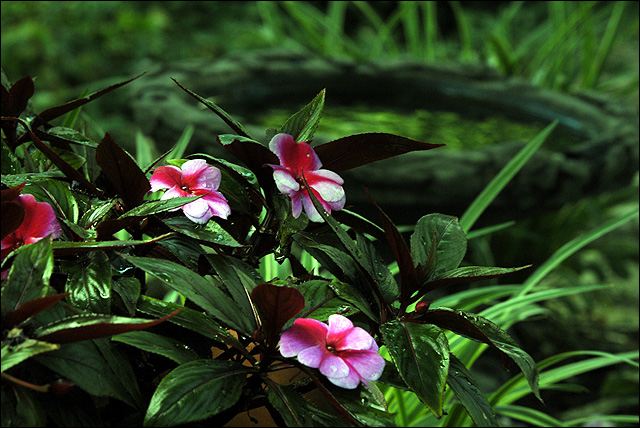
New Guinea impatiens bloom in Candice Davis' garden
Davis is on the right track. In fact, a study performed at Kaiser Permanente Hospital analyzing the electronic brainwaves of gardening subjects found a striking resemblance to the brainwave activity of people who regularly meditate. Other studies have shown that patients in hospitals actually heal about twice as fast if they have rooms with a view of the garden. Staffs at psychiatric hospitals have reported the mental benefits of being in nature. Increased ability to make decisions, an elevated confidence and self-esteem are prevalent themes these health care workers witness in patients.
“I think there is a lot of truth to that,” Davis says. “People have really discovered how important nature and beauty are to the human race. It puts you more in touch with yourself and with a higher spirit.”
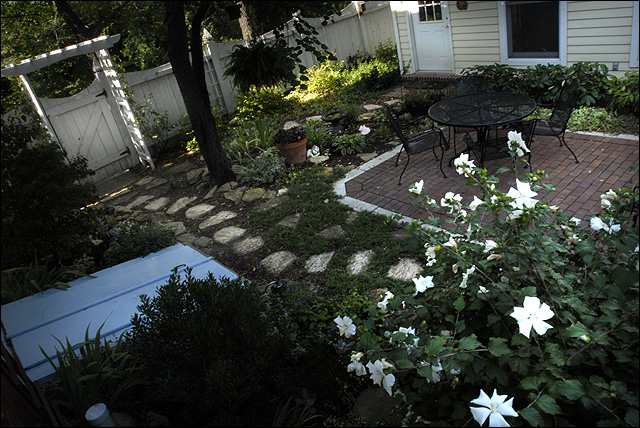
The courtyard to Candice Davis' therapy practice is a waiting place for clients. Many
Another study conducted at Rutgers University highlighted the effect of flowers on recipients. According to the study, the simple presence of flowers had an immediate impact on that person’s emotional state. In the experiment they delivered a number of gifts to various subjects, one of the gifts in the mix was a bouquet of flowers. The delivery person was told to look for the recipient’s expression, particularly the Duchenne smile, often called a “genuine” smile when the lines around the eyes crinkle. Out of 150 tested, 100 percent of the subjects produced this smile with the bouquet gift, men and women across the board.
“Nature does have a calming effect,” Davis agrees. “I find it incredibly therapeutic to dig in the dirt. There is a great personal satisfaction in gardening. It is how adults can play. You get dirty and stinky and muddy and it is fun, plus exceedingly rewarding. And I’m not even a good gardener.”
Davis looks at her Cottage Hill Counseling garden as her own artistic expression and admits if it doesn’t grow she pretty much moves on. But the courtyard is relaxing, her hardy plant choices are thriving and the idea of counseling mixed with this enchanted scene is an appealing and calming route when the weight of the world is holding you down.
Flowers’ effects on moods
¢ Red roses: Increase energy, it boosts adrenal glands producing energy.
¢ Yellow sunflowers: Enhance alertness, light waves stimulate the brain. Associated with the sun’s rays, this also brings a sense of optimism.
¢ Green hosta leafs: Slows the nervous system, people breathe slower and relax the heart.
¢ Indigo irises: Indigo stimulates the brain’s pineal gland, aiding in sleep and freeing the mind of worries and inhibitions.
¢ Orange lilies: Orange strengthens the immune system, the lungs, the digestive system and can stimulate sexual organs.
Source: ezinearticles.com