Companies researching DNA vaccines to fight flu
San Francisco ? The flu vaccine-making system that serves as the best available protection against a pandemic relies on millions of chicken eggs, takes nine months to produce each year’s flu shots and has changed little since the 18th century.
This creaky system poses a big problem if a new, deadly strain emerges once the annual and inflexible production process begins.
Several biotechnology companies are at work on a new and quicker way of making a flu vaccine they hope can replace one that requires people to be inoculated with the entire influenza virus. Their technique: extract just a few genes from the virus and inject it into people.
The nascent technology, called DNA vaccines, is a form of gene therapy that proponents argue is the best way to overhaul a 50-year-old vaccine manufacturing system.
In the meantime, most government and big pharmaceutical research funds are still pouring into the egg-based process.
The U.S. government awarded Chiron Corp. $62.5 million last week to produce shots that protect against the bird flu strain. Last month, Sanofi-Pasteur received $100 million for a similar government project. Both companies still use eggs to manufacture vaccines.
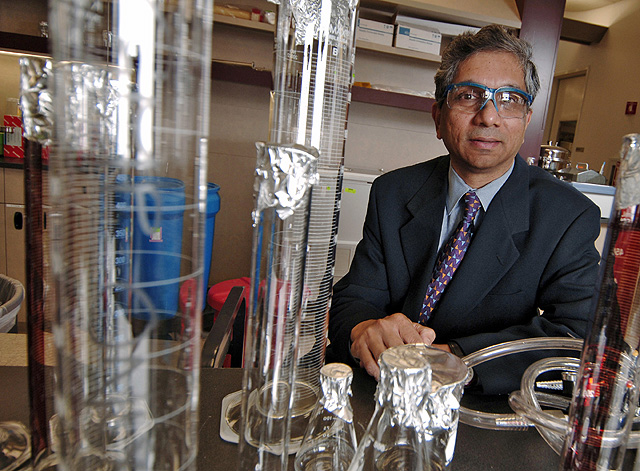
Vical Inc. chief executive officer Vijay Samant sits in one of the company's labs at their headquarters Friday in San Diego. The company is working on DNA vaccines, a form of gene therapy that proponents argue is the best way to overhaul a 50-year-old vaccine manufacturing system.
Most government and big pharma efforts on the influenza vaccine front are doing one thing new: They’re seeking to shave a few weeks off the process by trading in the chicken eggs for mammal cells, the standard brewing technique used to make biotechnology drugs.
The old and new vaccine-making techniques all rely, of course, on the same principle: tricking the body to create natural defenses against disease.
Under the current system, the three flu bug versions that are expected to be the coming season’s most prevalent strains are injected in chicken eggs to multiply before undergoing a long process of inactivation, sterilization and packaging.
The gene jockeys touting DNA vaccines say they are getting close to making vaccines with less effort. They claim they can soon produce flu vaccines in less than three months that would allow for injecting people with key bits of a flu’s DNA.
If a flu were to mutate into something unexpected, researchers say they can simply grab a gene from the new strain and gin up more vaccine. Best of all, they argue, their technology knocks drug makers out of the chicken wrangling business, the biggest limitation of the current system.
DNA vaccines were first introduced about 10 years ago as a possible treatment for a variety of diseases, from AIDS to cancer. They worked great in mice, but largely failed to work in humans because the injected genes did not find their way into the cells.
Vijay Samant, chief executive of Vical Inc. in San Diego, said those initial problems have been overcome and his company is testing DNA vaccines in cancer and AIDS patients to battle those diseases.
In Oxford, England, the tiny biotechnology company PowderMed tested its DNA vaccine for a common flu strain this summer in 12 people to ensure the technology was safe. It was the first such human test of DNA vaccine for flu and the company said it was successful enough to begin new trials with more people.
Health
ER visits for tick bites on the rise throughout the Midwest
FDA OKs first new sunscreen ingredient in over 25 years
WASHINGTON — Federal health regulators last week signed off on the first new sunscreen ingredient for the U.S. ...
OB-GYN group makes its 1st vaccine recommendations
A prominent OB-GYN group announced vaccine recommendations on Wednesday that differ from what the U.S. ...

How to talk to kids about vaping as fruity flavors make a comeback
Program that helped people with disabilities scrapped again
Margaret Tomlinson has been recovering from a traumatic brain injury for three years. Nearly a year ago, she moved ...