

Light conversation
Outdoor bulbs illuminate walks, homes
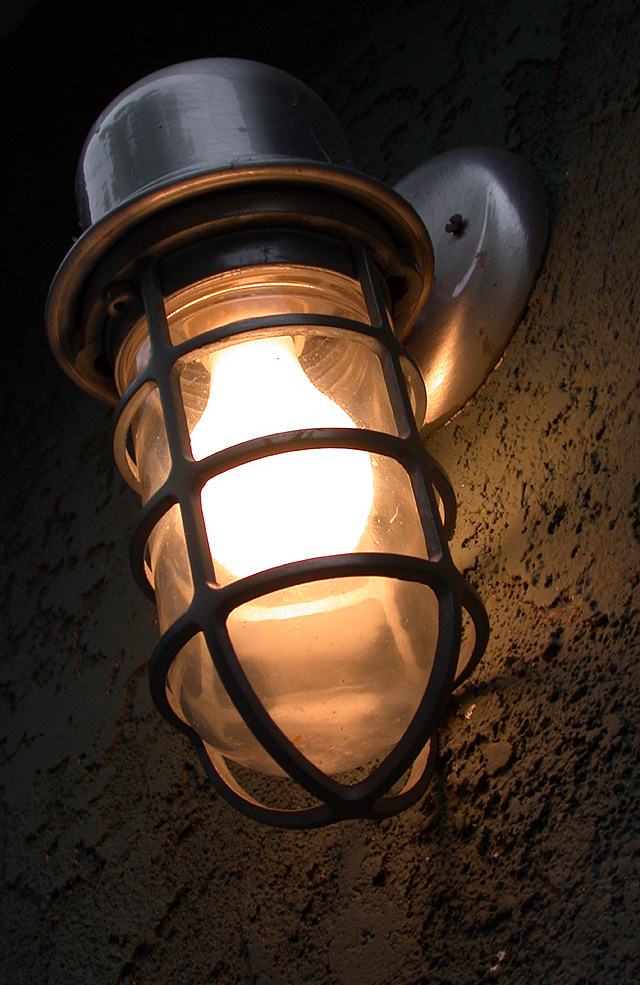
Autumn delivers a cruel twist.
Just as the weather turns ideal for spending long, lingering evenings outside, shorter days mean the lights are going out early on the party.
But the party doesn’t have to end prematurely. With some strategically placed outdoor lighting, the festivities can last long into the night.
Outdoor illumination is an ideal way to trick Mother Nature into bending to your whims instead of scurrying inside the moment the sun sets. Well-planned lighting can extend the time gardeners are able to appreciate their inviting outdoor living space. Late autumn and winter are tough times to keep the landscape interesting, but placing lights to direct the onlooker’s eye to certain focal points puts you in control of the stars in your garden. For instance, if your gorgeous blue spruce sparkles when the snow weighs heavily on its boughs, illuminate it!
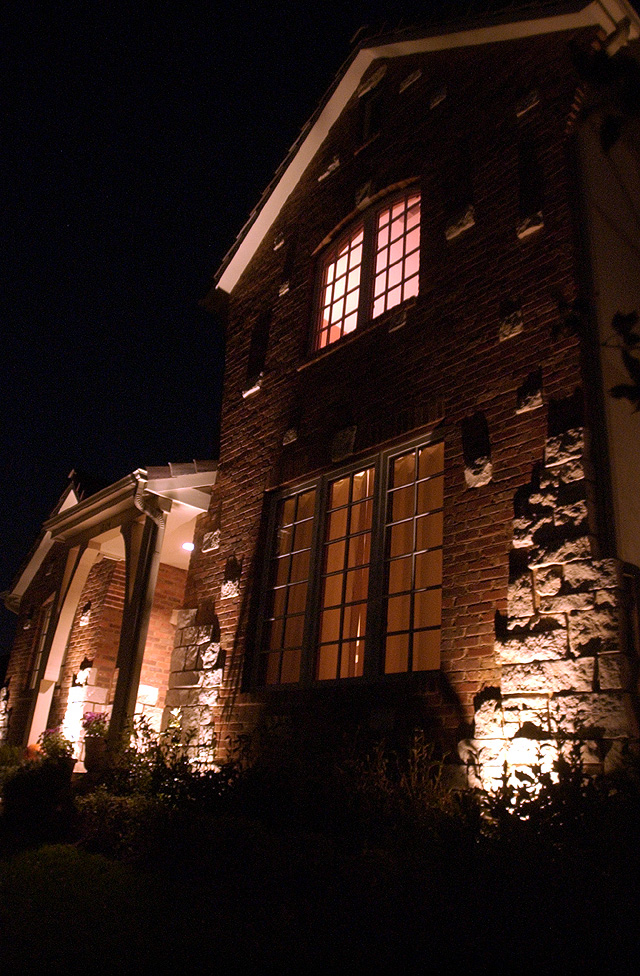
Outdoor lighting can be used to highlight architectural features and garden plants. Chris and Megan Schumm, of Lawrence, have used lighting on their home to increase both aesthetic and security lighting.
Lawrence residents Chris and Megan Schumm had distinct ideas about how they wanted their home to look as night fell.
“I wanted to do something that gave an architectural effect to the edifice of the home,” Chris says. “It needed to have an inviting feel and also create a unique aesthetic to the structure.”
There are many ways to light a focal area – up lighting, down lighting, side lighting – and a bevy of interesting things to accentuate: trees, ponds, walkways, the home, a barn. But too much lighting can have your neighbors complaining of restless nights. You might want to consult a professional about what you want to highlight.
Dan Huston, owner of Danielsan Electric has this suggestion: “You need a good balance in your illumination design of security lighting and aesthetic lighting.”
Huston’s goal often is to set up an outdoor lighting scheme that flawlessly blends with the natural beauty, almost going unnoticed.
“I try to create moon lighting, where you get a nice even blue glow over the yard,” he says. “I look at it as if I am lighting a second room, only outside of the house.”
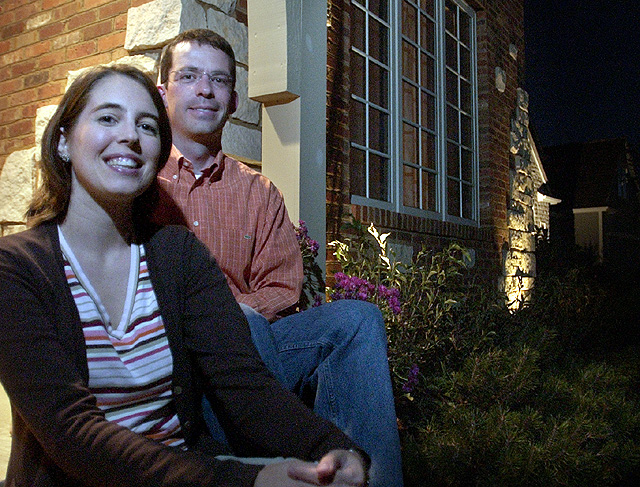
Megan and Chris Schumm, of Lawrence, use outdoor lighting to highlight some of the architectural features of their home as well as draw attention to plantings in their front yard.
For the Schumms, who were looking to accentuate the architectural aspects of their home rather than the yard, planning a design was a process of experimentation.
“I had very specific ideas on what I wanted to light, and Dan was very helpful in creating what I had envisioned in my mind’s eye,” Chris says. “We did a test run where he brought out a bunch of lights one night and we positioned them and repositioned them until we had developed a plan.”
The Schumms are happy with the final results, noting that the lights give their home an enormous amount of depth at night.
“It is also wonderful if you forget to turn on the lights,” Chris says. “You are never coming home to a pitch-black house.”
Huston encourages people who are up to the challenge of installing outdoor lights themselves to use low-voltage (12-volt) bulbs, which will safely provide clean, energy-efficient lighting. He also recommends copper instead of painted metal fixtures.
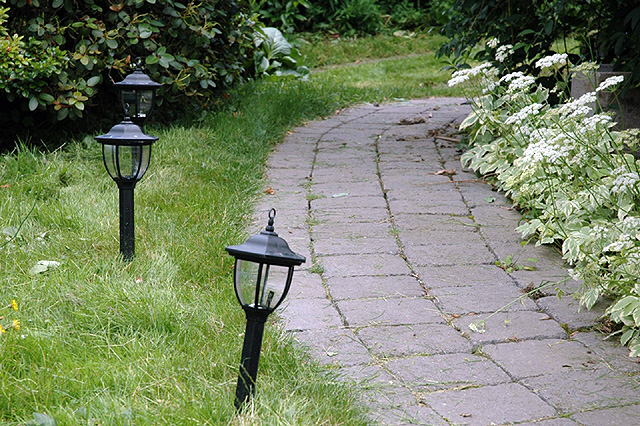
“The painted metal will erode much more quickly and have to be replaced,” he says. “Be sure to take your time and do the job correctly. After all, outdoor lighting takes more abuse than any other lighting. It must withstand rain, wind, hail, snow, the mailman, dogs and, in our case, an energetic little boy.”
So don’t fall prey to the early sunset. The weather is beautiful, the patio is calling and the kids aren’t yet ready for bed. Installing some strategically placed outdoor lights will take your fun into the yard well into the evening.
What to try
Five types of lighting to consider when illuminating your outdoor space:
¢ Feature lighting: This is used to create additional interest by lighting key features, such as plants, statues and trees. It will add depth and interest at night.
¢ Ambiance lighting: Generally these are low-voltage lights are purchased from a kit and create a mood. (Helpful hint: Many of these kits run off of solar power, so they’re virtually no good in areas that receive little sun.)
¢ Safety lighting: Positioned near steps, pathways, patio edges and pond edges, these lights ensure a safe place to walk after dark.
¢ Security lighting: This is the most popular lighting alternative that usually uses sensors and timers. It’s a valuable addition for home security.
¢ Flood lighting: It’s generally used to display houses and large trees. (Helpful hint: When illuminating a large tree, use up lighting from three directions. Lighting with one light makes the tree appear one-dimensional.)
Recommended reading
¢ “Creative Garden Lighting,” by Michele Osborne
¢ “Garden Lighting for Outdoor Entertaining: 40 Festive Projects,” by Chris Rankin