

Put your best foot forward
Doctors warn shoe size matters
Imagine taking three times your body weight and crushing it down on the 52 tiny bones, 66 joints and 214 ligaments that make up your feet. Now, imagine doing that 15,000 times.
Sound painful? Perhaps. But according to the American Podiatric Medical Assn., that’s exactly what the average runner does when he or she goes 10 miles.
Other activities aren’t much kinder to the feet: A 150-pound person walking one mile exerts the equivalent of 127,000 pounds on each foot. By age 50, he’s likely logged at least 75,000 miles.
Factor in workdays in high heels and pointy-toed dress shoes and summer days in flip-flops and it’s no wonder more than 75 percent of us will have foot problems at some point in life.
But contrary to popular belief, it doesn’t have to be that way, experts say.
“It is abnormal to have consistent foot pain,” says Dr. Tom Shonka, a Boulder, Colo., podiatrist.
Thanks to strides in shoe technology and athletic surfaces, wiser training and the availability of orthotics, insoles and specialty shoes, serious foot problems are far less common than when Shonka started practicing 25 years ago. Even long-distance runners, seniors and those who inherited their parents’ fallen arches need not resign themselves to a lifetime of “oh my aching feet,” experts say.
Helpful steps
¢ Shop for shoes in the afternoon, when your feet tend to be more swollen.
¢ Make sure you have plenty of room in the toe box.
¢ Try your shoes on with the same socks you use during races.
¢ Pick socks that wick off moisture; too much moisture can lead to bacteria, foot fungus and blisters.
¢ Change your shoes every 350 to 500 miles.
Source: Boulder Running Co.; Foot Solution
Measuring up
It all starts with the shoes.
“A lot of people don’t know that the problems they are having with their feet are because their shoes are completely wrong for them,” says Amanda Charles, manager of Boulder Running Co. “I worked with a woman last week who had had black toenails for years. She just thought it was because she ran so much. But it doesn’t have to happen. People don’t have to suffer.”
Before Charles sends runners to the enormous, somewhat intimidating selection on the store wall, she puts them on a treadmill where their running gait is videotaped and analyzed.
“There are certain things you just can’t catch when people are running outside,” says Charles, a longtime marathon runner.
For instance, women, blessed with naturally wider hips, have a tendency to let the front of their foot roll inward excessively with each footfall – a motion that can lead to knee, hip and back problems. While many assume they need more padding in the bottom of their shoe, they may, in fact, need more stability in the middle to keep the front of the foot from moving.
“It all comes down to proper alignment,” Charles says.
She says many runners come in with shoes that should have been retired long ago. While a shoe may look fine on the outside, the mid-sole breaks down long before the shoe shows signs of wear, and she recommends shoes be replaced after 350 to 500 miles.
“I’ve seen people who have been running in the same shoes for years,” she says.
Scott Lee, owner of Foot Solutions in Boulder, says most of his customers come in the door after their feet are already aching. Fifty percent are athletes; the rest are people with medical problems, such as diabetes, or seniors beginning to feel the toll of years in ill-fitting shoes.
“As you age, your arches start to fall and your feet expand. Some people think they can be a size nine forever,” he says.
His customers step on a device that takes a digital, topographical scan of their feet, showing every pressure point that touches the ground. It can quickly identify arches that are too high or low, excessive pressure on the heel or forefoot, or an uneven gait.
Then Lee recommends either a specialty shoe – extra wide, deep or stiff – or an insert or an orthotic that can be fitted on site.
“Most people think they are just stuck with it,” and buy shoes that are too big to quell the pain, he says.
Seek assistance
Lee says runners should seek out individualized help in finding the right shoe.
“There really is no generalization you can make for shoe fitting and shoe function,” he says. “It depends on the individual and their activity level. That’s why this type of individualized shoe source has evolved.”
Lee is not a doctor. Rather, he is a “certified pedorthist,” someone who has taken a 120-hour course in foot anatomy and function and taken a board-certified exam. He says Foot Solutions, a national franchise, is unique in that it combines medical technology, such as the scans, with a retail shoe outlet.
Both Lee and Charles say picking the right shoe is the critical first step, but if problems persist people may want to consider an over-the-counter orthotic that costs $35 to $70 or a custom-made one, which can run $200 to $500.
For some people, footwear may not be the problem at all.
Shonka recommends that people stretch their feet before and after exercise.
Charles says when it comes to running, posture and stride are critical: Keep your shoulders back, your chest open and make sure to land on your heel, rather than your toes, with each footfall, she says.
“If you land back there, you have a joint. If you land on your toes, you are landing on those tiny little bones,” she says. “Utilize what nature has given you.”
Health
Program that helped people with disabilities scrapped again
Margaret Tomlinson has been recovering from a traumatic brain injury for three years. Nearly a year ago, she moved ...

Excitement builds as LMH Health draws closer to completing Therapy Services renovations
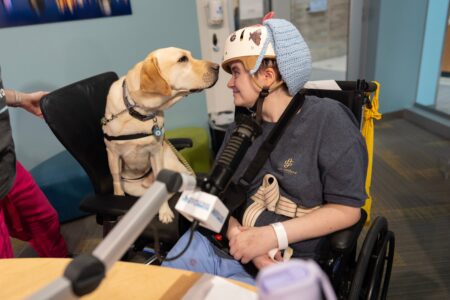
More children’s hospitals turn to furry caregivers to help kids heal
Sometimes ‘baby blues’ is actually something darker
Moments after Jenna Carberg gave birth to her daughter, doctors put the baby on her chest. “I felt a disconnect ...
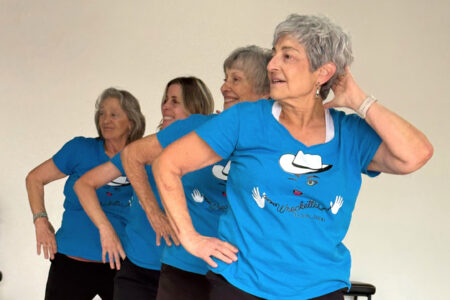
Moving to music offers all kinds of benefits as you age
Conflicting mamogram advice leads to confusion
WASHINGTON — Deciding when to get routine mammograms is confusing. Some health groups recommend women begin at ...