

Study backs earlier use of epidurals
Expectant mothers could receive pain treatment earlier in labor
Boston ? Pregnant women can be given a low-dose epidural early in labor without raising their chances of a Caesarean section, according to a study that could change the way obstetricians practice and make childbirth a lot less painful for many mothers-to-be.
The finding could lead doctors to consider offering early epidurals to hundreds of thousands more American women in first-time labor each year.
Though medical authorities recently dropped their reservations about giving women epidurals early in labor, some doctors and patients still prefer to wait until labor is further along. They worry that the painkiller’s numbing effect will interfere with a woman’s ability to push, prolonging labor and prompting a C-section.
This study appears to debunk the notion about C-sections and calls into question the one about prolonged labor, too.
“Women often feel guilty or weak when they request an epidural early in labor. I hope this study will help women see that there is no shame in asking for an epidural,” said lead author Dr. Cynthia Wong of Northwestern University in Chicago. “The message for women and their obstetricians and gynecologists is that there is no reason why women who want an epidural should not get it when they first request it.”
The study was reported in today’s New England Journal of Medicine.
More than 3.5 million women go into labor each year in this country. Epidural use has greatly expanded over the past decade, to more than 1.5 million women annually.
Epidurals deliver numbing medicine through a skinny plastic tube that is threaded into the back, close to spinal nerves, mostly bypassing the mother’s bloodstream. More recent techniques, sometimes called “walking epidurals,” provide lighter doses, allow women to push, and even enable them to walk throughout labor.
Doctors have welcomed epidurals as an alternative to “systemic” pain medicine through the bloodstream, which can leave a woman feeling nauseated and doped-up and even enter the baby’s body.
The Northwestern University study tested a type of low-dose pain relief known as a “combined spinal epidural.” A small dose of pain reliever is first injected into the spinal fluid, and the epidural is later fed through the same hole into a space a bit farther from the spine.
This study examined only first pregnancies, but C-sections are less frequent and therefore less of a worry in later pregnancies.
Other studies would be needed to settle whether early epidurals promote C-sections at higher doses or in case of medically induced labor, doctors said.
Health
Program that helped people with disabilities scrapped again
Margaret Tomlinson has been recovering from a traumatic brain injury for three years. Nearly a year ago, she moved ...

Excitement builds as LMH Health draws closer to completing Therapy Services renovations
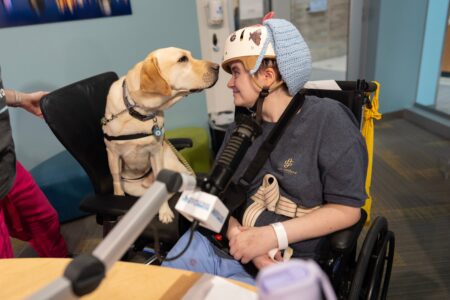
More children’s hospitals turn to furry caregivers to help kids heal
Sometimes ‘baby blues’ is actually something darker
Moments after Jenna Carberg gave birth to her daughter, doctors put the baby on her chest. “I felt a disconnect ...

Moving to music offers all kinds of benefits as you age
Conflicting mamogram advice leads to confusion
WASHINGTON — Deciding when to get routine mammograms is confusing. Some health groups recommend women begin at ...