

Climbers clamoring for indoor rock walls
Youths, adults take to challenge of reaching summit on artificial surface
Schenectady, N.Y. ? Kept from ski lessons by subzero cold, the homebound children were climbing the walls.
But that’s allowed at a rock-climbing gym.
Watching her 12-year-old scale a 38-foot wall for the third or fourth time, Adelle Ward said he’d probably sleep well that night.
“It was cool,” Robert said, after coming down slightly sweaty and flushed.
Most days, the Electric City Rock Gym hosts an after-school group, fun seekers and a core of climbing enthusiasts keeping in shape for the outdoors.
The sheltered verticals have grown in popularity, from a single gym in 1987, to 300 a decade later, to more than 600 now.
“Basically it was just a climber hangout,” said Seattle mountaineer Rich Johnston, who opened that first gym in the ’80s. “It was pretty rough. There were no handholds on the market, so we just glued rocks on the walls.”
Now there are several wall-building companies feeding a demand from universities, recreation centers, parks and other operators, Johnston said.
An Outdoor Industry Assn.’s survey showed 6.4 million Americans climbed on an artificial surface at least once in 2003, up from 6 million when they started tracking it three years earlier, spokesman Mike Lee said. Of those surveyed, 4.6 million said they climbed outdoors.
The rapid growth isn’t all good, Johnston said.

Nicole Kosloski, 12, of Schenectady, N.Y., looks for the next handhold as she climbs at the Electric City Rock Gym in Schenectady, N.Y. Kosloski climbs as part of an after-school program.
“The industry’s at a big crossroads right now because it’s an indoor activity and a lot of people are treating it almost as an amusement setting, which is very, very dangerous to the sport,” he said. “It’s an inherently risky sport.”
Ward was startled two years ago at first seeing her 5-year-old daughter at the top of the wall in Schenectady, N.Y. She said some mothers worry about children’s attention spans when holding safety ropes for each other.
But she believes “it’s safer than a lot of things they do.”
Growth in outdoor climbing has been flat the past several years while the indoor version has taken off as a youth recreation, fitness pursuit and even competitive sport. The activity, which emphasizes conserving strength to reach a summit, has been shown to produce physiological responses similar to cycling and treadmill running.
In one 1992 study, 20 beginners got stronger from two weekly sessions of 15 to 20 minutes on a 12-foot vertical climbing treadmill over seven weeks, said Wayne Westcott, fitness director for the South Shore YMCA in Quincy, Mass., where the study was done. On average, they lost 2.1 pounds of fat while increasing hip-trunk flexibility, leg strength and upper body strength. Their average heart rate nearly doubled to 156 after 10 minutes. Climbing skills and speed also improved.
“They were pretty much doing steady climbing for 15 minutes,” Westcott said. “We assume that would be likely to happen if someone were to climb in a climbing gym or a mountain for similar frequencies or durations.”
Health
Program that helped people with disabilities scrapped again
Margaret Tomlinson has been recovering from a traumatic brain injury for three years. Nearly a year ago, she moved ...
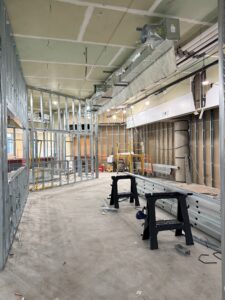
Excitement builds as LMH Health draws closer to completing Therapy Services renovations

More children’s hospitals turn to furry caregivers to help kids heal
Sometimes ‘baby blues’ is actually something darker
Moments after Jenna Carberg gave birth to her daughter, doctors put the baby on her chest. “I felt a disconnect ...
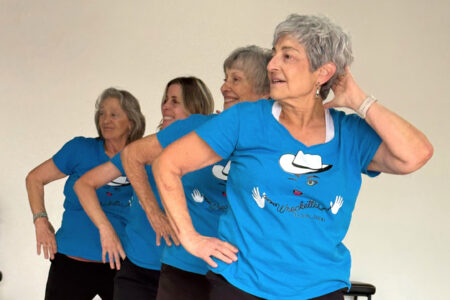
Moving to music offers all kinds of benefits as you age
Conflicting mamogram advice leads to confusion
WASHINGTON — Deciding when to get routine mammograms is confusing. Some health groups recommend women begin at ...