

Moms of chronically ill kids create in-home doctor training
Dix Hills, N.Y. ? Angela Cano worried she might kill her baby.
Born with Down syndrome and a heart defect, little Joanna required a feeding tube when she was sent home from the hospital. But her mom feared doctors had not spent enough time explaining how it worked.
What if, as she was warned, instead of snaking the tube through her nose and down into her stomach, it went into the baby’s lungs?
“You will drown your child, literally,” Cano said she was told. Then she was sent home with the tube and a “good luck.”
Everything turned out fine for Joanna, now a precocious 11-year-old who still requires a daily regimen of medicine and a close watch on her health.
But Cano’s experience convinced her that the communication gap between doctors and parents of sick children is often vast — and goes both ways. Doctors could provide better care and better advice, she thought, if they understood what families went through after leaving the hospital.
So she joined a group of parents dedicated to bridging the divide.
“When I started this journey, doctors didn’t have a lot of concern, or respect, for parents or their views or their ideas,” Cano said. “As far as they were concerned it was like, ‘I’m the professional, I went to school, I’ll call the shots.'”
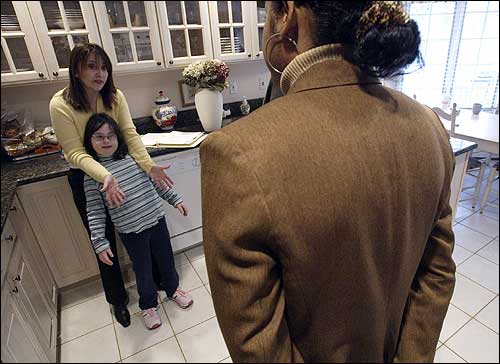
Angela Cano, left, and her daughter Joanna, 11, meet with medical resident Tamika Maxwell, who was visiting the Canos' Dix Hills, N.Y., home to get a look at a day in the life of a family dealing with a chronic illness. Joanna has Down syndrome.
The group she belongs to is Project DOCC — for Delivery of Chronic Care. It was formed in 1994 by three Long Island mothers, initially funded by a New York City-based health care philanthropy, the United Hospital Fund.
It’s now a part of more than 20 of the nation’s most respected hospitals and medical schools, which put pediatricians-in-training into the homes of chronically ill and disabled children to learn how families cope. More than 1,000 pediatricians have been trained by Project DOCC parents.
“It is revolutionary in the sense that the parents are the teachers and they put together the curriculum and they establish what it is they want the residents to learn,” said Dr. David Meryash, a developmental pediatrician at North Shore Hospital, where the program was first used.
One recent snowy morning, Dr. Tamika Maxwell arrived at the Cano home in Dix Hills just in time to see Joanna take her daily batch of medicines.
In training to be a pediatric specialist, the second-year resident said the Project DOCC instruction could pay off when parents and physicians faced inevitable stressful situations.
“There’s plenty of times parents are exhausted, frustrated and worried and that comes out in a negative way,” Maxwell said. “If you can understand that, it makes it so much easier to understand where they’re coming from when it’s 2 in the morning and they’re back in the hospital.”