

Feeling exotic?
Orchid craze grabbing hold of gardeners everywhere
Orchids seem to be everywhere. From the aisles of Costco and Sam’s Club to high-end floral boutiques, the orchid craze is in full force.
Most orchids found in grocery stores and discount megaplexes are called Phalaenopsis. It’s a magnificent flower because it’s highly adaptable to the home environment and often sports showy blooms for weeks – even months. Its staying power makes it a much more economically savvy choice than replenishing fresh cut flowers every week.
Orchids are the largest family of flowering plants, with more than 35,000 species and 120,000 hybrids. Yet, only two genera – Phalaenopsis and Dendrobium – are largely responsible for the plant’s recent leap into pop culture and its almost iconic presence in interior design.
Orchids range in size from the 44-foot Sobralia altissima, which grows in Peru, to the Platystele halbingeriana, a Mexican variety that can fit onto a dime. Orchids gather their nutrients from air and water rather than soil. They are epiphytes, or tree-dwellers, and can be seen clinging to branches from the jungles of the Amazon to the lakes of Minnesota.
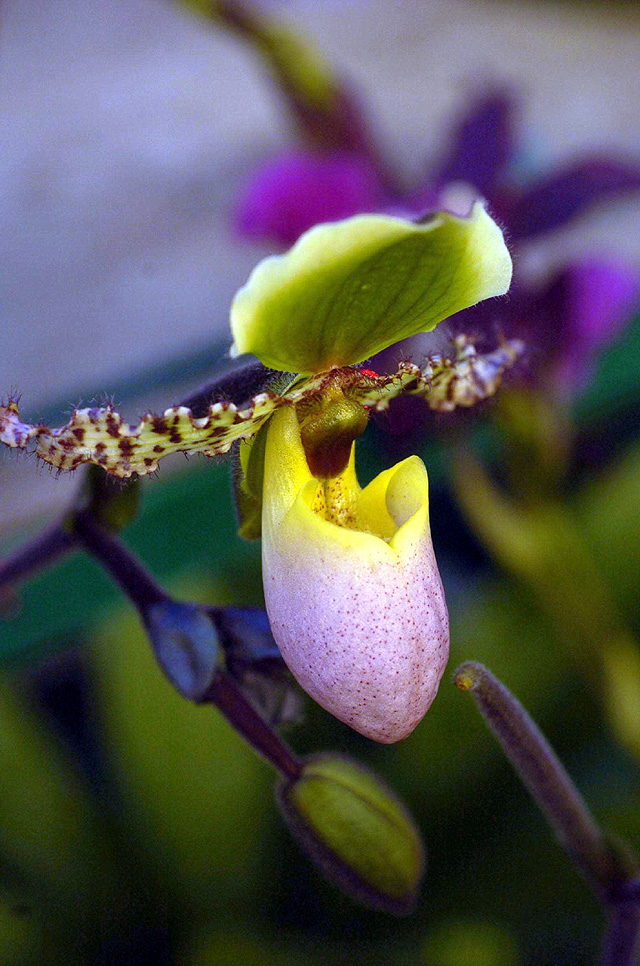
With their long-lasting blooms and adaptable temperaments, orchids are fast becoming the plant of choice for gardening enthusiasts and designers. Sunrise Garden Center, 1501 Learnard Ave., sells several varieties, including the ones shown here..
The recent boon in the orchid’s popularity is not simply thanks to some clever designers; the plants have tickled the fancy of cultures for ages. Confucius wrote about their allure in 500 B.C., and Darwin was attesting to their beauty before he penned “The Origin of Species.”
In any case, orchids are here to stay. Not only do they bloom for long durations, but they will bloom again if given the proper growing requirements. Dendrobiums merely need to spend summers outside in brighter light, and they should bloom annually.
Here are some tips to keep your orchids happy:
¢ Use a bark-blended mix in the pot for footing; fir works well.
¢ Water weekly in the sink, letting all the water drain.
¢ Never leave an orchid standing in water; remember they are tree-dwellers.
¢ Fertilize weekly with orchid food.
¢ Cut back spent flower spikes.
¢ Wipe orchid leaves with a soft, cotton cloth moistened with lemon juice.
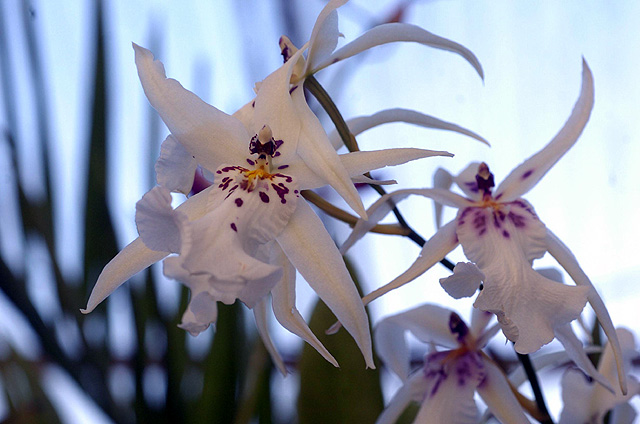
Richard Gwin/Journal World-Photo Oncidium Tahima Glacier
¢ Let orchids stand in filtered light; direct southern exposures can burn their leaves.
Karen Booker is a National Garden Clubs Inc. Accredited Master Judge who judges both horticulture and design at flower shows. Although she is not an orchid judge, she is an orchid enthusiast.
“I’m attracted to orchids because of their ‘exotic’ look,” she says. “Most of my orchids bloom in the winter, and there is nothing better than seeing – and smelling – a bit of the tropics when the temperatures outside are plunging and snow has covered the ground.”
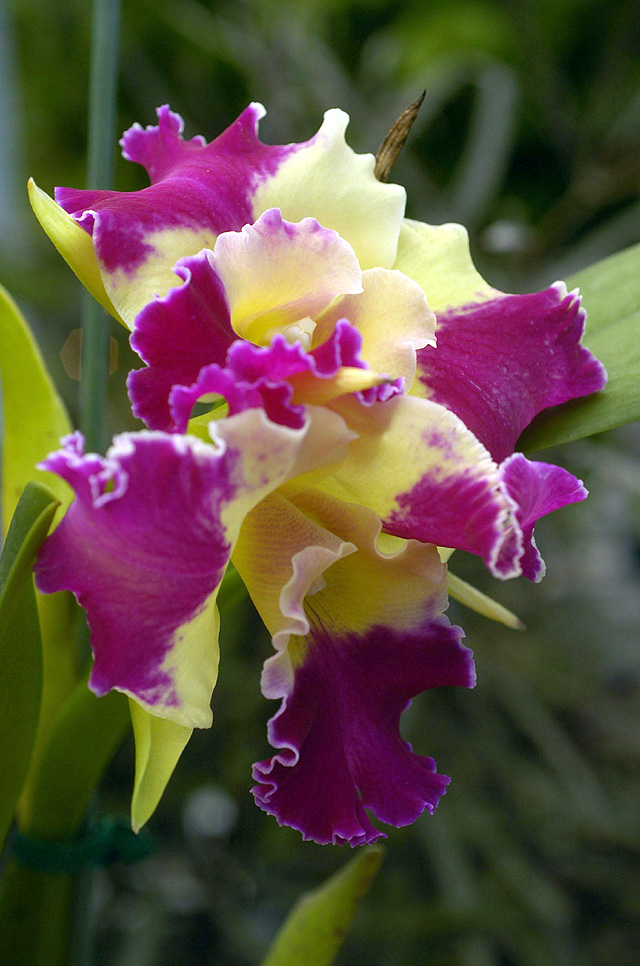
Richard Gwin/Journal World-Photo Brassolaelia Cattleya dragon cat
Dick and Carolyn Wagstaff feel the same way. The Lawrence couple has a greenhouse crammed full of orchids. Carolyn’s mother was an orchid connoisseur, and when she died, the Wagstaffs inherited about 150 orchid plants. Then a neighbor gave them about 100 more.
“We had so many orchids, we had to build a greenhouse to find a home for them all,” Dick says.
In the summer, the Wagstaffs put their plants in a lathe house in the backyard. The spring is earmarked for dividing their many plants.
“I’m partial to the Cattleyas,” Booker says. “I love their big showy blooms, and most have an intoxicating fragrance. They were the original corsage bloom. I also like Paphiopedilums (slipper orchids).” The most common orchids found in households:
¢ Phalaenopsis (moth orchid)
¢ Paphiopedilum (lady slipper)
¢ Brassia longissima (spider orchid)
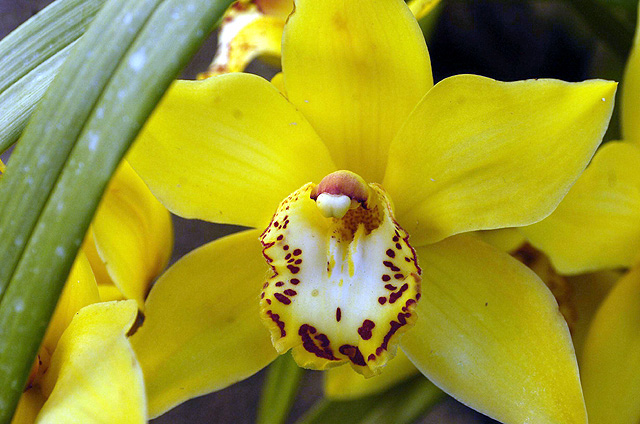
Richard Gwin/Journal World-Photo Cymbidium everglades gold
¢ Miltoniopsis (pansy orchid)
Orchids are tender, yet resilient plants that more and more people are using to beautify their homes. So why shy away from the orchid craze? Karen Booker recommends diving right in.
“Orchids are like potato chips,” she says. “You can’t stop at just one.”