

Transit strike slows New York’s pace
New York ? Commuters trudged through the freezing cold, rode bicycles and shared cabs Tuesday as New York’s bus and subway workers went on strike for the first time in more than 25 years and stranded millions of riders at the height of the Christmas rush. A judge slapped the union with a $1 million-a-day fine.
The sanction was levied against the Transport Workers Union for violating a state law that bars public employees from going on strike. The city and state had asked that the union be hit with a “very potent fine.”
“This is a very, very sad day in the history of labor relations for New York City,” State Justice Theodore Jones said in imposing the fine.
The union said it would immediately appeal, calling the penalty excessive.
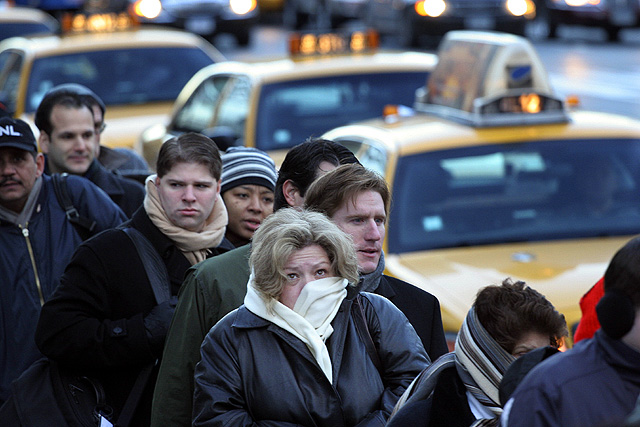
New York City commuters wait in line to catch a taxi on Tuesday. Subways and buses ground to a halt Tuesday morning in New York as transit workers walked off the job following days of acrimonious labor talks, forcing more than 7 million daily riders to find new ways to get around.
The strike over wages and pensions came just five days before Christmas, at a time when the city is especially busy with shoppers and tourists. The subways and buses provide more than 7 million rides per day.
The heavy penalty could force the union off the picket lines and back on the job. Under the law, the union’s 33,000 members will also lose two days of pay for every day that they are on strike, and they could also be thrown in jail.
The nation’s biggest mass-transit system ground to a halt after 3 a.m., when the union called the strike after a late round of negotiations with the Metropolitan Transportation Authority broke down.
The TWU balked at the MTA’s final offer of a 10.5 percent raise over three years, plus changes to the pension plan for new employees, and a new holiday. Health and pension benefits for current employees would have remained unchanged.
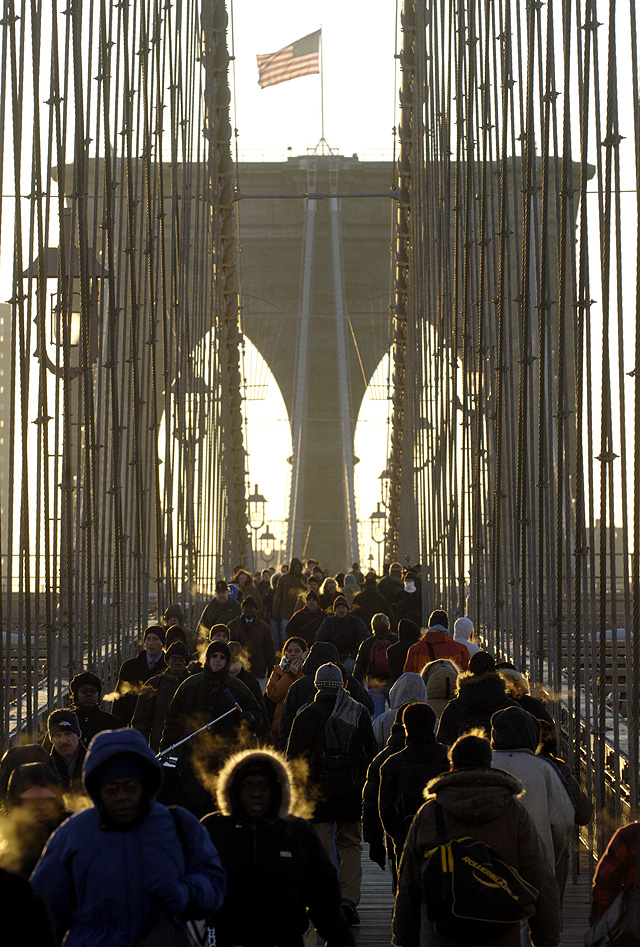
People cross the Brooklyn Bridge into Manhattan at dawn Tuesday in New York. Subways and buses ground to a halt Tuesday morning as transit workers walked off the job.
The MTA dropped a proposal to raise the retirement age from 55 to 62, but proposed that all new employees contribute 6 percent over the first 10 years toward their pension. Toussaint said Tuesday the pension proposal, the main sticking point, would have offset the pay increases.
The agency also offered to hire an outside consultant to improve the disciplinary process. The union wanted a 50 percent reduction in disciplinary cases.
By Tuesday’s evening rush hour, crowds were thick at both Penn Station and Grand Central Terminal as commuters waited for trains on the two suburban rail lines, where ridership had soared earlier in the day. The Long Island Rail Road, operating out of Penn Station, carried 50,000 more passengers above its usual 100,000.
No negotiations were scheduled between the two sides, although a mediator from a state labor board was meeting with both union and MTA officials Tuesday afternoon.
National
Feds won’t seek death penalty in plea deal with man accused of killing top Minnesota Democrat

NASA unveils astronauts to test tech for future moon landing
Social Security’ fund faces shortfall one year earlier than expected
WASHINGTON (AP) — Social Security 's retirement trust fund is projected to face a funding shortfall in 2032, a ...

House passes $70B bill to fund immigration enforcement for 3 years
Texas teen convicted of murder for stabbing another athlete at track meet
Multiple people shot near a festival in Ohio, authorities say
Multiple people were shot Saturday near a community festival in Toledo, Ohio, and police said a search for the ...