

Flaxseed part of power diet
Walk the aisles of almost any grocery store, and you’ll read the healthful ingredient claims printed in bold letters on packages ranging from breakfast cereals to pasta to energy bars to sandwich bread and even frozen waffles.
“Now With Flax.”
Yes, flaxseed is the hot grain du jour because of its high concentration of protein, fiber and omega-3 fatty acids – the holy trinity of nutritional health for those wanting to lower their cholesterol, prevent heart disease and (though the medical jury is still out on this) help prevent the swift spread of cancer. Heck, even baseball slugger Barry Bonds uses flaxseed – or, at least, said he did when denying steroid allegations.
But the flax fad is hardly new.
“My husband and I have to laugh because flaxseed is an ancient grain,” says Stephanie Ewing, a registered dietitian at California State University-Sacramento. “Flax is one of those things I learned in school years ago. Now, it’s going mainstream.”
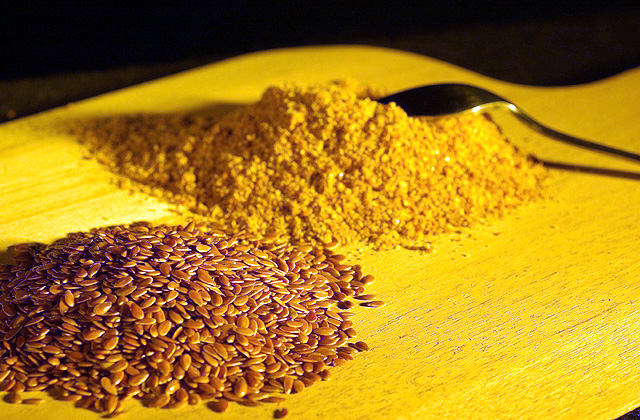
Flaxseed is touted for its health benefits, which include 3 grams of protein and 4 grams of fiber per serving.
Flaxseed, an ancient plant native to Central Asia, might at first seem to be an odd choice as a dietary star. Also known as linseed oil, flaxseed is a primary ingredient used in thinning paints and varnishes. It also provides the fiber from which linen is woven.
But, as the hoary food cliche goes, many parts are edible.
Two tablespoons of ground flaxseed contain 3 grams of protein and 4 grams of fiber. Flaxseed can be taken in many forms – whole seeds (the size of sesame seeds), ground into powder or extracted into oil. Many health-food stores also sell flax pills.
Miracle food?
Flaxseed proponents tout it as something of a miracle grain. Some studies have claimed it benefits prostate and breast cancer patients, slowing the growth of tumors. Others say it helps prevent heart attacks and strokes, eases arthritis, can help lessen anxiety, hastens weight loss and prevents constipation.
Diet changes
¢ Increase the use of fiber slowly. A sudden increase can result in gas, cramping and bloating.
¢ Drink plenty of water to avoid constipation.
¢ Either grind the seeds or chew them well. Whole seeds will simply pass through the body without absorption.
¢ Combine ground flaxseed with wheat flour for breads and muffins.
¢ Keep flaxseed refrigerated.
¢ Flaxseed oil cannot be used for frying or sauteing.
Sources: CSU, Sacramento, registered dietitian Stephanie Ewing; University of California, Berkeley, Wellness Letter
It’s no cure-all, Ewing says. Nothing’s that potent.
“It’s just food,” she says. There’s not a definitive, ‘You eat this, it will prevent everything.’ You need the composition of an overall healthy diet to start with. If you have that and, for instance, still find your cholesterol levels need to be lowered, that’s where flaxseed can help. It boosts your fiber content and gives you that added help from those omega-3s.”
Omega-3 fatty acids, most commonly found in fish oil, contain alpha-linolenics that help reduce the so-called “bad” cholesterol (LDL), according to many studies. Flax’s antioxidant properties come from a high amount of the fiber lignins.
“When we consume it, it has a property that binds cholesterol to the intestines, which you eliminate from the body versus having them be reabsorbed,” Ewing says.
Cancer connection
Researchers have yet to quantify whether flaxseed directly slows tumor growth. According to the journal Urology, a study of men with prostate cancer showed that those who consumed an ounce of flaxseed per day as part of a low-fat diet slowed the progress of their cancers.
There are mixed results concerning flaxseed’s ability to help heart patients. A federally funded clinical trial is ongoing.
Some people, however, consume flaxseed for a simpler reason: its nutty taste, similar to sesame seeds. A popular way to use flaxseed is in baked goods such as flax muffins and breads. Others add ground flaxseed to sauces and cereals and say they can barely taste it.
Health
Program that helped people with disabilities scrapped again
Margaret Tomlinson has been recovering from a traumatic brain injury for three years. Nearly a year ago, she moved ...

Excitement builds as LMH Health draws closer to completing Therapy Services renovations

More children’s hospitals turn to furry caregivers to help kids heal
Sometimes ‘baby blues’ is actually something darker
Moments after Jenna Carberg gave birth to her daughter, doctors put the baby on her chest. “I felt a disconnect ...

Moving to music offers all kinds of benefits as you age
Conflicting mamogram advice leads to confusion
WASHINGTON — Deciding when to get routine mammograms is confusing. Some health groups recommend women begin at ...