For Nicole Steineger, breast-feeding her three children has been a natural choice.
It's convenient, too.
"It goes with me where I go," said Steineger, whose youngest child is a year old. "If I'm in the middle of an aisle at Target and my baby needs to eat, I can do that. I don't have to prepare anything."
Organizations including the Lawrence-Douglas County Health Department and La Leche League International, are using this week - World Breast-Feeding Week - to raise awareness of breast-feeding's health benefits.
"It's a public health issue," said Jane Tuttle, a La Leche League leader in Lawrence. "I think it's something doctors should encourage. Doctors don't hesitate to tell people to lose weight or quit smoking. They shouldn't hesitate to tell mothers to breast-feed."
According to the National Women's Health Information Center, breast milk can help babies build immunity to a host of infectious diseases - including ear infections, diarrhea and respiratory illnesses. Breast-feeding also lowers the risk of breast and ovarian cancers in mothers.
- Senate vote kills public nursing legislation (03-24-05)
- Mothers say they want 'discreet' out of breast-feeding bill (03-15-05)
- Bill protects breast-feeding but discreet wording a problem (03-12-05)
- Breast-feeding bill advances, but changes unwelcome (2-24-05)
- Research, legislation back breast-feeding advocates (2-09-05)
Steineger said she hasn't had any problems with breast-feeding in public. But a Lawrence incident nearly led to a state law supporting the act.
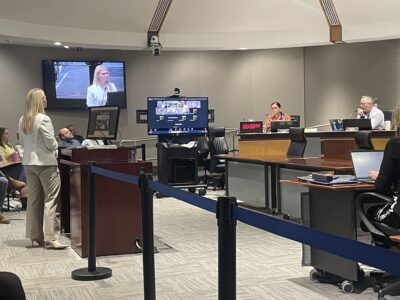
Kansas legislators last winter debated a bill the original intent of which was to declare the state in support of breast-feeding and allow mothers to breast-feed any place they had a right to be.
The measure was prompted by an incident in Lawrence, where a woman said she tried to breast-feed her baby at a health club and was asked by a male employee not to nurse.
A vote in the Kansas Senate referred the proposal back to committee, which killed the bill. It's unknown if another attempt will be made in the 2006 legislative session.
"Certainly if the bill returns to the Legislature, I anticipate being supportive of it," said Sen. Jim Barnett, R-Emporia, chairman of the Public Health and Welfare Committee.
Barnett, a physician, said he had become concerned amendments to the bill would have allowed businesses the right to prohibit women from breast-feeding on their property.
"My concern was that mothers would end up having less freedom," he said.


Comments
LJWorld.com doesn’t necessarily condone the comments here, nor does it review every post. Read our full policy. Also, read about banned accounts and harassing comments.
LawrenceMommy (anonymous) says…
I am 100% for breastfeeding. But why must so many breastfeeding mothers be so militant and insulting to those who can't? I have heard, literally countless times, that any woman who *really* wants to can, and that there really are no good medical reasons not to, and that simply isn't true.
I wanted more than anything to breastfeed my child, but I couldn't. I developed a life-threatening medical condition post-partum and tried every breastfeeding-friendly drug to treat it, without success. We finally had to resort to medicines that can't be taken while breastfeeding and I had to resort to bottle-feeding my daughter. I almost feel cheated that I couldn't breastfeed, like I intended, but I figured it was more important to be alive to raise my daughter. But, despite all that, I have still been told (after explaining my situation) by some less than compassionate mothers, that, if I truly wanted to, I could have figured out a way and that I cheated my daughter.
I still support breastfeeding and realize it's the best thing, if possible. I hope to be able to avoid the medical condition I had after my first child and be able to breastfeed my next. But I will not attend any so-called "support groups" at that time because most of the cruel mothers I have encountered have been members. Not a very compassionate group.
merrill (anonymous) says…
Breast feeding is one of the few best souces for glyco nutrients which unfortunately formula does not provide. Women's bodies are incredible. Glyco nutrients are the critters that are able to zap cancer cells that perpetually enter our bodies. Grade B real maple syrup is another source...grade A is too refined. Bogus syrups provide none.
Plug glyco nutrients into google for more data.
lori (anonymous) says…
Lawrencemommy, I am sorry for your experience with unsupportive mothers. There are few medical conditions and medications that truly prohibit nursing, but they do exist, which is why formula should exist. Being healthy enough to parent is is definately more important than nursing. However, most of us in the medical and breastfeeding support community have found that the vast majority of women who say they cannot nurse either really don't want to, or (more likely) they have been the victim of misinformation by family, friends, or even worse, the medical community.
Breastfed babies are healthier babies. It's that simple. In terms of economics, breastfed infants cost the insurance system over $1000 less in doctors visits and prescriptions their first year of life. Since breastfed babies are healtheir, they also result in fewer days of missed work for their parents. Even better than the glyco nutrients that merrill mention, at least in the short term, are the numerous antibodies passed from mother to infant in breastmilk. Breastfed babies literally receive an immunization against hundreds of various diseases everytime they nurse.
Our federal government spends hundreds of millions of dollars on formula for the WIC program, and then we turn around and spend hundreds of millions of dollars to treat formula fed infants for conditions that would have been prevented or lessend by breastfeeding. Food for thought.
Options certainly need to exist for women like LawrenceMommy, for the rare baby who cannot digest certain aspects of breastmilk. and for women who make the informed choice not to breastfeed. I personally think formula should only be obtainable through a prescription. I'd rather see pharmaceutical companies (yes, they are the ones who make the formula) spend less on mass marketing, and more on research to create an improved artificial breast milk. Frankly, most of the formula out there is at best marginally adequate. They do make a higher quality formula that is more easily digested by infants, but it is more expensive and is only available if your child has been diagnosed with a digestive disorder. Because of the expense of formula, and the potential negative side effects it can have for an infant, I think that it should be treated like a medication, covered by insurance, obtainable only through a pharmacy, and only after a pediatrician and lactation consultant have worked with the mother and individually evaluated her and her infant's specific needs.
All those millions of dollars we are spending on formula could be instead spent on providing pregnant and postpartum mothers with education and support. Imagine if every mother had free, unlimited visits to lactation consultants, a free, hospital grade pump available for her to use while at work, and a medical system that recognized the true importance of breastfeeding and supported it adequately.
aidan (anonymous) says…
I have to agree with all of the postings, however, I don't think that LawrenceMommy is getting the sympathy and understanding she truly deserves. I had a similar experience. My healthy, happy, bright, and spunky toddler was born very smal (under 5#) and premature. I tried my darndest to breastfeed her, and it seemed to be going well the first 2-3 weeks after some very helpful consultation from the Lactation consultants at LMH. (Joyce Williams is a superstar!)
Unfortunately, once production really kicked in for me, the dramatic difference between her small mouth size and weaker sucking ability, my not-so-small "endowment", and the onset of infant GERD, she just could not handle it. She was uncomfortable, she acted like she was drowning in breast milk, and she wasn't gaining weight sufficiently. By that point the damage had been done, and even pumping didn't produce enough. And, worst of all, my breastfeeding dreams came crashing down to reality over my very first Mother's Day. I cannot express to you how depressed I was about not being able to nurse.
LawrenceMommy, I feel for you. I can truly sympathize with your experience, and I hope, for both of us, that it goes better the next time. Our kids come first. But, if we can't be physically and emotionally healthy while breastfeeding, and if it doesn't seem to meet our children's needs, it's not the end of the world to use formula.
Becky (anonymous) says…
Because of medical reasons I could not and yes it happened to me twice. I made the best decesion for my children so that they would be healthy and they are. For this alone mothers are judged and condemed by other mothers who did it better. I have been told that I should have found a way and one mother said that I was completly misinformed when she did not even ask what my medical problem was. I know that breastfeeding is wonderful, healthy, the mother and child get to bond. But don't think that I missed out because I had to use a bottle.
whosaid (anonymous) says…
Insurance should start covering the expenses to get human breast milk from milk banks. In the event that a mother who truly wants her infant to benefit from breastmilk is not able to provide the milk herself for whatever reason, women should have the option to get human milk from milk banks and not have to resort to products derived from other animals that do not fully meet the nutritional requirements of humans.
I just want to l know who decided that humans were meant to use cows to feed their children. I have never seen a cow drinking human milk.
leslie (Leslie vonHolten) says…
I breastfed both of my children, and was fortunate to never have had complications or public incident because of it. I am, however, completely tired of the way bottle-feeding has become vilified in this town. You do not know why a mother is bottle-feeding: maybe the baby has a cleft palette, maybe she was a preemie, maybe she is adopted, maybe the mother is ill. What we do know is that it is none of your business.
i understand the concern and I agree with the public health initiatives set out to educate women on this issue. But I think the amount of time women in Lawrence spend tsk-tsking mothers' choices regarding breastfeeding or cosleeping or staying at home vs. keeping her career would be better spent working together toward protective legislation, improving the public schools, and establishing quality control standards for childcare. Making a mother insecure about her choices leads to depression and anxiety, two conditions that will be more detrimental to her child's health than formula.