

Animal shelters fill up as soldiers deploy, leaving best friends behind
Hinesville, Ga. ? The 32 dogs look up with sad eyes or wag their tails as animal control officer Linda Cordry walks the row of chain-link cages toward a door concealing a gas chamber.
“These guys are mine,” Cordry says with resignation. “These are basically on Death Row.”
Liberty County Animal Control and the humane shelter that shares its small cinderblock building have been crammed to capacity with dogs and cats since Army troops from neighboring Fort Stewart deployed to Iraq. Both agencies say it’s no coincidence.
“I would say 95 percent of these animals come from military homes,” says Beate Hall, who runs the humane shelter where dozens of soldiers and Army spouses began dumping pets during the holidays.
The wars in Iraq and Afghanistan have prompted national efforts to alert deploying soldiers to alternatives to abandoning animals when they leave for war. But the hundreds of unwanted pets turning up in this southeast Georgia military town indicate many aren’t getting the message.
Since the Fort Stewart-based 3rd Infantry Division deployed 19,000 troops to Iraq in January, animal control officers took in 321 abandoned dogs and cats. Of those, 119 have been euthanized.
Many of the abandoned pets are wearing collars, but with their tags removed. Animals with collars get up to 10 days before they’re euthanized. Those without collars are spared for only three.
“We get in so many with personalities, we know they had to belong to somebody,” Cordry says. “It’s hard to say, ‘Today’s euthanasia day — let’s load them up and go for it.”‘
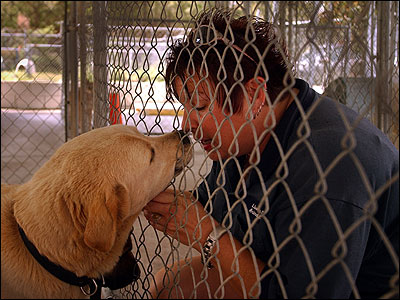
Linda Cordry, a Liberty County Animal Control Officer, spends time with a dog last week at a shelter in Hinesville, Ga.
Animal rescue groups say they’ve put a serious dent in wartime pet dumping, largely by using the Internet to find foster homes to care for soldiers’ animals until they return home.
Steve Albin, president of the nonprofit NetPets, says he’s found temporary homes for 8,000 military pets nationwide since starting his Military Pets Foster Program after the Sept. 11, 2001, terrorist attacks.
“Even though this is available, there’s still the 5 percent of the military, they say, ‘Nah, we’ll get another pet when we get back,”‘ says Albin, a retired dog breeder in North Myrtle Beach, S.C.