

Too few zzzs
Lack of sleep a growing problem, especially for women
Ann Roy, 62, cannot remember the last time she felt rested.
Her sleep problems started when she was 18.
“You just learn to cope with it,” said Roy, of Carmichael, Calif. “It’s a little bit like having a cold all the time.”
As a teenager, Roy “started dropping off in the middle of things,” she said. “I would fall asleep in class” in college. A doctor diagnosed her with narcolepsy. Medication helped.
She became a mother, sleeping in snatches, rarely getting a full night’s rest. During menopause, Roy awoke at night, sweating. Now, she has learned she has sleep apnea, which causes cycles of loud snoring, interrupted breathing and sudden waking.
As many as 60 percent of Americans report at least occasional sleep problems. More than half say that sleepiness interferes with their work, according to the National Sleep Foundation.
Women seem to be the sleepiest Americans of all.
The sleep foundation has reported that women are twice as likely as men to complain about insomnia, and that three out of four women get less than the recommended eight hours of sleep per night.
“Many women exist in a state of perpetual sleep deprivation,” said Dr. Lydia Wytrzes, a neurologist and director of the Sutter Sleep Center in Sacramento, Calif.
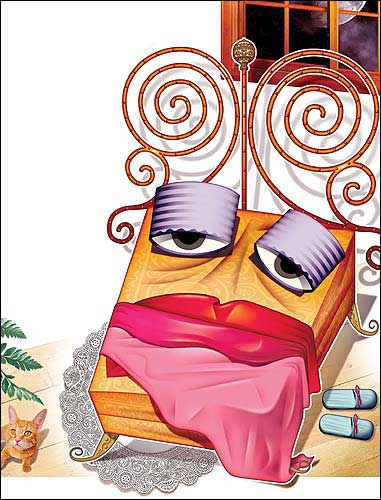
At virtually every stage of their lives, women undergo complex physical and biological changes that can sabotage a good night’s sleep. Menstrual periods. Pregnancy. Menopause. On top of all that, more women than ever are dealing with the stresses of high-pressure jobs, divorce and single motherhood.
Research has shown that a lack of proper sleep translates to problems concentrating, irritability, diminished productivity in school and on the job and possibly increased vulnerability to certain illnesses, including an impaired immune system. According to the National Highway Traffic Safety Administration, more than 100,000 crashes each year are a result of drivers asleep at the wheel.
“There was a period in time when people bragged about how little sleep they needed. It was a badge of honor,” Wytrzes said. “Now we’re starting to realize that’s foolish.
“If you get adequate sleep, you are much more efficient and effective. Everything about life is so much easier.”
Luckily for people like Roy, “sleep medicine” has evolved into a legitimate medical specialty with highly trained specialists and sophisticated technology to diagnose and treat conditions such as apnea. A complete sleep study involves measuring brain waves, eye and limb movements, and air flow through the body, said Dr. Kimberly Hardin, an assistant professor of clinical medicine at the University of California, Davis, and a specialist in sleep medicine.
Sleep apnea, Hardin said, can lead to high blood pressure and other serious problems if left untreated. The “gold standard” treatment, she said, is a device that uses a mask or mouthpiece to deliver air and assist breathing during sleep.
Sutter specialists recommended a “positive airway pressure” device for Roy, and it has worked wonders, she said.
Although the mask was uncomfortable at first, “I hardly even notice it now,” she said. “I’m not snoring as much. I wake up feeling more energetic. The first time I used it, I got up in the morning and my husband said, ‘Welcome back, honey!'”
Health
Program that helped people with disabilities scrapped again
Margaret Tomlinson has been recovering from a traumatic brain injury for three years. Nearly a year ago, she moved ...

Excitement builds as LMH Health draws closer to completing Therapy Services renovations
More children’s hospitals turn to furry caregivers to help kids heal
Sometimes ‘baby blues’ is actually something darker
Moments after Jenna Carberg gave birth to her daughter, doctors put the baby on her chest. “I felt a disconnect ...

Moving to music offers all kinds of benefits as you age
Conflicting mamogram advice leads to confusion
WASHINGTON — Deciding when to get routine mammograms is confusing. Some health groups recommend women begin at ...